Published : 03 Jul 2026, 01:00 AM
Updated : 08 Sep 2026, 09:20 AM


Contested Legacy: The ‘Chronic Malady’
Systemic stagnation: Many feel the 2024 uprising replaced a government but left the authoritarian state structure fully intact
Unfulfilled ideals: Student leaders say a Bangladesh free from discrimination remains out of reach amid political divisions
Movement controversies: Public trust was damaged by internal allegations that sections of the movement were used for financial gain
An enduring lesson: Despite institutional failures, the uprising proved that no entrenched government can ignore public will
Two years after the July Uprising reshaped Bangladesh's political landscape, the euphoria that once filled the streets has increasingly given way to a more sobering question: beyond a change of government, how much has really changed?
For many who rallied against allegations of one-sided elections, political patronage, corruption, enforced disappearances, suppression of dissent and abuse of power under the Awami League government, the answer remains deeply unsatisfying.
The disappointment is shared not only by those who took to the streets during the student-led mass uprising but also by academics, analysts and citizens who had hoped it would usher in a fundamentally different system of governance.
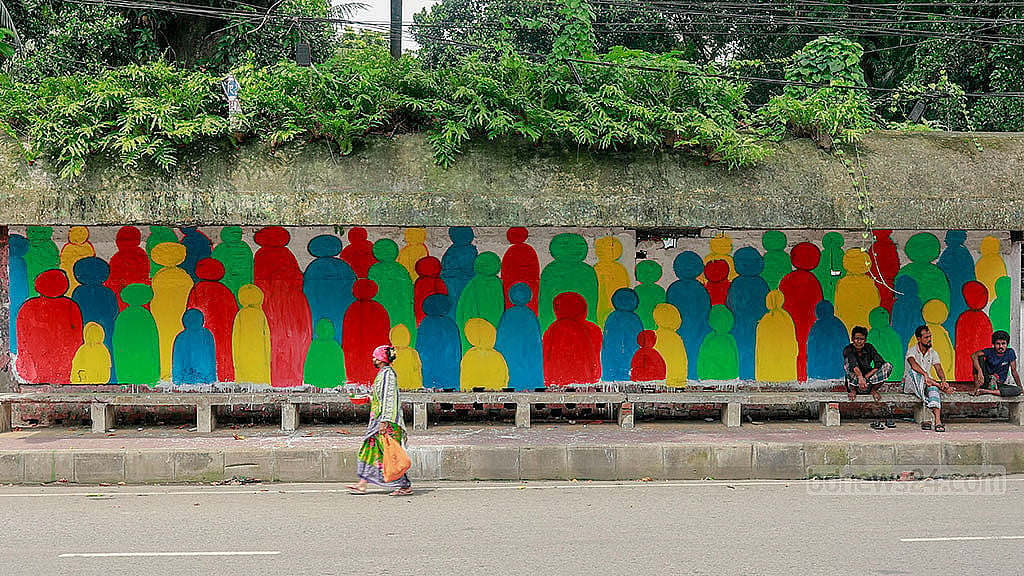
While opinions differ on why expectations remain unmet, many agree that replacing political leadership without transforming state institutions has left much of the old order intact.
The movement that ultimately toppled the Awami League government on Aug 5, 2024 grew out of the anti-quota protests, which had first gained nationwide momentum in 2018 before resurfacing in June 2024 after a High Court case.
As demonstrations spread across the country, they evolved into a one-point demand for the government's resignation.
The mass uprising ended Sheikh Hasina's more than 15 years in power. She fled to India on the day her government fell, while the Awami League and its affiliated organisations were later banned in Bangladesh.
Nearly 1,000 protesters were killed and thousands more injured during the movement, alongside casualties among law enforcers.
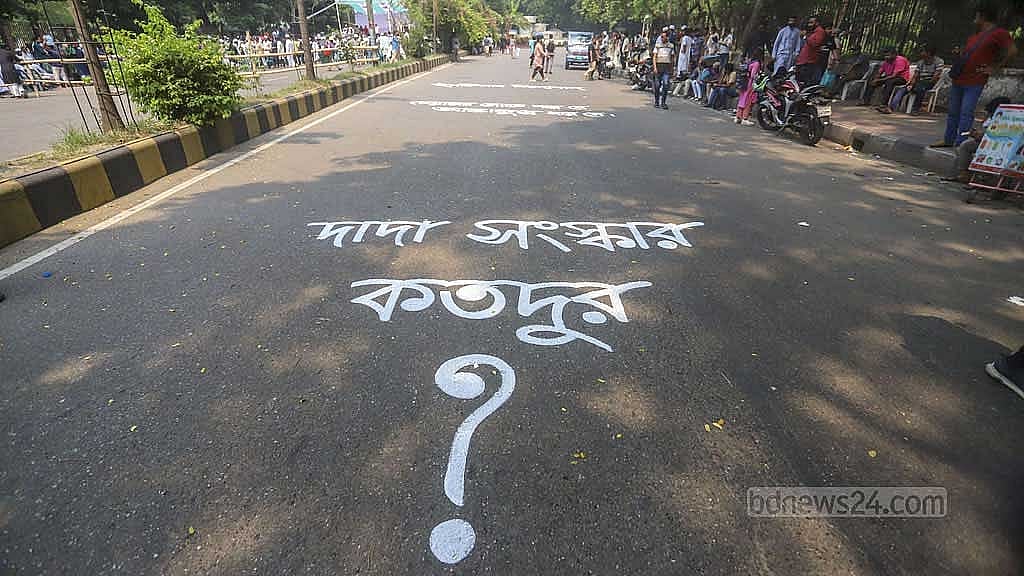
Dreams of Reform Collide with Reality
Hasnat Abdullah, one of the movement's most prominent leaders and now a member of parliament as well as chief organiser of the National Citizen Party's southern region, believes the movement’s central objective remains unachieved.
"The structural changes we spoke about never really happened," he told bdnews24.com. "People expected reforms across the judiciary, executive and every institution of the state. Instead, the same old structure that repeatedly allows authoritarianism to return has survived."
After taking office, the interim government launched reform initiatives covering the Constitution, judiciary, police, Anti-Corruption Commission, electoral system and public administration before expanding the process through additional commissions.
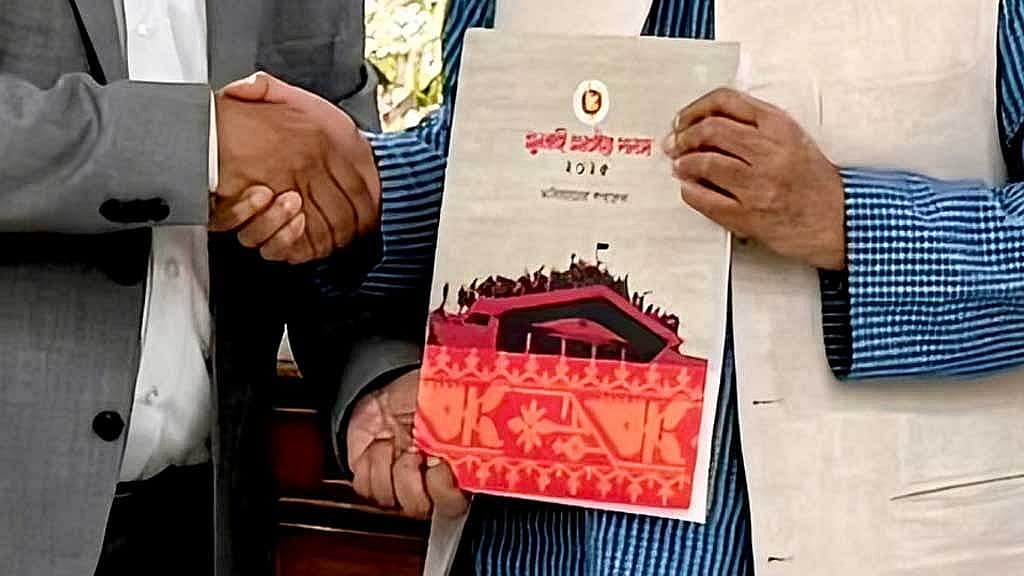
Their recommendations led to the adoption of the July National Charter last October, but political disagreements have left its implementation uncertain.
Hasnat blames the BNP-led government for moving away from the reform agenda: "We believed they genuinely wanted change because many of those ideas appeared in their 31-point programme. They have now stepped back from that position."
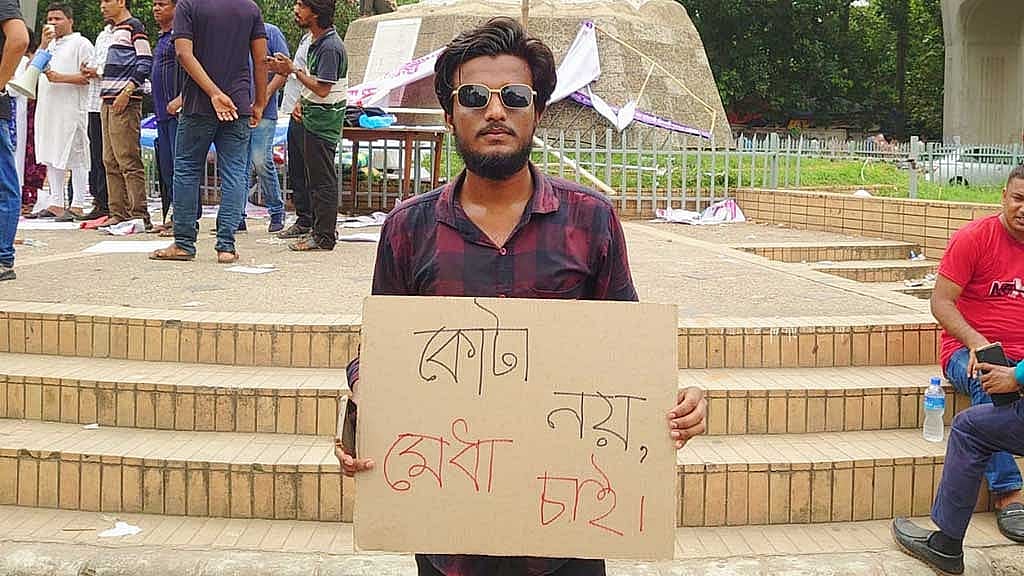
Former Anti-discrimination Student Movement coordinator Rifat Rashid shares the frustration.
"The Bangladesh free from discrimination that we dreamed of remains beyond reach. What we received falls far short of what we hoped for."
He argues that the July Uprising's ideals of national unity and sovereignty have been overshadowed by political bargaining.
Another former coordinator, Abdul Quader, says July was never simply about replacing leaders.
"Our goal was to change policies and the system that produced authoritarian rule. People did not sacrifice their lives merely to replace one person."
He believes factional politics and ideological divisions have weakened the movement's legacy, while warning that rising political polarisation has eclipsed the inclusive vision many protesters embraced.
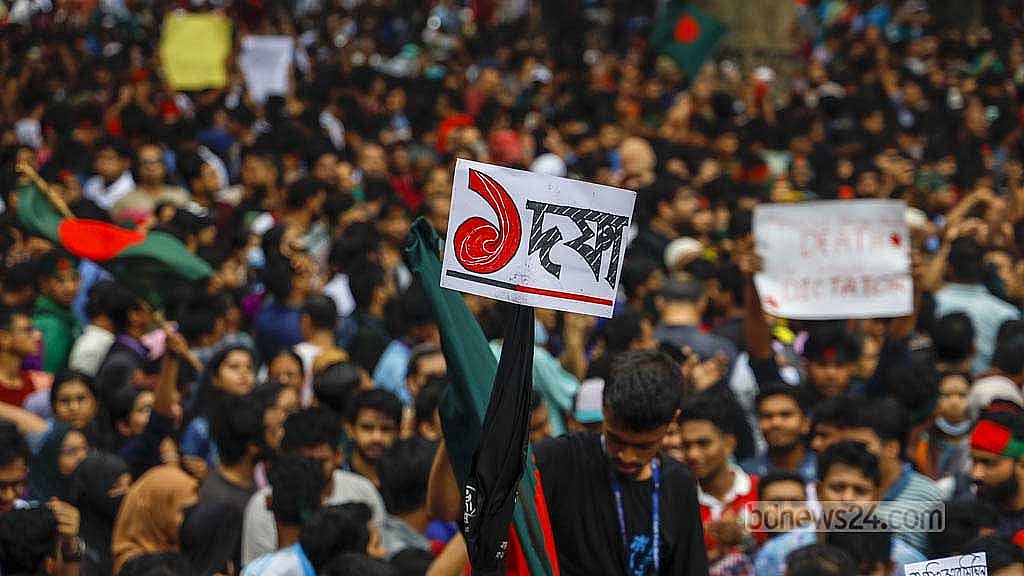
Criticism from Within
Disillusionment has not been directed solely at political parties.
Former movement spokesperson Umama Fatema stunned supporters when she publicly accused some organisers of turning the July movement into a “money-making machine”.
Speaking during a Facebook Live broadcast last year, she alleged that some individuals exploited the movement for financial gain through influence, lobbying and tender manipulation.
"Why should we turn the July movement into a money-making machine? Unfortunately, that is exactly what happened."
She also spoke of allegations involving extortion, favouritism and patronage within sections of the movement.
Political analyst Prof Tariq Manzoor of Dhaka University believes such controversies have damaged public confidence.
"The coordinators who inspired people during July could not fully uphold that legacy. Some of their actions inevitably attracted criticism."
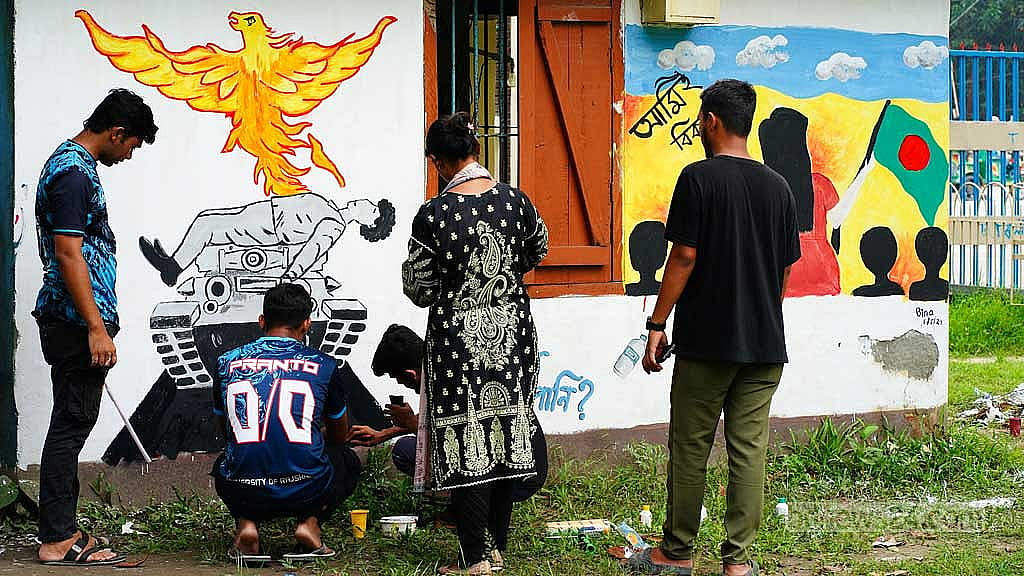
Lessons and Lingering Doubts
The BNP rejects suggestions that it has abandoned the spirit of July, insisting the current government remains committed to the movement's aspirations.
Student organisations aligned with the left, however, argue that the promises of social justice, democratic reform and accountability remain largely unfulfilled, pointing to continued concerns over law and order, political violence and governance.
Among university students, expectations have also given way to scepticism.
Dhaka University law student Rezwan Ahmed Rifat believes the country has made some progress in restoring democratic space but has failed to deliver institutional reforms, justice for past abuses and a new political settlement.
International Relations student Mahin Monowar offers an even starker assessment.
"Like many uprisings before it, July changed the leadership but not people's lives. One party left power and another took its place. That is what the uprising has achieved."
Political scientist Ainul Islam echoes that view, arguing that July has gradually become more of a political slogan than a transformative force.
Despite the disappointment, analysts insist the uprising still delivered one enduring lesson.
Prof Tariq says it demonstrated that no government can indefinitely ignore public sentiment or govern through authoritarianism without consequences.
Another Dhaka University analyst Moshahida Sultana agrees that while Bangladesh's politics may not yet have undergone the qualitative transformation many envisioned, the uprising remains an enduring reminder that even entrenched governments can ultimately be challenged by the people.