Published : 20 Jul 2026, 08:10 PM
Updated : 08 Sep 2026, 09:26 AM


Bangladesh plans to raise its solar power capacity to 10,000MW within the current government's term.
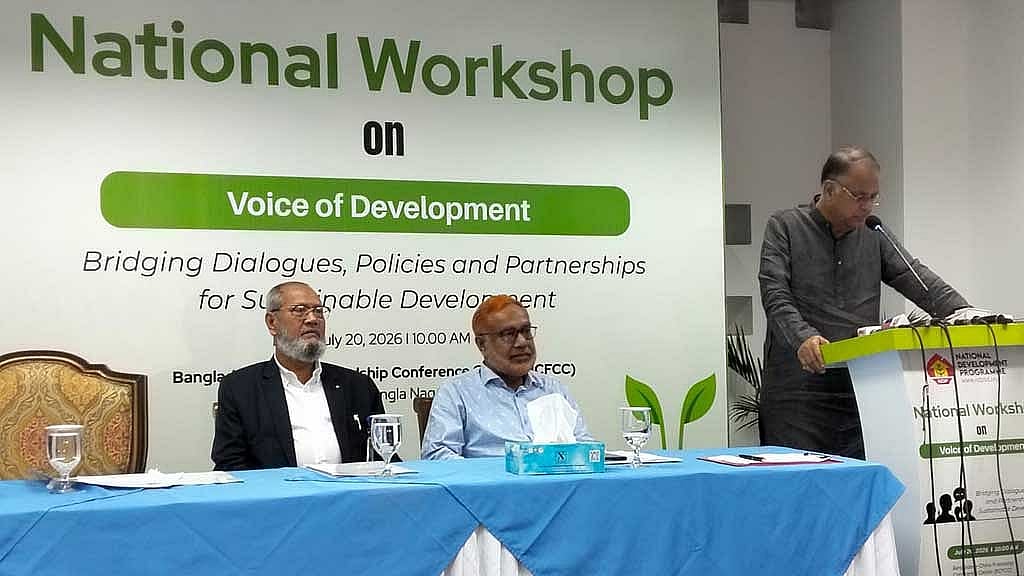
Power Minister Iqbal Hassan Mahmud Tuku called on non-government organisations (NGOs) to step up investment in the sector, speaking at a national workshop at Dhaka's Bangladesh-China Friendship Conference Centre on Monday.
Tuku said expanding solar power would reduce fuel imports and free up funds for other development priorities.
"If we reach 10,000MW, our dependence on imported energy will fall, and the savings can be spent on other sectors.”
According to the Bangladesh Power Development Board (BPDB) and the Power Cell, the country currently has 797MW of installed solar power generation capacity.
Tuku said NGOs could help expand rooftop solar in rural areas through cluster-based projects and sell electricity under the net metering system, allowing them to recover their investment.
He also said solar-powered irrigation could become a profitable business, much like deep tube-well owners who sell irrigation water to farmers.
The minister said financing should not be a major obstacle, noting that concessional funding from the World Bank and other development partners is available through commercial banks.
Highlighting public interest in renewable energy, he cited the example of an easy-bike driver who uses a small solar panel and two old batteries to operate his vehicle.
He also pointed to a woman in Faridpur who produces biogas from cattle waste and supplies cooking gas to neighbouring households, saying similar projects have strong commercial potential.
Tuku said Bangladesh had spent $2 billion importing petroleum and other fuels in the first two months after the government took office, putting heavy pressure on foreign exchange reserves.
He added that global instability, including the Iran-Israel conflict, has made energy security even more challenging, reinforcing the need to expand renewable energy.
The minister said declining domestic gas supplies have forced Bangladesh to import more liquefied natural gas (LNG), increasing government subsidy costs.
He also said neighbouring countries are already producing gas from offshore fields while Bangladesh remains at the exploration stage, noting that the government has invited bids for offshore oil and gas exploration.
Tuku said the government has offered tax incentives on solar panels and batteries to encourage investment in renewable energy.
He urged NGOs to move away from dependence on grants and instead develop business-based renewable energy projects using concessional international financing.
"Why rely on aid? Take the money, invest it, run a business and repay it. You'll get the funds at concessional rates," he said.
Responding to requests from NGO representatives for a meeting with the prime minister, Tuku said he would convey their proposal.