Published : 04 Oct 2026, 11:28 PM
Updated : 04 Oct 2026, 11:28 PM


Bangladesh’s telecom sector is still growing, but its revenue growth is hitting a ceiling, Axiata Group CEO Nick Rizal Kamil has said.
He wants taxes, spectrum prices and regulatory charges reconsidered.
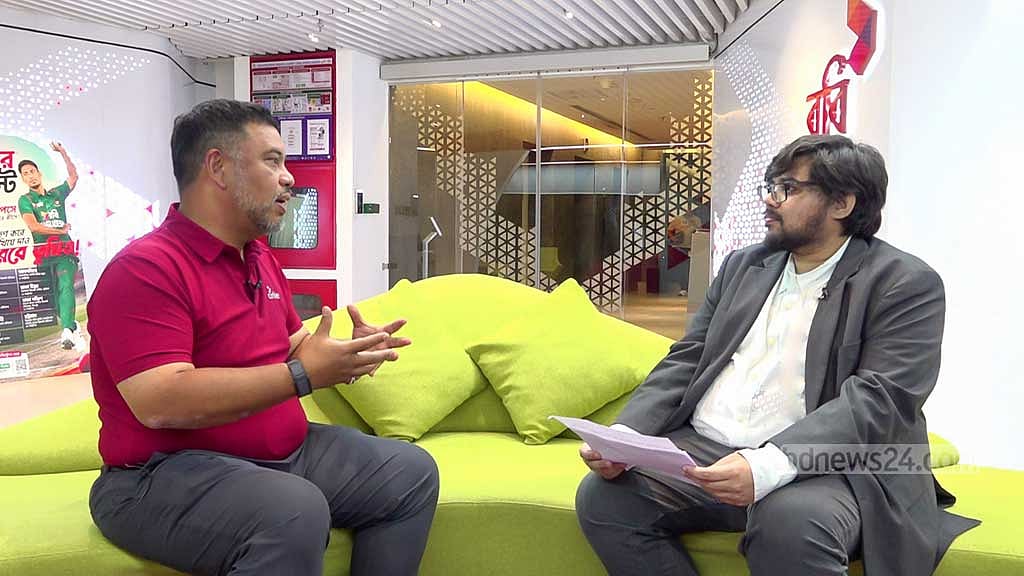
Kamil made the remarks in bdnews24.com’s discussion programme “Chinwag with the Chiefs”, broadcast on its YouTube channel and Facebook page.
The interview, recorded on Sept 29 during his visit to Dhaka for Robi’s 30th anniversary, covered Bangladesh’s telecom and technology sectors, artificial intelligence and digital banking.
Axiata operates around 10 telecommunications and technology companies across Bangladesh, Malaysia, Indonesia, Sri Lanka, Pakistan, Cambodia and the Philippines. Robi is its Bangladesh operation.
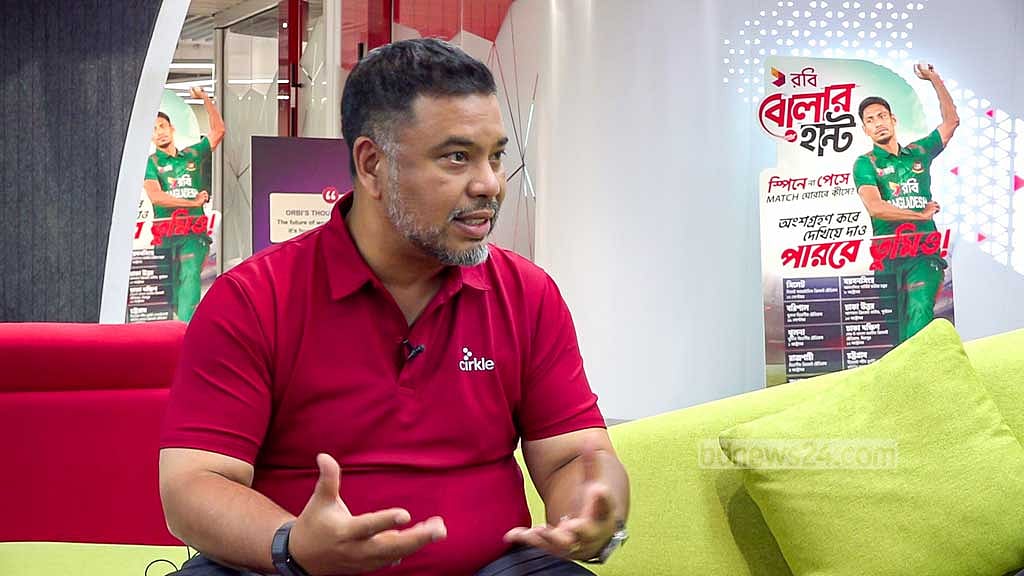
Kamil, 53, became Axiata’s chief executive in June. He described Bangladesh’s new BNP-led government as business-friendly.
“The new government seems to be business-friendly and they have a clear goal and vision for the future. You can see the impact of that in the telecommunications sector as well,” he said.
He cited the withdrawal of the SIM tax as an example.
“This is a very good step. Because of this, some of the money that operators used to spend on taxes can instead be invested in buying spectrum, getting better equipment or setting up new sites and towers. This can improve network coverage and service quality.
“Of course, tax is an important issue. Alongside that, spectrum regulation and spectrum pricing are also extremely important. Historically, I believe Bangladesh’s spectrum prices have been among the highest in the world. That needs to change.”
He said there were positive signs that the government understood the issue.
“We are at least getting some positive signals from the government that they recognise this. The government also understands that if spectrum continues to be priced highly, it becomes difficult for telecommunications companies to use that spectrum effectively while also reinvesting in expensive network equipment. Such changes would be very helpful for the telecommunications sector.”
Kamil said Bangladesh was a particularly promising market for Axiata.
“We see Bangladesh as a very promising market. It is a growth market for us. If I look at my own country, Malaysia, telecom companies there have revenue growth of around 1 percent to 2 percent a year. In Bangladesh, on the other hand, we are seeing growth of around 7 percent, 8 percent or 9 percent.”
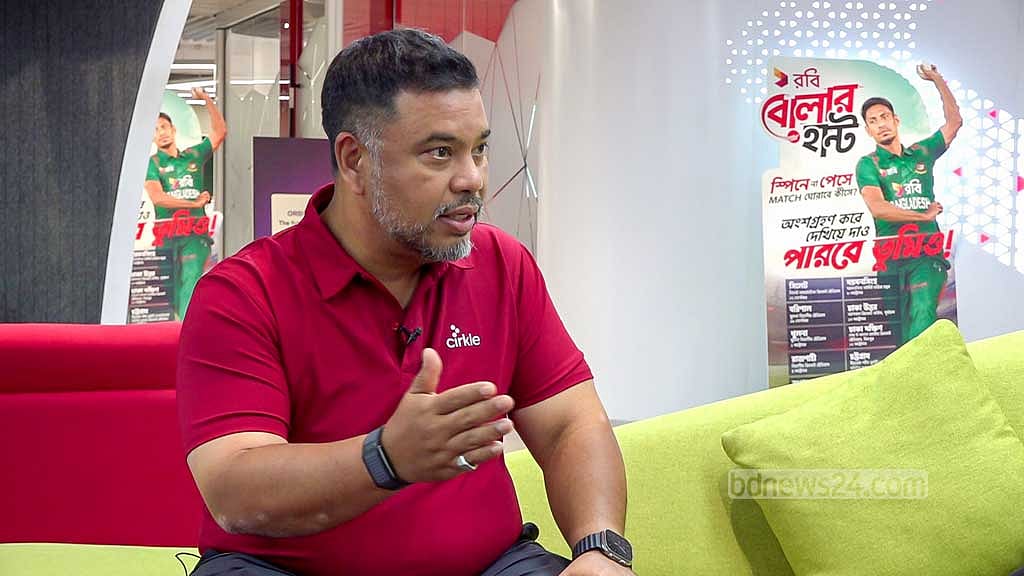
He attributed the growth to rising demand for better technology and connectivity.
“Bangladesh’s people are still moving towards more advanced technology and better connectivity. So there is a lot of growth potential in this market.
“Bangladesh has a population of around 180 million. Malaysia, by comparison, has a population of around 32 million. So Bangladesh’s market is almost six times larger in terms of population. By simple calculation, that creates a market with almost six times the potential.”
But Kamil said the opportunity extended beyond telecommunications.
“The question is, how can Bangladesh reduce its excessive dependence on a few specific sectors, including ready-made garments, and diversify its economy? I see a lot of potential here. That will require forward thinking, proper planning and, in some cases, a willingness to take risks. I cannot speak for the government, of course. But some aspects of Bangladesh’s current forward-thinking approach are clearly visible.”
Political stability and a clear understanding of economic needs would not only attract investors but also signal globally that Bangladesh was open for business, he said.
“I know the last few years have not been easy for Bangladesh.”
Revenue Squeeze
Kamil said Bangladesh’s telecom sector was growing but revenue growth was becoming increasingly stagnant.
“The telecommunications sector is highly competitive. The sector is still growing, but in terms of revenue growth, I would say it is becoming quite stagnant.
“On the other hand, telecommunications equipment is very expensive. Robi and Axiata Group’s other operating companies conduct business in local currencies. But when buying network equipment, we often have to pay in US dollars. So there is a major currency mismatch here.”
He also discussed the industry’s transition from telecommunications operators, or telcos, into technology-driven digital service providers, or techcos.
“Previously, perhaps the job was to put up towers, install radio equipment and provide services through spectrum. Now, alongside that, how these technologies are managed and used is becoming increasingly important, particularly as growth in the telecommunications sector becomes somewhat stable.”
Operators in Bangladesh have long cited high taxes, spectrum prices and regulatory charges as major obstacles.
Kamil said the sector needed a supportive regulatory and tax regime, noting that Axiata operates under different policies and tax systems across its markets.
On Robi’s ability to adapt, he said: “This is nothing new for us. Robi has already been operating for 30 years. During this time, we have moved from the early days of mobile communications through 2G, 3G and 4G and are now moving towards 5G.”
From Connectivity to AI
Robi has already begun 5G operations in Bangladesh, with greater focus on areas with high population density and business activity.
Kamil said AI was also changing the way telecom networks were designed and used.
“Before, we used to talk mainly about download speed and download capacity. Because we were mainly receiving information from the internet. But in the AI era, upload has now become equally important. The need for uplink capacity is also increasing. This is changing the way telecommunications companies operate.”
He said connectivity remained Robi Axiata’s core business, with network modernisation a major priority.
“By installing new and improved equipment, we are working to increase network coverage and capacity in these areas. So we are by no means standing still. A large part of our operations is still centred on connectivity.
“But after 30 years in business, Robi has developed some other areas of business. One is information technology, particularly enterprise IT, which we believe will expand further in the future. At the same time, technologies such as fixed wireless access, or FWA, using 5G and advanced spectrum are becoming important. This can essentially provide broadband-like connectivity to homes.”
Robi Axiata has around 60 million customers, while Axiata Group has around 190 million.
On cybersecurity, Kamil said telecommunications companies could be viewed as a “pipe”, but many security breaches occurred beyond it through OTT platforms, hyperscalers and other digital services.
“We provide significant cybersecurity services for our telecommunications companies.
“For example, Robi has the Axiata Cyber Fusion Centre. It is essentially a security operations centre. One of its operations is in Sri Lanka and its headquarters is in Kuala Lumpur, Malaysia. It has basically been created by integrating the cybersecurity operations of our various telecommunications companies.”
Digital Banking
Robi Axiata’s Boost Digital Bank was among five institutions to receive preliminary approval to launch a digital bank last month.
Kamil said Axiata had yet to receive any formal notification or approval concerning Robi’s involvement.
“There have been some reports in the media at this point. We have not yet received any formal information or approval. We will have to wait until there is a formal announcement regarding Robi’s involvement.”
He said obtaining a licence alone would not be enough, as a digital bank also needed capital, regulatory structures and compliance systems. The regulatory and compliance requirements, he said, were not very different from those of conventional banks.
Fintech and financial services are not new to Axiata, Kamil said, pointing to Boost Holdings in Malaysia.
“Boost Holdings in Malaysia is under the Axiata Group. It initially started as a digital wallet-based business. It subsequently expanded. Around two to three years ago, when the central bank of Malaysia issued five digital bank licences, Boost was one of the licensed institutions.”
On the industry’s shift towards techcos, Kamil said Robi was also moving in that direction.
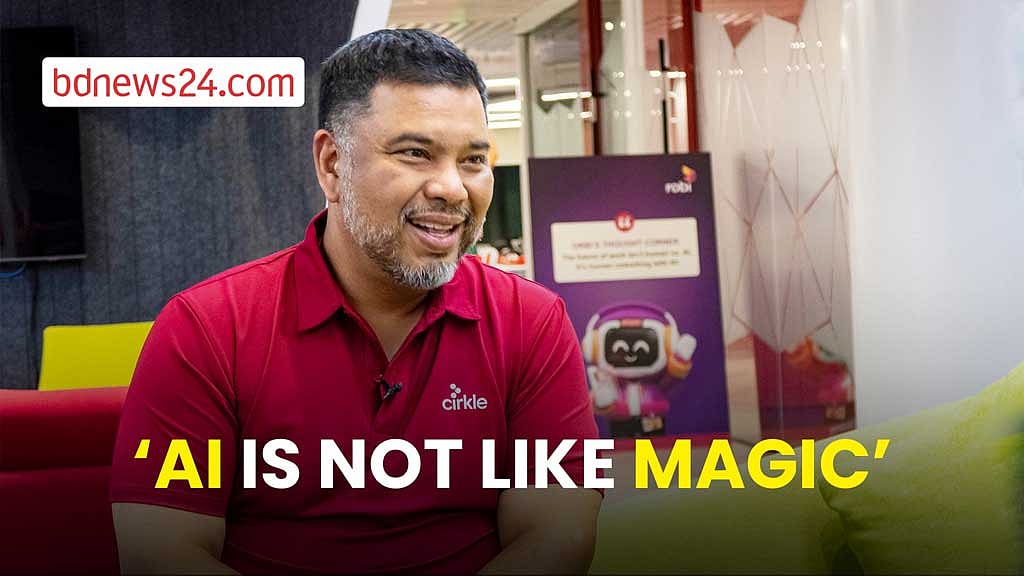
“But becoming a techco does not mean that Robi Axiata or the Axiata Group will go and invest in AI companies. Rather, it means how we can use AI to make our own operations more efficient and provide better services to customers.”
AI is already being used to improve operational efficiency, including through autonomous networks.
“We can use AI to monitor our network, improve its performance and quickly identify and manage problems in the network. Maintenance can also be scheduled appropriately. At some point, it is possible to take the network into a ‘self-healing’ system. That means if a problem occurs in the network, traffic can automatically be redirected through another route.”