Published : 10 Apr 2026, 03:16 AM
Updated : 21 Aug 2026, 03:34 PM


Church and religious leaders have a crucial role in preventing human trafficking and migrant smuggling, said Father Albert Rozario, house superior of the Archbishop’s House and St Mary’s Cathedral in Kakrail.
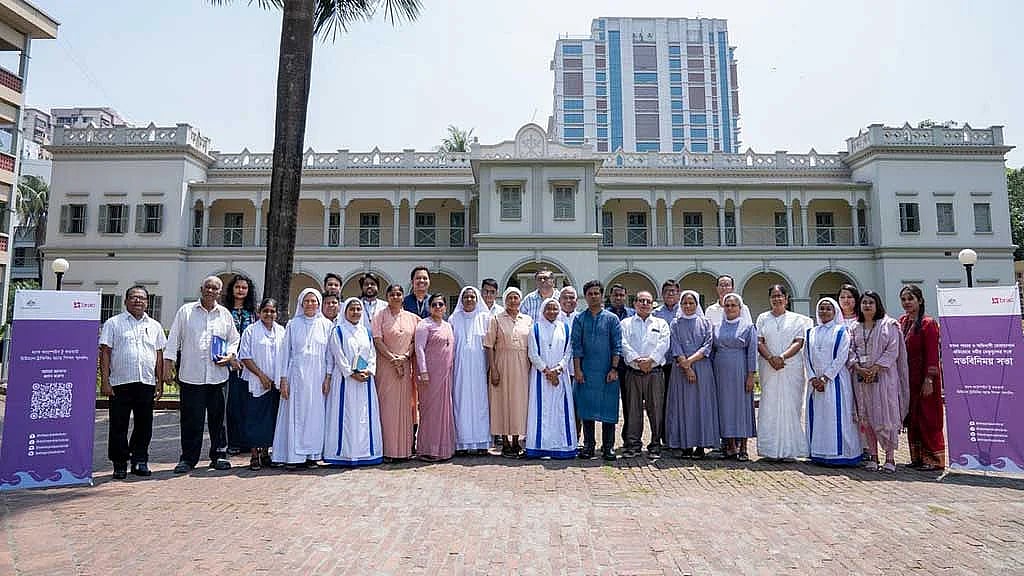
He made the remarks while chairing a consultation meeting with Christian religious leaders on Tuesday at the Pastoral Centre of the Archbishop’s House in Ramna.
The event was organised by the BRAC Migration Programme under its “Mass Campaign to Combat Human Trafficking and People Smuggling” project, supported by the Australian government.
Speaking at the discussion, Sister Kalpona Costa, headmistress of Holy Cross Girls’ High School, said trafficking remains one of the largest illegal businesses globally, adding that it targets marginalised communities, particularly indigenous girls moving from rural areas to Dhaka.
She said awareness initiatives will be introduced in school assemblies and classrooms, while church prayer gatherings can also discuss safe migration and trafficking prevention methods.
Concerns were also raised over deceptive recruitment practices in the healthcare sector.
Sister Florence Mita Das, chief of the Salesian Sisters House, said many people are being misled with false promises of “on-site training” abroad, particularly in nursing recruitment, which often leads to trafficking risks.
The event began with a welcome speech by BRAC Migration Programme Manager Blaise Anthony Gomes.
The keynote presentation was delivered by Shariful Islam Hasan, associate director of BRAC’s Migration Programme and Youth Platform.
Religious leaders and representatives from churches and educational institutions in Dhaka, Gazipur and Narayanganj attended the meeting.
BRAC, founded in 1972, runs its Migration Programme in migration-prone areas of Bangladesh, focusing on safe migration awareness, prevention of human trafficking, reintegration support for returnees, and advocacy and training for migrant workers’ rights.