Published : 13 Apr 2026, 04:45 PM
Updated : 28 Aug 2026, 01:33 AM


Earthen toys and other traditional items do not top the purchase lists of people throughout the year, but their demand increases during the Noboborsho, or Bengali New Year, on Pahela Baishakh.
New year fairs, in particular, commonly sell earthen or terracotta toys.
As Baishakhi fairs near, potter families from the Paikpara, Sholla and Manuri villages in Chandpur’s Faridganj Upazila are busy making and decorating various earthen items, including dolls, elephants, horses, peacocks, pots and pans.
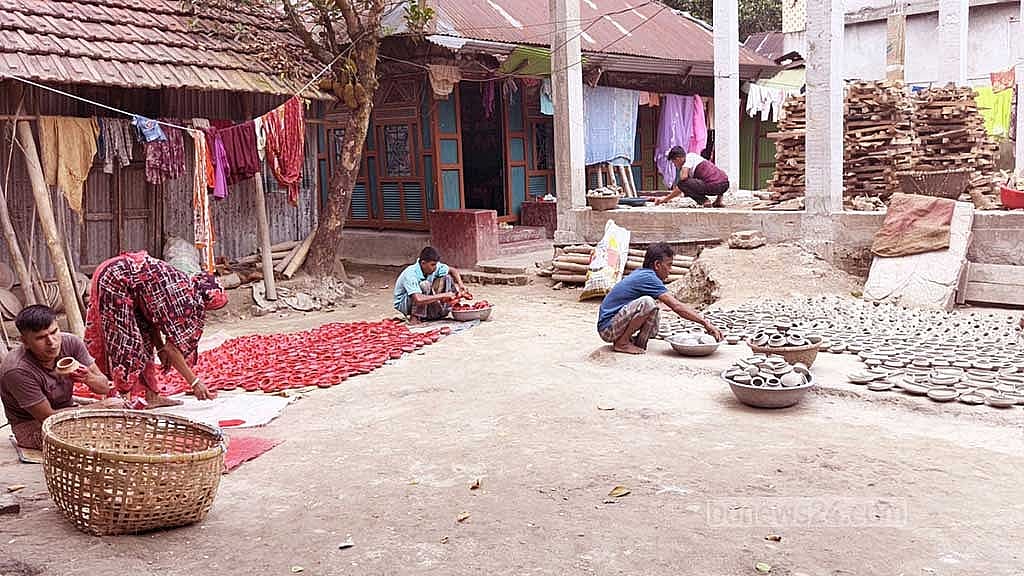
In the neighbourhood of Palpara in Paikpara village, both men and women busy in the courtyards of their houses. Some were making dolls out of clay, while others were making pots and pans. These products are dried in the sun, fired, and coloured with skillful brush strokes. They said that they would sell them at the Baishakhi fair.
Potters Nayan Pal, Joba Pal, Sentu Pal and Arpita Pal said they are engaged in pottery work all year round. However, the Bengali New Year is the busiest season for them. If sales increase on the occasion of the New Year, it is possible to compensate for losses at other times.
Mintu Pal, Jhantu Pal and Bikash Pal from the same neighbourhood said that they have endured in their trade despite difficulties. Due to the financial crisis, many have left the profession and gone into other lines of work. But they believe the industry can be maintained with government sponsorship.
Mithu Pal, a potter from Sholla, said: "Plastic products have taken over the market. However, using plastic can cause various diseases in the human body. Our clay products are not hazardous for human health. We hope the government will stand by the potters."
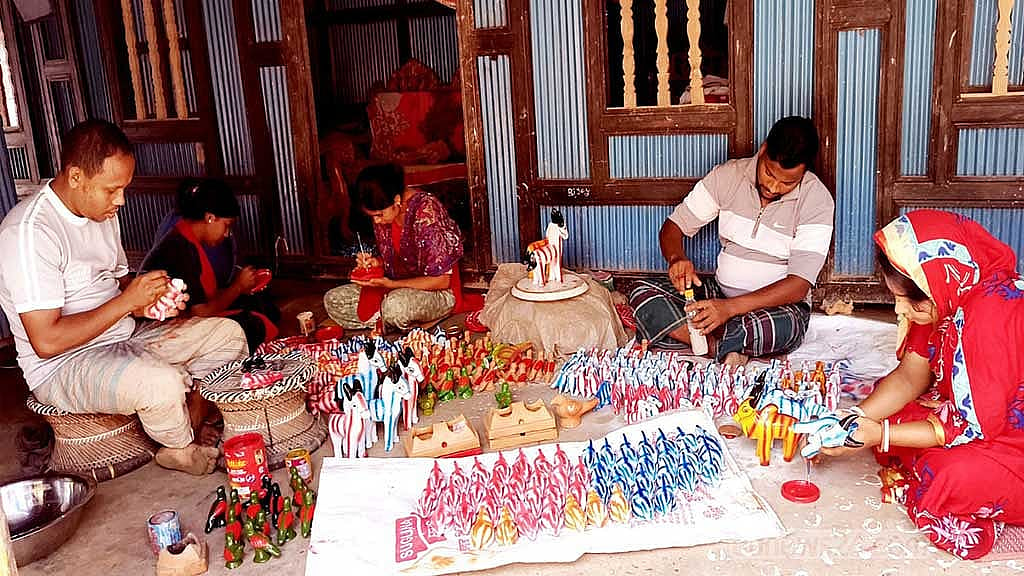
Faridganj Upazila Social Service Officer Mahmudul Hasan said that some potter families have been given training and grants under the Marginal Community Living Improvement Project. Others will be brought under this programme in phases. Faridganj Upazila Executive Officer (UNO) Sentu Kumar Barua said that there is no separate incentive for potters under the government sponsorship. However, they could be offered incentives in future if the government makes a decision in this regard.
The potters believe that the traditional industry of pottery can survive with training and sponsorship. Although the demand for earthen pottery surges during traditional festivals like Bengali New Year, the industry has an uncertain future unless there is a long-term solution.