Published : 30 Oct 2026, 12:22 AM
Updated : 30 Oct 2026, 12:22 AM


“The present time is good for Bangladesh. A new step of development has been created with Japan. Cooperation is growing in various fields,” says Sohrab Hossain, a student in Japan.
Prime Minister Tarique Rahman left Tokyo for Dhaka on Thursday evening, wrapping up a four-day visit that began on Oct 26.
Four cooperation agreements, loan pledges for two projects and 17 private sector memorandums of understanding (MoUs) were signed during the trip, and the areas of cooperation have widened.
His summit with Japanese Prime Minister Sanae Takaichi laid the ground for progress on economic cooperation, investment and trade expansion.
Behind the high-profile diplomacy lies a crucial test: what are the real gains for Bangladesh?
Assessing the trip, State Minister for Foreign Affairs Humaiun Kobir said: “I would say, this is one of the most successful trips by any head of state in recent times.The visit has given Bangladesh-Japan bilateral ties a new dimension.
“Japan now regards Bangladesh as an important partner for investment and economic cooperation. The visit has been completely successful in terms of the cooperation and understanding created.”
After the BNP won the February election by a landslide and formed the government, Tarique made Malaysia his first foreign visit, on Jun 21. China followed, and then Tokyo on Oct 26.
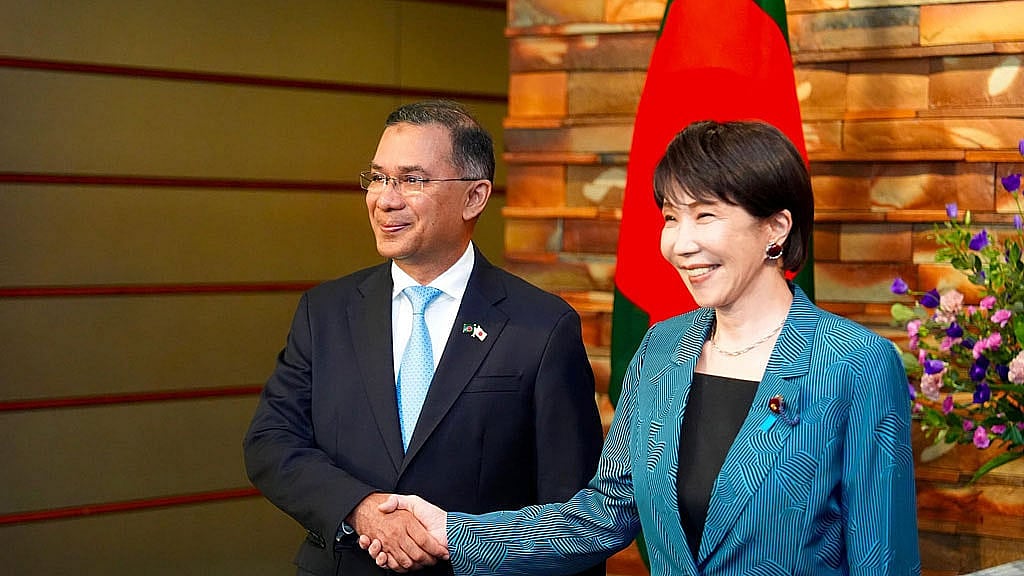
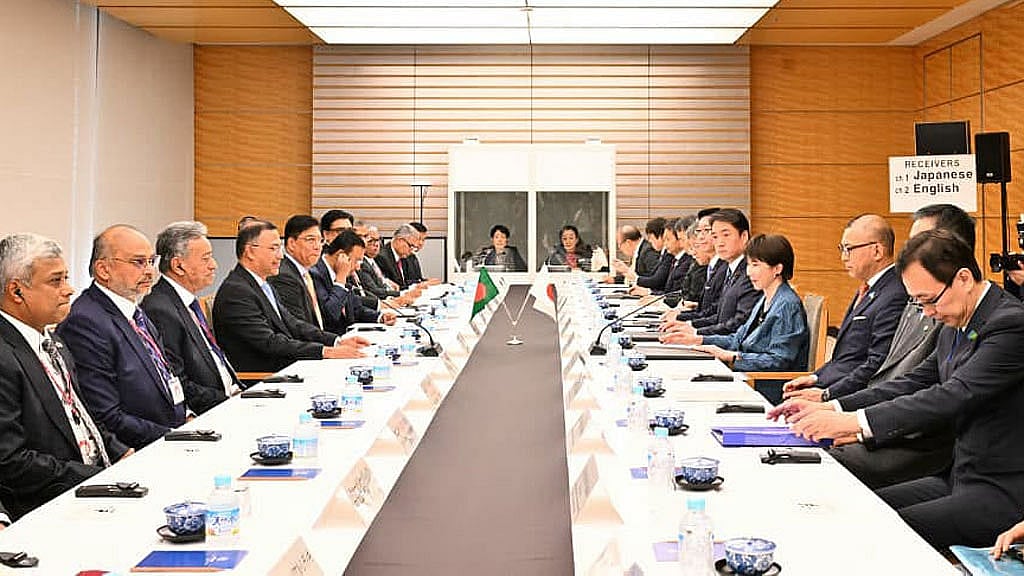
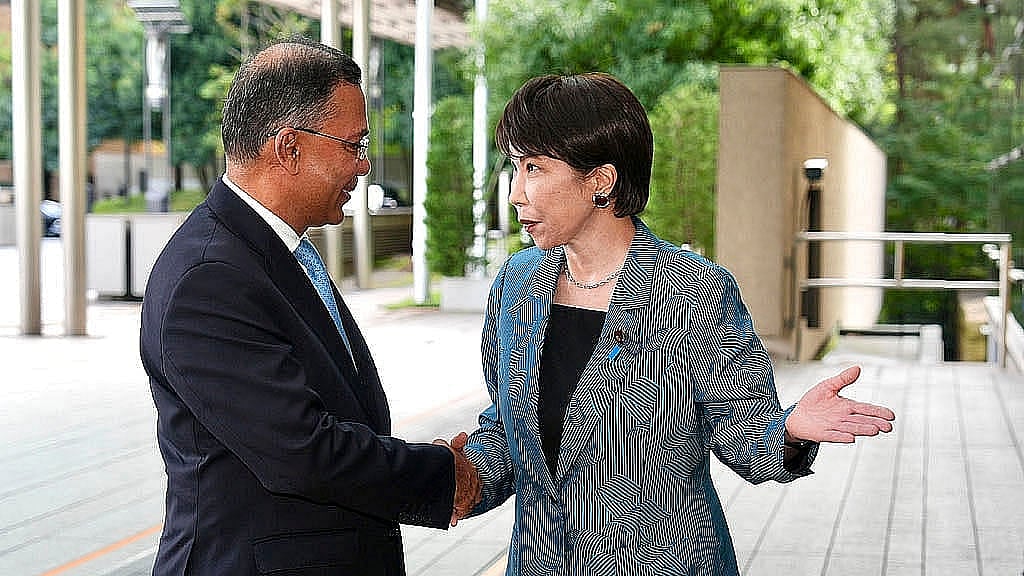
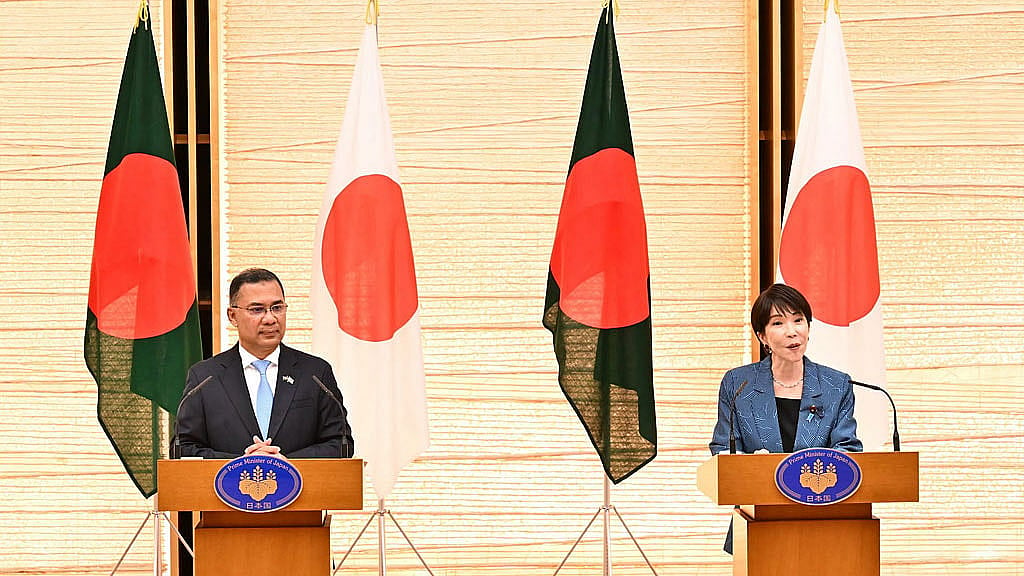
On the second day, the two prime ministers held a bilateral summit.
A joint declaration was issued afterwards, in which Japan and Bangladesh pledged to advance a special partnership initiative, “Big-B”, to build their capacity and stability amid global realities.
The decision was announced in the joint declaration after the talks at the Kantei, the Japanese prime minister’s office in Tokyo, led by Tarique and Takaichi.
The declaration says “Big-B” will go forward as “Big-B for Shared Prosperity” to take economic ties to a new level.
Under it, the two countries will work together on power, energy, deep seaports, industry and information and communication technology infrastructure.
The aim is to build a key hub for industrial value addition and supply chains, make Bangladesh a gateway for trade and goods, and raise growth and prosperity.
Work will focus on four areas: improving connectivity, building resilience against risks including natural disasters and geopolitical uncertainty, expanding public-private partnerships for growth and policymaking, and strengthening cooperation for peace and stability.
The declaration says Japan’s private sector may invest 1 trillion yen in Bangladesh over five years, with the prospect of creating 200,000 jobs.
It also commits both sides to strengthen their longstanding friendship, boost trade and investment, develop infrastructure and cooperate on energy security.
Matarbari, Other Infrastructure
The two prime ministers agreed to work together to turn the Matarbari-Moheshkhali region into a major hub for supply chains, energy and industry, centred on the Matarbari deep seaport.
They also decided to advance preparatory work for early operation of the third terminal at Dhaka’s Shahjalal International Airport.
The two countries will also discuss speeding up Dhaka Metro Rail construction and future cooperation on running and managing Matarbari Port.
The two prime ministers expressed interest in sending a Japanese business delegation to Bangladesh and planning an economic dialogue to deepen business ties.
They also agreed to expand cooperation under Bangladesh’s special economic zones.
The two leaders welcomed the signing of the Japan-Bangladesh Economic Partnership Agreement and pledged to bring it into force quickly.
It aims to boost trade and investment and diversify Bangladesh’s industry.
The declaration says the agreement will help Bangladesh make a sustainable, resilient graduation from least developed country (LDC) status.
Japan is also keen to advance talks on Bangladesh’s request to join the Regional Comprehensive Economic Partnership (RCEP).
MoUs Signed
Takaichi stressed improving the climate for foreign investment in Bangladesh.
Tarique pledged to improve rules and transparency in tax, customs clearance, remittances and licensing to make investment easier.
Four cooperation agreements were signed during the visit, including a grant agreement for patrol vessels to strengthen Bangladesh’s coastal security.
Japan also pledged loans of 46.56 billion yen ($295.5 million) for two projects.
• Japan will give Bangladesh up to 2.12 billion yen ($13.44 million) as a grant for patrol vessels to strengthen coastal security.
• A memorandum of cooperation (MoC) was signed between Japan’s Ministry of Economy, Trade and Industry and the Economic Relations Division of Bangladesh’s finance ministry, on economic relations and improving the business climate.
• An MoC was signed between Japan’s Ministry of Agriculture, Forestry and Fisheries and Bangladesh’s agriculture ministry, on a skills development programme and employment between the two countries.
• Japan’s Ministry of Agriculture, Forestry and Fisheries and Bangladesh’s Ministry of Fisheries and Livestock also signed a cooperation memorandum.
A letter of intent, a preliminary understanding on climate change cooperation, was also signed between Japan’s Ministry of the Environment and Bangladesh’s Ministry of Environment, Forest and Climate Change.
The first received a pledge of 15.88 billion yen ($100.8 million), and the second 30.68 billion yen ($194.7 million).
On the private side, 17 MoUs were signed with private companies through the Japan External Trade Organization (JETRO).
They may open the way to about $6 billion in investment across different sectors over five years, Humaiun said.
At the Bangladesh-Japan Economic Forum dialogue, Tarique urged Japanese businesses to invest more in Bangladesh, and several large Japanese firms voiced interest.
“We warmly welcome new investment by Japanese businesses,” he said. “Japan stood by us when we were laying the foundation of Bangladesh’s development. Now I call on you to build industries with us, create new opportunities and move forward with Bangladesh.
“Our goal is clear. Let us turn our long friendship into a stronger partnership, create mutual opportunities for our people and businesses, and ensure prosperity for our two great countries.”
JETRO and the Japan-Bangladesh Committee for Commercial and Economic Cooperation jointly hosted the forum at JETRO’s headquarters.
During the four-day visit, Japan’s Trade Minister Akazawa Ryosei, Japan Bank for International Cooperation Governor Amakawa Kazuhiko, JETRO President Kataoka Susumu and Uniqlo Chief Executive Tadashi Yanai, among others, called on Tarique.
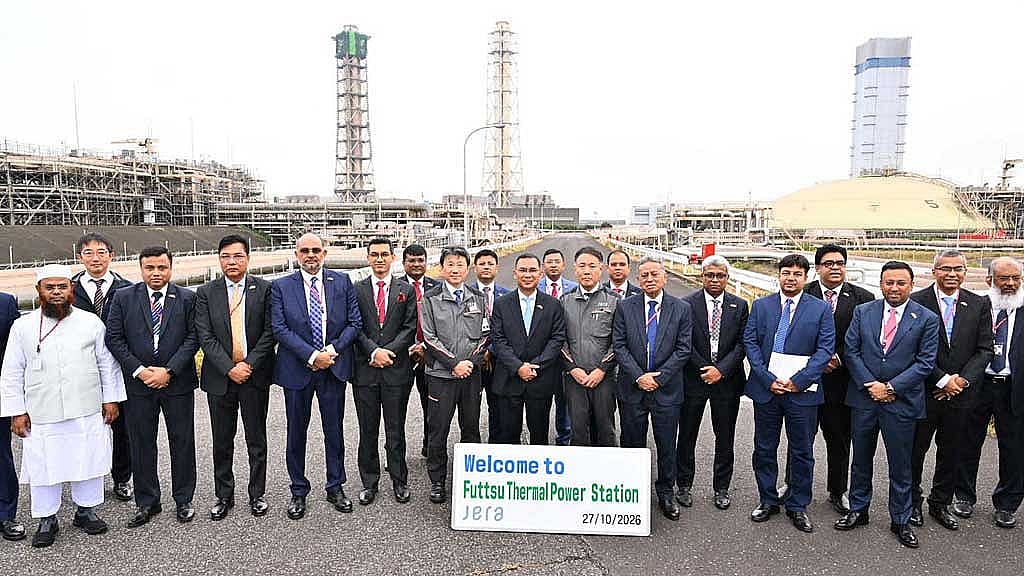
Tarique also toured an LNG terminal and power plant in Futtsu, in Chiba Prefecture.