Published : 31 May 2026, 07:56 AM
Updated : 28 Aug 2026, 01:34 AM


Key Highlights:
Labour vs recognition: Women outnumber men in national agricultural labour (17.25mn vs 13.62mn), yet their field work is structurally dismissed as unpaid household chores.
The Land ownership barrier: Only 13 percent of Bangladeshi women own agricultural land, legally blocking them from securing digital Farmer Cards, state subsidies, and bank loans.
Severe time poverty: Rural women spend five to seven times more hours on unpaid domestic care than men, severely limiting their access to paid employment and leadership roles.
Climate change vulnerability: Coastal female farmers bear the brunt of climate crises, suffering heavy crop losses from tidal surges and health risks from working in saline water.
Local adaptation vs policy gaps: Small NGO initiatives help women adapt via innovative methods like sack farming, but structural policy changes are required for true state recognition.
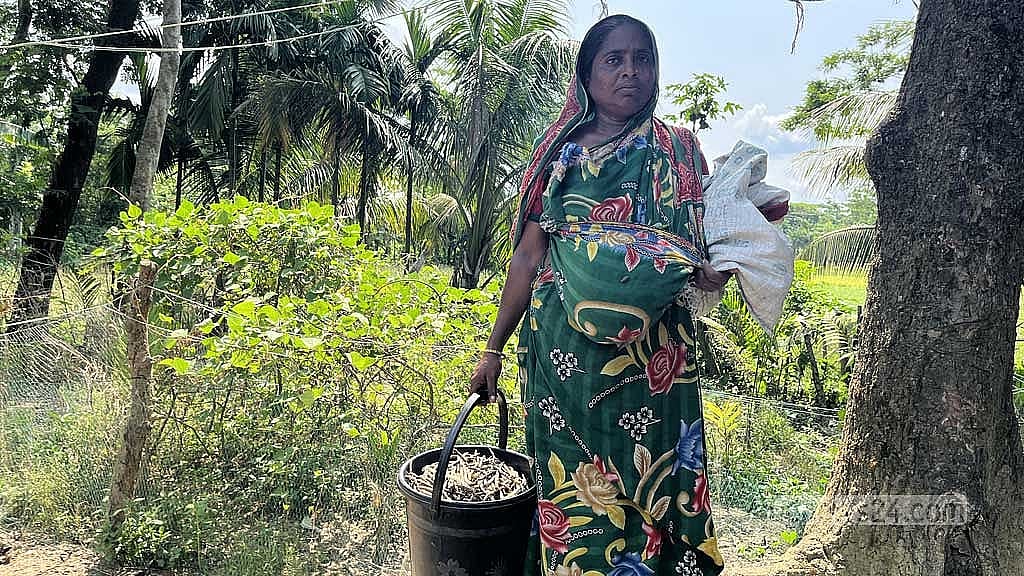
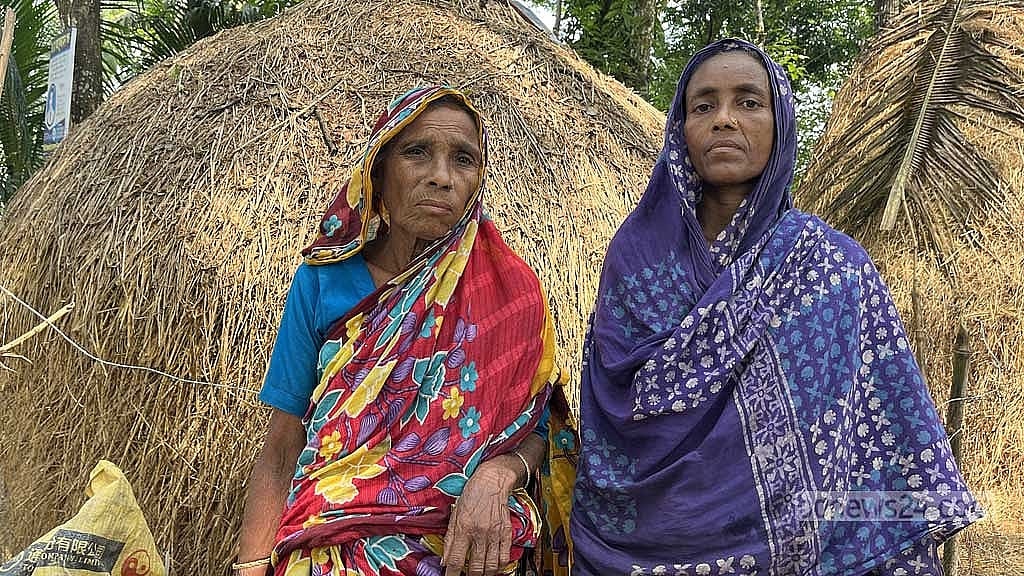
Nargis does not know her exact age, though she estimates it to be around 35.
Living in Bhola’s Borhanuddin, she works alongside her husband in the fields -- harvesting paddy, threshing straw, filling sacks, and carrying crops on her head from the riverine Char lands.
Upon returning from the fields, she manages cooking, childcare, poultry rearing, and household chores.
When asked whether she should receive a separate wage for this gruelling work, her face lit up with sheer astonishment.
“Why would he pay me, sister? My husband has nothing. If he did, he would have given it. My husband belongs to me, and I belong to him. There is nothing else, sister, nothing else,” she said with a smile.
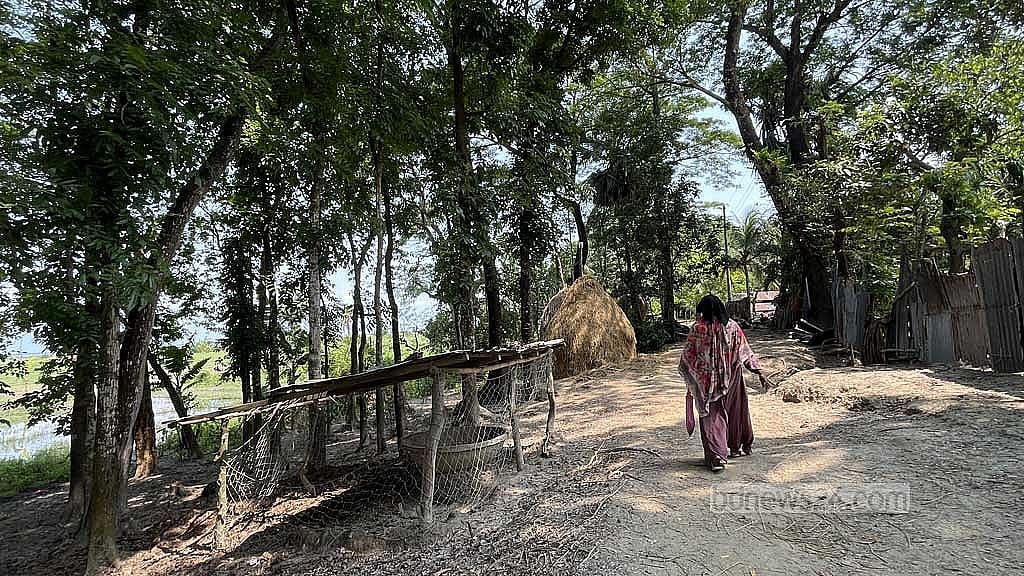
Women like Nargis manage the lion's share of agriculture in the Sachra and Gongapur Unions of Borhanuddin.
Yet, the vast majority of their labour remains completely unpaid and lacks any formal recognition.
When questioned if she receives any state assistance for farming, Nargis replied: “No. We do everything ourselves with our own means. We borrow from others to farm, and after selling the harvest, we repay them. No one gives us this kind of support.”
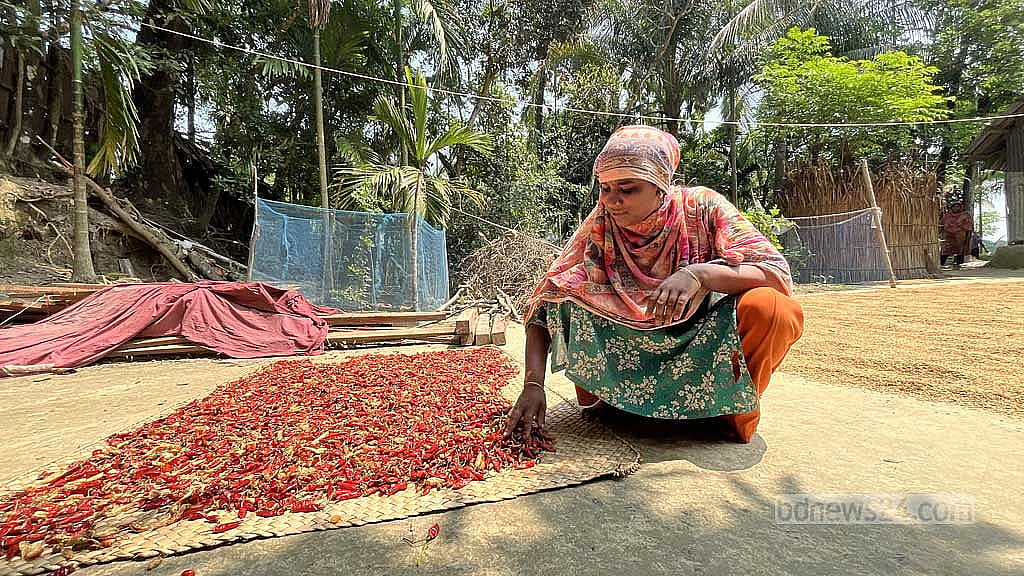
In contrast, the life of Shahnaz Begum from Deula Shibpur village in Sachra Union offers a glimpse of what structured support can achieve.
Shahnaz, whose husband passed away in 2016, lives at her father’s house with her son and daughter.
Poverty cut her education short, forcing her into marriage when she was only in the sixth grade.
After she gave birth to two children, her husband remarried, leaving her entirely isolated upon his death.
Shahnaz now cultivates her father’s small plot of land alongside leased property, growing sweet potatoes, chillies, groundnuts, and pulses, while also rearing ducks, chickens, and goats.
Her trajectory changed after joining the Community-based Resilience, Women’s Empowerment and Action (CREA) project.
Through this initiative, she received training in agriculture and livestock rearing, learnt about public services, and secured seeds, fertilisers, and other assistance from the local agricultural office.
Her farm now boasts 42 ducks, four goats, geese, and indigenous chickens.
She hopes to expand her poultry farm further if she can secure additional financial backing.
Reflecting on the stark contrast in her life before and after joining the local organisation, Shahnaz said: “Previously, I could not even speak up. I never ventured out in the area. Now, with their cooperation, I am coming out of the house.”
While both Nargis and Shahnaz are deeply embedded in agriculture, the sole difference lies in the access to opportunities.
Shahnaz secured a vital connection, received training, and learnt how to navigate government offices, whereas Nargis remains entirely outside the formal system.
10 percent of Upazila’s Farmers are Women, but What About Land?
According to the agricultural census, Borhanuddin Upazila holds 21,168 hectares of net arable land.
Upazila Agriculture Officer Gobinda Mandal told bdnews24.com that out of roughly 40,000 local farmers, an estimated 4,000 are women.
He added that at least 500 women received agricultural training during the 2025-26 fiscal year.
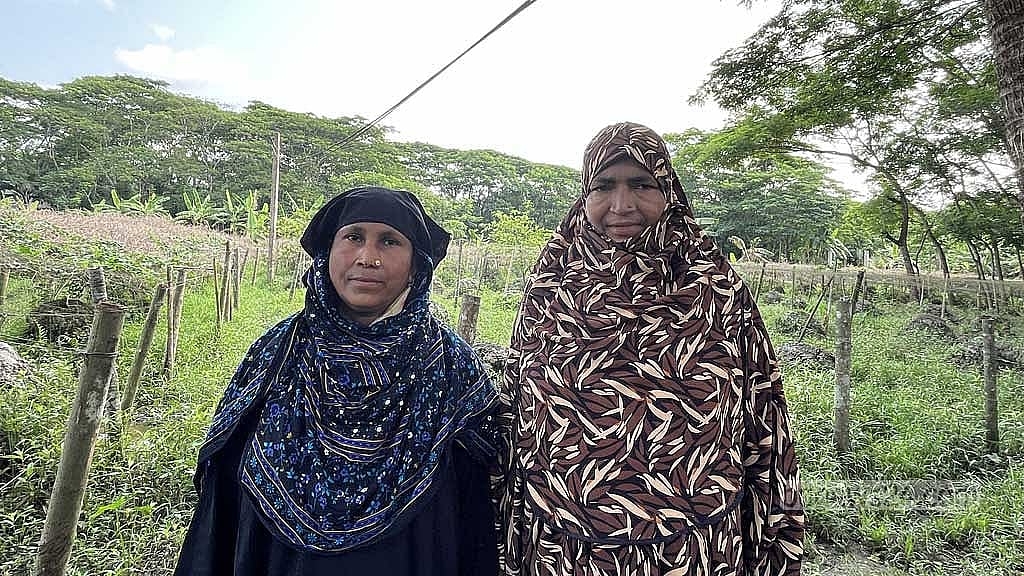
During a field visit on May 13 to Sachra and Gongapur Unions, bdnews24.com spoke with several women, including Shahina Begum, Bibi Hazera, Fakhrunnesa Begum Rabeya Begum, and Bibi Rahimjan.
Some work on their husbands' land, while others are widows single-handedly managing both farming and homes.
When asked if any of them owned land, they said collectively: “People around here do not give land to women.”
Without land deeds, securing agricultural aid, bank loans, or formal recognition as farmers becomes incredibly difficult.
Shahina recounted being denied a bank loan due to her lack of land ownership, forcing many to rely on local loans or small-scale project aids.
To bolster the resilience of climate-vulnerable poor women, Manusher Jonno Foundation (MJF) is implementing the Community-based Resilience, Women’s Empowerment and Action (CREA), funded by the Swedish government.
The project spans 14 districts through 13 non-governmental organisations, including Grameen Jano Unnayan Sangstha (GJUS) in Bhola.
Irin Ishrat, a project officer at GJUS, noted that because many coastal men catch fish in the river, women spearhead homestead farming, poultry and livestock rearing, and post-harvest operations.
Banasree Mitra Neogi, director of the Rights and Governance Programme at MJF, believes structural and patriarchal barriers keep female farmers "invisible".
“Women clean cowsheds, prepare cattle feed, dry and thresh paddy, stack straw, and preserve seeds. These are all agricultural tasks, yet they are viewed merely as household chores.
“Agricultural policy links identity to land ownership, meaning women's labour is not recognised as productive labour,” she said.
When the Adversary is the Climate Crisis
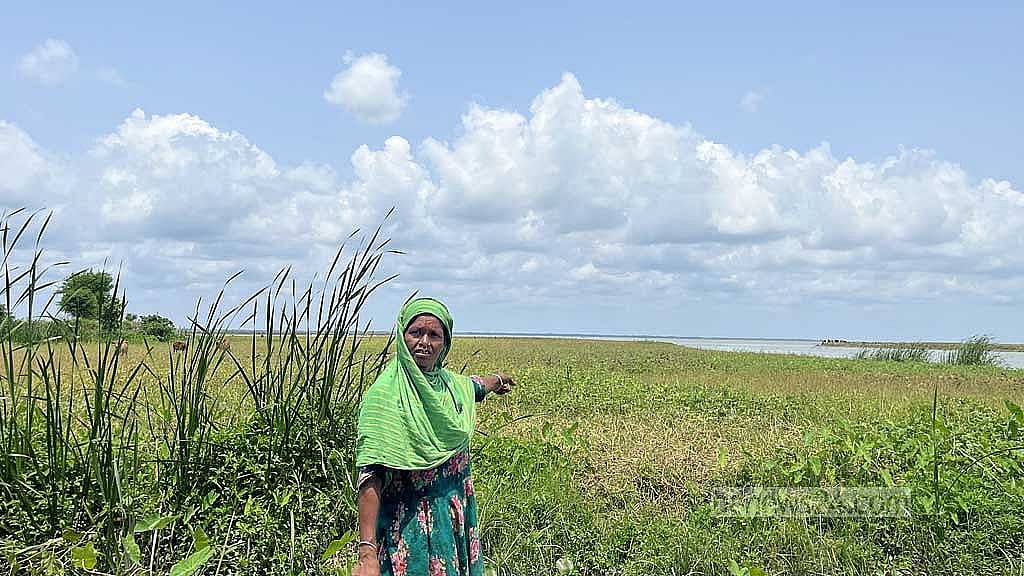
Bibi Rahimjan pointed toward her groundnut field, large portions of which were submerged by early floods and unusual tidal surges.
For women, crop damage brings added pressure, forcing them to recalculate family food security, loan repayments, and care for children.
Borhanuddin's fields also present physical health hazards, as women must stand and work in fields inundated by saline tidal waters.
“You would instinctively feel repulsed looking at the pond water, but they use that very water for all their household chores,” said GJUS Project Officer Irin.
Locals report that saltwater exposure damages groundnuts, vegetables, and pulses, while causing skin rashes among women.
Drinking water is also scarce, severely hampering basic menstrual hygiene.
Dr Taiebur Rahman, the Borhanuddin Upazila health officer, confirmed that the Upazila sees a comparatively high number of diarrhoea patients.
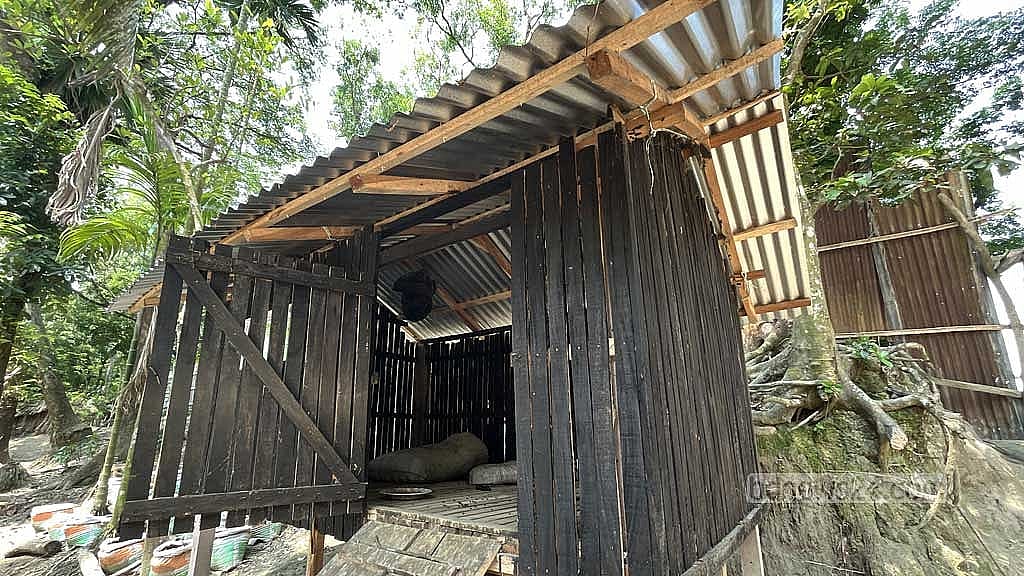
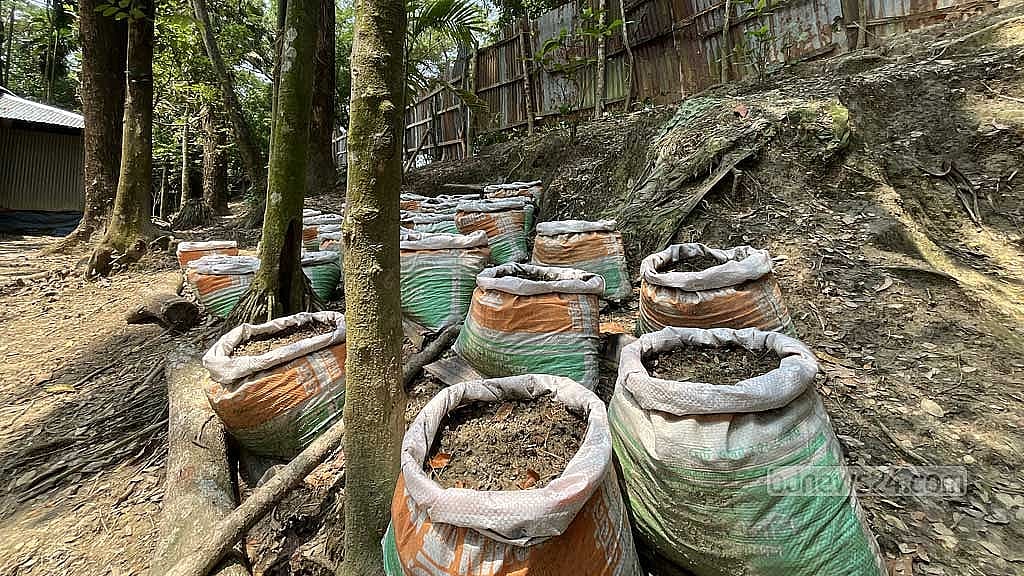
Climate change is forcing a shift in local farming. Tidal surges submerge mud houses and destroy livestock, prompting projects to teach women how to rear goats on raised platforms or cultivate ginger in sacks to bypass soil salinity.
Fatema Begum from Jara village took Tk 10,000 in adaptation assistance to cultivate ginger in 100 sacks.
She now shares her expertise to inspire others at community meetings. Yet, Fatema does not own land, lacks a farmer card, and has no access to bank loans.
“I want the government to recognise me as a farmer. Even by cultivating in sacks, I am still a farmer,” Fatema said.
The Trap of Unpaid Care Work and Time Poverty
The gruelling work Borhanuddin’s women start after returning from the fields is rarely categorised as "agriculture".
Yet, without their tasks of cooking, fetching water, gathering fuel, and managing livestock, farming households could not survive.
To cut down on fuel, time, and costs, several female farmers revealed they cook just once a day and ration the food across three meals.
This relentless routine feeds into a larger global crisis.
According to a 2026 article published in Defending Peasants' Rights citing International Labour Organization (ILO) data, the world relies on 16.4 billion hours of unpaid care work daily.
Valued at minimum wage, this labour equates to nearly 9 percent of global GDP, or $11 trillion -- and women and girls perform 76.2 percent of it.
Climate change further exacerbates this burden by compounding water scarcity, fuel shortages, and family illnesses.
Closer to home, the Unpaid Household Production Satellite Account 2023 report by the Bangladesh Bureau of Statistics (BBS) and UN Women reveals that unpaid household work generates value equivalent to 21 percent to 30 percent of Bangladesh’s GDP.
The BBS Time Use Survey 2022 underscores that women dedicate five to seven times more hours to unpaid domestic chores than men.
A 2024 case study by America's Test Kitchen (ATK) on electric cooking echoed this, showing Bangladeshi women spend an average of 5.9 hours a day on domestic care, compared with just 0.8 hours for men.
Consequently, formal labour marketplace participation for women stands at just 36 percent, compared with over 80 percent for men, according to the BBS Labour Force Survey 2022.
Prof Sharmind Neelormi of the economics department at Jahangirnagar University emphasises that recognising this work is not about direct cash payouts, but rather making women's economic contributions visible through satellite accounting.
Moreover, the UNDP Human Development Report 2020 points out that this severe "time poverty" directly limits women's economic empowerment and civic participation.
MJF Director Banasree Mitra noted: “Domestic labour robs women of the time needed for agricultural, social, or political engagement. We want to highlight this time poverty. We are actively working to increase female representation in union-level standing committees, arbitration processes, and market committees.”
The Hurdle to Securing Farmer Cards
The Bangladesh government has rolled out an integrated digital Farmer Card to ensure transparent distribution of incentives, providing holders access to 10 key benefits including agricultural loans, subsidies, and irrigation facilities.
However, female farmers in Borhanuddin face a critical question: will they actually get one?
Prof Neelormi explains that the primary obstacle is the requirement of owning production inputs.
“There is a distinct difference between a farm labourer and a farmer. For a card, you must either own the land or hold a lease agreement in your own name.”
Since most rural women lack land deeds and leased arrangements are rarely formalised in writing, female farmers are routinely locked out.
While women have previously accessed agricultural inputs by using their husbands' cards, Prof Neelormi argues this should not diminish the need for independent registration.
She proposes introducing joint "family agricultural cards" featuring the names of both spouses.
Conversely, Md Abdur Rahim, director general of the Department of Agricultural Extension, clarified that land ownership is not the sole criteria for the card.
“In our society, women are deeply intertwined with agriculture, even if the land remains under a male guardian’s name. Anyone actively working the field -- man or woman -- qualifies as a farmer and can receive the card,” he insisted.
Rahim added that the Farmer Card project is currently in its pre-piloting phase across 11 agricultural blocks in 10 districts, with eight women among the first 15 recipients.
The initiative will eventually expand to 385 Upazilas, creating a comprehensive database that will finally map out the demographics of the country's female farming workforce.
Where Do Women Stand in Agricultural Decision-Making?
According to the BBS Labour Force Survey 2024, women dominate the country's agricultural sector, accounting for 17.25 million workers compared with 13.62 million men.
However, World Bank data reveals a stark gender disparity in asset ownership: only 13 percent of women in Bangladesh own agricultural land either individually or jointly, whereas the figure stands at 70 percent for men.
Consequently, despite contributing the bulk of physical labour, rural women remain largely excluded from land ownership, official farmer status, institutional enrollment, and state support systems.
Moreover, their representation in Upazila and Union-level agricultural planning and distribution networks remains practically non-existent.
When questioned on how beneficiaries are selected for state agricultural training, Borhanuddin Upazila Agriculture Officer Gobinda explained that the department relies on pre-established local groups.
“We have pre-existing groups formed across the Union levels. We train the women who are already registered within those groups,” he said.
Elaborating on the verification process, Gobinda added: “Our field-level team, consisting of 16 second-class officers, assesses whether an area is suitable for farming and verifies if the candidates are actively engaged in agriculture.
“If we discover real farmers outside these groups, we try to support them through alternative channels.”
MJF Programme Manager Soma Dutta emphasised that while the contributions of female farmers are absolutely vital to the national economy, their labour remains systematically undervalued and invisible.
Soma pointed out that the ruling Bangladesh Nationalist Party's election manifesto explicitly promises agricultural and rural development alongside the advancement of female farmers' rights.
However, she stressed that translating these pledges into reality requires structural reforms.
“To ensure land ownership, hassle-free credit facilities, and direct market access for women, the government must implement gender-responsive agricultural policies and increase budget allocations.
“At the same time, we must closely monitor whether these interventions are inadvertently compounding women’s double-labour burden or exposing them to heightened domestic violence,” she said.