Published : 18 Mar 2026, 07:21 AM
Updated : 24 Aug 2026, 04:00 PM


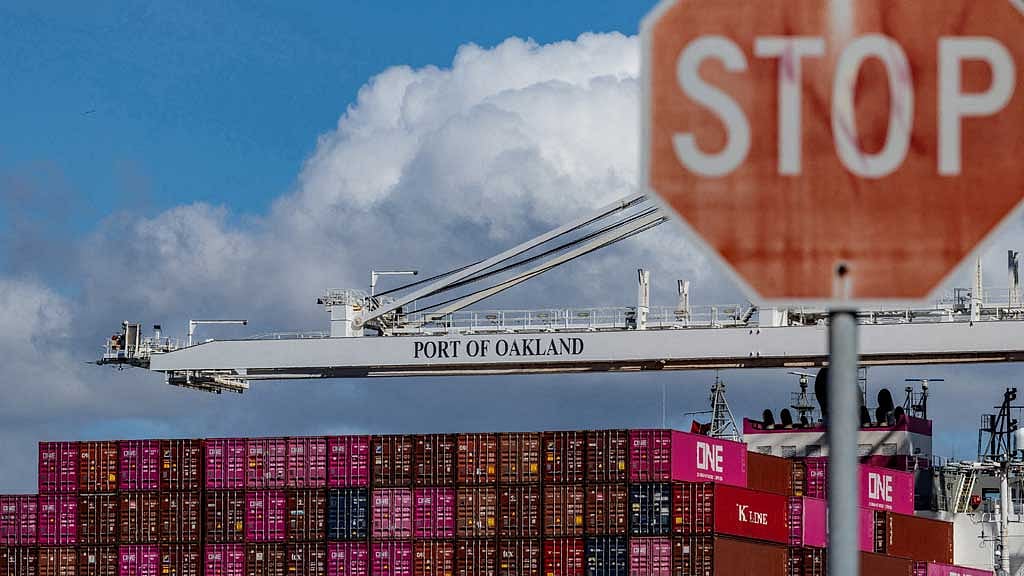
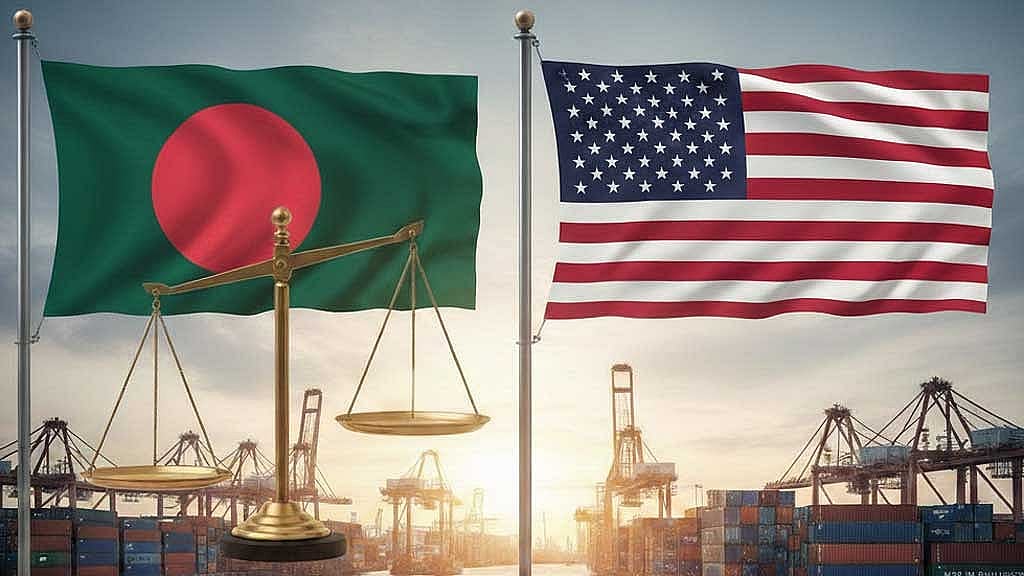
A sweeping United States investigation into forced labour practices has cast a shadow over global supply chains, placing Bangladesh alongside 59 other countries under scrutiny.
While some observers warn of potential risks to exports, government and industry leaders in Dhaka insist there is little cause for alarm.
The probe, led by the Office of the US Trade Representative (USTR), seeks to determine whether governments are taking sufficient steps to prevent goods produced with forced labour from entering American markets.
For Bangladesh, the stakes are high: the US is its largest export destination, with the ready-made garment (RMG) sector at the forefront.
For now, officials and industry leaders in Bangladesh see the move primarily as a policy review process. However, some observers say the final outcome of the investigation could determine whether any future pressure emerges on exports.
Despite concerns, leaders of Bangladesh’s ready-made garment (RMG) export sector have welcomed the investigation, saying the industry follows compliance standards.
A similar view has been expressed by the government.
Commerce Secretary Mahbubur Rahman said he does not expect the probe to have any impact on Bangladesh’s export market.
Under the law cited by the USTR, the US may take retaliatory trade measures if it determines that another country’s policies or trade practices are “unreasonable” or “discriminatory” and harmful to US commerce.
Such measures could include imposing tariffs or import restrictions, withdrawing trade concessions granted under agreements, or negotiating binding arrangements with governments to end disputed practices or provide compensation.
Policy Research Institute Chairman Zaidi Sattar described Bangladesh’s inclusion in the investigation as “most strange”.
He said the definition of forced labour used in the probe does not apply to Bangladesh.
However, Sattar, a former World Bank advisor, suggested viewing the investigation within the broader context of geopolitical relations and advised Bangladesh to engage in strategic negotiations given the importance of the US market.
The US Stance
US Trade Representative Jamieson Greer said the investigation aims to evaluate whether foreign governments have failed to implement and enforce bans on goods made with forced labour.
"This investigation will determine if these unethical practices are harming American workers and businesses," Greer said.
The USTR has requested formal consultations with the listed governments.
A public hearing is scheduled for Apr 8, with a deadline of Apr 15 for interested parties to submit written comments or summaries of testimony.
If the probe finds evidence of forced labour, the US could withdraw trade concessions, impose compensatory requirements, or mandate bilateral agreements to stop the disputed activities.
Does An Investigation Mean Sanctions?
The launch of an investigation does not automatically lead to tariffs or import bans.
However, concerns remain as the administration of Donald Trump has taken a series of steps aimed at expanding US trade interests.
Typically, such investigations begin with an assessment of the policies and laws of the countries concerned.
Trade measures may be considered later if deemed necessary. The process is primarily designed to protect and expand US commercial interests.
Under Section 301, the United States may impose additional tariffs on goods from a country, restrict imports, or suspend trade concessions if it considers the country’s policies harmful to US commerce. In some cases, disputes are resolved through negotiated agreements with the governments involved.
The Trump administration first revived extensive use of this law in 2017.
After the establishment of the World Trade Organization in 1995, the United States had largely used Section 301 to build cases within the global trade body.
In 2017, however, Washington launched an investigation into China’s technology transfer and intellectual property policies. The following year, it imposed tariffs ranging from 7.5 percent to 25 percent on about $370 billion worth of Chinese goods.
China challenged the move at the WTO, arguing that it violated the organisation’s rules. Although the WTO later ruled in China’s favour, the United States did not reverse the tariffs.
In 2020, tariffs were also imposed on certain goods from the European Union over a dispute involving aircraft subsidies. Those measures were later suspended in 2021.
The administration of Joe Biden continued to use the provision, launching investigations into labour and human rights policies in Nicaragua, China’s semiconductor industry policies, and China’s shipbuilding and shipping sectors.
In its second term, the Trump administration has opened new investigations involving Brazil’s digital trade and electronic payment services, ethanol market access issues, and additional measures targeting China.
The latest announcement on Thursday placed Bangladesh alongside dozens of other economies under review, including India, Vietnam, Pakistan, China, Japan, South Korea, the United Kingdom and the European Union.
Earlier this week, the United States also launched a separate investigation into whether there is excess production capacity in manufacturing sectors across 16 countries, including Bangladesh.
‘No Cause For Concern’
Bangladesh Knitwear Manufacturers and Exporters Association President Mohammad Hatem says there is “no cause for concern”, arguing that Bangladesh’s export-oriented industries have long operated without forced labour in production.
However, he acknowledged some unease over the series of decisions taken by the administration of Donald Trump to expand US trade interests, including imposing tariffs and reshaping trade arrangements in favour of the United States.
Hatem urged the government to quickly develop a strategy in consultation with exporters.
After returning to office for a second term, Trump announced on Apr 2, 2025, steep tariffs on imports from more than 100 countries.
Bangladesh initially faced an additional 37 percent duty.
Following negotiations, the rate was reduced to 20 percent, which took effect on Aug 1.
Bangladeshi goods were already subject to a 15 percent tariff, bringing the total to 35 percent.
The interim government held talks with the United States for more than nine months to reduce the additional duty.
As part of negotiations, Bangladesh agreed to increase imports of US goods such as aircraft from Boeing, wheat, soybeans and oil.
Amid the negotiations, an announcement was made on Feb 9 -- three days before the parliamentary election -- that the two countries had reached a trade agreement.
The deal reduced the reciprocal supplementary tariff on Bangladeshi exports to the US market by 1 percentage point to 19 percent, lowering the total tariff rate to 34 percent.
Under the agreement, the United States agreed to certain concessions, while Bangladesh pledged to increase imports of US goods and provide greater market access.
The deal, negotiated under strict confidentiality, later drew criticism from several quarters. Critics argued that it could oblige Bangladesh to consider US interests even when deciding what goods to import from other countries.
Hatem alluded to those concerns, saying the government should consult stakeholders and prepare a clear strategy.
“I would call on the government to sit with stakeholders and determine the strategy on this matter,” he said.
“We need to decide which points to raise and how to proceed. I believe preparations should begin before the hearing scheduled for Apr 28,” he added.
Still, the industry leader reiterated that he does not see any immediate risk.
“We do not understand why Bangladesh has been included in the investigation, but we welcome it,” he said.
“We conduct business in a very transparent way. If they want to investigate, they are welcome to do so.”
Responding to questions about whether Bangladesh imports goods produced through child or forced labour, Hatem said the country mainly imports raw materials, particularly from China.
“We import raw materials from China. Does China have child labour? Most US imports come from China. Have they stopped imports from China?” he said.
“So we are not very worried about this.”
‘Bangladesh Must Be Tactful In Relations’
Trade analyst Sattar expressed surprise that Bangladesh has been included in the US investigation and suggested carefully assessing Washington’s intentions.
“From what I have read, this seems most strange. The way they have defined forced labour does not apply to Bangladesh,” he said.
According to Sattar, the Trump administration has been taking a series of trade decisions while often bypassing the WTO rules.
At the same time, he noted that maintaining access to the US market remains crucial for Bangladesh because of strong demand and higher prices for exported goods.
Given these realities, he advised Dhaka to maintain a “strategic and tactful relationship” with the United States in bilateral trade.
Alongside bilateral engagement, Sattar also stressed the importance of complying with international labour standards, including conventions of the International Labour Organization, to avoid scrutiny in such investigations.
The former World Bank advisor said Bangladesh exports mainly to developed markets, including the European Union and North America.
“Sooner or later, we will have to move closer to their labour laws and employment standards,” he said.
“Even if everything is not perfect, we must at least demonstrate that we are committed to following international labour regulations.”
Sattar also pointed out that Bangladesh is not the only country under review.
“It appears this is not only about Bangladesh. India, Pakistan and Sri Lanka are also among the 60 countries,” he said.
“Surprisingly, countries such as New Zealand, Switzerland and the United Kingdom are also included. So it seems no one has been left out.”
He suggested the move may reflect broader geopolitical considerations shaping trade relations.
What the Government Says
Commerce Secretary Mahbubur Rahman says the government does not expect the US investigation to create risks for Bangladesh’s exports.
Speaking to bdnews24.com, he noted that the probe covers around 60 countries, including the United Kingdom.
“We don’t think it will have any impact. This investigation involves nearly 60 countries, including the United Kingdom,” he said.
Mahbubur said child labour in Bangladesh largely exists in the informal sector and does not affect US trade.
“For instance, children working in small shops does not harm US commerce. There was child labour in the ready-made garment sector in the past, but it no longer exists. It is mainly a labour issue,” he said.
He also referred to the separate US probe into excess production capacity, saying Bangladesh does not have overcapacity in its key export sectors.
“We do not have excess capacity in any sector that would affect the United States. Certainly not in the ready-made garment sector, which is our main export industry.”
While Bangladesh’s cement sector may have excess capacity, he said it is not among the country’s major export products and therefore should not raise concerns.
“Other trade-related or non-tariff issues exist, but we do not expect them to have much impact either,” Mahbubur added.
Asked whether Bangladesh verifies the use of forced labour in countries from which it imports goods, the commerce secretary said most imports consist of raw materials and high-technology products.
“So I do not think that will be an issue,” he said.
He also pointed out that Bangladesh’s labour laws now include provisions addressing child labour.
On preparations for discussions with the United States, Mahbubur said the government does not expect the process to require extensive negotiations.
“There is no special preparation. Most information is available online,” he said.
“A group at the deputy secretary and joint secretary level will be formed to respond to queries from the Office of the United States Trade Representative.”
Mahbubur added that the process is unlikely to involve the kind of intense bargaining seen earlier over additional tariffs.
“It does not appear that we will need the same level of negotiation and bargaining as before,” he said.