Published : 09 Nov 2026, 01:24 AM
Updated : 09 Nov 2026, 01:24 AM


Every year, countries gather at the UN climate summit to negotiate how the world should respond to a warming planet. The pledges are made, agreements are announced and new targets are set.
But for countries on the front line of climate change, the test comes later: whether the money, technology and support promised at the negotiating table ever reach the communities that need them.
That gap between commitments and delivery will shape Bangladesh’s agenda at COP31, which opens in Turkiye’s Antalya on Nov 9. Dhaka is going into the summit seeking a threefold increase in adaptation finance, alongside technology transfers, stronger support for loss and damage and resources to build resilience.
Prime Minister Tarique Rahman is scheduled to attend the high-level sessions, accompanied by the environment minister and state minister, senior civil servants, civil society representatives and NGO officials. Australia will lead this year's negotiations.
Environment Minister Abdul Awal Mintoo said Bangladesh would put the protection of vulnerable communities and climate justice at the centre of its demands.
"Bangladesh is prioritising the protection of climate-vulnerable communities, climate justice, and securing the funding and technological support required to execute our national adaptation plans."
Climate scientist Atiq Rahman said Bangladesh would continue representing least developed country (LDC) priorities after graduation. All participants are parties to the UN Framework Convention on Climate Change (UNFCCC).

"Bangladesh was previously at the forefront of the least developed countries bloc," he said.
"Even as we graduate from LDC status to a developing country, we remain a key voice and coordinator for LDC priorities. In practice, the real pivots happen not during plenary debates, but at the stage of implementation."
A Summit Measured by Delivery
The IPCC was established in 1990; a global framework followed in 1992 and annual COP meetings began in 1995.
"This year's summit is critical strictly through the lens of implementation," climate expert Prof Ainun Nishat said.
"Political declarations and procedural milestones are routinely secured, but delivery lags. Even where financing structures and processing channels exist, independent monitoring and evaluation must verify whether funds actually reach the ground."
He warned temperatures could exceed 2°C above pre-industrial levels by 2050. Recent severe cyclones in India, the United States and China illustrated the threat.
"Preparedness looks robust on paper, but ground-level execution falls well short. Climate mainstreaming across all development spending is now an imperative."
Department of Environment Director Mirza Shawkat Ali has arrived after two days of LDC preparations.
"We have initiated technical consultations, concluding two days of LDC preparatory sessions," he said. "Climate finance dominates our agenda, alongside technology transfer, loss and damage delivery, and adaptation mechanisms."
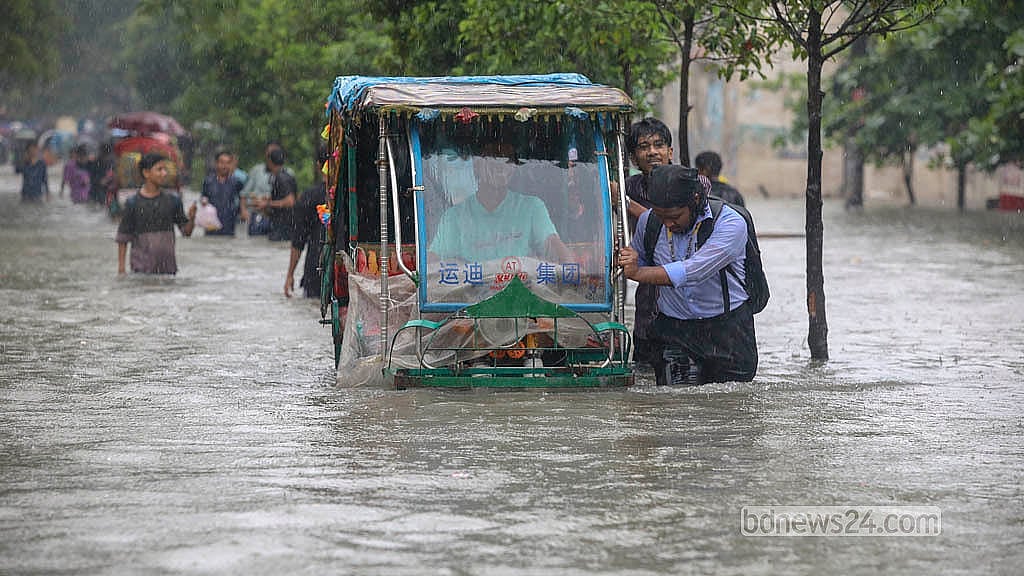
Dhaka will seek three times the adaptation finance, a larger Loss and Damage Fund, and resources for the Global Goal on Adaptation (GGA), while retaining the 1.5°C threshold.
"We also aim to expand the Loss and Damage Fund, maintain the 1.5°C threshold under the mitigation work programme, and secure dedicated indicators and resources for the Global Goal on Adaptation (GGA) established under the UAE framework.
“Preparations for the 2028 Global Stocktake (GST) will also feature prominently."
Article 7 of the 2015 Paris Agreement established the GGA, giving adaptation equal weight with emissions reduction.
"If global warming is capped within 1.5°C or well below 2°C, that benefits mankind as a whole, including Bangladesh. In South Asia, Bangladesh maintains a comparatively strong pipeline of approved climate projects,” he said.
"Our core priority is ensuring adequate, accessible international capital flows. The government of Bangladesh already allocates around $4.2 billion annually from its Annual Development Programme (ADP) to climate-related line items. In terms of national strategic readiness, we remain ahead of many peers."
Distance between Pledges and Payments
COP30 in Brazil’s Belem yielded no major financial pledges for Bangladesh. Oil producers continued to resist binding fossil-fuel phase-out timelines.
On Oct 24, State Minister for Foreign Affairs Shama Obaed Islam highlighted the gap between pledges and disbursements.
"Access to loss and damage financing, particularly through the Green Climate Fund, must be simplified. The Loss and Damage Fund must become operational on the ground, accompanied by technology transfers for agricultural and water security alongside technical project design assistance.”
“The procedural barriers confronting vulnerable nations and affected populations must be dismantled," she added.
Mintoo said climate assistance must be grant-based, not loans.
"Bangladesh will push for adequate grant-based climate finance at COP31. Funding for adaptation and loss and damage must not compound our sovereign debt burden. Approval processes must be streamlined so vulnerable states can draw down disbursements directly.
"Climate change costs Bangladesh an estimated $15.2 billion in economic damages each year," he added. "However, actual compensation packages are not negotiated bilaterally on the floor; they are bargained through negotiating blocs based on shared principles."

Bangladesh would press for more funding for the most vulnerable. Prof Ainun said its vulnerability ranking had changed.
"Twenty years ago, Bangladesh was considered the single most vulnerable nation; today we rank around 47th.”
"The venue is split into two arenas. The Blue Zone is where heads of state, diplomats, and negotiators hammer out policy anchored in the Paris Agreement.
“The Green Zone is where civil society and pressure groups stage demonstrations and publish briefs, which rarely sway the negotiators inside.”
Prof Ainun said states conduct substantive negotiations. Bangladesh’s leaders and officials would carry its case; bilateral meetings could build leverage.
Finance Targets and Structural Deadlocks
Bangladesh’s 2022 National Adaptation Plan (NAP) is being implemented with domestic resources but needs international funding. It was among 27 LDCs to submit a plan, Shawkat said.
"Bangladesh was among 27 LDC nations to formulate and submit its NAP," said Shawkat. "We have begun financing implementation through domestic resources, but international capital remains vital.”
COP29 set a $300 billion annual climate finance target by 2035. Bangladesh wants a tripled resilience allocation.
"Following the COP29 decision in Baku on the New Collective Quantified Goal (NCQG) targeting $300 billion annually by 2035, we are demanding that a substantial, threefold allocation be dedicated explicitly to resilience," he added.
BUET’s Prof AKM Saiful Islam said the US withdrawal from the Paris Agreement, wars and oil-rich countries’ resistance were obstructing climate finance and emissions cuts.
He identified five agenda areas: coastal and national adaptation plans; loss and damage grants and technology; the $300 billion annual target by 2035 and $1.3 trillion longer-term commitment; a just transition with alternative livelihoods, training and social protection; and carbon credits, the 1.5°C goal and the GGA.
Taking Bangladesh’s Case to Antalya
Saimum Parvez, special assistant to the prime minister, said the brief followed inter-ministerial reviews and expert consultations. Bangladesh would coordinate with the LDC group, G77 and Climate Vulnerable Forum.
"Bangladesh’s primary objective at COP31 is securing concrete, trackable progress on implementation support to protect lives and livelihoods," he added.
A 100-square-metre pavilion will display Bangladesh’s vulnerabilities, adaptation initiatives, NDC 3.0, carbon strategies and community resilience, and host policy forums and a showcase of sustainable jute alternatives.