Published : 01 Dec 2025, 01:12 AM
Updated : 21 Aug 2026, 02:48 PM


The nation holds its breath as a Special Judge's Court in Dhaka prepares to announce a verdict in unprecedented corruption cases implicating Sheikh Hasina and her immediate family.
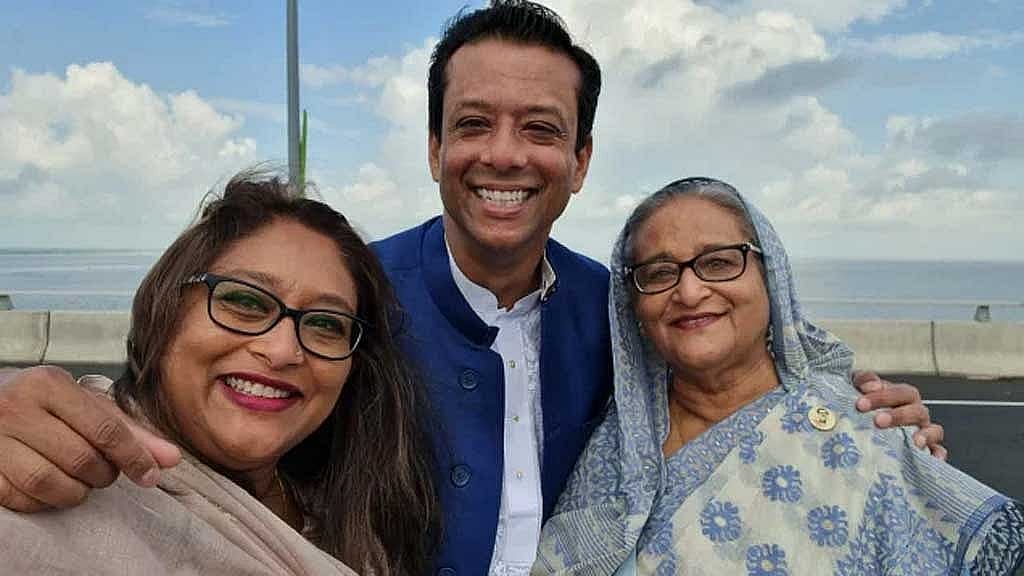
The former prime minister, sentenced to death for crimes against humanity during July Uprising, and her children -- Sajeeb Wazed Joy and Saima Wazed Putul -- are accused of exploiting state power to secure Purbachal New Town plots, in a case highlighting alleged collusion, bribery, and abuse of authority at the highest levels.
Prosecutors are pressing for life imprisonment, while Hasina’s family remains outside the country, leaving the trial to unfold in their absence.
The verdict, set for Thursday, may mark the most consequential corruption ruling in recent history.
Judge Mohammad Abdullah Al Mamun is scheduled to announce the verdict. Beyond the Hasina family, 20 others are also accused across the three cases, with only one currently in custody. Former RAJUK member (Estate & Land) Mohammad Khurshid Alam will be present in court at the verdict reading.
The other defendants are former state minister for housing and public works Sharif Ahmed, former private secretary to the prime minister Mohammad Salah Uddin, former senior assistant secretary of the Ministry of Housing and Public Works Purabi Golder, former RAJUK chairman Anisur Rahman Miah, former member (development control) Shafiul Haque, former member (planning) Mohammad Nasir Uddin, Shamsuddin Ahmed Chowdhury, Nayeb Ali Sharif, Saiful Islam Sarkar, Kazi Wasi Uddin, Shahid Ullah Khandaker, Kabir Al Asad, Tanmoy Das, Md Nurul Islam, Sheikh Shahinul Islam; RAJUK Deputy Director Hafizur Rahman, Habibur Rahman, former deputy director Kamrul Islam; and assistant director Mazharul Islam.
On Nov 17, Hasina was sentenced to death by the International Crimes Tribunal (ICT) for crimes against humanity in suppressing the July Uprising 2024. Following the fall of the Awami League government on Aug 5, 2024, allegations of mismanagement and corruption from her administration surfaced, with the first verdict on these cases scheduled for Thursday.
The charges, if proven, could carry life imprisonment.
Khan Md Mainul Hasan Lipon, counsel for the Anti-Corruption Commission (ACC), said, “We have been able to substantiate the allegations. We expect the highest sentence will be life imprisonment.”
Khurshid Alam’s lawyer Shahinur Rahman countered: “The ACC could not prove the charges against my client. We hope he will be acquitted.”
With Hasina, her son and daughter at large, the trial has proceeded in absentia. No legal representation from their side attended the hearings.
In January, the ACC filed six separate cases over the allocation of 60 katha of plots in the Purbachal New Town project, naming Hasina, Sajeeb, Saima, her sister Sheikh Rehana, and her nieces and nephew Tulip Siddiq, Azmina Siddique Ruponti, and Radwan Mujib Siddiq Bobby.
Three cases involving Hasina’s immediate family are being tried together, while Rehana’s family faces another set of three cases concurrently.
On Jul 31, the court framed charges against 23 individuals across these cases. The verdict date was set after closing arguments for Hasina’s family on Nov 23, while Rehana’s family’s hearing concluded on Nov 25 with a Dec 1 verdict scheduled.
LAWSUIT TO JUDGEMENT
Following the Uprising, Hasina fled to India along with other family members. Investigations into multiple cases began immediately. On Dec 26, the graftbusters opened an inquiry into irregularities in the allocation of six plots in Purbachal New Town under the names of Hasina and five family members.
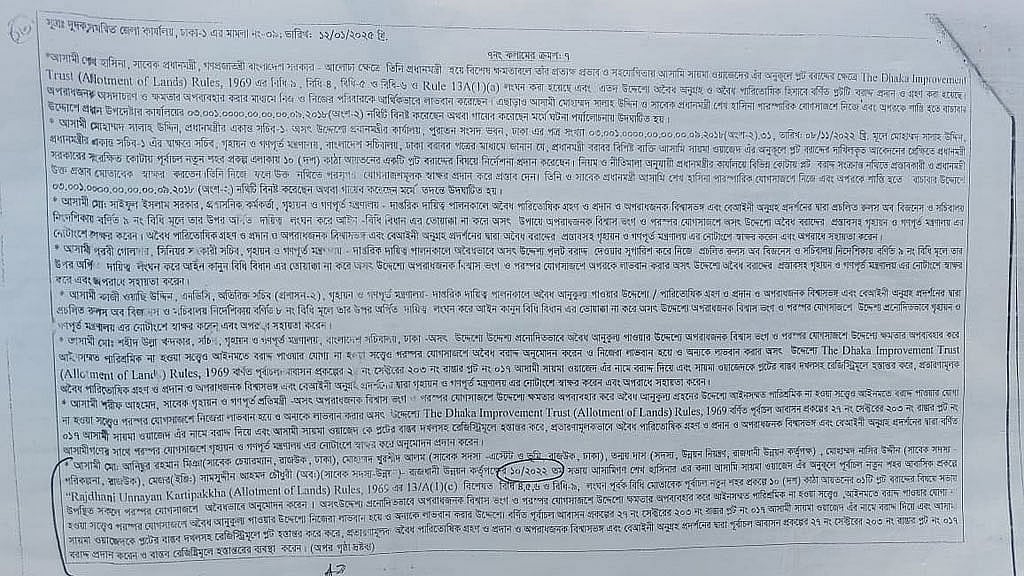
According to documents reviewed by the ACC, Hasina was granted a 10-katha plot (plot no. 009) on Aug 3, 2022, with a RAJUK allotment letter issued in her name.
Joy’s allotment letter was issued on Oct 24, 2022, with the ownership finalised on Nov 10, 2024. Meanwhile, Putul’s allocation was confirmed on Nov 2, 2024.
Similarly, her son Joy (plot no. 015), and daughter Putul (plot no. 017) received 10 katha each.
Rehana secured 10 katha (plot no. 013), while her children, Radwan (plot no. 011) and Azmina (plot no. 019), were also allocated 10 katha each.
The allegations came under heightened scrutiny last year when the High Court formed a three-strong committee to examine potential irregularities in the allocation of plots.
On Jan 14, ACC Deputy Director Salah Uddin filed a case against Hasina and seven others; following the investigation, ACC Assistant Director Afnan Jannat Keya submitted charges against 12 defendants, including four additional individuals identified during the probe, on Mar 10.
On Jan 12, the ACC also filed a case against Putul and 16 others.
The chargesheets allege that Putul and her family members already owned houses, flats, or other residential properties in RAJUK areas of Dhaka city.
Concealing this information, Putul secured a plot allocation in the Purbachal New Town project. During this period, Hasina, at the highest level of government, is accused of influencing responsible officials and misusing her authority.
The indictment states that the defendants colluded to benefit themselves and others by allocating plots in Putul’s name, with allegations of bribery also cited.
On Mar 10, investigation officer Keya submitted chargesheets against a total of 18 suspects, including two additional suspects identified during the investigation.
For Joy’s plot, ACC Deputy Director SM Rashedul Hasan filed a case on Jan 14 against 16 others, including Hasina. Following the investigation, on Mar 24, he submitted charges against 17 defendants, including two additional individuals identified during the probe.
In April, the court accepted the charges and issued arrest warrants for Hasina, Joy, Putul, and 23 others. Police were instructed to report whether the suspects were apprehended. None could be arrested.
Gazette notifications summoned them to appear in court, yet they remained absent.

On Jul 31, Judge Mohammad Abdullah Al Mamun formally framed charges for the three cases, initiating trial proceedings. Witness testimony began on Aug 11, starting with ACC Deputy Director Salah for Hasina’s plot case, Keya for Putul’s case, and Rashedul for Joy’s case.
On Aug 26, 17 witnesses were examined, including RAJUK Deputy Director Md Mahbubur Rahman, assistant directors Asim Shil, Ullas Chowdhury, Sourav Das, and Dhiraj Chandra Barman; housing ministry officer Akhtar Jahan, and housing ministry office assistant Shafiqul Islam. Of these, six testified in both Hasina and Putul’s cases, and five in Joy’s case.
On Sept 2, 18 witnesses were examined across all three cases, including Sonali Bank officials, tax clerks, and housing ministry assistants. On Sept 17, 10 additional witnesses testified, including Dhaka metropolitan magistrates, personal officers, and bank cashiers.
On Sept 30, nine witnesses appeared for Hasina and Joy, while no testimony was recorded for Putul that day. Witnesses included principal advisors, sub-registrars, housing ministry clerks, and metropolitan magistrates. Four testified in Hasina’s case, five in Joy’s.
On Oct 15, 12 witnesses appeared, including director-2 of the Prime Minister’s Office, RAJUK Deputy Secretary Tanzillur Rahman, clerks, and sub-registrars, distributed across Hasina (5), Putul (5), and Joy’s (2) cases.
On Oct 29, former RAJUK member Khurshid surrendered and applied for bail, which was rejected; he was remanded to jail. Eight witnesses were examined that day, including housing ministry Joint Secretary Jahirul Islam Khan, bank assistant managers and principal officers, and ACC officials.
With all other suspects absconding, trials were initially one-sided. After Khurshid’s surrender, witness examination began; before that, only witness statements were recorded.
On Nov 3, ACC assistant directors Keya (Hasina’s case) and Rashedul (Joy’s case), along with RAJUK officer Tanzillur, testified, though the investigators’ examination was not complete. On Nov 6, further testimony was recorded. Khurshid was permitted to cross-examine witnesses.
By Nov 10, testimony concluded in Hasina’s case, though Joy and Putul cases continued. Khurshid maintained his innocence during self-defence hearings in Hasina’s case; other absconding defendants could not present their defence.
The court scheduled Nov 23 for closing arguments in Hasina’s case, with self-defence and final submissions for Joy and Putul to follow. On Nov 23, arguments in Hasina’s case concluded, and the court fixed Thursday for the verdict in Joy and Putul’s cases after completing self-defence hearings and submissions.
ALLEGATIONS IN 3 CASES
In all three cases, new names appeared in the investigation alongside those listed in the original FIRs.
Investigators detailed the allegations against each suspect in the chargesheets.
Hasina plot case
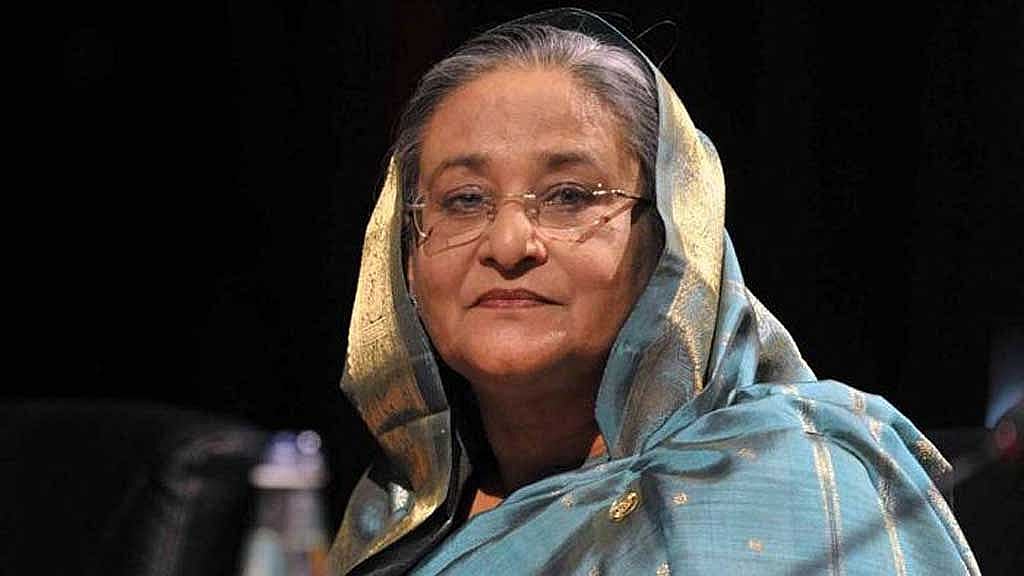
Hasina: While serving as prime minister, Hasina obtained a plot in the Purbachal New Town housing project by concealing the fact that she already had ownership of houses, flats, or residential facilities in Dhaka in her own name and in the names of her son, daughter, sister, and her sister’s two children. This violated the laws and allocation policies.
Sharif: The former state minister for housing and public works misused his power to allocate the plot in Hasina’s name. He approved the allocation in collusion with the other suspects.
Purabi Goldar: While serving as a senior assistant secretary at the housing ministry, she assisted the illegal allocation without regard for laws, rules, or regulations.
Wasi Uddin: As secretary of the housing ministry, he assisted the illegal allocation, disregarding laws, rules, and regulations.
Shahid Ullah: While serving as secretary of the housing ministry, he misused his power to approve and facilitate the illegal allocation and transfer of the plot.
Former RAJUK chairman Anisur, former member (estate and land) Khurshid, former member (development control) Shafiul, former member (planning) Nasir, and former member (development) Shamsuddin Ahmed Chowdhury approved the allocation in Hasina’s favour at a meeting in violation of RAJUK policies. They assisted the offence by transferring the plot in her name to benefit themselves and others.
Nayeb Ali: The former RAJUK deputy director (estate and land-3) assisted the allocation with dishonest intent even though Hasina was not eligible for a plot under the law.
Saiful: The administrative officer of the housing ministry has been accused of assisting the illegal plot allocation.
Joy plot case
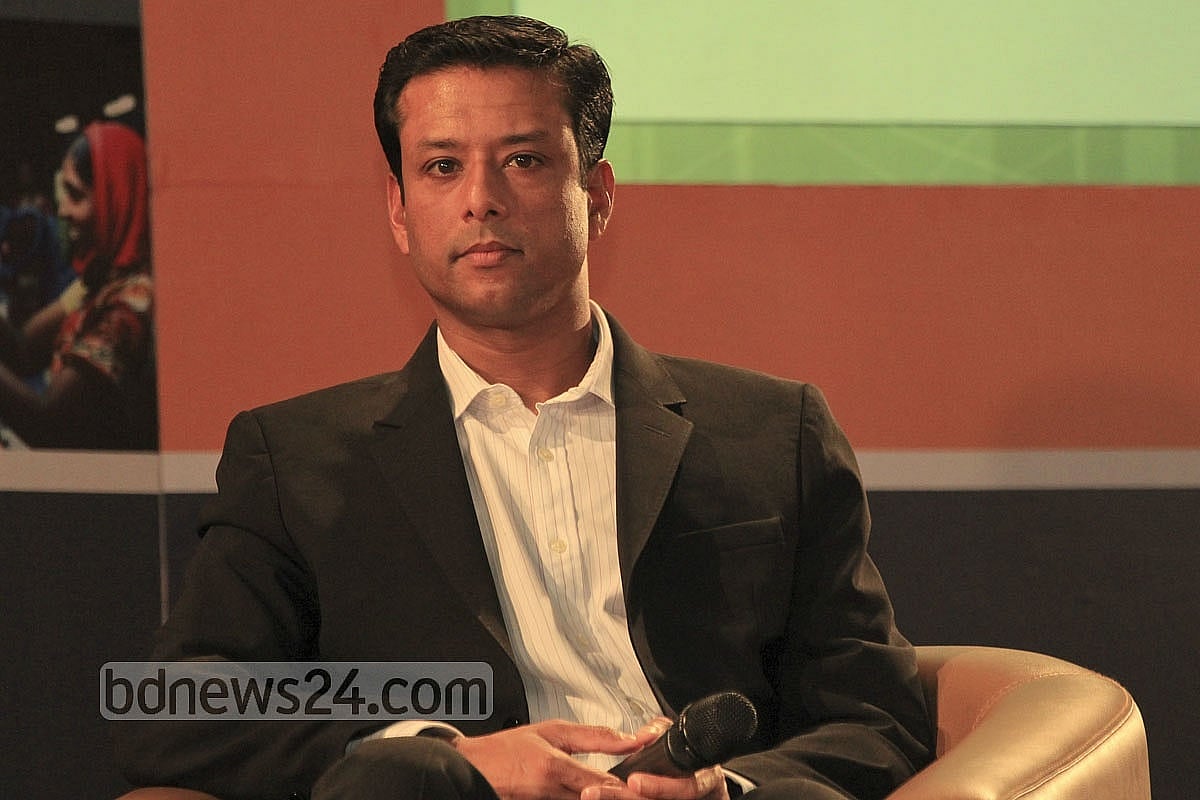
Joy: Despite having housing facilities in the RAJUK area, Joy concealed the information in the affidavit and obtained a 10-katha plot in the Purbachal New Town housing project, violating allocation laws and regulations, with the influence of his mother Hasina.
Hasina: While serving as prime minister, Hasina “misused” her power to arrange the plot allocation for her son, providing financial benefit to the family.
Salah Uddin: Serving as the prime minister’s private secretary-1, he sent a letter to the housing secretary regarding a 10-katha reserved plot in Joy’s name. He, together with Hasina, destroyed or caused to disappear a document from the Prime Minister’s Office to protect themselves and others from punishment.
Saiful: The administrative officer at the housing ministry signed documents related to the illegal plot allocation, disregarding laws and regulations.
Purabi: While serving as senior assistant secretary at the housing ministry, she bypassed laws and regulations to propose and facilitate the plot allocation.
Wasi Uddin: As secretary of the housing ministry, he assisted in the illegal allocation of the plot in Joy’s name.
Shahid Ullah: He was involved in the illegal allocation of the plot to benefit himself and others.
Sharif: The former state minister for housing and public works misused power to allocate and transfer the plot in Joy’s name.
Former RAJUK chairman Anisur, former members Khurshid, Tanmoy Das, Nasir Uddin, and Shamsuddin Ahmed colluded to approve the plot allocation in Joy’s name at a meeting.
RAJUK Assistant Director (estate and land-3) Mazharul Islam, former RAJUK deputy director (estate and land-3), former RAJUK deputy director (estate and land-2) Kamrul Islam, and RAJUK member (estate and land) Nurul Islam signed documents related to the illegal allocation.
Putul plot case
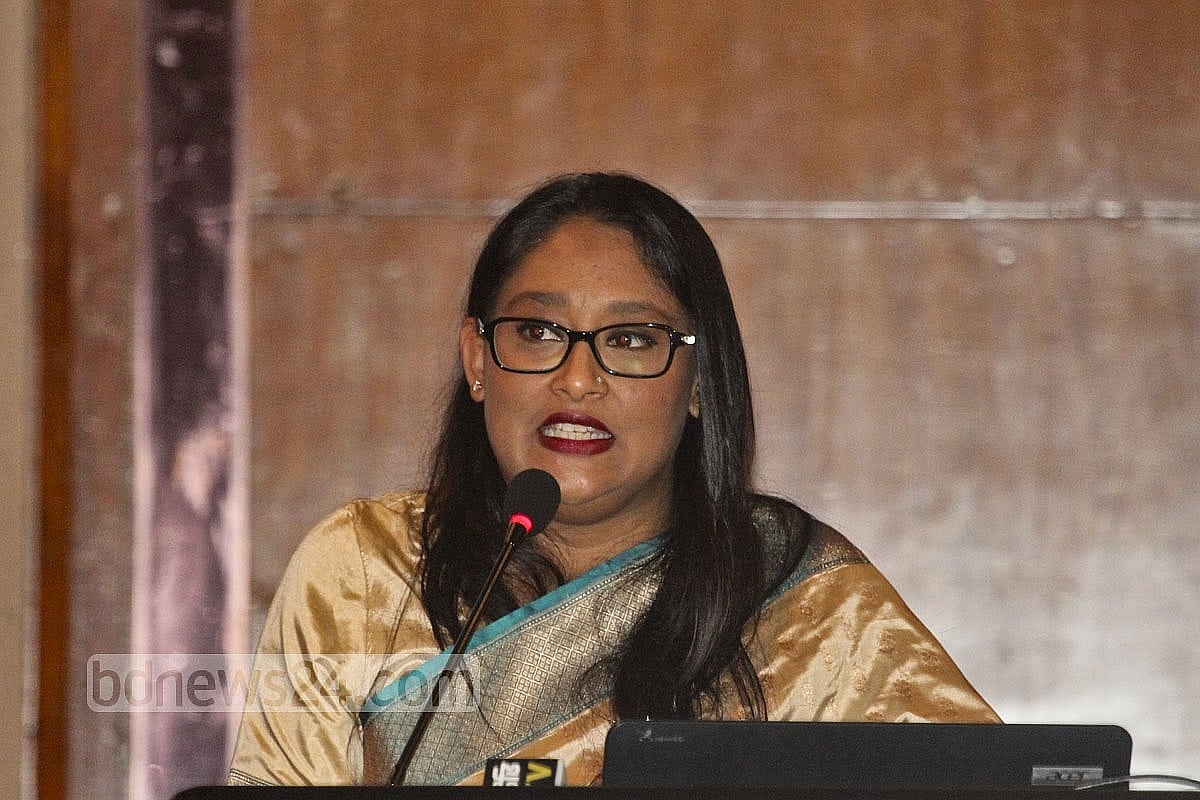
Putul: Despite having housing facilities in the RAJUK area, Putul concealed the information in the affidavit and obtained a 10-katha plot in the Purbachal New Town housing project without submitting any application to RAJUK, violating allocation laws and regulations and influencing her mother Hasina.
Hasina: While serving as prime minister, Hasina misused her power to arrange the plot allocation for her daughter, providing financial benefit to the family. She, together with Salah Uddin, destroyed or caused to disappear a document from the Prime Minister’s Office to protect themselves and others from punishment.
Salah Uddin: Serving as the prime minister’s private secretary-1, he sent a letter to the housing secretary regarding a 10-katha reserved plot in Putul’s name and colluded with Hasina to destroy or remove an official document.
Saiful: The administrative officer at the housing ministry signed documents related to the illegal plot allocation and assisted in the offence, disregarding rules and regulations.
Purabi: While serving as senior assistant secretary at the housing ministry, she bypassed rules and regulations to assist in the plot allocation to Putul.
Wasi Uddin: As secretary of the housing ministry, he signed documents and facilitated the transfer of the plot in Putul’s name, disregarding laws and regulations.
Shahid Ullah: While serving as secretary at the housing ministry, he misused his power to approve and facilitate the illegal plot allocation and transfer.
Sharif: The former state minister for housing and public works misused his power to allocate and transfer the plot in Putul’s name.
RAJUK Deputy Directors Hafizur and Habibur, Director Shahinul, and RAJUK member Nurul signed documents related to the illegal allocation.
Other suspects were accused of facilitating the plot allocation to benefit themselves and others.
If Hasina is found guilty, she will become the second former head of government convicted in a graft case.
Previously, during the Awami League government, Khaleda Zia received sentences in the Zia Orphanage Trust and Zia Charitable Trust cases, but was acquitted on appeal after a political change.
Former military ruler HM Ershad faced over a dozen corruption cases, including Janata Tower, in which he was convicted.