Published : 25 Mar 2026, 07:06 AM
Updated : 21 Aug 2026, 03:31 PM


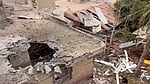
What was meant to be a simple family visit turned into a nightmare for Riyad Hasan Apu. Visiting his sister’s home in Dhaka’s Rayer Bazar, he was jolted awake just before Sehri by a deafening blast.
Though he managed to rush out with his 3-year-old nephew, known as only Mayan, the fire had already taken its toll.
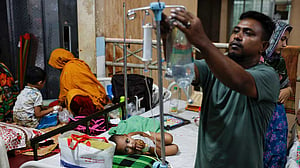
Apu suffered 7 percent burns, while Mayan sustained 24 percent.
His sister Pinky and brother-in-law Md Roman are in "critical" condition with 75 percent and 25 percent burns, respectively.
"My sister got up to cook for Sehri. As soon as she struck the match, there was a huge explosion and fire spread through the room," Apu recounted from the National Institute of Burn and Plastic Surgery.
This is not an isolated tragedy.
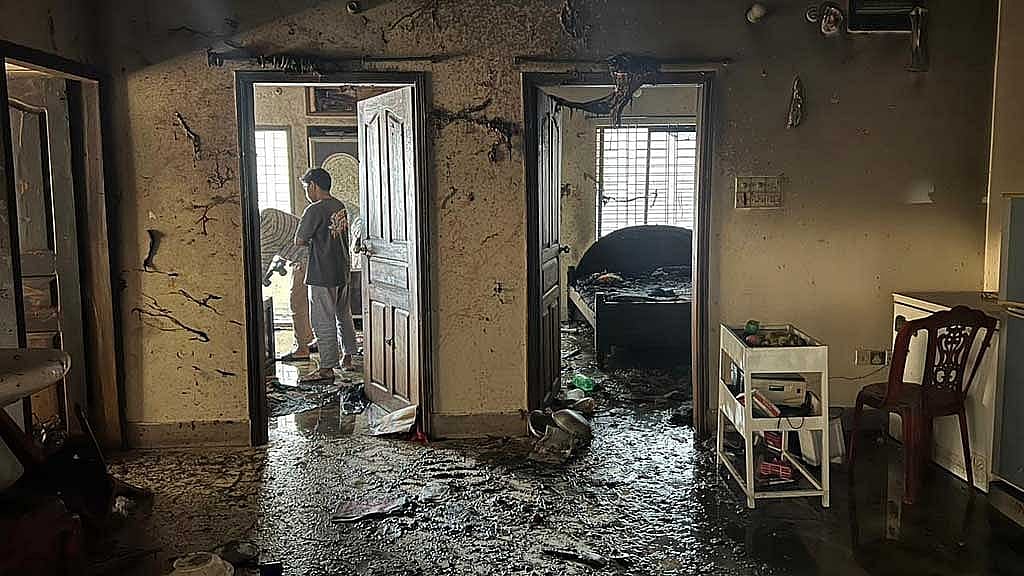
On the same night in Chattogram’s Halishahar, a similar leak ignited, injuring nine family members.
Six have since died.
In the three weeks following these twin horrors, 53 people from 10 different locations across the country have been treated at the national burn institute for gas-related injuries; 12 of them did not survive.
The surge in accidents involving both piped natural gas and LPG cylinders has raised a grim question: Why is this happening now?
Experts point to a combination of aging infrastructure and a severe "lack of awareness".
While cylinder companies claim their tanks usually remain intact after blasts, they argue that substandard hoses, regulators, and clamps are the true culprits.
"The risk is increasing as more people switch to LPG without knowing how to maintain it. About 60-65 percent of accidents are due to human error," said Md Maksud Helali, vice-chancellor of Khulna University of Engineering and Technology (KUET).
Ali Ahmed Khan, former director general of Fire Service and Civil Defense, highlighted the danger of illegal connections and decaying lines.
"Gas lines are being tapped illegally, and in many places, the pipes are simply too old. Furthermore, there is no regular supervision of the cylinders used in households," he noted.
While gas distribution companies claim they are "trying" to replace old pipelines, they maintain that leaks inside a home are the responsibility of the owner or tenant.
As the death toll rises, the message from officials remains clear: unless users ensure high-quality fittings and remain vigilant about shut-off valves, the very fuel intended to sustain life will continue to threaten it.
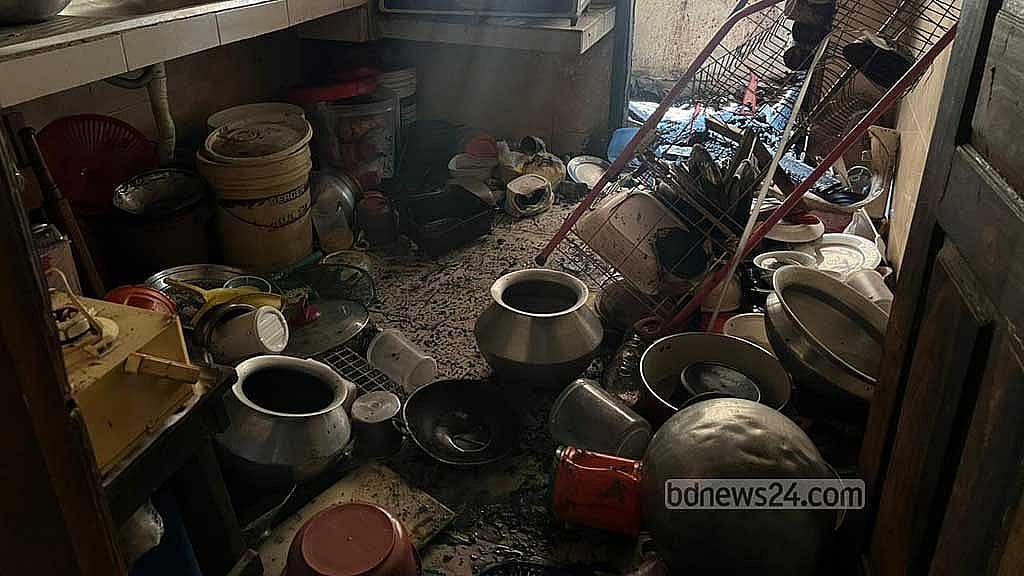
Why Such Accidents Occur
Following the horrific blast in Chattogram’s Halishahar, both Karnaphuli Gas Distribution Company Limited (KGDCL) and the Fire Service have launched separate probes.
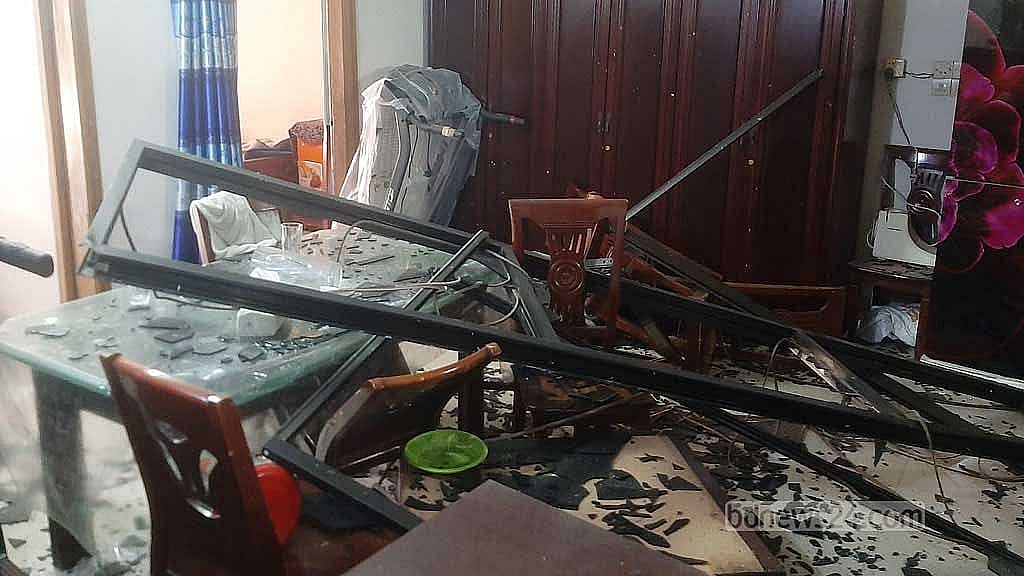
Initial findings from the Fire Service suggest the explosion was triggered by gas accumulating within the confined space of the home.
The carnage continued on Feb 24 in Cumilla’s Daudkandi, where a gas leak explosion left four people burnt.
Amlan Kumar Dutta, an engineer at Bakhrabad Gas Distribution Limited, revealed the connection was "illegal".
"The property had no valid connection. We had disconnected their illegal line recently, but they likely bypassed the system using their own makeshift methods, which led directly to the disaster," he said.
The following day, three members of a family from Chandpur’s Kachua were taken to the National Burn Institute after an LPG cylinder leak ignited.
According to a relative, the blast occurred at 4am when the homeowner’s wife, Khadija Akter, attempted to light the stove to prepare Sehri.
Urban areas have been equally hit.
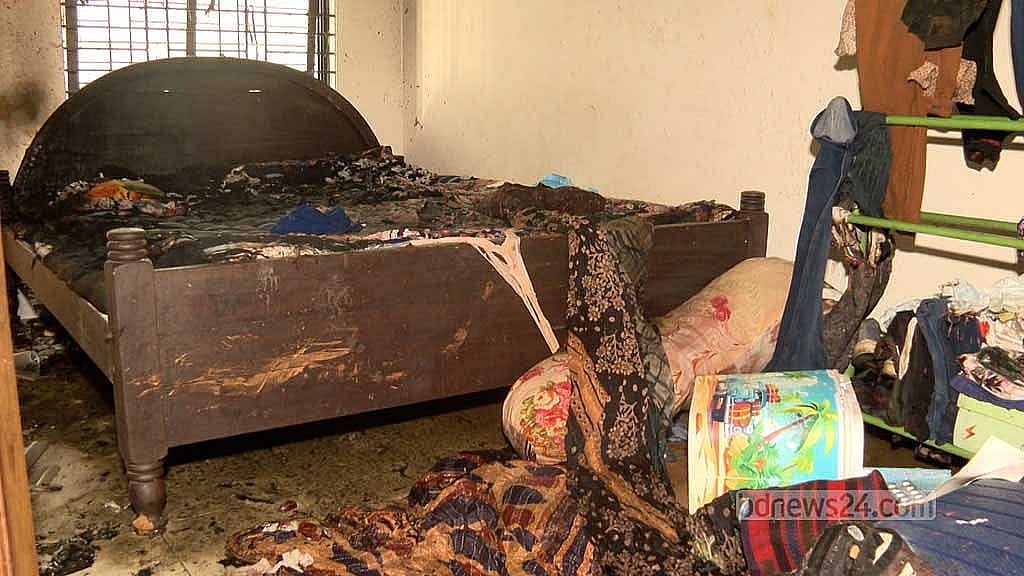
On Mar 6, a leak in Dhaka’s Uttara Kamarpara left 10 people burnt; three have since died.
Later, on Mar 10, 45-year-old Sumona Badsha died from her injuries after gas trapped in her Dhamrai kitchen exploded.
Her husband and two children were also burnt while attempting to save her.
Fire Service spokesperson Talha bin Zasim told bdnews24.com that while such leaks are common, recent incidents have been particularly catastrophic.
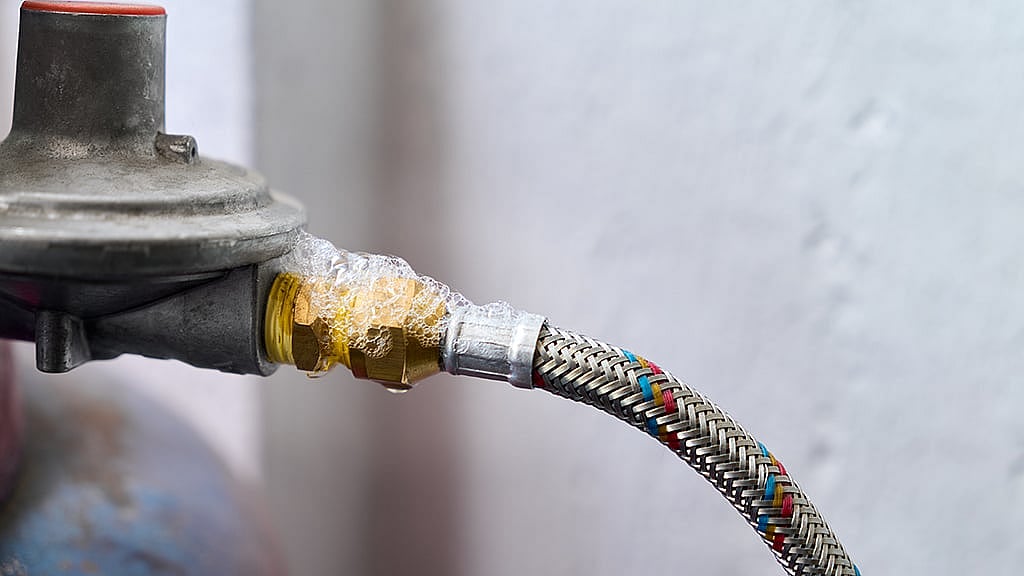
"Leaks typically occur in the line connecting the burner to the cylinder, often because users are simply not vigilant," he explained.
Ali Ahmed observed a dangerous level of "apathy" among consumers.
"People use cylinders but never bother with maintenance or safety checks," he said. "Often, someone leaves a stove on during a pressure drop; when the pressure returns, gas fills the room unnoticed. This is why most of these explosions happen right inside the home."
Rising Accidents and Fatalities
In 2025, Bangladesh witnessed 27,059 fire incidents nationwide, resulting in 85 deaths and 267 injuries, according to the Fire Service.
Of these, 2,909 cases (10.75 percent) were linked to stoves, 920 (3.40 percent) to gas cylinder leaks, 562 (2.08 percent) to gas supply line leaks, and 121 (0.45 percent) to gas cylinder explosions.
By comparison, in 2024 there were 539 incidents from cylinder leaks, 29 from cylinder explosions, 379 from supply line leaks, and 61 from heating system faults.
In 2023, gas line leaks caused 694 incidents, cylinder-related fires 210, and heating system faults 88. In 2022, line and cylinder leaks and explosions caused 767 incidents, while heating system faults triggered 48 fires.
In 2021, there were 894 incidents from gas lines and cylinders, and 39 from heating system faults.
In 2025, 264 patients injured in gas explosions received treatment at the National Burn and Plastic Surgery Institute, according to Assistant Professor Shawon Bin Rahman.
Patients were distributed across six units depending on injury severity, so a precise total of fatalities was not immediately available.
Shawon told bdnews24.com: “Most incidents occur in kitchens. People light the stove, and the explosion happens, usually because gas has accumulated from a line leak.”
He added that in such accidents, most victims suffer burns to their respiratory tracts, which is often fatal.
Why Are Accidents Peaking Now?
The timing of recent explosions, particularly during the early hours of Sehri, was no coincidence, according to experts.
BM Rabby Hossain, assistant professor of disaster science and climate resilience at Dhaka University, explains that gas pressure often fluctuates during the colder months.
"People may be cooking when the pressure drops, and they forget to turn off the stove. When the gas returns, it leaks and accumulates in the room," he said. "In this weather, doors and windows are usually kept shut. When someone wakes up and strikes a match, the gas ignites instantly. As oxygen rushes in to fill the vacuum, it creates the massive pressure that causes a loud, destructive explosion."
While he noted negligence by distribution companies in maintaining decades-old pipelines, he stressed that "individual lack of awareness" remains the primary driver of these tragedies.
LPG Accumulation on Floors Raises Risk
A critical but widely unknown danger lies in the physical properties of liquefied petroleum gas (LPG).
Maksud Helali, ex-KUET vice-chancellor and former BUET professor, warned that LPG is heavier than air.
"Unlike the natural gas used in traditional pipelines, which rises and escapes, LPG settles on the floor in a confined space. I believe 90 percent of people are unaware of this," he told bdnews24.com. "Every household needs to understand this risk; it may even require changes to kitchen designs to ensure low-level ventilation."
Satyajit Ghosh, general manager (planning) at Titas Gas Transmission and Distribution Co Ltd, echoed these concerns, pointing out that while pipeline gas is lighter and rises toward the ceiling, LPG creates a "gas chamber" at floor level.
"Even a microscopic leak in the connecting pipe between the cylinder and the stove can be lethal. The gas pools on the floor, and when someone enters the kitchen to cook, the resulting blast can be as powerful as several bombs detonating at once," Satyajit said.
He added that while pipeline leaks contribute to "system loss", improper handling of LPG cylinders represents a far more immediate and explosive threat to life.
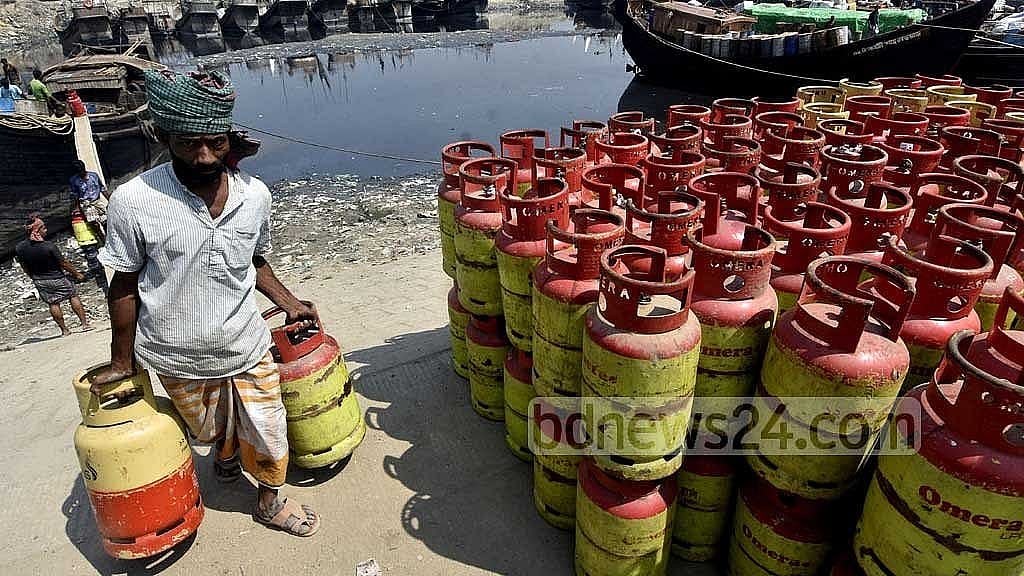
Over 30mn Cylinders in Circulation
Industry insiders claim that in 90 percent of fire incidents, the LPG cylinder itself is found intact.
A marketing official from an LPG company explained that while strict regulations exist -- testing every five years, renewing every 10, and decommissioning after 20 -- the hardware purchased by the consumer is often the weak link.
"Before a cylinder hits the market, it requires clearance from at least four bodies, including the Department of Explosives," the official said. "But if a customer leaves a regulator switch open or uses substandard accessories like pipes, there is little a company can do."
However, Prof Maksud Helali pointed to a systemic flaw.
"In neighbouring India, cylinders have double protection, whereas ours only have single. This is a policy failure on our government's part," he argued.
The Department of Explosives estimates there are currently 30 million cylinders in the market.
When asked about post-market monitoring, Assistant Explosives Inspector Md Alim Uddin told bdnews24.com that there is "nothing to supervise" once a cylinder passes its initial leak test.
"Cylinders rarely explode. Blasts occur due to leaks from regulators, pipes, or valves caused by user negligence," he said. "Users are instructed to open windows 30 minutes before cooking, but many ignore this. Often, they fail to turn off the regulator after use, leading to a fatal build-up of gas."
How Much Responsibility Lies With Gas Companies?
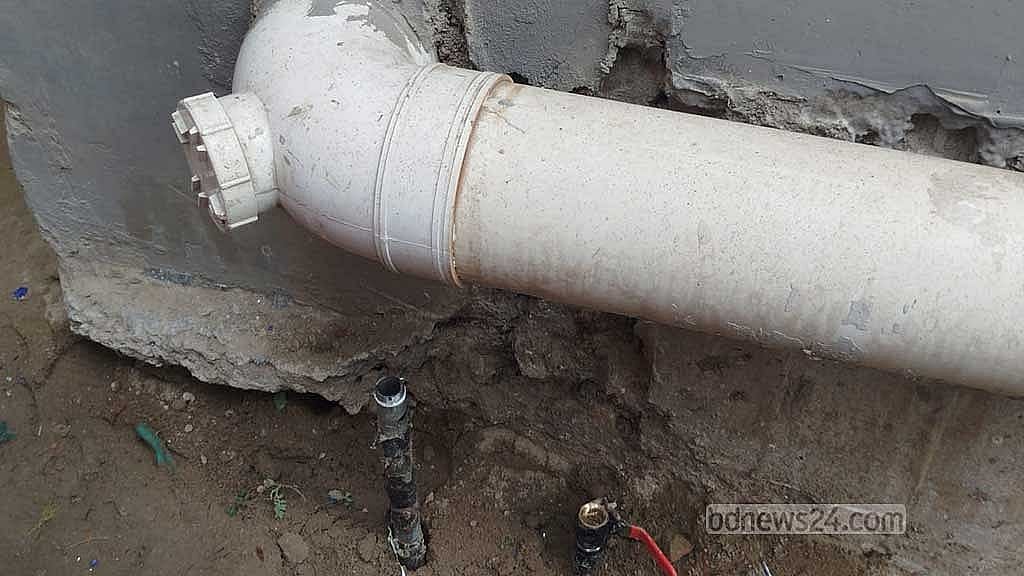
Regarding piped gas, Titas’s Satyajit clarified that the company’s jurisdiction ends at the "riser" (the point where the main line enters a property).
Maintenance of all internal lines remains the responsibility of the homeowner or tenant.
"We urge users to have their internal lines inspected regularly," Satyajit said.
He added that Titas monitors its own network, but a major project to replace aging pipelines in Dhaka, Narayanganj, and surrounding areas is still awaiting final approval.
"We are trying to replace old lines where the network is most dense. While the project hasn't reached the approval stage yet, the planning is well underway," he added.
Awareness Is Vital
Former director general of the Fire Service Ali Ahmed stressed that the burden of safety lies with both property owners and tenants.
"Maintenance of gas lines is essential," he said. "Awareness is the first line of defence."
He urged users to adopt two critical habits: "Always turn off the gas switch before going to bed, and ensure windows and doors are opened first thing in the morning to ventilate the home."
Fire Service’s Talha highlighted the importance of kitchen design.
"Stoves should always be placed near large windows to allow fresh air to circulate. This ensures that even if a leak occurs, the gas can escape," he explained.
He noted that the connections surrounding the stove are rarely inspected, leading to the "human error" that causes most accidents.
The official also pointed out a flaw in the LPG exchange system: customers often trade their cylinders for refills without knowing the history or condition of the new unit.
He advised consumers to check the expiry dates on cylinders before accepting them and to ensure they are using high-quality regulators, tubes, and pipes.