Published : 17 Nov 2025, 07:03 AM
Updated : 21 Aug 2026, 02:44 PM


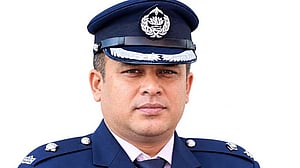
Former inspector general of police (IGP) Chowdhury Abdullah Al-Mamun, once a suspect, has stepped forward as a state witness and revealed that he had received direct instructions from the highest echelons of power to suppress the July Uprising protests “at any cost”.
His testimony, delivered before the International Crimes Tribunal in a crimes against humanity case, provided an unflinching account of the deadly crackdown.
The verdict in this case, which also names ousted prime minister Sheikh Hasina and former home minister Asaduzzaman Khan, is scheduled for Monday. Among the three accused, only Mamun remains in custody; the other two are considered fugitives, and proceedings against them have concluded in their absence.
The charges encompass five counts of “genocide” and crimes against humanity, underscoring the gravity of the tribunal’s deliberations.
HOW MAMUN BECAME A STATE WITNESS
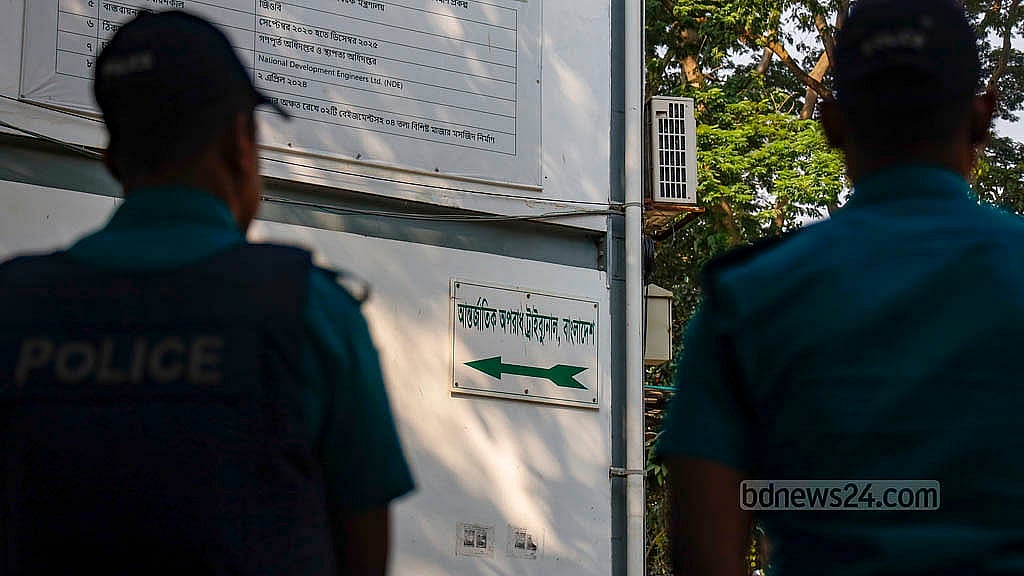
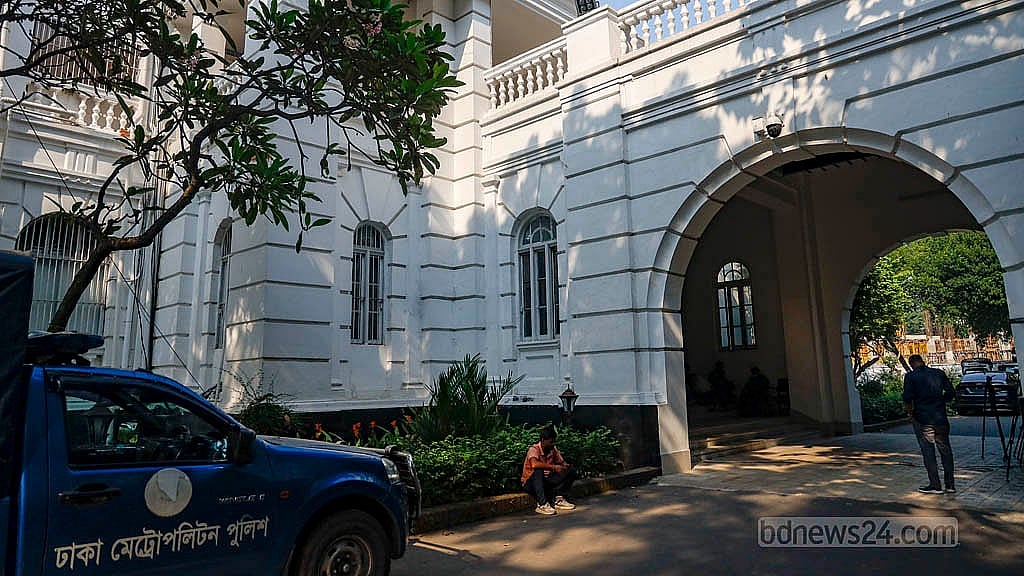
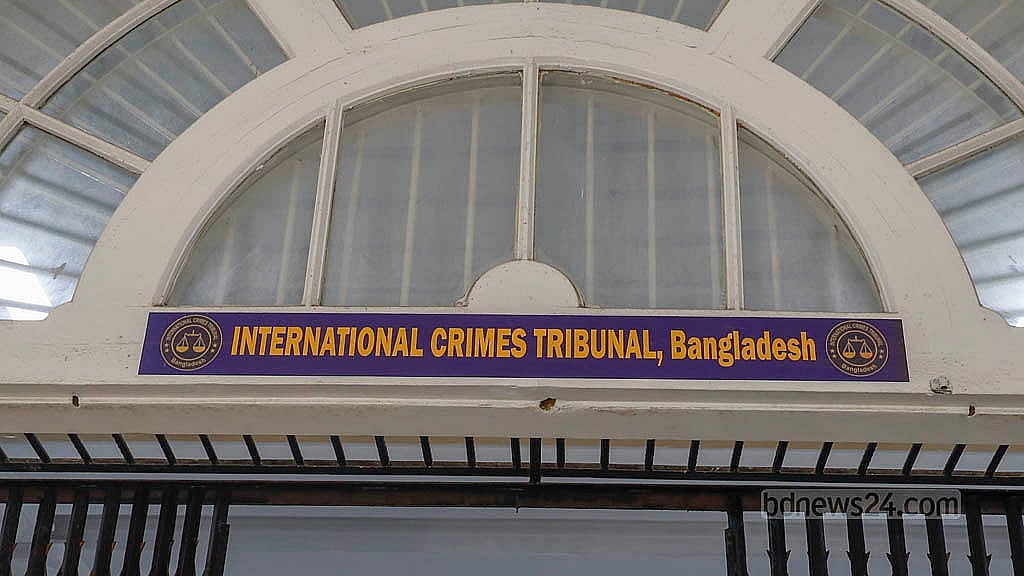
On Jul 10, the International Crimes Tribunal-1, led by Justice Md Golam Mortuza Mozumder, held a hearing for framing charges in the case.
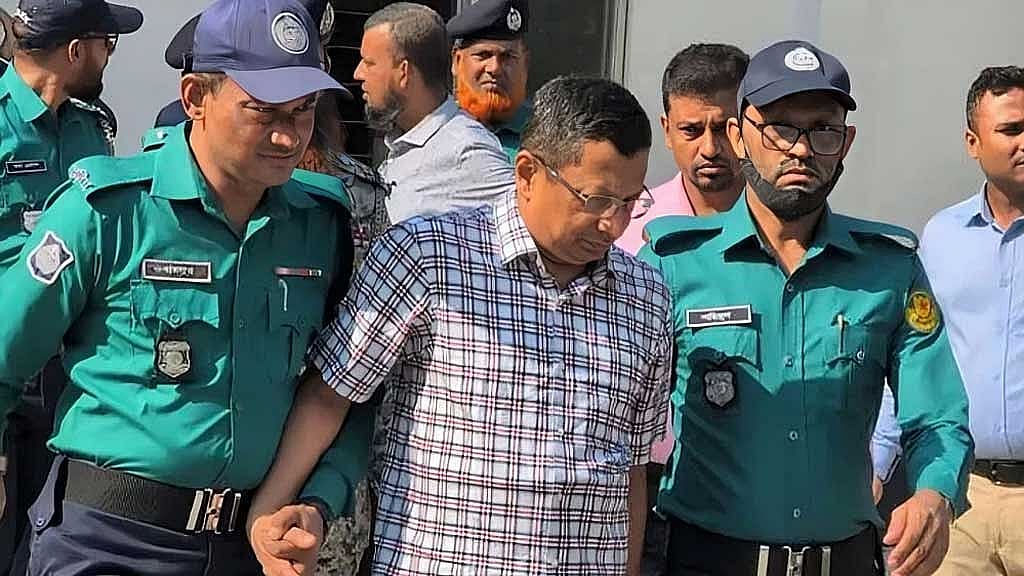
Lawyers representing fugitives Hasina and Asaduzzaman applied for their exemption. Mamun, however, did not seek exemption; instead, he admitted his guilt and applied to become a state witness.
During the charge-framing hearing, the tribunal read the charges to him and asked whether he accepted responsibility. Mamun confessed his guilt and agreed to assist the tribunal by providing information on the crimes. The tribunal approved his request to serve as a witness.
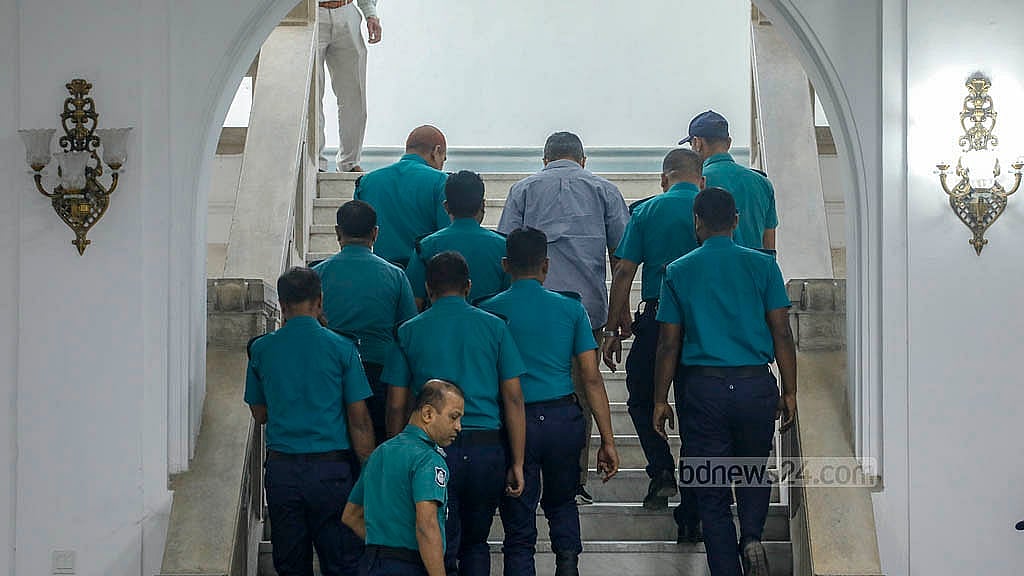
For security reasons, Mamun’s lawyer Zayed Bin Amjad requested that he be kept in a separate detention area, which the court assured would be arranged.
Tribunal Chief Prosecutor Mohammad Tajul Islam appeared on behalf of the state and later briefed reporters.
He said, “Hasina and Asaduzzaman are fugitives. The third accused, Mamun, was present in court. He admitted his guilt and requested to assist the court in revealing all information about the crimes against humanity committed in July–August 2024.
“The court approved his request. He will be treated as a witness; in Bengali, we call it ‘Rajsakkhi’ [state witness], but legally it is an approver.”
When asked whether Mamun could be pardoned as a state witness, Tajul said: “If the full truth is disclosed, the court may pardon him or issue another appropriate order.”
MAMUN’S TESTIMONY
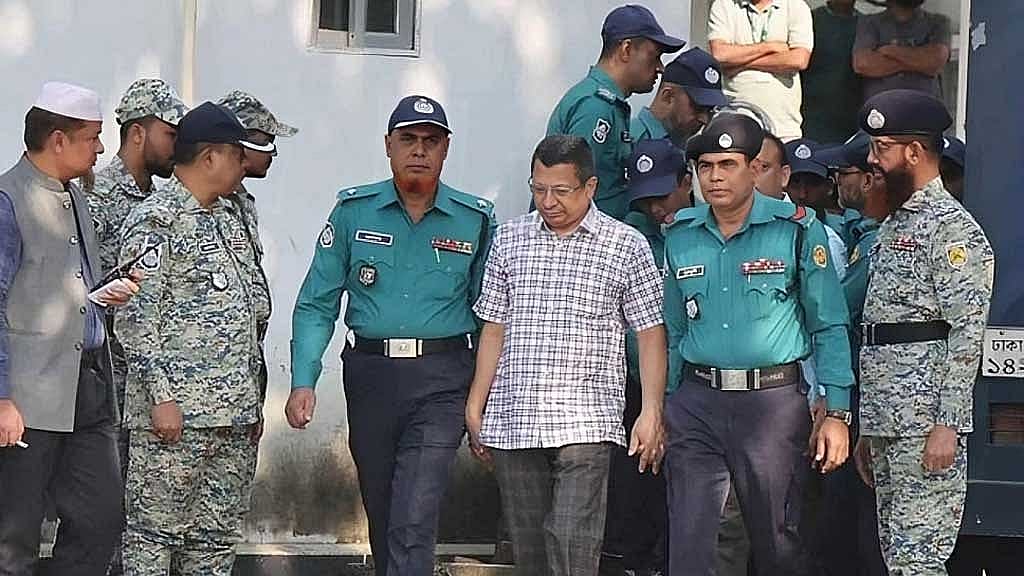
On Nov 13, 2024, Mamun gave his first testimony at the Dhaka Chief Metropolitan Magistrate’s Court in the “genocide” case. Following that, on Jul 12, the tribunal formally framed charges, beginning the trial. As a state witness, Mamun gave his tribunal testimony on Sept 3 this year.
He said, on Jul 18, 2024, Asaduzzaman, who was the home minister then, called him, instructing that lethal weapons be used to suppress the movement on the direct orders of Hasina.
Mamun said he was at Police Headquarters with then-additional DIG Proloy Kumar Joarder. The directive was subsequently communicated across the country, including to then-DMP commissioner Habibur Rahman. From that day, the use of lethal force began.
Mamun said Habibur and additional commissioner Harunor Rashid were “particularly eager” to use lethal weapons, acting under the minister’s instruction to suppress the movement “at any cost”.
He testified that Hasina was reportedly “encouraged” to use lethal force by political figures, including Obaidul Quader, Asaduzzaman, Anisul Huq, Salman F Rahman, Rashed Khan Menon, Hasanul Haq Inu, Jahangir Kabir Nanok, Mirza Azam, Sheikh Fazle Noor Taposh, and Mohammad Ali Arafat.
On the use of helicopters and drones to suppress the movement, Mamun said it was implemented as a “political decision by the government”, advised by then-RAB director general Harun Ar Rashid.
The city was divided into zones marked according to the intensity of protests, and block raids with helicopters, drones, and lethal weapons were used to kill and injure protesting students. Mamun added that pro-government intellectuals, journalists, cultural workers, and business figures “encouraged” the government in the crackdown.
On the “Core Committee” meetings, Mamun said from Jul 19 onwards, nightly meetings were held at the Dhaka residence of Asaduzzaman. These meetings provided directives for suppressing the movement, including the arrest of its coordinators.
Mamun said he initially opposed a proposal from the military intelligence agency DGFI (Directorate General of Forces Intelligence) to detain the coordinators, but later complied under the minister’s instruction. Responsibility for the arrests was assigned to then-DB chief Harun.
He testified that, per the minister’s directives, DGFI and DB apprehended the coordinators and pressured them to compromise with the government. Their relatives were also brought to the DB for pressure, eventually forcing the coordinators to announce the withdrawal of the movement on television.
Mamun said, on Aug 4, 2024, a National Security Coordination Committee meeting was held at the Ganabhaban, chaired by Hasina and attended by 27 officials, including the home and law ministers, chiefs of the three forces, and intelligence heads.
According to him, the meeting discussed strategies to suppress and control the July Uprising, but was suspended due to rapidly deteriorating conditions.
He added that another meeting was held that night at Ganabhaban, attended by Hasina, Sheikh Rehana, the home and law ministers, the three forces’ chiefs, the RAB director general, and former Lt Gen Md Mujibur Rahman, while DGFI and NSI chiefs waited outside.
He said the Aug 5 meeting focused on halting the “March to Dhaka” by protesting students. Police and military were assigned the responsibility of coordinating.
Mamun testified that he visited the military operation control room, where the home and law ministers, three forces’ chiefs, RAB director general, DGFI and NSI chiefs, and Lt Gen Mujibur were present. They decided to station personnel at city entrances, leaving the control room at 12:30am on Aug 4.
Recounting the days of the Uprising, Mamun said: “On the 27th of July, during the height of the movement, Asaduzzaman, former home secretary Jahangir, DMP’s Habibur, and I went to Narayanganj to assess the situation on the ground. On the way, we stopped briefly in front of Jatrabari Police Station.
“At that time, DC [Mohammad] Iqbal of the Wari Zone showed the home minister a video on his mobile, saying, ‘If we fire, one may die; let that happen. The others will not.’ That video later went viral across the country.”
From Apr 14, 2020 to Sept 30, 2022, Mamun served as the director general of RAB.
In his testimony, he said, within the RAB headquarters, including the Uttara and RAB-1 offices, there was a detention facility known as the Taskforce Interrogation Cell (TFI Cell).
He said other RAB units also operated multiple detention facilities. Political dissidents and individuals considered threats to the government were detained in these facilities, which had become institutionalised as a “culture” of operations.
He said abductions, secret detentions, torture, and killings under the guise of “crossfire” were coordinated by RAB’s ADG (operations) and intelligence directors. Orders to abduct, detain, or kill were issued directly from the Prime Minister’s Office.
Mamun claimed in his testimony that he was aware these instructions were conveyed through the former prime minister’s defence advisor, Tariq Ahmed Siddiq. He further alleged that these orders bypassed the chain of command and were sent straight to the ADG (Operations) and RAB intelligence directors.
He recounted that upon assuming the IGP role, he was informed by former RAB DG Benazir Ahmed about the detention of Barrister Mir Ahmad bin Quasem Arman, son of Jamaat leader Mir Quasem Ali, sentenced to death for war crimes. Mamun said the government had decided to secretly detain him.
“After learning of this, I spoke with the prime minister’s military advisor Tariq [Ahmed] Siddiq. He told me ‘Keep him. I will advise later’. But he never provided further instructions. I raised the issue several times subsequently, but received no response.”
Mamun acknowledged in his testimony that “excessive force” was used under government orders to suppress the Students Against Discrimination Movement, resulting in brutal killings.
“As the head of police, I feel shame, remorse, and penitence. I have decided to become a state witness out of guilt for the atrocities committed during the July Uprising.
“Later, I witnessed the grief of bereaved families in court. Seeing the brutality on video, I considered it justified to serve as an approver.”
He added, “The heinous act of burning bodies after the killings deeply distressed me. I served in the police for 36 and a half years. Policing is always complex, with accusations against officers frequent.
These killings occurred at the end of my tenure, during my period of responsibility. I accept full responsibility. Under the directives of Hasina and Asaduzzaman, this genocide occurred.
“I ask forgiveness from the victims’ families, the injured, the nation, and the tribunal. If Allah grants me life, I hope to attain some relief from guilt through my full testimony.”
WHO CAN BECOME A STATE WITNESS?
A person directly or indirectly involved in a crime, or in possession of secret information about it, may be granted a pardon on condition that they provide full, truthful disclosure of the crime, the principal perpetrator, and all accomplices. Such a witness is called a “Rajsakkhi” or state witness.
Under Sections 337 and 338 of the Criminal Procedure Code, Section 133 of the Evidence Act, and Rules 459 and 486 of the Police Regulations of Bangladesh (PRB), the conditions for state witness status are laid out.
Section 337 allows a pardon for an accomplice under certain circumstances. Subsection (1) stipulates that a person may become a state witness if they fully disclose the truth of an offence triable by a sessions court, offences punishable with up to 10 years’ imprisonment, or specified sections of the Penal Code.
Any magistrate may offer a pardon to a person involved directly, indirectly, or with secret knowledge of a crime for the purpose of recording testimony, on condition that they truthfully disclose the entire situation and all persons involved as principal offenders or accomplices.
Even if pardoned, the individual is examined as a witness and, if not on bail, must remain in custody until the trial concludes.
Section 338 allows magistrates to exercise discretion in granting a pardon for testimony purposes. Section 133 of the Evidence Act clarifies that accomplices may provide evidence without invalidating punishments imposed on others solely for relying on unsupported testimony.
IMPORTANCE OF STATE WITNESS
Supreme Court lawyer AKM Shamshad told bdnews24.com that a state witness is essentially one of the suspects who admits their crime and testifies on behalf of the state.
“The uniqueness of their testimony lies in revealing internal, secret details -- planning, who did what. Pardons may be granted, but false testimony can lead to punishment.”
He emphasised that the testimony of a state witness is carefully assessed, as the witness is personally involved in the crime and may require special security, particularly in high-profile or serious cases.
WILL MAMUN BE PARDONED?
In the case of crimes against humanity during the attempt to suppress the July Uprising, the prosecution has sought the death penalty for Hasina and Asaduzzaman.
Tajul Islam said, “They [the prosecution] believe Mamun has disclosed the truth in his testimony. The tribunal will make a decision regarding his status.”