Published : 20 Mar 2026, 11:37 PM
Updated : 21 Aug 2026, 03:29 PM


A man who sued ousted prime minister Sheikh Hasina and 123 Awami League leaders and activists over the alleged killing of his son during the July 2024 Uprising had falsely shown the boy as dead in the hope of securing money and housing benefits, according to a police investigation.
Police say the boy, Jihad, was in fact alive and had only been injured. Investigators concluded that the case, filed at Keraniganj Model Police Station, was based on “factual errors” and recommended that all the accused be discharged.
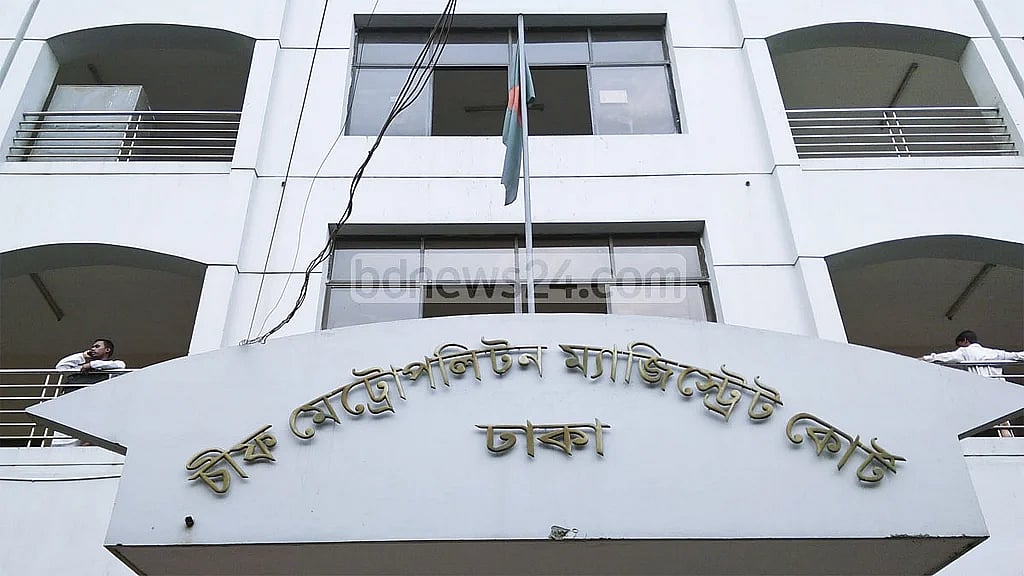
A final report submitted by Sub-Inspector Badiar Rahman on Aug 11 last year was accepted by Senior Judicial Magistrate Tamanna on Oct 30, clearing Hasina and the other accused in the case.
The court said the first information report (FIR), complaint and the victim’s own testimony showed that although the case had been filed as a murder case, the alleged victim was alive.
“He was only injured, which he himself admitted before the court,” the order said.
Those discharged in the case include former road transport minister and Awami League General Secretary Obaidul Quader, former home minister Asaduzzaman Khan Kamal, former Dhaka mayor Sheikh Fazle Noor Taposh, former MPs Sheikh Helal, Qamrul Islam and Nasrul Hamid Bipu, former Keraniganj Upazila chairman Shahin Ahmed, former inspector general of police Chowdhury Abdullah Al-Mamun, former Dhaka Detective Branch chief Harunor Rashid, former additional commissioner Biplob Kumar Sarker and former Counter Terrorism and Transnational Crime unit chief Monirul Islam.
Investigating officer Badiar said the case contained two major errors.
“One was that a living person was shown as dead, and the other was that a case over an incident in Bosila was filed in Keraniganj,” he said.
“Both were proven false. So, after investigation, finding no truth in it, I submitted a final report.”
He said another case had since been filed over the victim’s injuries, naming Hazaribagh as the actual place of occurrence.
In the original complaint, filed by Zahirul Islam, it was alleged that his son Jihad was shot on Aug 5, the final day of the July movement, under the Washpur Bosila Bridge in the Keraniganj area.
The complaint said Jihad was first taken to Gonoshasthaya Medical College Hospital and later to Dhaka Medical College Hospital as his condition worsened. It further stated that he died on Sept 3, 2024.
But the investigation found that although the complaint named Washpur Bosila Bridge under Keraniganj Model Police Station, the actual location fell under Hazaribagh Police Station in Dhaka.
Police said Jihad had in fact been shot in the leg and injured under Bosila Bridge on Aug 5.
In his report, Badiar said Zahirul had later been influenced by several people and went to court in the hope of obtaining rehabilitation housing and cash support.
However, a “vested group” inserted Jihad into the case as dead, even though Zahirul had been told the case was being filed on the basis that his son had been injured, he added.
Police also found that some witness names and addresses provided by the complainant were incorrect, and that several named witnesses either knew nothing about the incident or were unwilling to testify.
Investigators further found that no death certificate for Jihad had been issued by Yearpur Union Parishad on Sep 8, contrary to documents submitted in support of the case.
Police later tracked down Zahirul, who told investigators that Jihad was alive. On Jan 9 last year, Jihad himself gave a statement before the court confirming that he had been injured.
Based on the evidence and surrounding circumstances, police concluded that the case was built on factual errors and recommended that the accused be discharged.
Dhaka Metropolitan Public Prosecutor Omar Faruq Faruqi said many such cases had been filed around the July Uprising by “vested-interest groups acting in syndicates”.
“Police are investigating them and submitting final reports,” he said.
Asked whether false complainants could face punishment, he said the law did provide for action in such cases, though examples of that were rare in Bangladesh.
Obaidul Islam, a lawyer for one of the accused, Abdul Matin Hawlader, said the case should have been scrutinised before it was accepted by the court.
“This kind of false case is extremely unfortunate. The complainant should be brought under the law.”
He said Hawlader had spent more than 15 months in jail after being arrested in the case, even though the court had now discharged everyone.
Attempts to reach Zahirul by phone for comment were unsuccessful, as his mobile phone was switched off.