Published : 09 Aug 2026, 07:07 AM
Updated : 08 Sep 2026, 09:31 AM


Fragile Infrastructure, Concentrated Reserves and Bangladesh's Energy Crisis
Severe Infrastructure Vulnerability: Bangladesh’s gas import reliance is bottlenecked at Moheshkhali, where issues at either of the two FSRUs eliminate hundreds of million cubic feet of gas daily, leaving national supply critically exposed
Over-Concentration of Domestic Supply: Nearly two-thirds of domestic gas comes from just two fields (Bibiyana and Titas). Furthermore, five fields acquired in 1975 still generate roughly 34.5 percent of local production
Widespread Economic Impact: Recent grid shortfalls met only half of national demand, causing industrial output in manufacturing hubs (Narayanganj, Ashulia, Gazipur) to fall by 35–40 percent and creating long delays at CNG stations
Slow Transition to Renewables: Renewables made up just 2.3 percent of power generation in 2025. Meeting the government's 20 percent target by 2030 will require adding roughly 760mw of renewable capacity annually.
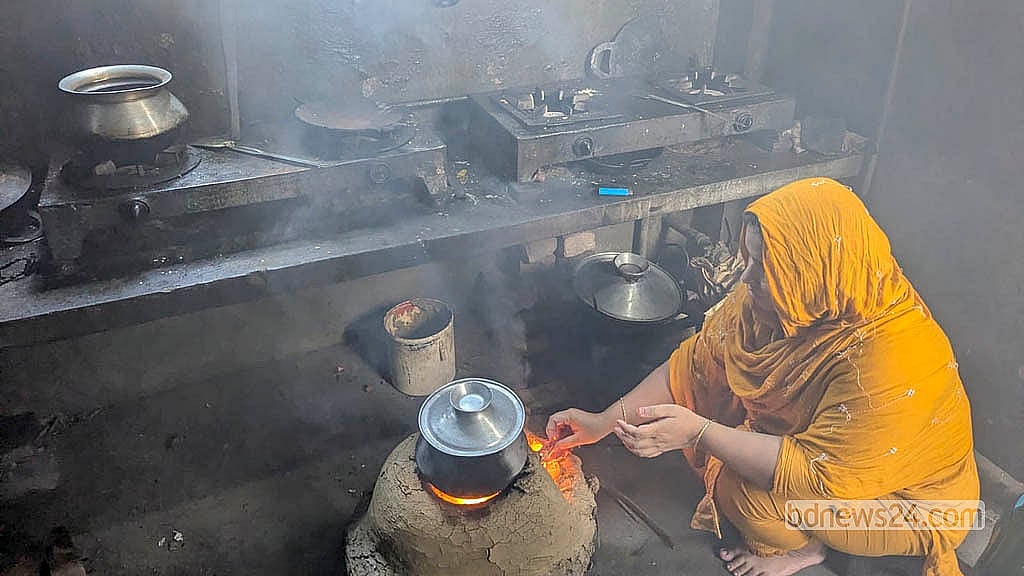
Mohammadpur resident Akhira Islam still remembers two decades ago when gas stoves in many Dhaka households were left burning for days on end – either to save matchsticks or to dry clothes.
Having lived in parts of the country for years due to her husband’s civil service career, Akhira assumed that settling permanently in Dhaka with her children would ease her cooking hassles.
Piped gas would be reliable; a simple turn of the burner would suffice.
That kitchen certainty is now largely a thing of the past.
Unsure when gas pressure will rise or when the stove will light, Akhira tries to complete as much cooking as possible whenever the flame appears.
Another thought preoccupies her – a portion of the gas burning on her stove is transported by ship from countries such as Qatar.
The reality that a resource once so readily available now depends on foreign imports remains a source of bewilderment.
"Where did all our country's gas go?" Akhira asks.
A short walk from her residence, in Mohammadia Housing Limited, Suraiya Jannat shares a somewhat different experience, though the shifting energy landscape has similarly transformed her kitchen.
Having moved from her village to Dhaka for higher education, Suraiya initially lived in a hostel. During that time, she also observed people using gas stoves to dry clothes.
After starting a family, she witnessed that abundance gradually dissipate. Despite various disruptions, she cooked using piped gas for several years.
However, moving house six months ago changed her cooking fuel entirely.
The new residence lacks a piped gas connection, leaving her reliant on liquefied petroleum gas (LPG) cylinders. Yet, reliability remains elusive there as well.
Suraiya alleges that she cannot purchase cylinders at the government-fixed rate, facing higher prices in the retail market. Moreover, whenever rumours of price hikes spread, securing a cylinder becomes difficult.
Gas flame once used to dry clothes has now become one of her primary household expenses, Suraiya notes.
While Akhira waits for piped gas pressure to rise, Suraiya waits for affordably priced cylinders.
These two Dhaka kitchens reflect the changing face of the nation's energy sector.
Once an abundant domestic resource, natural gas supplies have now been heavily supplemented by imported liquefied natural gas (LNG) and LPG.
It is against this backdrop that National Energy Security Day is observed on Aug 9.
On this day in 1975, Bangladesh assumed control of the Titas, Habiganj, Bakhrabad, Rashidpur, and Kailashtila gas fields from Shell oil company.
The government purchased Shell’s 75 percent stake in the operating entity for around £4.5 million – equivalent to roughly Tk 178.6 million at the time.
This acquisition brought the management of five gas fields, wells, and production facilities under state control, with the entity later renamed the Bangladesh Gas Fields Company Limited (BGFCL).
National Energy Security Day has been observed on Aug 9 since 2010 to commemorate that historic decision.
More than five decades later, those five fields remain major sources of domestic gas.
The nation's energy map, however, has transformed significantly. Imported LNG was introduced to bridge the gap between local supply and rising demand.
Although LNG imports began in 2018, injecting that gas into the national grid remains entirely dependent on two Floating Storage and Regasification Units (FSRUs) anchored off Moheshkhali.
Even when LNG arrives via tankers, it cannot be converted into gas or piped into the grid if an FSRU is inoperable. Consequently, any natural disaster, adverse weather, or technical fault at either terminal directly disrupts national supply.
Such incidents have recurred frequently over recent years.
In May 2024, during Cyclone Remal, a floating pontoon collided with Summit’s FSRU, damaging its ballast tank. This reduced supply to the national grid by around 400 million cubic feet (mmcf) daily.
While normal operations across both terminals yield roughly 1,100mmcf of LNG, supply plummeted below 700mmcf during that period. Restoring the terminal to full capacity took over three months.
On Apr 21, 2026, a brief six-hour technical glitch at Excelerate Energy’s terminal reduced national grid supply by nearly 400mmcf, causing pressure drops across industrial zones in Dhaka, Narayanganj, and Sonargaon.
Subsequently, on Jul 7, adverse weather in the Bay of Bengal prevented an LNG tanker from berthing at the Summit terminal, leading to a daily supply reduction of roughly 300mmcf.
Two weeks later, on Jul 21, a fire and technical fault at Excelerate Energy's FSRU cut off an additional 450mmcf. The terminal typically feeds between 500 and 550mmcf into the national grid.
The July disruption was not an isolated incident.
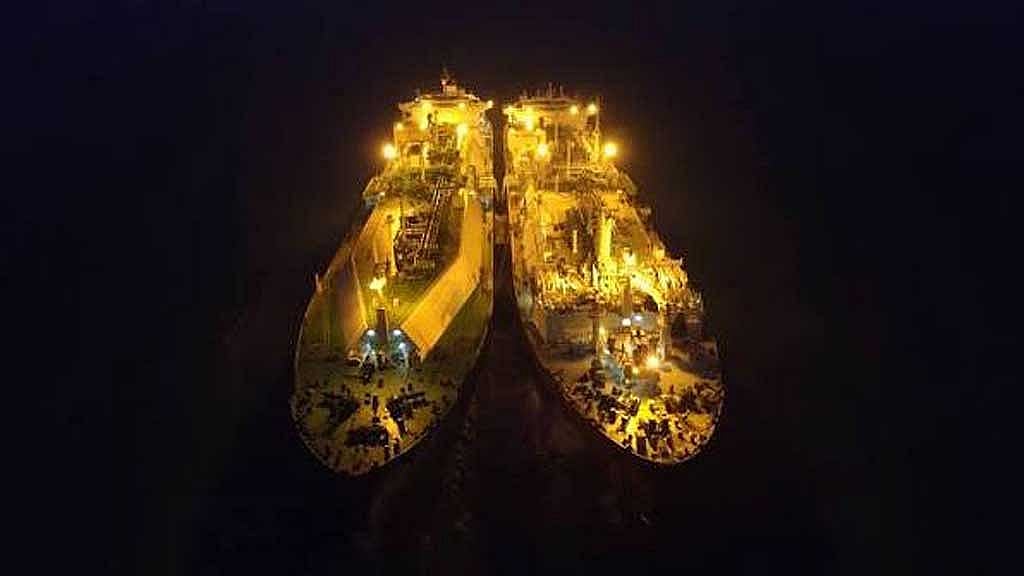
Events over recent years highlight that while reliance on imported LNG has grown, the infrastructure required to receive it lacks adequate redundancy.
Whenever an issue arises at either Moheshkhali terminal, several hundred million cubic feet of gas supply vanish.
This severely impacts an already deficit-ridden national grid, with immediate repercussions felt across domestic kitchens, CNG stations, power plants, and industrial units.
Prior to the breakdown at Excelerate Energy's floating terminal on Jul 21, the two Moheshkhali terminals were collectively supplying around 1,000mmcf to the national grid.
In the 24 hours from the morning of Jul 20, total supply stood at 993.53mmcf.
By the following day, it dropped to 621.58mmcf. The situation deteriorated further; in the 24 hours from the morning of Jul 26, LNG supply fell to 500.75mmcf – roughly half the pre-breakdown level.
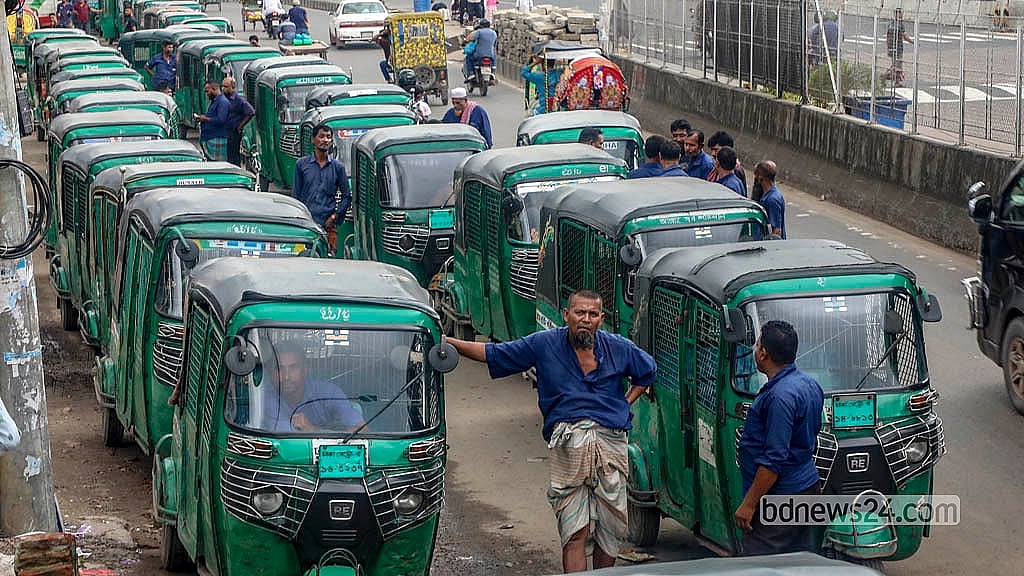
Helaluddin, a CNG auto-rickshaw driver from Cumilla working in Dhaka, was waiting at Royal Filling Station in Mohakhali.
By 4pm last Tuesday, he had already been in line for three and a half hours, with a long line of vehicles still ahead. No one could guarantee when he would receive gas.
He remains unaware of the technical details behind the sudden shortage. His calculation is simple: time spent in line means lost earnings.
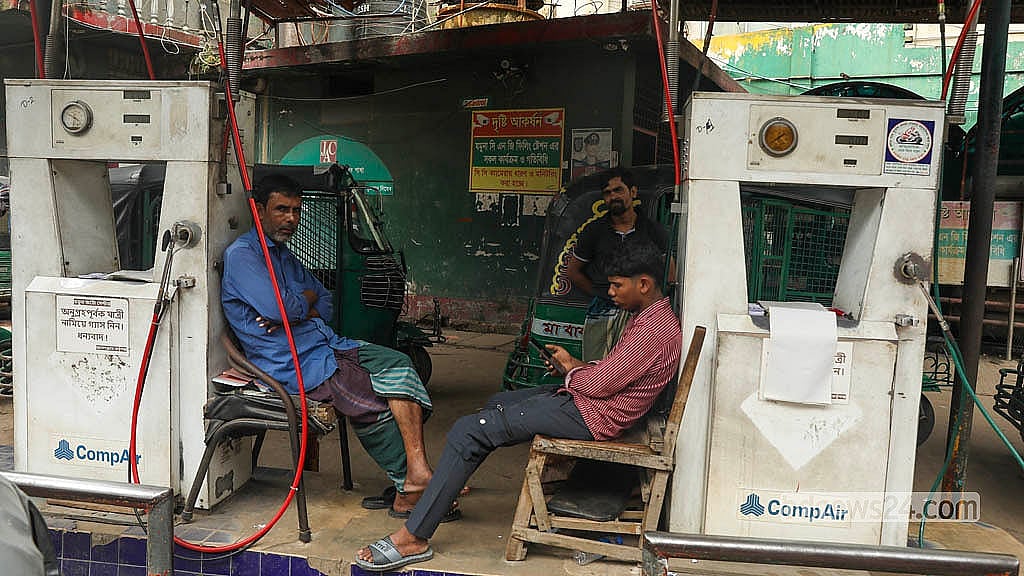
Even when gas is available, pressure issues often prevent full tank refills, forcing drivers to return to filling station lines after just a few trips.
Selim Mia, another driver queuing in Moghbazar, shared a similar account.
Previously, he could purchase around Tk 300 worth of gas at once, but current pressure drops often cap refills at Tk 100 to Tk 120. That quantity lasts for only a couple of passenger runs before requiring another queue, resulting in up to six hours lost daily just sourcing fuel.
Following the terminal failure, total gas supply from domestic fields and imported LNG stood at 2,140.3mmcf in the 24 hours from the morning of Aug 4 against a national demand of 3,854mmcf. The system met around 56 percent of national demand, with LNG contributing just 490.7mmcf.
The deficit extended beyond CNG stations. Many households were unable to light gas stoves during the day, resorting to induction cookers or preparing meals late at night.
Industrial plants experienced reduced gas pressure, while power plants struggled with fuel shortages, leading to increased load-shedding.
Operations partially resumed early on Aug 6 following repairs to a section of the damaged terminal, initially adding about 115mmcf back to the national grid.
Domestic Production Stagnates
The July crisis reignited focus on domestic production.
The five state-acquired fields from 1975 continue to supply a significant portion of local gas.
According to Petrobangla data from Aug 4–5, Titas yielded 333.4mmcf, Habiganj 102.3mmcf, Bakhrabad 18.2mmcf, and Rashidpur 70.1mmcf, alongside 45.5mmcf daily from two installations at Kailashtilla. In total, these five fields contributed 569.5mmcf.
With overall domestic production around 1,650mmcf, these five legacy fields account for roughly 34.5 percent of local output – underscoring the lasting significance of the 1975 acquisition while highlighting the limited progress made in discovering new fields to reduce over-reliance on aging assets.
The concentration of domestic production is itself a risk. During Aug 4–5, the Bibiyana field alone produced 747.1mmcf -- nearly 45 percent of total domestic output.
Combined with Titas, two fields generate nearly two-thirds of Bangladesh's domestic gas.
With both floating LNG import terminals located in Moheshkhali, import infrastructure is similarly localised, leaving the broader system vulnerable to regional operational failures.
Focus on Domestic Sources
To address this vulnerability, Petrobangla emphasises the need to step up domestic exploration and extraction.
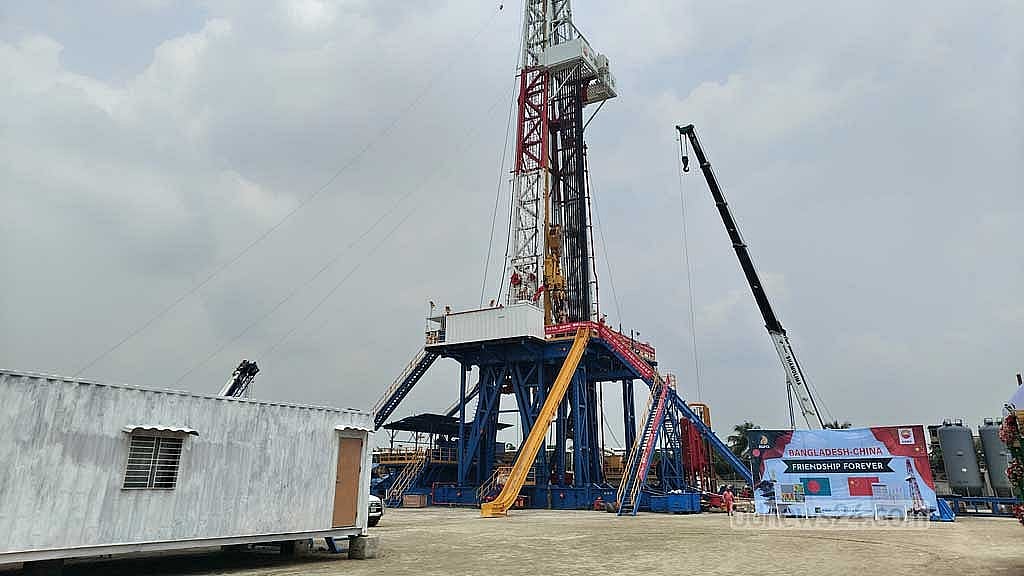
Petrobangla Chairman Abdul Mannan said two new drilling rigs -- with capacities of 2,000 horsepower and 1,500 horsepower -- are being procured to build the capacity of state exploration entity BAPEX.
However, he noted that bringing new wells online requires time.
The process -- spanning geological surveys, feasibility studies, regulatory approvals, international tendering, and drilling -- can take around a year.
"The government is actively working to ensure the country's energy security; there is no doubt about that," Mannan said.
While depletion in older fields was expected, output from newer wells has not fully offset declining production. As a result, energy planning increasingly focuses on the timeline for bringing new gas online alongside drilling targets.
Impact on Export Industries
Beyond domestic users and transport, the gas shortage has affected key industrial hubs.
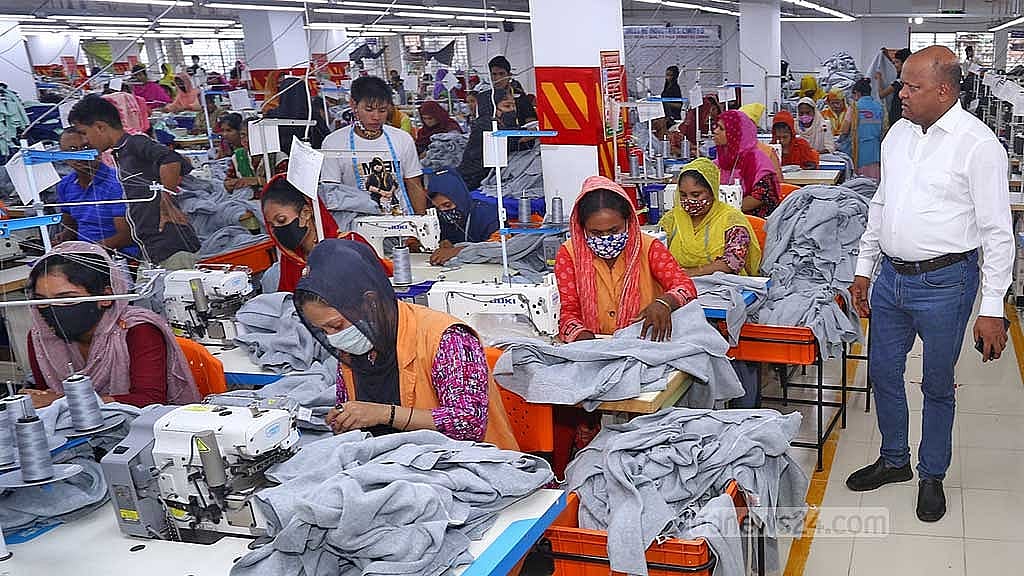
Anwar-Ul Alam Chowdhury, chairman of Evince Group and president of the Bangladesh Chamber of Industries (BCI), noted that production at several factories across Narayanganj, Ashulia, and Gazipur dropped by 35 to 40 percent.
He explained that export-oriented units face delays in manufacturing and shipping, creating uncertainty among international buyers.
Unusual delays prompt buyers to request discounts or ask manufacturers to cover air freight costs. Prolonged disruptions could eventually affect future purchase orders.
"When customers see delivery delays caused by energy shortages and realise the situation is uncertain, panic sets in among them," Chowdhury said.
He recommended prioritising gas allocation during acute shortages, suggesting power plants temporarily shift toward coal or alternative fuels, fertiliser plants reduce gas consumption in favour of imports, and CNG station allocations be gradually scaled back.
He also stressed minimising pipeline leakage and operational waste, while pursuing new LNG terminals, exploration, and well drilling over the medium-to-long term.
Mitigating Import Vulnerabilities via Renewables
While importing LNG bridges supply gaps, exposure to volatile international market prices drains foreign exchange reserves. Technical disruptions at import terminals further compound supply risks.
Energy analysts suggest expanding renewable power generation to help manage these vulnerabilities.
Under the government's Renewable Energy Policy 2025, Bangladesh aims to source 20 percent of its electricity from renewables by 2030 and 30 percent by 2040.
However, current capacity remains far below these targets.
Data from the Institute for Energy Economics and Financial Analysis (IEEFA) indicates that renewables accounted for just 2.3 percent of Bangladesh's power generation in 2025, compared with a global average of roughly 33.8 percent.
Installed renewable capacity stood at 1,690.7mw at the end of December 2025, leaving a significant gap to reach the 2030 target of 5,851mw. Meeting this target requires adding an average of 760mw of renewable capacity annually between 2026 and 2030.
Shafiqul Alam, lead analyst at IEEFA, noted that higher renewable generation during daylight hours could relieve pressure on gas-fired power plants, freeing up gas for industrial use.
However, solar power alone cannot resolve the shortfall. Gas will remain necessary for nighttime demand, continuous industrial loads, and grid stability. Consequently, renewable expansion must occur alongside domestic gas exploration.
Shafiqul suggested integrating domestic gas, renewables, existing power generation assets, and battery storage into a single operational roadmap.
IEEFA estimates show that a 1mw rooftop solar installation can save approximately Tk 22.4 million annually in imported fuel costs -- making renewable expansion both an environmental initiative and a measure to limit fuel import expenses and supply risks.