Published : 27 Jul 2026, 06:41 AM
Updated : 08 Sep 2026, 09:28 AM


Skyward Threats
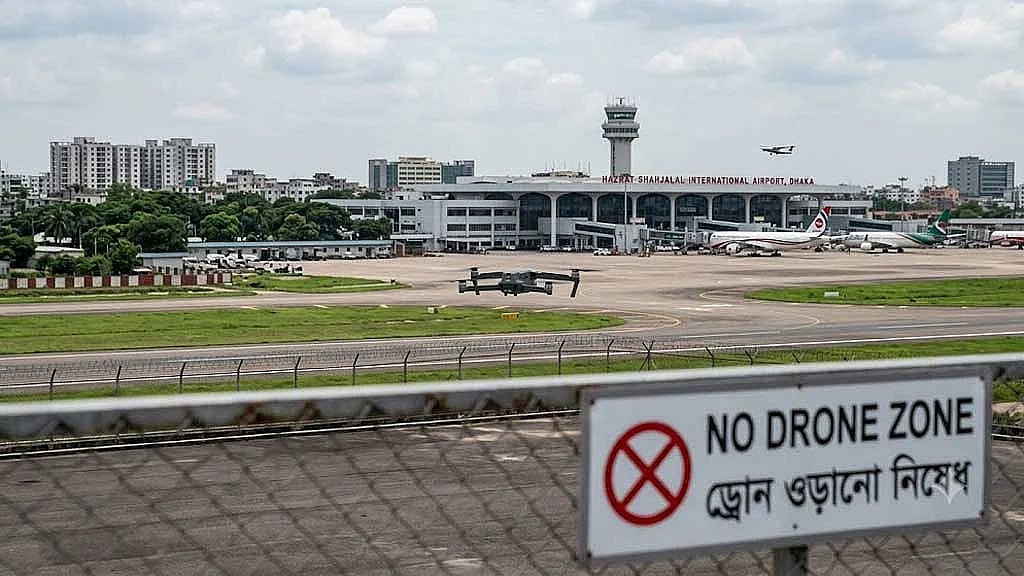
Beyond the birds: Drones are overtaking birds as the most dangerous airborne hazard at Shahjalal Airport
Defences outpaced: Newer Chinese-made drones can bypass existing safety locks, prompting urgent system upgrades
Tragic precedent: A deadly Air Force crash probe urges strict enforcement against flying objects near runways
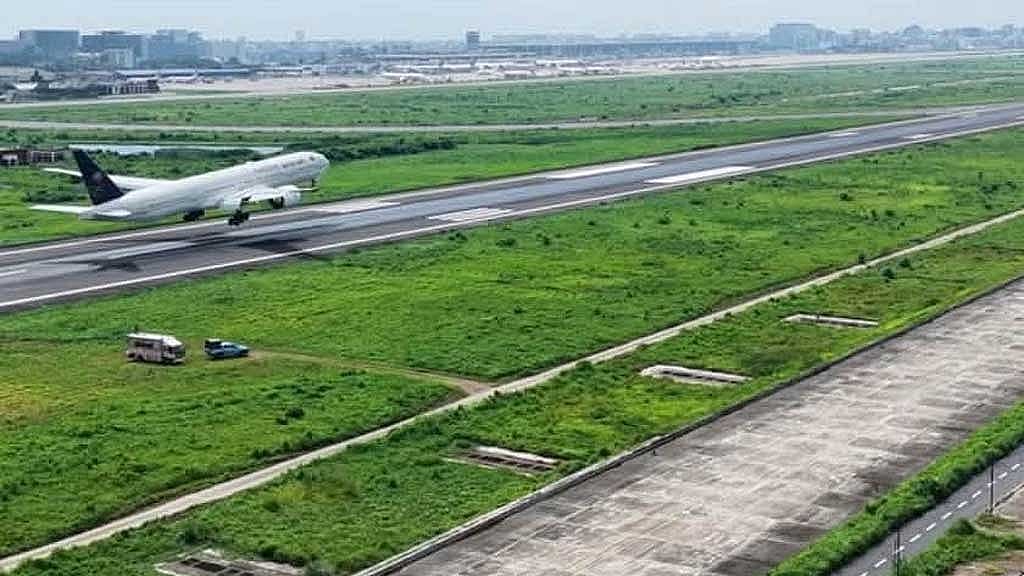
For decades, birds posed the greatest threat to aircraft taking off and landing at Dhaka's Shahjalal International Airport. Now aviation officials say another hazard is rapidly overtaking them: drones.
Cheap, powerful and increasingly difficult to stop, unmanned aircraft are frequently appearing over the country's busiest airport, sometimes hovering close to aircraft approaching or leaving the runway.
Officials fear it is only a matter of time before a serious accident occurs.
Those concerns have gained renewed urgency after the investigation into last year's devastating Milestone School and College crash recommended strict controls on drones and other flying objects around airports.
The Civil Aviation Authority of Bangladesh (CAAB) says the technology it has relied on to deter drones is no longer sufficient, with many newer Chinese-made drones capable of bypassing existing restrictions.

Reporters and online content creators now regularly fly drones around Shahjalal Airport to capture aircraft movements, often without regard for take-off and landing schedules, according to airport officials.
Last week, CAAB Chairman Air Vice Marshal Md Mostafa Mahmud Siddiq acknowledged the growing threat.
"Drones have become a global menace," he said. "We have seen their devastating use in Iran and Ukraine. We are going to take strong measures against them."
Defences Falling Behind
Air Commodore Abu Sayeed Mehbub Khan, CAAB's member for operations and planning, said the authority already has a drone-locking mechanism in place.
"We have a standard mechanism to lock drones," he said. "But many Chinese-made drones can bypass that mechanism. It's a form of hacking."
CAAB is now planning to procure a more sophisticated anti-drone system, initially for Shahjalal Airport, while intensifying enforcement of existing laws banning unauthorised drone flights near airports.
The danger, officials say, is no longer theoretical.

On Jul 15, a Facebook page named “Shada Payra–Prokriti Premik” uploaded drone footage showing aircraft landing at Shahjalal Airport. The videos appeared to have been filmed from Bawnia behind the airport. The same day, another drone flew over the airport's Third Terminal to capture aerial footage.
Drones were also spotted during the 2025 fire at the airport's Cargo Village, later identified as being operated by television crews.
Perhaps the most striking incident came on Dec 19, when several television stations flew drones and livestreamed the arrival of Inqilab Moncho spokesperson Sharif Osman Hadi's body from Singapore by air ambulance.
The flights took place in the presence of at least three government advisors and senior CAAB officials.
"Our biggest concern was that the drone was flying live while aircraft were operating," Mehbub said.
"If it had struck an aircraft, a small mistake could have cost the lives of 300 or 400 people."
He said CAAB had immediately warned media organisations that flying drones at the airport was illegal.
"Television channels were running our warning as a news ticker while broadcasting the drone footage on screen."
Unlike some countries that deploy anti-drone guns or jamming technology, Bangladesh is taking a different approach.
"Drones are no longer expensive," Mehbub said. "If you shoot one down, the operator may simply buy another."
Following the December incident, CAAB issued a formal notice reminding media organisations and the public that unauthorised drone operations around airports are prohibited under the Drone Registration and Operation Guidelines 2020.
Lessons from the Milestone Tragedy
The renewed focus on drones also stems from the investigation into the Jul 21, 2025 crash of an Air Force training aircraft at Milestone School in Uttara, which killed 36 people, most of them children.
Quoting the Air Force's internal investigation, the government-appointed commission said CCTV footage showed a "black mark" on the aircraft's windscreen moments before impact.
The report said the mark could have been caused by a bird or another airborne object, prompting the pilot to make a sudden manoeuvre that may have contributed to the crash.
Although no conclusion was drawn that a drone caused the accident, the commission urged CAAB and other agencies to ensure that birds, drones and any other objects capable of endangering flight safety are strictly controlled in the airspace around Shahjalal Airport and other airports nationwide.
Bangladesh is far from alone.
According to Reuters, US officials told a Senate committee that more than 3,000 drone-related incidents had been reported near American airports between 2021 and mid-2025. Eleven aircraft were forced to take evasive action this year alone to avoid collisions.
British aviation experts have also warned that drones pose a greater impact risk than birds because of their dense components, potentially damaging aircraft windscreens, engines or even striking cockpits.
For Bangladesh's aviation authorities, those international warnings are becoming increasingly difficult to ignore. As drones become cheaper, smarter and harder to stop, officials fear the next close call may not end as a near miss.