Published : 30 May 2026, 07:51 AM
Updated : 21 Aug 2026, 03:48 PM


Iran and the United States are in discussions to extend their ceasefire so as to start negotiations on issues including Tehran's nuclear programme, where Washington insists Iran must not be able to make a nuclear weapon.
While much of Iran's uranium enrichment infrastructure was destroyed or badly damaged when Israel and the US bombed it in June, a large part of the highly enriched uranium it amassed is thought to have survived. That is the biggest US concern ahead of nuclear talks.
On Friday, Trump said in a social media post that Iran must agree that the enriched uranium buried underground after earlier US strikes be "unearthed" and destroyed in coordination with Iran and the UN nuclear watchdog.
What Is Highly Enriched Uranium?
One of two fissile materials, along with plutonium, with which one can make the core of a nuclear bomb.
While plutonium is usually extracted from the spent fuel of a nuclear reactor, requiring large and highly visible infrastructure, uranium can be enriched using centrifuges that have a much smaller footprint.
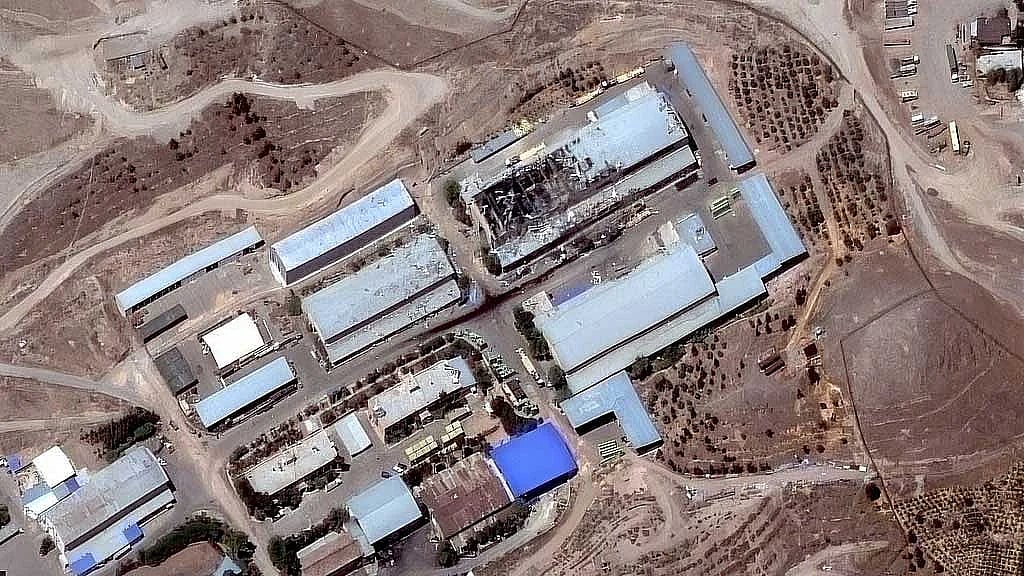
Two of Iran's three enrichment sites that are known to have been operating when Israel and the US attacked in June were underground. The above-ground one was clearly destroyed.
Uranium is highly enriched when it has reached 20% purity, and weapons-grade as of around 90%.
Modern reactors generally use fuel enriched to up to 5 percent but some use fuel enriched to higher levels. The ones that power US nuclear submarines reportedly use fuel enriched beyond 90 percent.
How Much Does Iran Have?
Iran has not informed the UN nuclear watchdog of the fate of its enriched uranium since the June attacks or let its inspectors return to the sites where it was stored.
The International Atomic Energy Agency estimates Iran had these amounts when the first Israeli bombs fell on June 13:
- 440.9 kg enriched to up to 60 percent
- 184.1 kg enriched to up to 20 percent
- 6,024.4 kg enriched to up to 5 percent
- 2,391.1 kg enriched to up to 2 percent
According to an IAEA yardstick, the amount at 60 percent is enough, if enriched further, for 10 nuclear weapons. The 20% stock would be enough for one and the 5 percent could produce 12.
How much has survived is unclear. IAEA chief Rafael Grossi has said his agency believes "a bit more than 200 kg" of the 60% stock is stored at a tunnel complex in Isfahan that appears to have been largely unharmed by the June attacks. Some was also at the Natanz nuclear site, he said.
WHY THE CONCERN?
US concern has been focused on the 60 percent material because that would be easiest and thus quickest to make a bomb with. Washington wants it gone. Iran denies seeking nuclear weapons.
As the enrichment level of uranium increases, it becomes exponentially easier to enrich further. Getting from 60 percent to 90 percent is easier than getting from unenriched to 5 percent.
President Donald Trump pulled the United States out of a nuclear deal between Iran and major powers that kept Tehran at a far greater distance from being able to produce an atom bomb than it is at now. The US withdrawal in 2018 caused the deal to unravel, and Iran quickly expanded its atomic programme.
Under that 2015 deal, Iran did not enrich beyond 3.67 percent.
Even at 90 percent, however, it takes more steps to produce the core of a bomb. When it is enriched, the uranium is in gas form. It must then be turned into metal for use in a weapon.
Can You Move It?
Yes. Iran moved enriched material between sites under IAEA monitoring before the June attacks.
Under the 2015 deal and a precursor to it, Iran's stocks of uranium enriched to up to 20 percent were diluted or turned into reactor fuel plates and shipped out of the country.
Moving nuclear material like highly enriched uranium internationally is a sensitive but relatively routine procedure.
"It requires some precaution but it can be moved," Grossi told PBS in March when asked about the 60 percent material.
Will Iran Give It Up?
Iran's supreme leader has issued a directive that the 60 percent material should not be sent abroad, two senior Iranian sources said last week.
Iranian sources say Tehran might agree to send half of it to a third country, receiving uranium enriched to 5 percent in return, and dilute the other half inside Iran.