Published : 19 Sep 2022, 11:22 AM
Updated : 20 Sep 2022, 01:47 AM


Queen Elizabeth was laid to rest alongside her beloved husband on Monday after a day which saw Britain and the world pay a final farewell to the nation's longest-reigning monarch, in a dazzling show of pomp and ceremony.
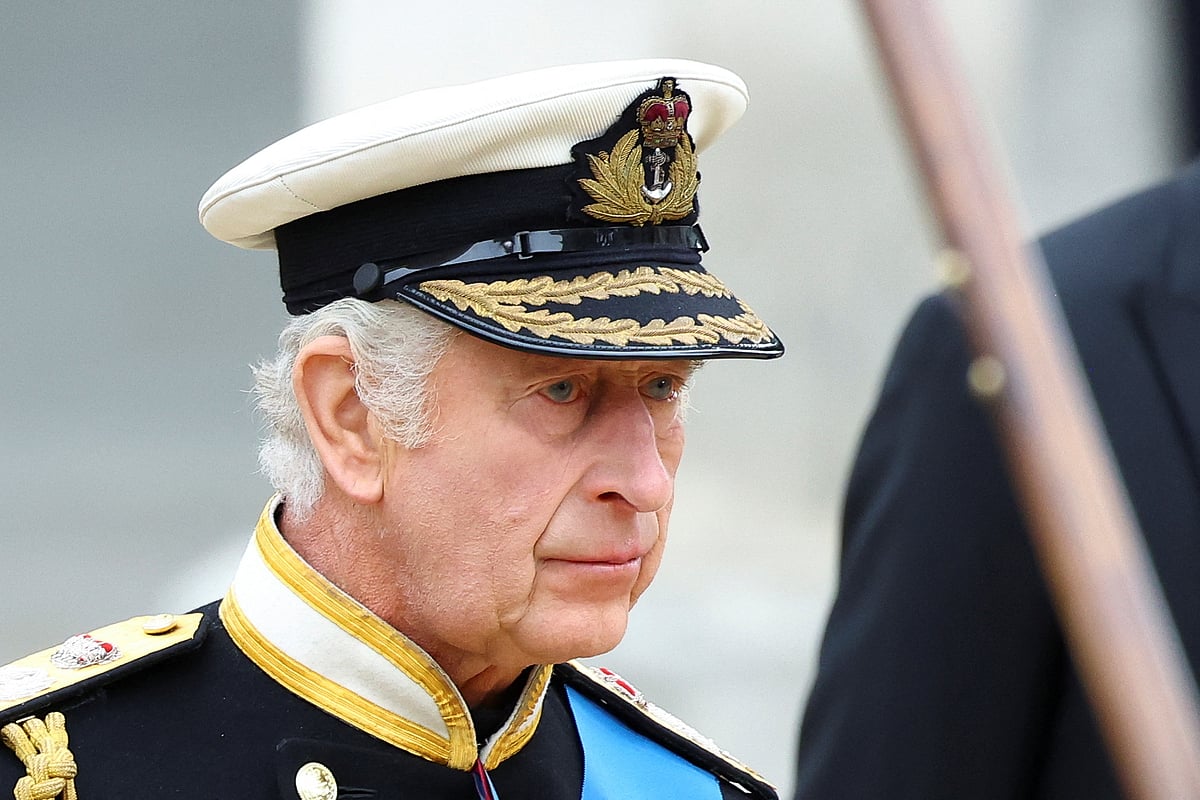
Amid formality and careful choreography, there were moments of raw emotion. Late in the day an ashen-faced King Charles held back tears, while grief was etched on the faces of several members of the royal family.
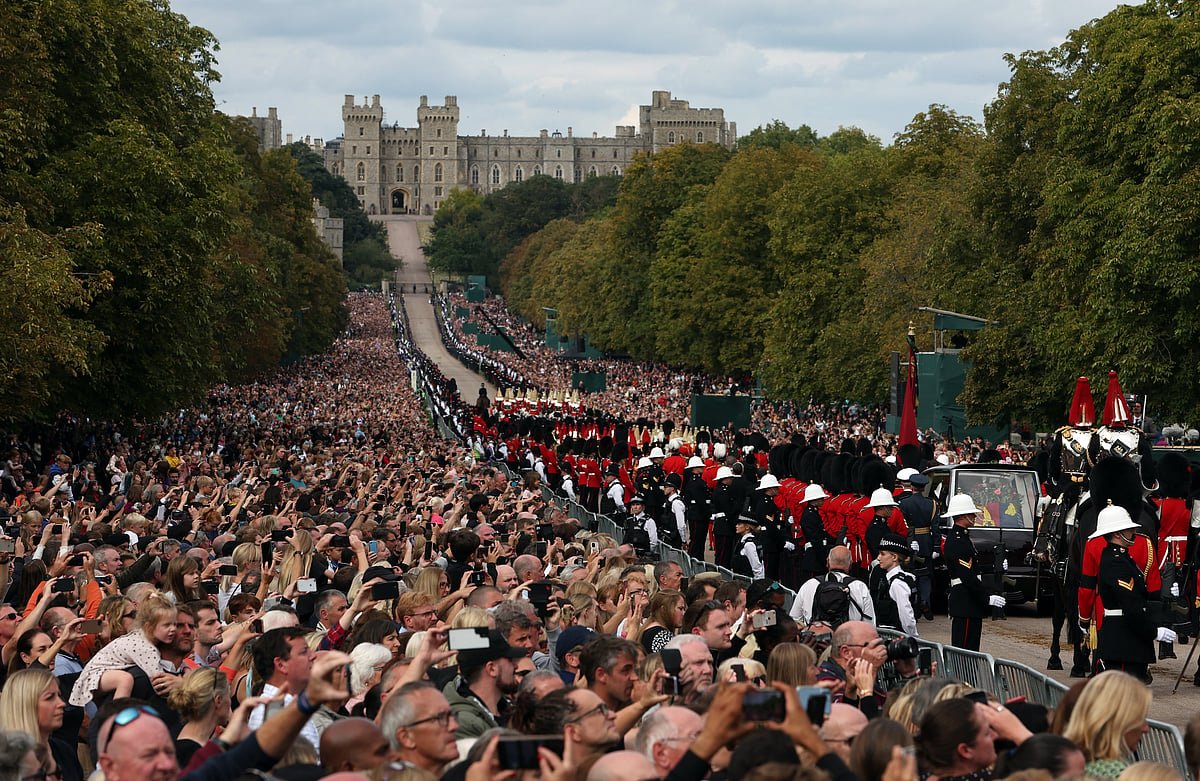
Huge crowds thronged the streets of London and at Windsor Castle to witness the moving, grand processions and ceremonies.
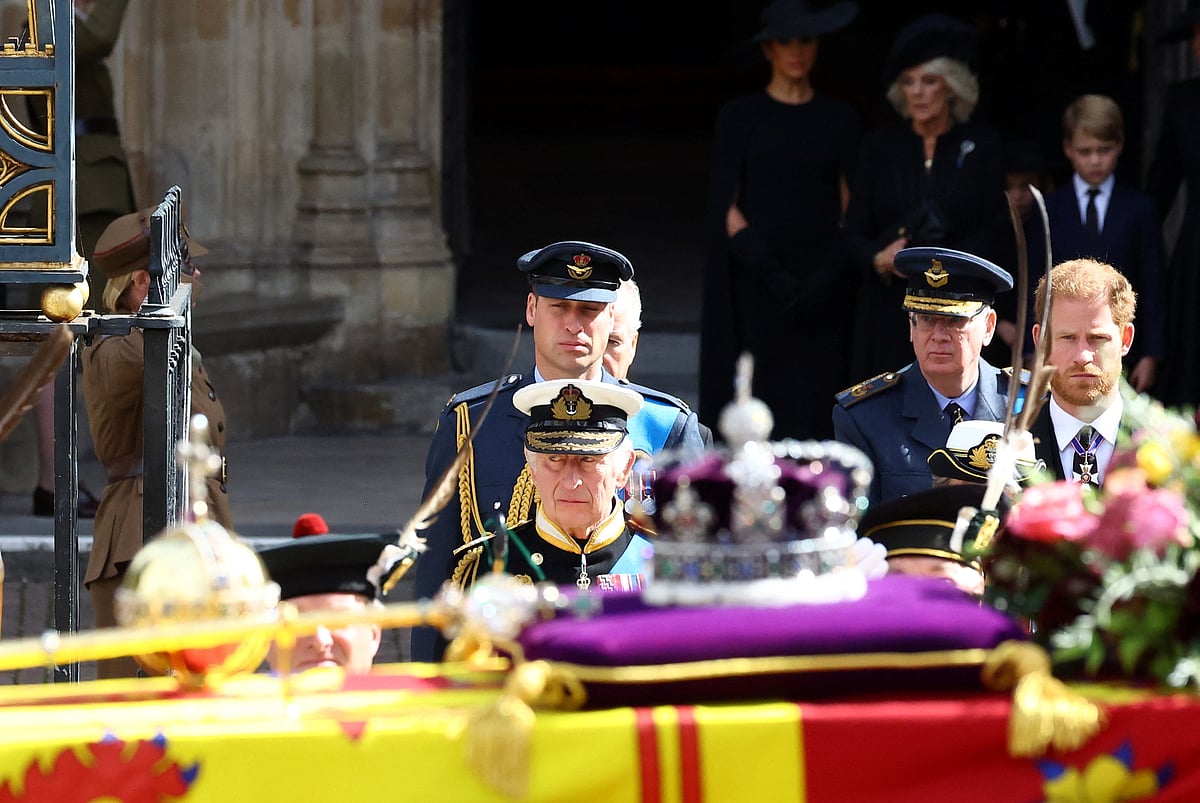
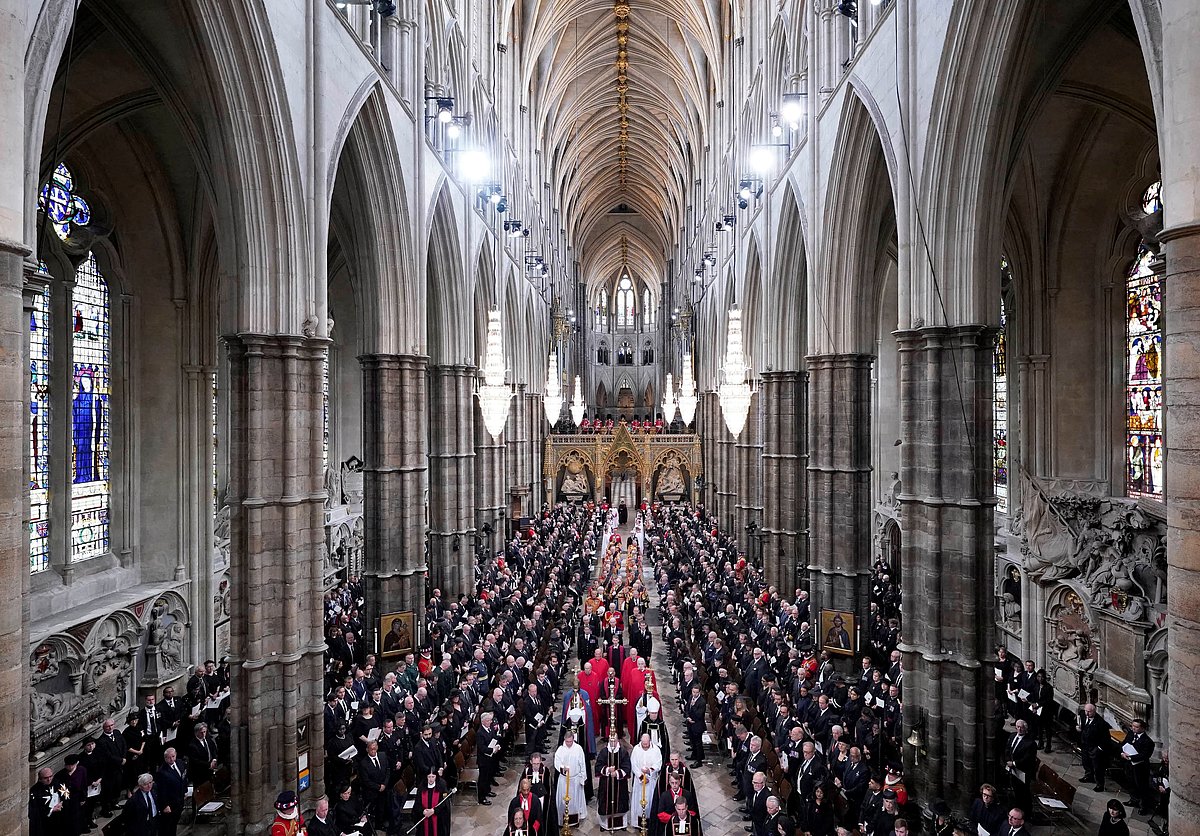
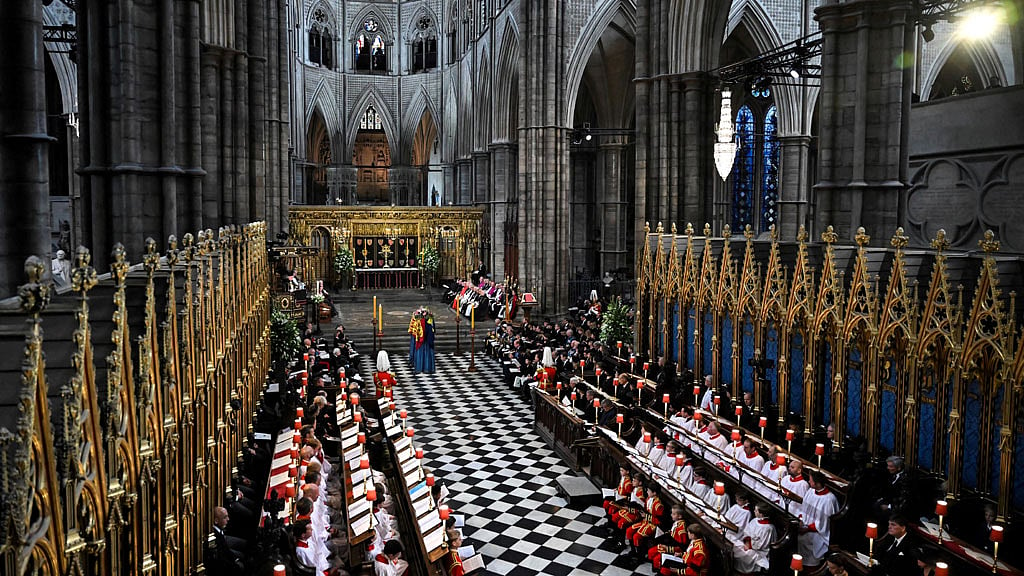
"Few leaders receive the outpouring of love that we have seen," Justin Welby, the Archbishop of Canterbury, told the congregation at the state funeral in the majestic Westminster Abbey, where monarchs have been married, buried and crowned over the last 1,000 years.
Among the 2,000 congregation were some 500 presidents, prime ministers, foreign royal family members and dignitaries, including Joe Biden of the United States.
Outside hundreds of thousands had crammed into the capital to honour Elizabeth, whose death at the age of 96 has prompted an outpouring of gratitude for her 70 years on the throne.
Many more lined the route as the hearse took her coffin from London to Windsor, throwing flowers, cheering and clapping as it passed from the city to the English countryside that she loved so much.
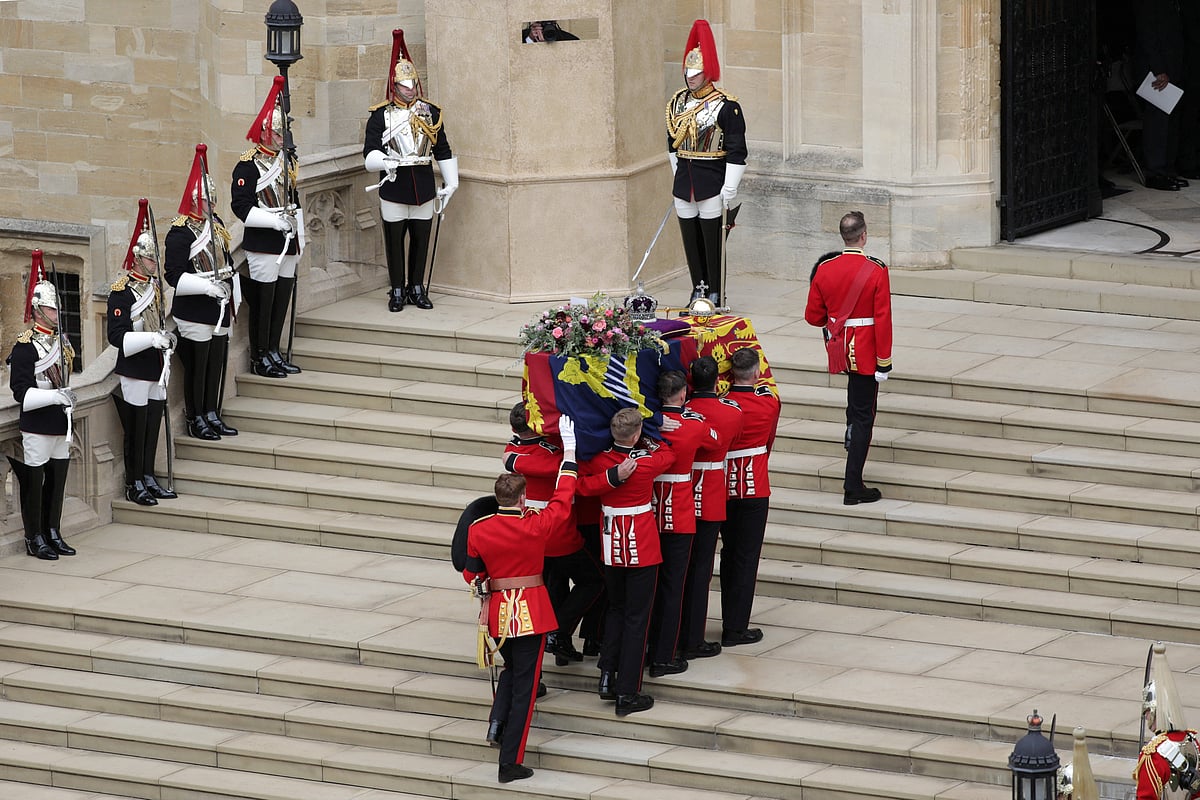
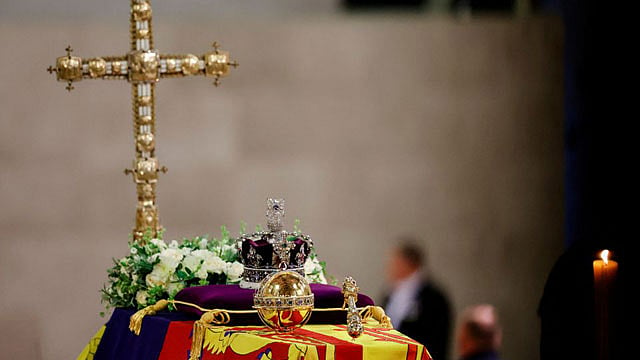
At St George's Chapel in Windsor Castle, some 800 guests attended a more intimate committal service which concluded with the crown, orb and sceptre - symbols of the monarch's power and governance - being removed from the coffin and placed on the altar.
The Lord Chamberlain, the most senior official in the royal household, then broke his 'Wand of Office', signifying the end of his service to the sovereign, and placed it on the casket which then slowly descended into the royal vault.

As the congregation sang "God Save the King", King Charles, who faces a huge challenge to maintain the appeal of the monarchy as economic hardship looms in Britain, appeared to be fighting back tears.
It was in the same vast building that the queen was photographed alone, mourning her husband of 73 years, Prince Philip, during the pandemic lockdown, reinforcing the sense of a monarch in synch with her people during testing times.
Later on Monday evening, in a private family service, the coffins of Elizabeth and Philip, who died last year aged 99, were moved from the vault to be buried together in the same chapel where her father, King George VI, mother, and sister, Princess Margaret, also rest.
'ABUNDANT LIFE'
At the state funeral, Welby told those present that the grief felt by so many across Britain and the wider world reflected the late monarch's "abundant life and loving service".
"Her late majesty famously declared on a 21st birthday broadcast that her whole life would be dedicated to serving the nation and Commonwealth. Rarely has such a promise been so well kept," Welby said.
Music that played at the queen's wedding in 1947 and her coronation six years later again rang out. The coffin entered to lines of scripture set to a score used at every state funeral since the early 18th century.
After the funeral, her flag-draped casket was pulled by sailors through London's streets on a gun carriage in one of the largest military processions seen in Britain, involving thousands of members of the armed forces dressed in ceremonial finery.
They walked in step to funeral music from marching bands, while in the background the city's famous Big Ben tolled each minute. Charles and other senior royals followed on foot.
The casket was taken from Westminster Abbey to Wellington Arch and transferred to a hearse to travel to Windsor, where more big crowds waited patiently.
Among those who came from around Britain and beyond, people climbed lampposts and stood on barriers and ladders to catch a glimpse of the royal procession.
Some wore smart black suits and dresses. Others were dressed in hoodies, leggings and tracksuits. A woman with dyed green hair stood next to a man in morning suit as they waited for the London procession to begin.
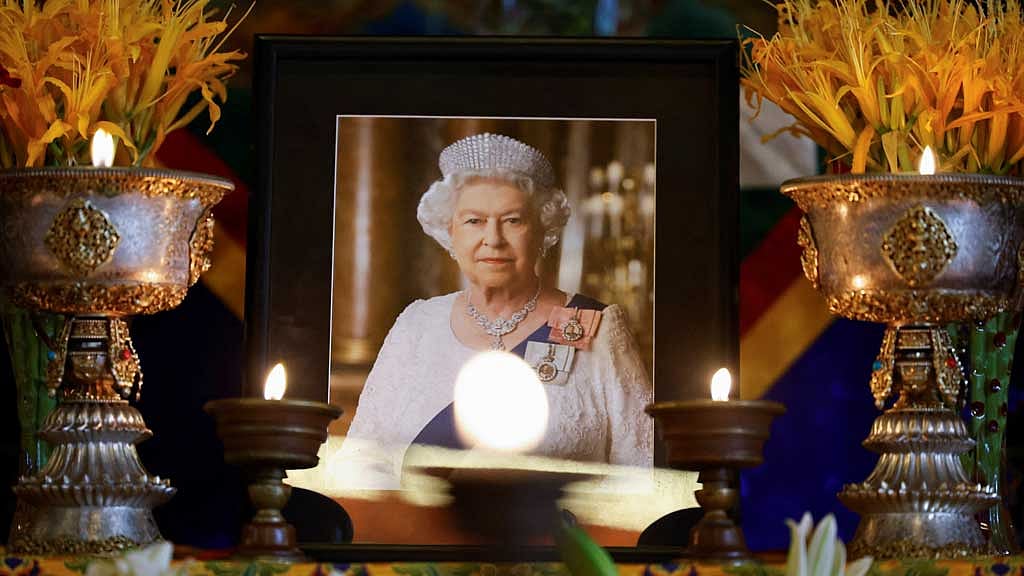
Millions more watched on television at home on a public holiday declared for the occasion, the first time the funeral of a British monarch has been televised.
"I've been coming to Windsor for 50 years now," said Baldev Bhakar, 72, a jeweller from the nearby town of Slough, speaking outside Windsor Castle.
"I saw her many times over the years; it felt like she was our neighbour and she was just a lovely woman; a beautiful queen. It was good to say one last goodbye to our neighbour."
'INVINCIBLE'
Elizabeth died on Sept 8 at Balmoral Castle, her summer home in the Scottish highlands.
Her health had been in decline, and for months the monarch who had carried out hundreds of official engagements well into her 90s had withdrawn from public life.
However, in line with her sense of duty she was photographed just two days before she died, looking frail but smiling and holding a walking stick as she appointed Liz Truss as her 15th and final prime minister.
Such was her longevity and her inextricable link with Britain that even her own family found her passing a shock.
"We all thought she was invincible," Prince William told well-wishers.
The 40th sovereign in a line that traces its lineage back to 1066, Elizabeth came to the throne in 1952 and became Britain's first post-imperial monarch.
She oversaw her nation trying to carve out a new place in the world, and she was instrumental in the emergence of the Commonwealth of Nations, now a grouping comprising 56 countries.
When she succeeded her father George VI, Winston Churchill was her first prime minister and Josef Stalin led the Soviet Union. She met major figures from politics, entertainment and sport including Nelson Mandela, Pope John Paul II, the Beatles, Marilyn Monroe, Pele and Roger Federer.

Despite being reputedly 5ft 3ins (1.6m) tall, she dominated rooms with her presence and became a towering global figure, praised in death from Paris and Washington to Moscow and Beijing. National mourning was observed in Brazil, Jordan and Cuba, countries with which she had little direct link.
"People of loving service are rare in any walk of life," Welby said during the funeral. "Leaders of loving service are still rarer. But in all cases, those who serve will be loved and remembered when those who cling to power and privileges are long forgotten."
The tenor bell of the Abbey tolled 96 times. Among the hymns chosen for the service were "The Lord's my Shepherd", sung at her wedding in the Abbey.
In the royal group following the casket into the Abbey was the queen's great-grandson and future king, Prince George, aged 9 and his younger sister Charlotte, 7.
Towards the end of the service, the church and much of the nation fell silent for two minutes. Trumpets rang out before the congregation sang "God Save the King". Outside, crowds joined in and broke into applause when the anthem was over.
The queen's piper brought the service to an end with a lament called "Sleep, Dearie, Sleep".
At Windsor there was a similar, poignant end to the ceremony with a lone piper walking away, leaving the chapel in silence.
"I've sang God Save the Queen all my life," said John Ellis, 56, an army veteran who had travelled to Windsor. "It's going to be quite hard to change now."