Published : 19 Jul 2025, 10:28 AM
Updated : 21 Aug 2026, 01:32 PM


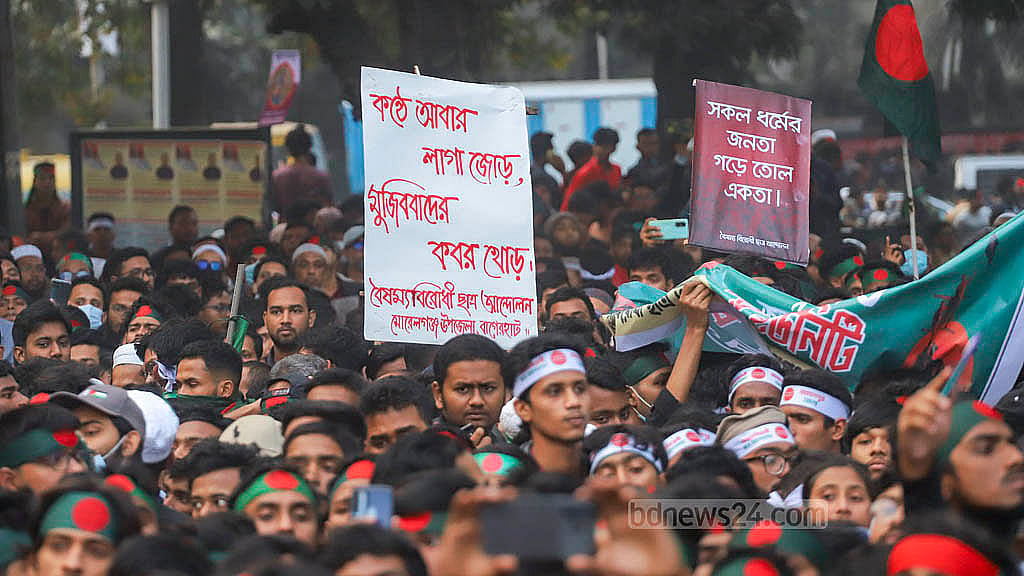
A year after the so-called July Uprising upended Bangladesh’s political landscape, the country remains in a period of fluid transition, grappling with the aftershocks of regime change and the uncertainties of institutional reform.
The toppling of Sheikh Hasina’s government, after 15 years in power, by a mass student-led movement on Aug 5, 2024 -- rebranded by protesters as "36 July" -- ushered in an interim government headed by Nobel laureate Muhammad Yunus.
The new administration pledged sweeping reforms, including judicial action on alleged human rights abuses and constitutional restructuring.
Yet, despite the initial surge of hope, political analysts say the promise of democratic renewal is being muddied by fragmentation, rivalry, and inconsistency among the very forces that helped bring about change.
“Neither old nor new political parties are responding meaningfully to the call for genuine transformation,” says Prof Kazi Mahbobor Rahman, who teaches political science at Dhaka University. “The government itself is struggling to provide adequate support for these reforms.”
POST-JULY POWER SHIFTS: ALLIES SPLINTER
Long-time allies the BNP and Jamaat-e-Islami, key players in the 2024 protest movement, have since drifted apart.
The BNP now denies any plans for a renewed electoral alliance with Jamaat, citing past “strategic alliances” but claiming such a coalition is no longer necessary.
In contrast, the Jamaat has been forging ties with Islamist parties to consolidate conservative votes, while courting the National Citizen Party (NCP).
A new political force born out of the July Uprising, the NCP has sought to position itself as a reformist alternative, but has already become embroiled in allegations ranging from extortion to harassment, raising concerns about its internal discipline.
“What we’re seeing is that people may have changed, but the political process hasn't,” notes Prof Zobaida Nasreen, a political anthropologist. “Even some of the new parties are mimicking the old patterns of power.”
The interim government has launched national dialogues via a National Consensus Commission, holding consultations with nearly 30 parties, including the BNP, Jamaat, and NCP. Yet ideological cohesion remains elusive.
With the Awami League now banned and off the political field, former opposition parties are recalibrating their positions.
The BNP, for instance, is reaching out to smaller factions to bolster its strength ahead of elections. Meanwhile, debates rage over the timeline and framework for reforms, particularly around women’s representation and electoral restructuring.
Since taking office, the Yunus-led interim government has launched initiatives to investigate alleged crimes against humanity committed during the July–August uprising, address corruption and irregularities during the Awami League’s 15-year rule, and pursue comprehensive reforms of the constitution and state institutions.
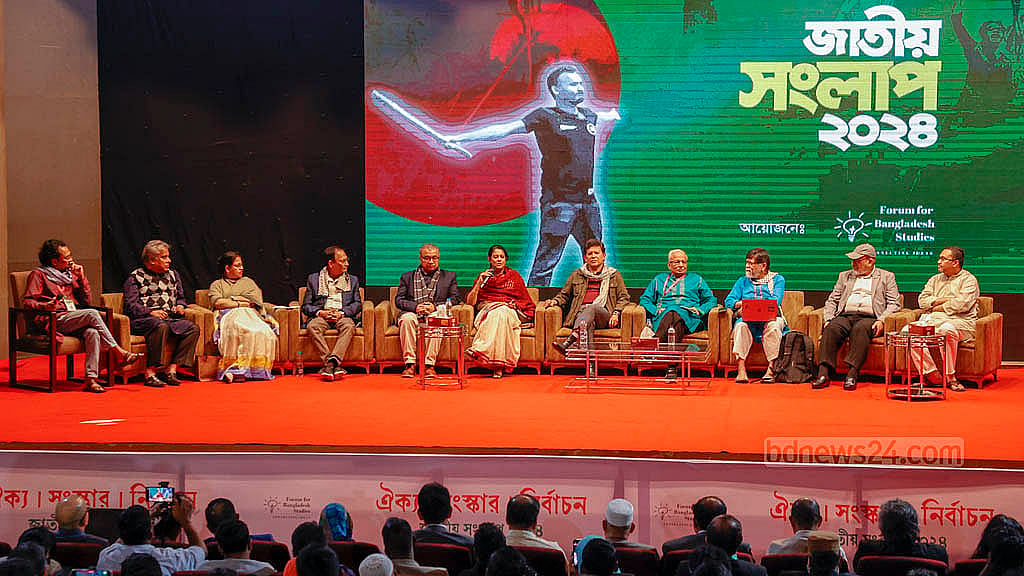
A push for unity culminated in year-end dialogues involving 20 parties, but consensus remains fragile. While Jamaat appears to be aligning with the NCP on several fronts, analysts warn that political fluidity may shift alliances closer to the elections.
Meanwhile, the Jatiya Party, formerly the main opposition during the Awami League era, has been hit by internal discord. Left-leaning political parties, while broadly supportive of the interim government's reform agenda, have maintained opposition on various key issues.
Several parties that had faced repression and marginalisation under the Awami League’s rule have now emerged at the forefront of the call for justice over the July Uprising’s violence and have joined the ongoing constitutional reform process.
As the next national election looms, both the BNP and Jamaat-e-Islami are working to strengthen their political leverage by engaging with smaller parties and factions. The aim appears to be to consolidate negotiating power in the reform dialogue and prepare for potential electoral coalitions.
At year’s end, a civil society initiative, the Forum for Bangladesh Studies, convened a national dialogue with 20 political parties and alliances, emphasising reform as the core agenda.
While BNP has expressed reservations about aspects of the reform process and the election timeline, Jamaat’s positions have notably aligned more closely with those of the interim government. In this context, the NCP, founded by leaders of the July movement, appears to be operating in parallel with Jamaat.
Jamaat has also initiated outreach to religion-based parties, including Islami Andolon Bangladesh, in an effort to unify Islamist votes under a shared platform. Party leaders have suggested that votes from like-minded groups should be consolidated into a single electoral bloc.
In the absence of the Awami League from the electoral scene, BNP Standing Committee member Salahuddin Ahmed recently said that there was no prospect of a fresh electoral alliance with Jamaat, although the door remains open for the NCP.
“We previously allied with Jamaat as part of a broader political strategy. But this time, we don’t see the need for such an alliance,” he said.
Political analyst Zobaida, however, warns against reading too much into current distances between the BNP and Jamaat.
“In politics, nothing is ever final. Who aligns with whom at the last moment is always uncertain especially as the use of religion in Bangladesh’s politics appears to be growing.
“At the moment, it seems Jamaat is aiming to gain power independently. Sometimes it brings the NCP along, though in most cases, the NCP appears to be leaning heavily on Jamaat to advance. For now, BNP and Jamaat seem to be maintaining a distance.”
Zobaida continued: “But when it comes to the final stretch before the election, the Awami League could re-enter the race — and that could change everything. We might even see new alliances. It all depends on a series of ‘ifs’ and shifting calculations.”
WHAT LIES AHEAD FOR AWAMI LEAGUE?
Following its ouster, the Awami League was forced off the political field. Party chief Sheikh Hasina, along with many senior leaders and activists, fled the country, while several others who remained were arrested and imprisoned.
Since leaving the country, former prime minister Hasina has been living in Delhi. Although she has occasionally appeared live on social media, she has not made any public appearances in person.
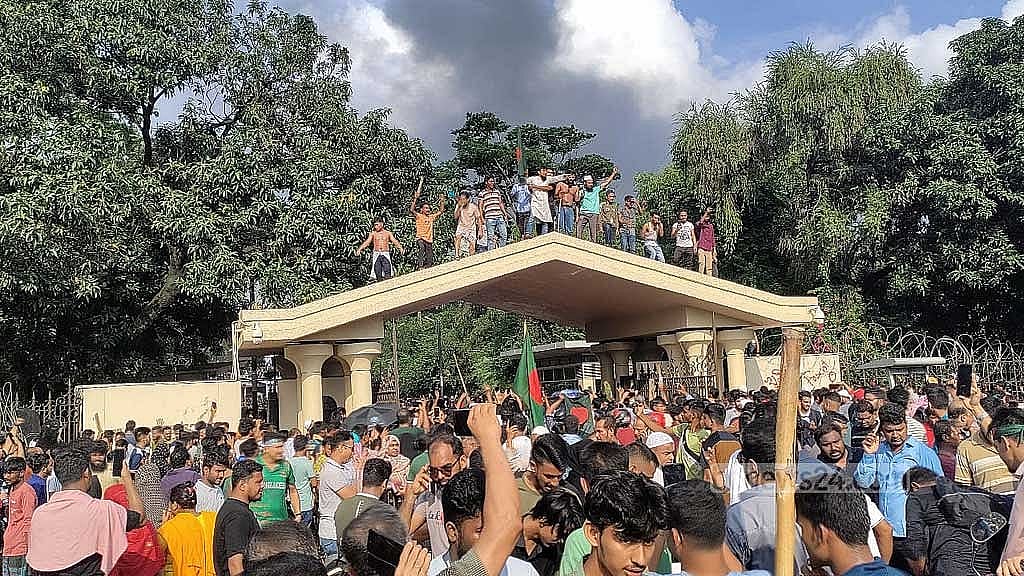
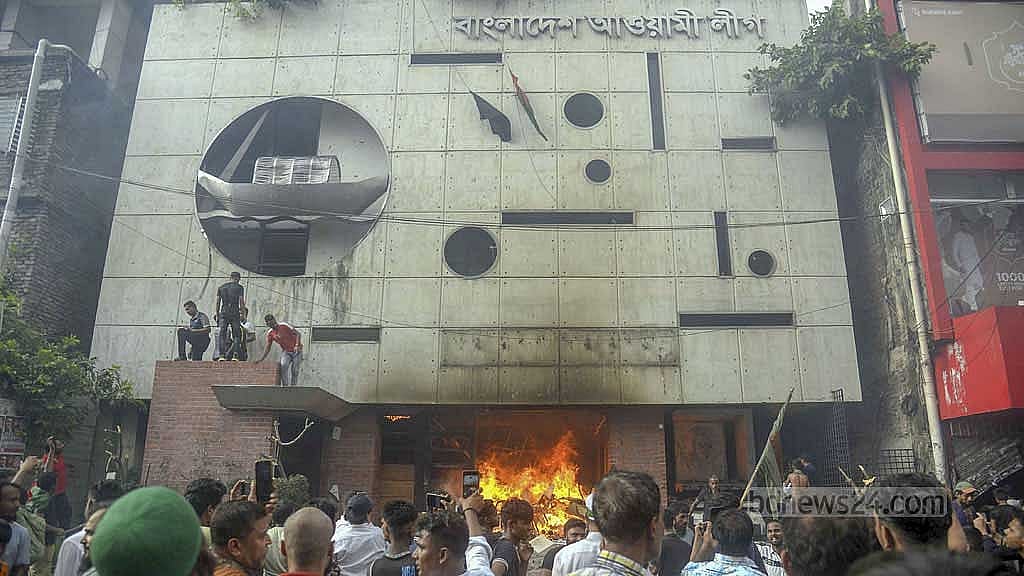
Even though the Awami League continues to maintain a strong presence online and hold sporadic flash rallies though its loyalists, its political activities were officially banned by the interim government on May 12 his year.
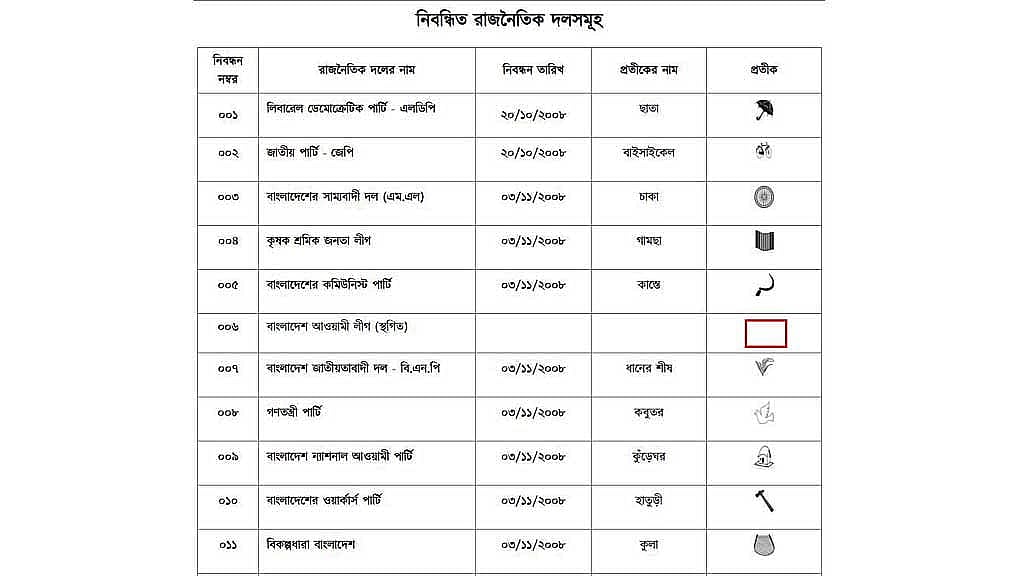
Under the Anti-Terrorism Act, the government imposed this ban and, on the same day, the Election Commission suspended the party’s registration under the Representation of the People Order.
Earlier, the government amended the International Crimes Tribunal Act with the aim of prosecuting the party that spearheaded Bangladesh’s independence struggle for alleged crimes against humanity during the suppression of the July movement.
The decision followed demands from the NCP as well as Jamaat-e-Islami and several other religion-based parties. While the BNP did not initially endorse the ban, it has since welcomed the move.
Before the action against the Awami League, in October last year, its affiliated student wing the Bangladesh Chhatra League was banned as well.
Meanwhile, the Awami League and affiliate leaders arrested over alleged involvement in killings during the uprising have been brought to trial in the International Crimes Tribunal and other courts.
The interim government has also initiated the removal or renaming of public installations and institutions bearing the names of Hasina and her family members, citing their role in what it calls a “fascist and autocratic” regime.
On Aug 5, the day Hasina was removed from power, the residence of Bangabandhu Sheikh Mujibur Rahman at Dhanmondi 32, which had been burnt during protests, was bulldozed. The government later pointed to what it described as “incendiary” speeches by Hasina, circulated on social media, as justification for the attack on the house.
The government has hinted at holding the general election in the first half of next year. Whether the Awami League will be allowed to participate remains uncertain and depends on a court ruling. However, various political parties currently on the ground have begun preparing for the election without factoring in the Awami League.
Citing a survey conducted on Jul 7 involving 2,000 young respondents, the South Asian Network on Economic Modeling (SANEM) reported that the Awami League would secure only 15.02 percent of the vote if it contests the next general election.
Political analyst Prof Mahbobor has suggested that it is still too early to say whether the Awami League will be allowed in the election.
On the other hand, senior journalist Mozammel Hossain has criticised the Awami League leadership for lacking initiative to return to the political arena.
He commented that instead of reflecting on its time in power or expressing any remorse, the Awami League is pushing its supporters toward danger by continuing to issue threats.
Highlighting that most the Awami League leaders are either in hiding or in custody, Mozammel told bdnews24.com: “In the past year, the party’s leadership has failed to offer any direction on how it plans to re-enter politics.
“It’s true that during the Awami League’s rule, widespread injustice, repression, corruption, and manipulation of elections deeply angered the people. What we saw a year ago, the uprising and the fall of the government, was really an eruption of that collective anger.”
He added: “The Awami League deeply wounded the public during its time in power. Ideally, the party should soften its stance, engage in introspection, and return to the people with a revised political strategy.
“But instead, it keeps declaring ‘we will return and show everyone. We will return, and no one will be spared. No one will escape the country’.
“Statements like these are stoking fresh tensions in the political landscape. One cannot entirely rule out their influence in recent incidents like what happened in Gopalganj.”
He suggests: “The Awami League must first reflect on its own actions, why it was toppled by such public rage and protest.
“Some degree of introspection and repentance is necessary, and the party must design a clear political strategy to reconnect with the people.
“Without such a plan or leadership,” Mozammel concluded, “if its top brass remain in hiding while pushing young activists into the line of fire, it’s simply not acceptable.”
BNP EYES POWER AS GRASSROOTS TURN UNRULY
With its arch-rival the Awami League shunted out of the political field, the BNP now has its sights set on state power. As a major force behind the movement that led to Hasina’s fall, the party is pushing for national elections to be held as soon as possible.
While expressing support for the interim government’s reform agenda and the aspirations of the July Uprising, the BNP is simultaneously applying pressure for a swift return to elections.
Alongside engaging with the government on the reform process, the BNP has also flexed its street power multiple times, demanding a roadmap for the general election.
When party Chairperson Khaleda Zia returned to Dhaka in May after receiving medical treatment in London, thousands of supporters lined the route from the airport to her residence in Gulshan, signalling the BNP’s organisational strength.
Although some political parties have called for local government elections to be held ahead of the national vote, the BNP has opposed such moves.
The interim government had previously stated its intention to hold the 13th parliamentary election by June 2026.
Unconvinced by statements from Yunus and his advisors, the BNP demanded that a clear election roadmap be announced, calling for the vote to be held by December this year.
Amid disputes over the election timeline, the BNP continued to take a stance against the interim government on several fronts, while maintaining pressure through its presence on the streets.
On the eve of Eid-ul-Azha, Chief Advisor Yunus indicated in a national address that elections might be moved forward slightly, potentially taking place in April next year.
While parties like Jamaat and the NCP welcomed the announcement, the BNP stood firm on its original demand for December elections.
BNP leaders pointed out that with Ramadan scheduled for February-March and SSC-level exams following shortly after, April would be an inconvenient time for polls.
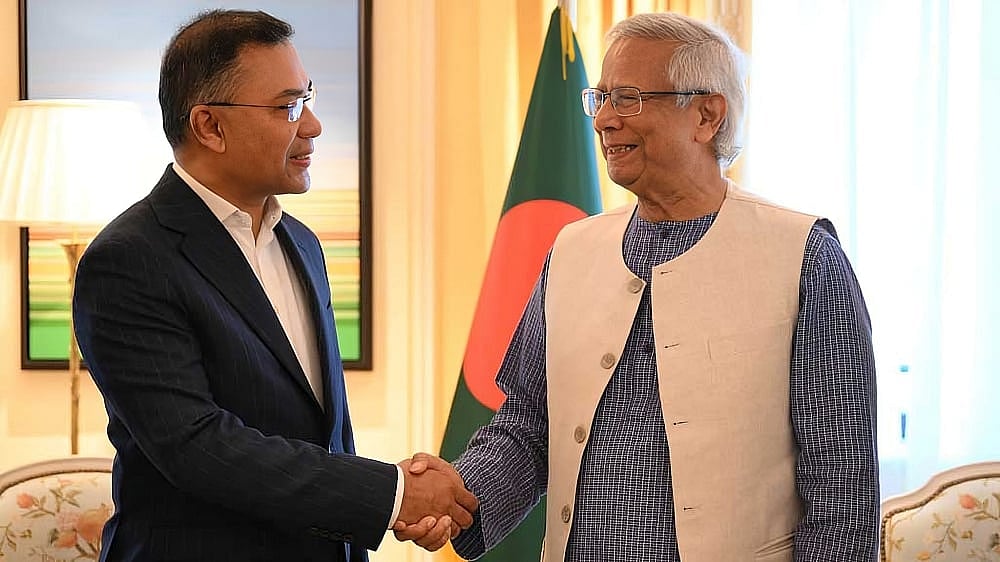
Subsequently, on Jun 13 in London, a meeting between Yunus and BNP’s Acting Chairperson Tarique Rahman suggested some flexibility from both sides over the election date.
In a joint statement following the meeting, it was revealed that Tarique Rahman proposed holding elections before Ramadan next year. Khaleda also reportedly supports this timeline.
The statement further said that if all necessary preparations are completed, elections could even be held in the week prior to Ramadan in 2026. However, significant progress on reforms and justice processes would be required beforehand.
Though the meeting was welcomed as a step towards defusing political tensions, other parties, including Jamaat and the NCP, criticised the decision to discuss a potential election date through dialogue with only one party.
Despite the party’s focus on elections, the BNP and its affiliates have come under intense criticism for alleged extortion and turf control at the grassroots level.
According to rights group the Ain o Salish Kendra (ASK), internal clashes within the BNP and its affiliate organisations have resulted in at least 73 deaths between August 2024 and June this year.
The ASK’s latest data shows that from January to June 2025 alone, political clashes claimed 65 lives, injured 2,770 people, and led to 270 recorded incidents of violence.
Of those, 43 deaths were attributed to internal conflicts within the BNP and its affiliated organisations.
One such incident sparked national outcry after a video went viral showing the brutal murder of Lal Chand alias Md Sohag, a youth wing (Jubo Dal) member, in front of Mitford Hospital in Dhaka.
According to police, Sohag was killed over disputes linked to extortion and business rivalry. In response, five members across three BNP-affiliated bodies were expelled from the party.
News reports suggest that since Aug 5 last year, BNP and its affiliated organisations have taken disciplinary action against some 3,200 members over involvement in clashes and misconduct.
Of these, the BNP has taken action against around 1,800 members, including the expulsion of 800, suspension of 50, issuance of show-cause notices to at least 700, warnings to 100, and notices for disciplinary violations to 150 others.
As per media reports, by June 2025, student wing Jatiyatabadi Chhatra Dal had expelled around 400 members and issued show-cause notices to over 600. The volunteer wing Swechchhasebak Dal expelled at least 100 members and issued warnings to 150, while more than 100 members of the youth wing Jubo Dal were also expelled.

JAMAAT: FROM WILDERNESS TO FOREFRONT
On Aug 1, amid the failure to quell the uprising by use of deadly force, the Awami League administration banned Jamaat-e-Islami and its affiliated organisations under the Anti-Terrorism Act.
The ban, however, appeared to have little impact on the momentum of the movement. In fact, as the protests intensified, Hasina’s government was forced to step down within five days.
After she relinquished power and fled to India, Jamaat’s Ameer or chief Shafiqur Rahman attended a meeting of political parties held at the Army Headquarters with Army chief General Waqar-Uz-Zaman, even while the party was technically still banned.
When asked at a press conference on Aug 5 about who was present at the Army Headquarters meeting, the army chief first mentioned Jamaat’s leader.
Despite the ban remaining in effect, the Jamaat quickly rose to political prominence. The party played a significant role in the decision-making process that led to the formation of the interim government on Aug 8.
Just 20 days later, on Aug 28, the interim government formally revoked the ban on Jamaat through an official notification.
Following the lifting of the ban, a court ruling on appeal reinstated Jamaat’s registration after 12 years. The party also regained its traditional electoral symbol, the weighing scale, which it had lost after a 2013 High Court verdict.
Now, with the Awami League’s participation in the next general election still uncertain, Jamaat and its long-time electoral ally the BNP have drifted into opposing camps due to conflicting electoral calculations.
Once inseparable names in Bangladesh’s political landscape for decades, the two parties have now become vocal critics of one another.
Jamaat has accused the BNP of extortion and violence, citing law enforcement’s alleged inaction and apathy. For their part, the BNP leaders have started echoing the Awami League’s long-standing condemnations of Jamaat’s role in the genocide and rapes during the Liberation War in 1971.
Commenting on the growing rift between the two parties, Prof Mahbobor, the political scientist, framed the split as a natural development.
“Rivalry between political parties should follow an institutional path. It’s unrealistic to expect everyone to always remain allies. Friendships can break, especially when political interests shift.
“These are parties, they form alliances based on shared interests. But I hope that their rivalry will remain within the bounds of democratic norms in Bangladesh.”
CONTROVERSY FOLLOWS NCP CLOSE BEHIND
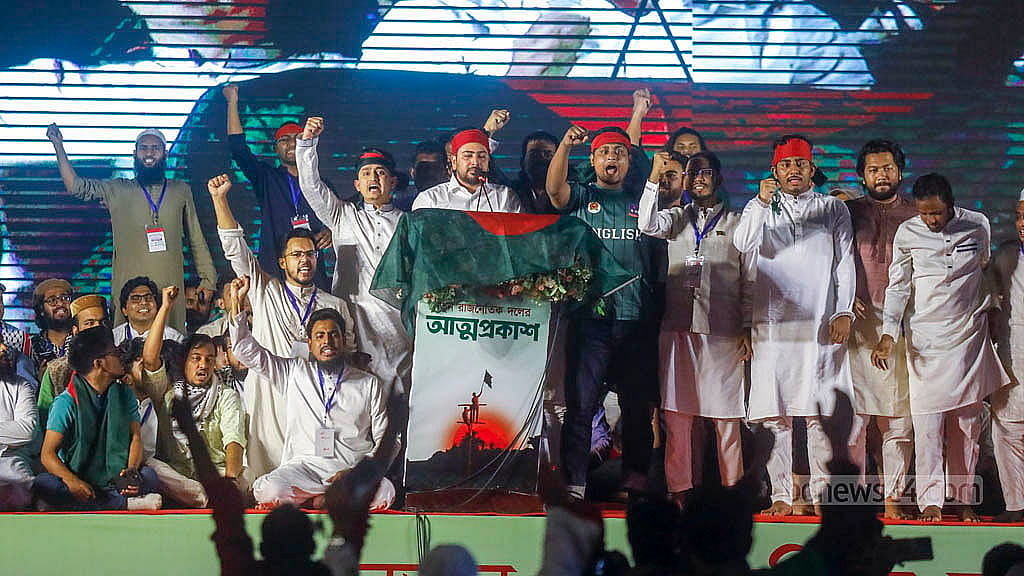
The NCP is now actively working to organise its structure and mobilising support across the country. Its leaders have launched a month-long programme titled “July March to Rebuild the Nation”, marking the anniversary of the July Uprising.
The campaign began on Jul 1 in Pirganj, Rangpur, with a visit to the grave of Abu Sayed, who was killed during the movement. The NCP leaders have covered 31 districts with their march until Jul 15.
Despite once being allies in the movement to overthrow the Hasina government, the NCP now appears to have grown distant from the BNP. While the NCP and the Jamaat share common ground on several issues, friction between the NCP and the BNP has become frequent.
Following the uprising, the National Citizens’ Committee was initially formed to organise the movement. On Feb 28 this year, the NCP was officially launched as a political party.
Nahid Islam, the spokesperson of the student-led uprising, stepped down from his role in the interim government to lead the party. Akhtar Hossain, another leader from the July movement, serves as NCP’s second-in-command.
In its founding declaration, the NCP said: “We believe the July 2024 uprising marked the beginning of our struggle for a Second Republic.To prevent the re-establishment of constitutional authoritarianism, a new democratic constitution must be drafted.
“One of our primary goals is to initiate this through the election of a Constituent Assembly.

In our Second Republic, a strong national defence system will be developed to safeguard national interests.”
The party’s draft constitution further outlines its ambition to build a democratic, inclusive, and self-reliant state rooted in the three historical moments of 1947, 1971, and 2024.
The NCP says its mission is to establish rule of law, justice, and human rights, while building a “new Bangladesh” through a youth-driven, decentralised governance model.
To contest elections, the NCP applied for party registration with the Election Commission on Jun 22. It requested the ‘Shapla’ (water lily) as its preferred election symbol, with ‘Pen’ and ‘Mobile Phone’ listed as alternatives.
However, the EC released its list of available symbols excluding both ‘Shapla’ and ‘Doel’ (magpie robin). Complicating matters, two other parties, Bangladesh Jagrata Party and Janaswarthe Bangladesh, have claimed they previously applied for the 'Pen' and 'Mobile Phone' symbols.
The EC has not yet made a decision on the NCP’s registration or symbol. On Tuesday, it granted the NCP and other newly applying parties 15 days to correct minor documentation errors.
Commenting on the NCP’s promise of a “new political settlement", Prof Mahbobor Rahman urged the party to stay focused on democratic values.
“It’s too early to evaluate this new party,” he said. “But if they can offer a healthier alternative to the old political culture, avoid mudslinging, and stay clear of violence and corruption, the public will come to believe in their vision for a new political order.”
The analyst added, “A new political settlement should mean the creation of an accountable system of governance. If the NCP can stay focused on that goal and work closely with the public, their promises will become more credible, and they’ll gain broader acceptance.”
AL ALLIES SIDELINED, INFIGHTING GRIPS JATIYA PARTY
Since Aug 5, political parties allied with the Awami League under the 14-Party coalition have faced public backlash, widely condemned as “accomplices of dictatorship” in the wake of the July Uprising.
Among them, former ministers and prominent leftist leaders, Rashed Khan Menon, president of the Workers’ Party of Bangladesh, and Hasanul Haq Inu, president of Jatiya Samajtantrik Dal (JaSaD), have been arrested and are currently in prison.
The Jatiya Party (JaPa) is also facing mounting challenges. Several factions of the uprising have called for the party, like the Awami League, to be formally banned.
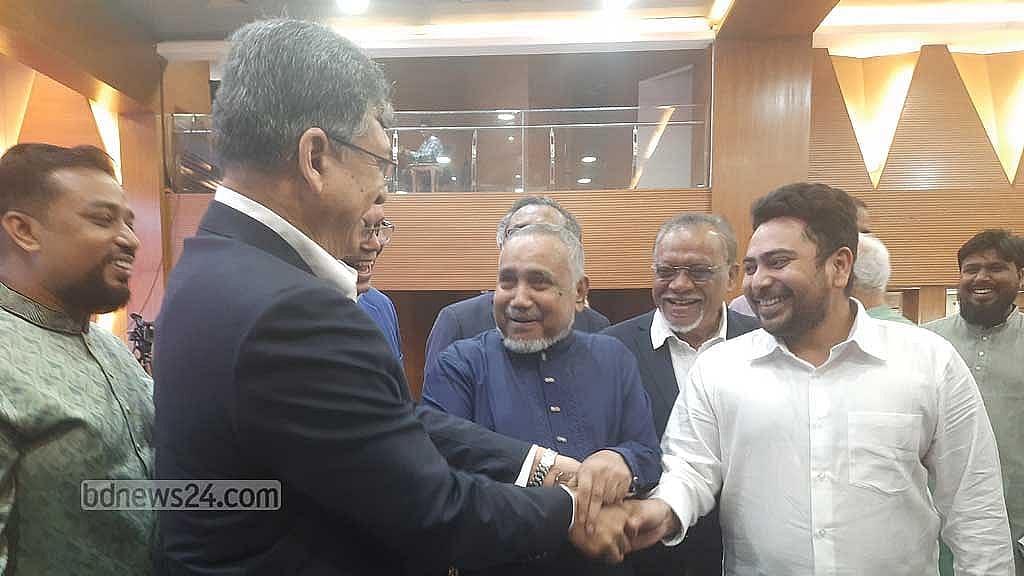
Attempts by the Jatiya Party to organise events have repeatedly been thwarted. The party was also excluded from the Consensus Commission’s national dialogue, effectively isolating the GM Quader-led party from the mainstream political process.
The party, which contested three consecutive general elections under Awami League rule through political compromise, held the role of the official opposition in parliament, earning the label of a “domesticated opposition”.
Now, following the shift in power, the party finds itself in disarray. Both Chairman Quader and a group of ‘rebel’ senior leaders are locked in a desperate tug-of-war to take control of the party.
The chairman has moved to purge dissenters and already removed key figures. Senior Co-Chairman Anisul Islam Mahmud, Co-Chairman ABM Ruhul Amin Howlader, and Secretary General Mujibul Haque Chunnu have been sacked from all party posts.
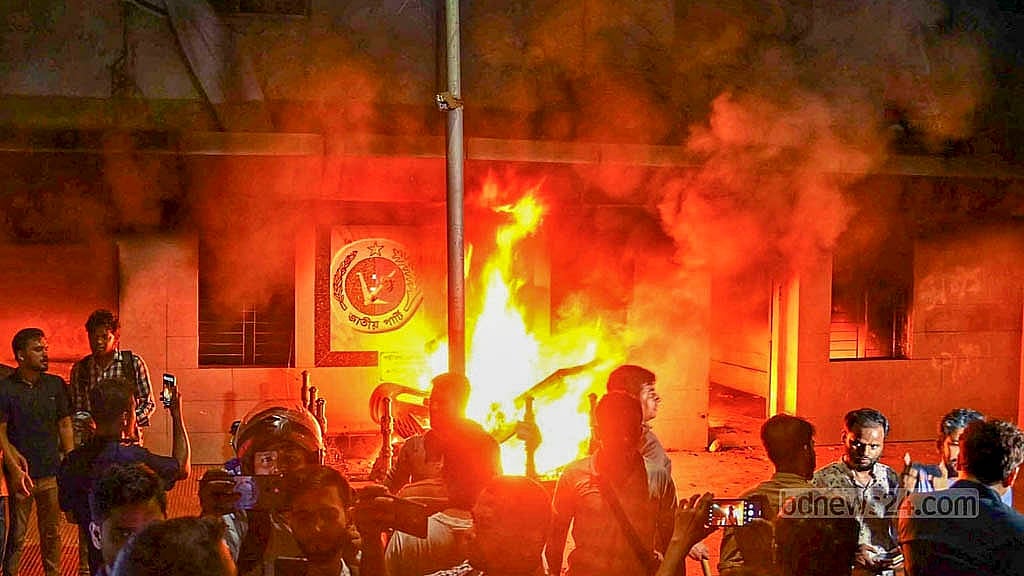
The move appears to have triggered yet another inevitable split within the Jatiya Party, originally founded by former military ruler Hussain Muhammad Ershad. Quader, Ershad’s younger brother, has made expulsions his main tool of control.
Sources inside the party say a list of senior leaders has been drawn up with the warning that anyone siding with the “rebels” will also face expulsion.
But Anisul Islam Mahmud and his faction have adopted a different strategy. Publicly, they say they do not want the party to split and have no intention of leaving. But behind the scenes, they are mobilising grassroots leaders and members in a bid to stage an internal coup within the party forum.