Published : 18 Sep 2026, 07:19 PM
Updated : 18 Sep 2026, 07:19 PM


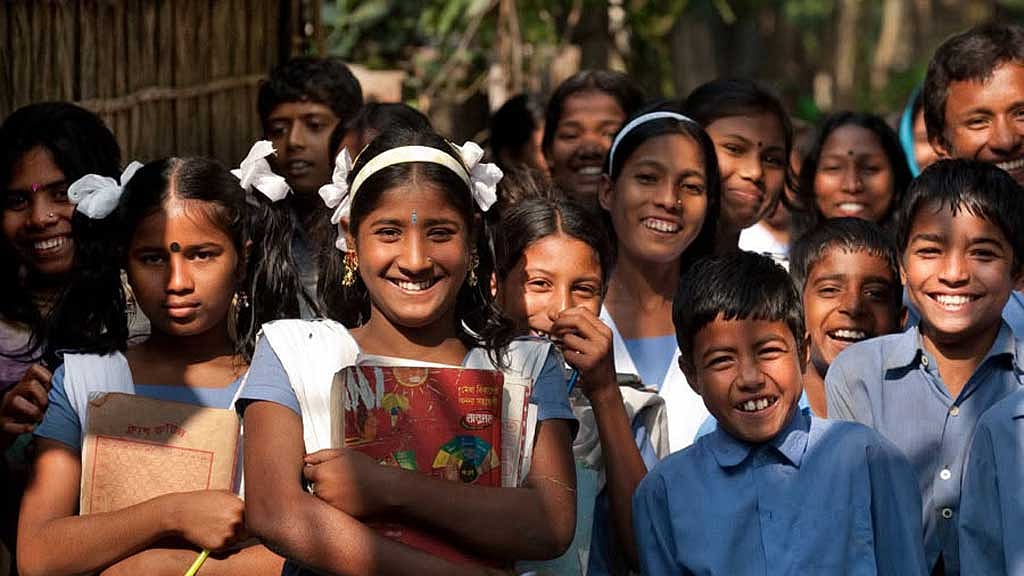
Bangladesh and other South Asian countries are entering a demographic shift that could reshape their education systems, with the region’s under-15 population projected to fall 16 percent by 2050.
The number of children under 15 across South Asia is projected to drop from 420 million in 2024 to 352 million by 2050, according to a World Bank Group analysis published on its development blog.
The six countries covered are Bangladesh, Bhutan, India, the Maldives, Nepal and Sri Lanka.
The region has made major progress in expanding school access over the past two decades, with almost all children enrolling in primary school at the right age and secondary participation rising significantly.
But education quality remains a major challenge.
In countries including Bangladesh and India, more than half of children at the end of primary school are in learning poverty, meaning they cannot read and understand a simple age-appropriate text, the World Bank said.
South Asian countries spend an average 3.7 percent of GDP on education, below the 4 to 6 percent range often cited in international benchmarks.
The challenge, however, is not only the amount spent but also how effectively resources are used, with spending in many cases concentrated in areas that do not generate the strongest gains in student learning, as per the analysis.
Fewer Children Could Boost Education
Shrinking school-age populations could allow countries to redirect resources towards improving education coverage and quality, the World Bank said.
But the opportunity, often described as a demographic dividend, would not be automatic.
Falling student numbers would not necessarily reduce costs, since expenses such as school buildings, administration and transport networks would remain, it noted.
Without reforms, per-student costs could rise while learning outcomes remain weak, the paper warned.
It analysed public education spending through demographic change, enrolment and spending per student, projecting how education spending as a share of GDP could change under different scenarios from 2020 to 2050.
It found that demographic change alone could create fiscal space for reinvestment.
By 2050, the regional fiscal space was estimated at 0.53 percentage points of GDP for primary education and 0.47 percentage points for secondary education, relative to 2020.
Even with an ambitious expansion towards universal pre-primary, primary and secondary enrolment, the paper found demographic change could still create room for higher public spending per student, including towards levels seen in current high-income countries.
The regional picture, however, would vary.
Bhutan and the Maldives could finance higher per-student spending as a share of GDP by capturing gains from demographic change, while Bangladesh and Sri Lanka would likely need additional resources to meet more ambitious quality targets.
India could gain meaningful room for reinvestment, while Nepal also showed potential depending on enrolment patterns and system efficiency, the paper found.
Citing the experience of countries in Europe and Central Asia, the paper noted that declining student populations there did not automatically produce savings.
In some cases, school systems remained unchanged despite falling enrolment, creating inefficiencies and limiting the ability to reinvest in education quality.
What Governments Can Do
Governments should protect education budgets and reinvest demographic savings in measures with evidence of improving learning, the World Bank said, pointing to better pedagogy, structured teaching support and teaching at the right level as priorities.
It also called for early planning of school systems, noting that school consolidation could improve efficiency and quality, but would require transparent communication, community engagement, safe student transport and better facilities at receiving schools.
The response should reflect individual country circumstances, since South Asian nations are moving through the demographic transition at different speeds, the analysis said.
What works for Sri Lanka or the Maldives may differ from what is feasible in Nepal, Bhutan, Bangladesh or India, it noted, adding that countries could learn from others further along in the transition.
Demographic change could benefit education across the region, but only where governments plan ahead and reinvest gains in learning outcomes, the World Bank said.