Home
+
Published : 14 Jul 2026, 01:07 AM
The January Paper Chase
Unfinished content: Curriculum revisions and four completely new subjects are still unwritten as the deadline looms large
Tight deadlines: Tender approvals could push the start of mass printing to September, leaving very little room for error
Supply logistics: Printers warn of looming paper shortages and cash flow issues due to Tk 180m in unpaid government bills
Political revisions: New textbooks will feature historic updates, including Ziaur Rahman as the proclaimer of independence
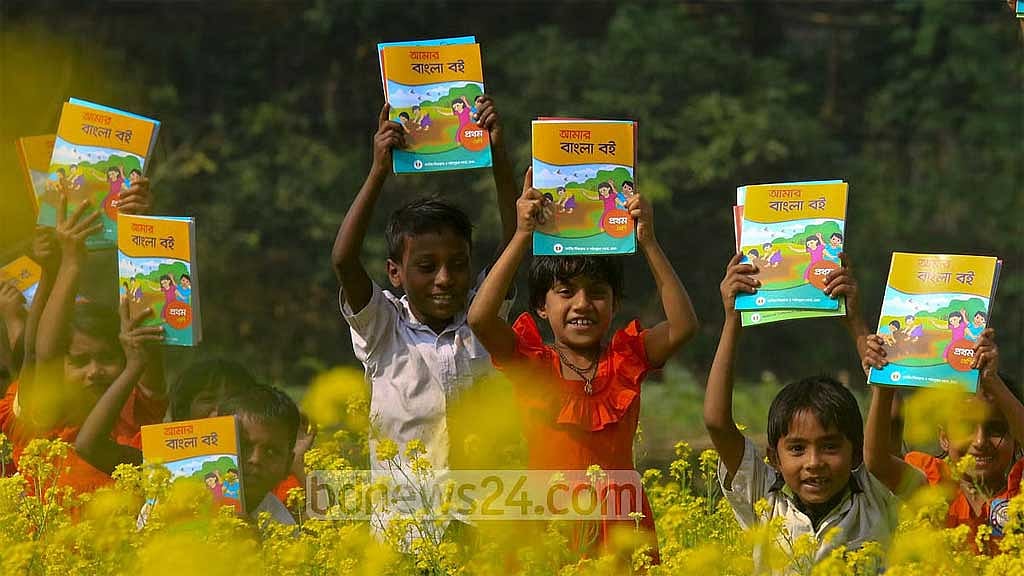
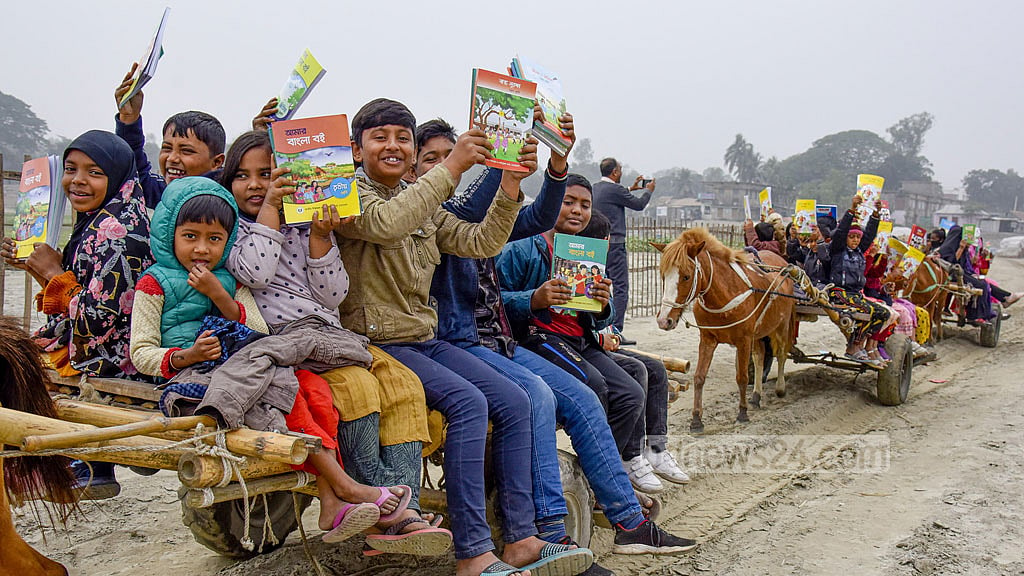
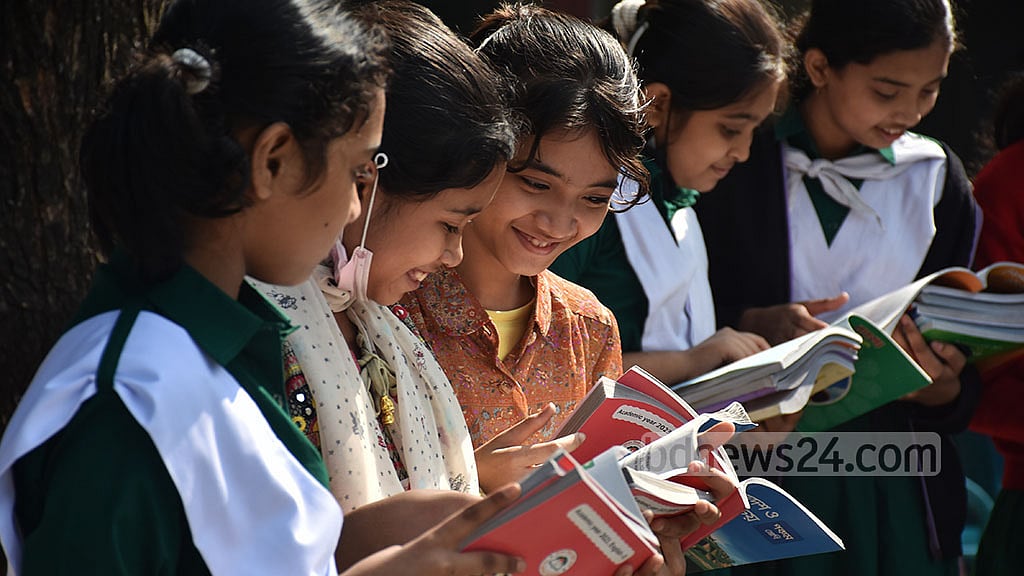
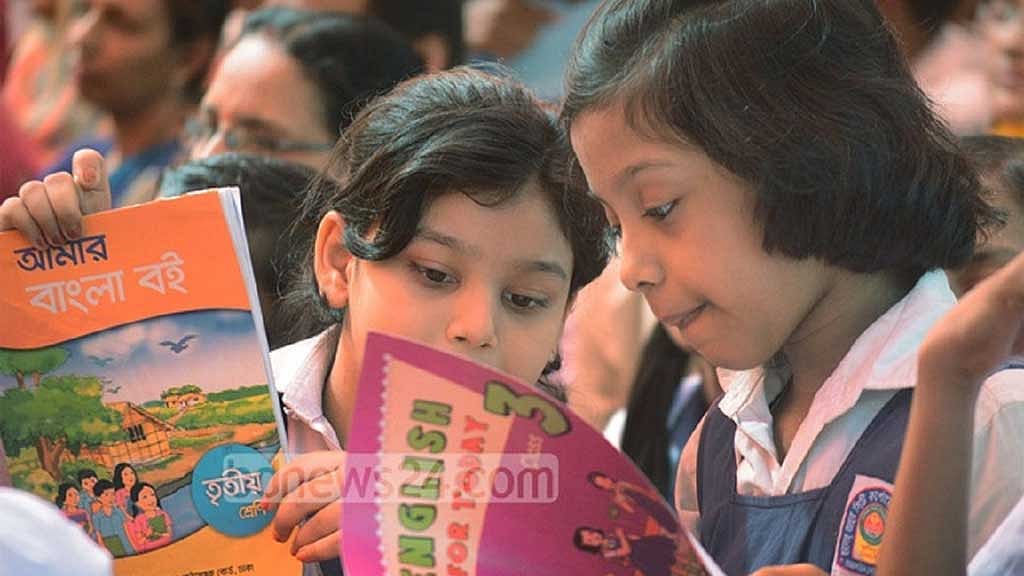
For generations of Bangladeshi students, the first day of January has meant one thing above all else: the excitement of opening crisp, new textbooks handed out free of charge at school.
That longstanding tradition faltered under the interim government, leaving millions of students waiting for books that should have arrived before classes began.
Now, with the BNP-led government promising to restore timely textbook delivery, a crucial question hangs over the education sector: can more than 300 million textbooks be written, printed and delivered before the new academic year?
The government says yes. Printers and education experts are less certain.
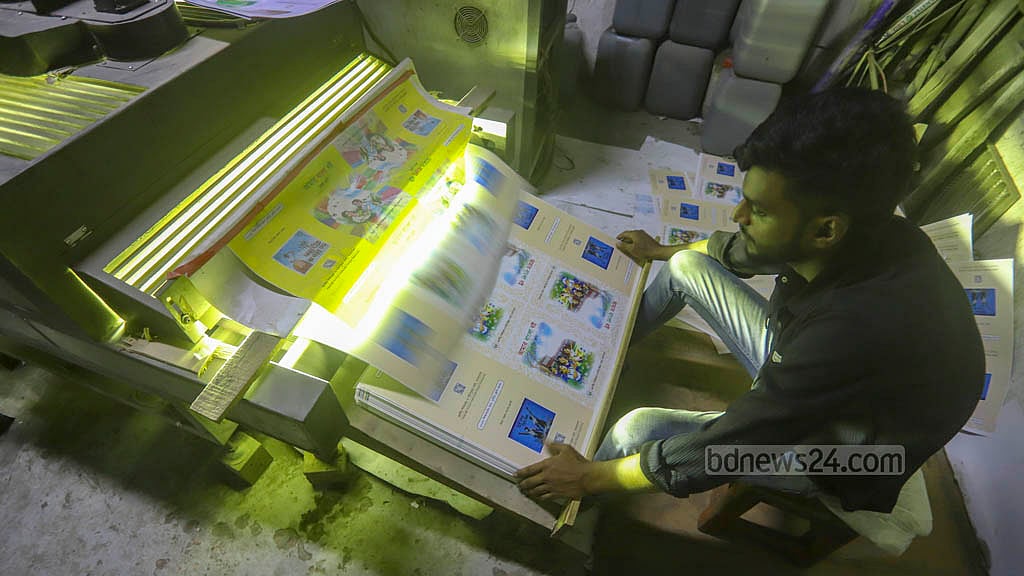
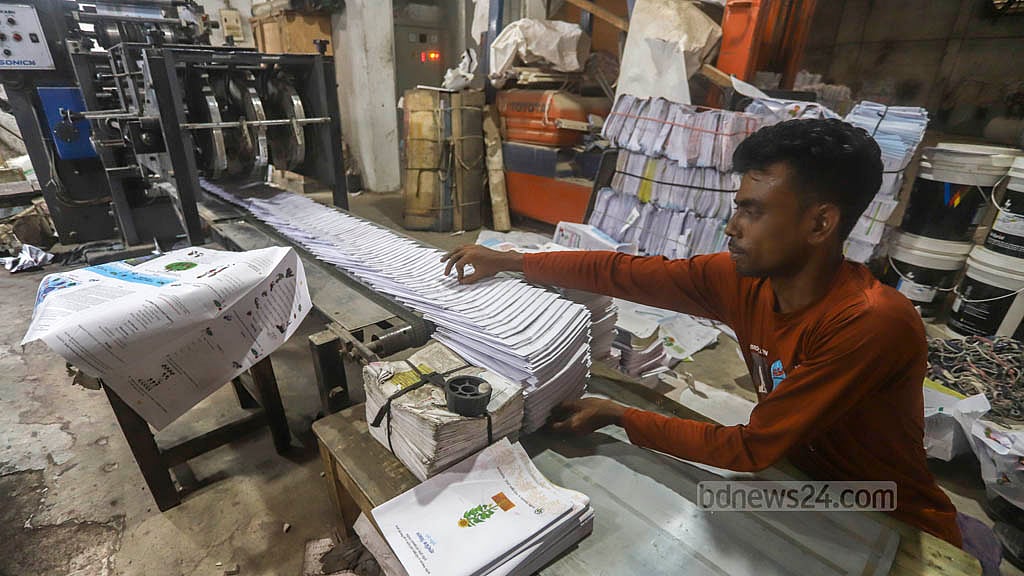
Tender invitations have already been issued for textbooks from pre-primary to Class 9. But officials and industry insiders say printing is unlikely to begin before September, after tenders are opened, evaluated and approved by the education ministry and the government's procurement committee.
Complicating matters further, revisions to the curriculum remain unfinished despite the year being more than halfway over. Work on four entirely new subjects, due to be introduced next year, has yet to be completed.
Education Minister ANM Ehsanul Hoque Milon, however, insists the government remains on schedule.
He says students at both primary and secondary levels will receive their new books during their annual examinations, before Christmas, with the government aiming to complete all printing by November.
The National Curriculum and Textbook Board (NCTB), which oversees textbook production and distribution, has echoed that confidence.
"We are making every possible effort to ensure students receive their textbooks before Christmas," NCTB Chairman Prof Mohammed Fakhrul Mawla told bdnews24.com.
"We are trying to shorten every stage of the process that traditionally takes longer. We hope to complete printing on schedule, but we need cooperation from everyone involved."
Curriculum Changes Still Unfinished
Behind the optimism lies a race against time.
The government plans to introduce revised textbooks next year under a further update of the 2012 revised curriculum, before rolling out an entirely new curriculum nationwide from 2028.
NCTB members Prof Muhammad Fatihul Qadir and Prof Iqbal Haider say curriculum revision is still under way.
"Our curriculum revision committee has made significant progress," Prof Haider said.
"Once the revision is finalised, it will go to the National Curriculum Coordination Committee for approval before textbook printing begins."
He expects the process to conclude by August.
Work also continues on four new subjects that will now be introduced a year earlier than originally planned.
From Class 4, students will study separate subjects on sports and culture. From Class 6, they will begin “Technical and Vocational Education” and “Learning with Happiness”.
The books for these new subjects are still being written.
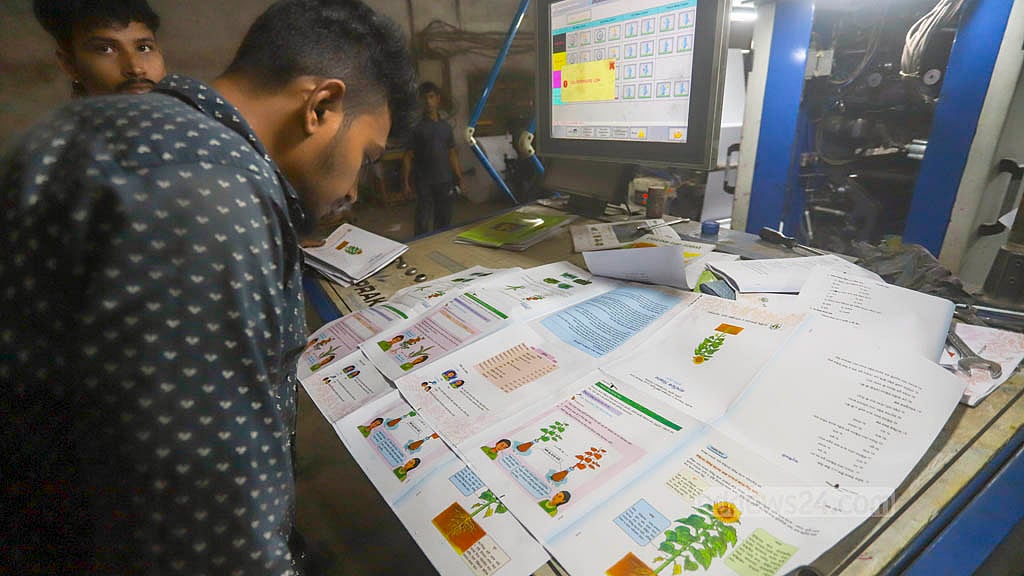
Prof Fatihul said the curriculum committee itself is preparing the manuscripts.
"We expect both the curriculum revision and writing of the new books to be completed before printing begins. The proposed changes will then be placed before the National Curriculum Coordination Committee for approval."
Printers Warn of a Narrow Window
While officials remain optimistic, printing industry leaders see growing pressure.
Former Bangladesh Printing Industries Association president Tofayel Khan says the timeline leaves little room for error.
"The preparations suggest clouds gathering on the horizon," he said.
"Although tenders have been invited, curriculum revisions are still incomplete."
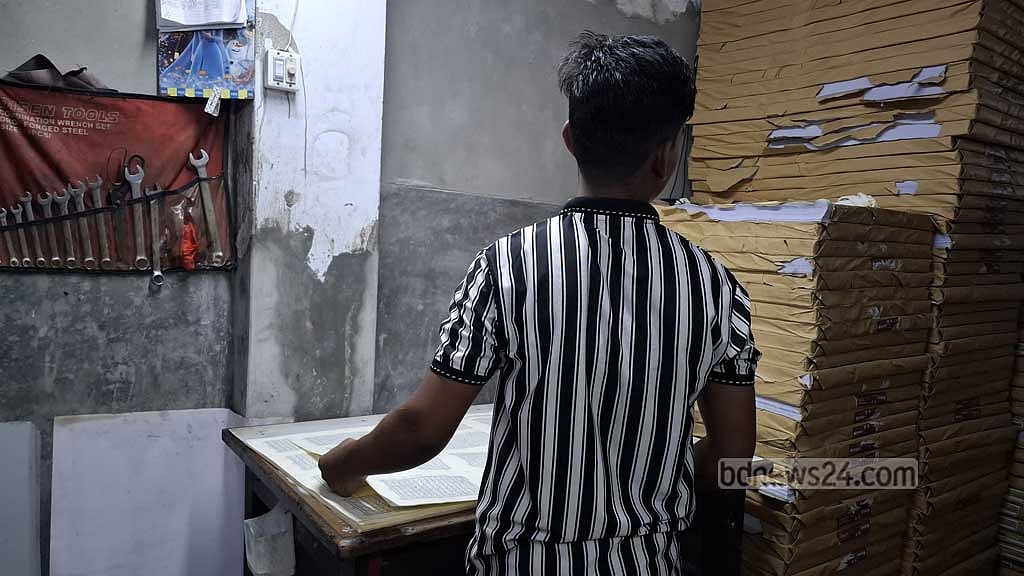
He noted that the number of printing lots has been reduced while each contract now covers larger volumes, limiting opportunities for smaller presses.
According to Khan, tender evaluations alone are expected to continue into August before ministry and procurement approvals consume another month.
Publishers will then receive 28 days after signing contracts before beginning production.
"If everyone starts printing together in September, there is a possibility of a paper shortage," he warned.
Printers are also waiting for Tk 180 million in unpaid bills for additional printing work completed this year for primary textbooks.
Khan fears those outstanding payments could make it harder for printing presses to secure fresh bank loans needed for the next production cycle.
"In this situation, there are genuine concerns over whether printing can be completed by December," he said.
Others are more hopeful.
Bangladesh Printing Industries Association Vice-President Anwar Hossain said NCTB had indicated contracts would be signed in early August.
"If that happens, we can begin printing by Aug 10," he said.
"Our presses are in good condition and new machines have been added. It should take no more than three months."
Biggest Publishing Exercise of the Year
For the next academic year, Bangladesh plans to print 302.7 million textbooks for students from pre-primary through Class 9.
The total budget stands at around Tk 18.99 billion, including pre-delivery inspection (PDI) and post-landing inspection (PLI), which monitor paper quality, printing standards and the quality of books after distribution.
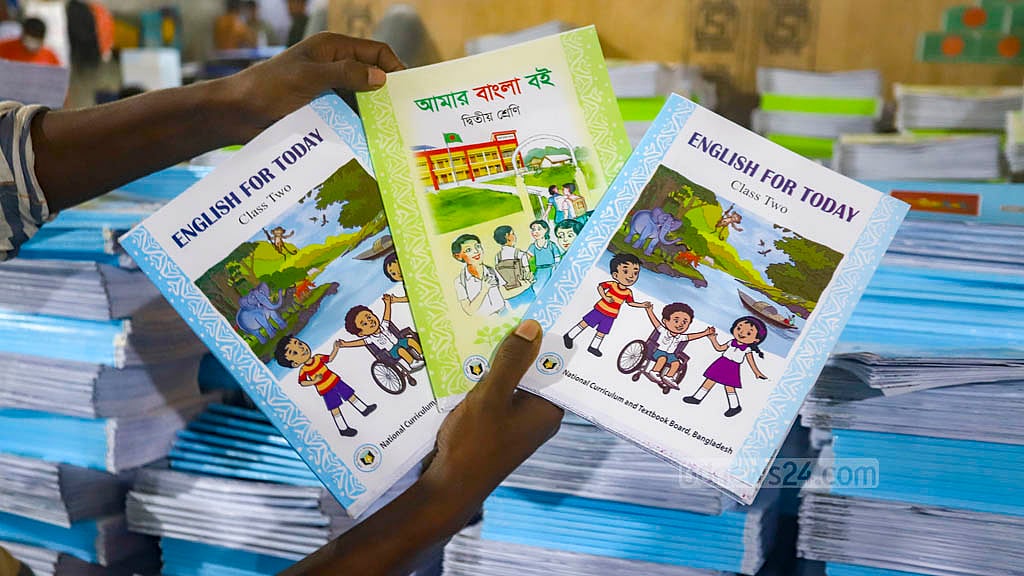
Of the total, 82.2 million books will be printed for pre-primary and primary students across 141 lots, while 220.6 million copies covering Ebtedayee, secondary, Dakhil, vocational and technical education will be produced through 535 lots.
NCTB officials expect tender evaluations to conclude by Aug 6 before contracts are signed.
Even then, estimates differ.
The education minister believes printing can begin in early August.
NCTB textbook member Prof Mohammad Abu Nasher Tuku believes September is a more realistic target.
He says the actual printing process requires only about two and a half months once work begins.
What's Changing Inside the Books?
Beyond the timetable, next year's textbooks will also reflect notable curriculum changes.
Prof Iqbal said revisions are being made to the existing primary curriculum before a comprehensive overhaul in 2028.
Among the changes, the Class 4 Bangladesh and Global Studies textbook will include a section titled Our Memorable Leaders, featuring former president Ziaur Rahman and former prime minister Khaleda Zia.
Language throughout several chapters is also being simplified.
At the secondary level, NCTB says textbooks for classes 6 to 9 will identify Ziaur Rahman as the proclaimer of Bangladesh's independence.
References viewed as glorifying particular individuals or political parties are also being removed.
"There are also plans to include an essay written by Ziaur Rahman in the Class 9-10 Bangla textbook," Prof Fatihul said.
A new chapter on third-language learning will also appear in the Class 6 Bangla textbook.
Government Remains Confident
Despite concerns over timing, financing and logistics, officials insist the target remains achievable.
Prof Nasher says printing itself will not be delayed even if presses begin operating in September, provided publishers work efficiently.
NCTB has also promised to clear the outstanding Tk 180 million owed to printers.
Education Minister Milon says the government has already met paper mill owners to prevent the supply disruptions and price manipulation that affected previous years.
According to the minister, domestic paper manufacturers have assured the government they will supply the 80,000 tonnes of paper required for textbook printing on time and at prevailing market prices.
"Following Prime Minister Tarique Rahman's commitment, we are determined to place quality textbooks in students' hands on time," Milon said.
He added that future agreements with both paper suppliers and printers would be brought under a legal framework to prevent contract violations midway through the process.
For millions of students waiting to begin another academic year, those assurances now face their ultimate test. Whether the familiar January ritual returns -- or another school year begins without books -- will depend on whether today's promises can survive the deadlines of September and November before the first school bell rings.