Published : 10 Sep 2025, 10:36 PM
Updated : 28 Aug 2026, 01:27 AM


Seizing the momentum of the July Uprising, Islami Chhatra Shibir has re-emerged in a striking new avatar and clinched an unprecedented victory in the Dhaka University Central Students' Union (DUCSU) elections.
The student wing of Jamaat-e-Islami, which had never before won a DUCSU seat nor openly fielded a panel, emerged as the dominant force early on Wednesday, capturing key posts, including vice-president (VP) and general secretary (GS).
In all, Shibir-backed candidates won a significant share of the 28 positions in the central union -- nine of the 12 executive secretary posts in addition to VP and GS -- to mark its first major breakthrough on the campus in decades.
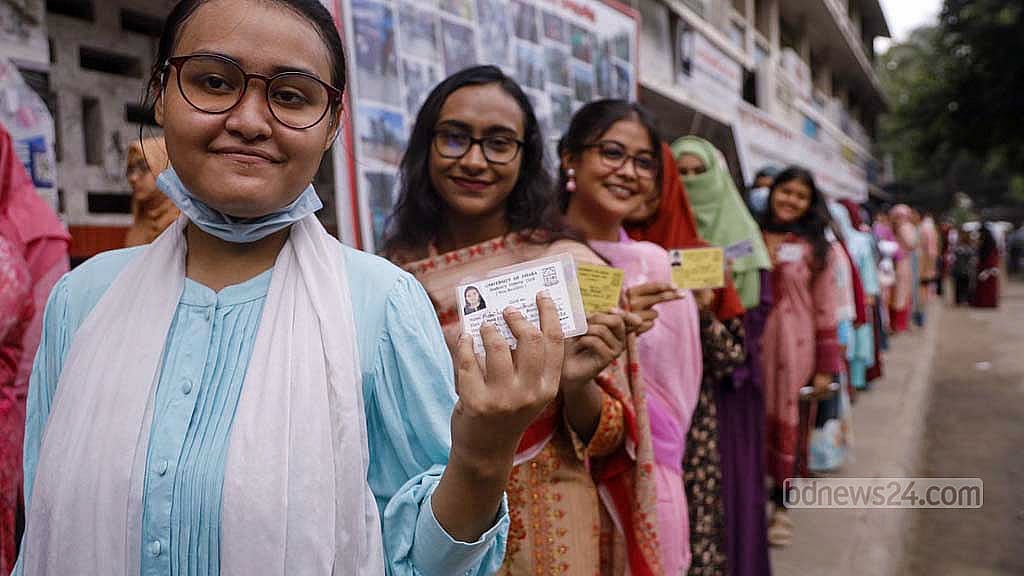
The election, held after a six-year hiatus, drew more than 40,000 eligible voters, with turnout topping 70 percent. Voting took place in a festive atmosphere across the campus.
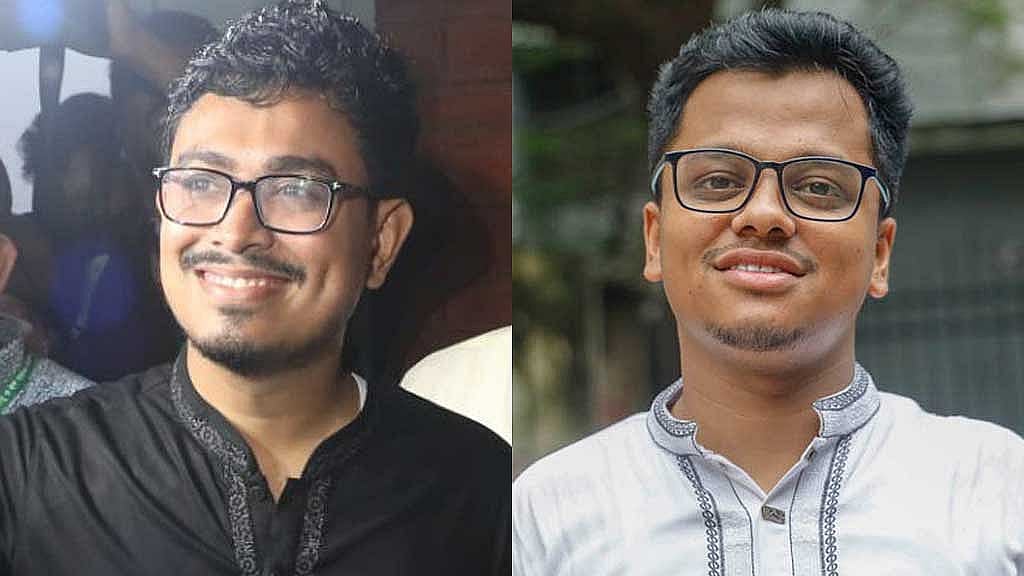
Former Dhaka University Shibir president Abu Shadik Kayem, a political science student, was elected VP, succeeding Nurul Haque Nur as leader of the country’s largest student union.
Running under the Shibir-backed “United Students’ Alliance” panel, Shadik secured a wide margin over his nearest rival, BNP’s student front Jatiyatabadi Chhatra Dal candidate Abidul Islam Khan , winning 14,042 votes to Abidul’s 5,708.
Shibir’s SM Farhad was elected GS, defeating Chhatra Dal’s Shaikh Tanvir Baree Hamim by 10,794 votes to 5,283, while the assistant general secretary’s post went to Md Mohiuddin Khan, also from Shibir, with 11,772 votes against Chhatra Dal’s Thanbir Al Hadi Moyed, who secured 5,064.
Although Chhatra Dal alleged irregularities late in the day, the voting concluded without major clashes. As results began to trickle out after midnight, Shibir activists erupted in celebration across campus. By around 3am, victory processions began in several areas.
The Bangladesh Ganatantrik Chhatra Sangsad (BGCS), formed by students active in the July 2024 Uprising, failed to mount a serious challenge. For the first time, a DUCSU election was held without the presence of the Bangladesh Chhatra League, the now banned student affiliate of the once ruling Awami League.
Despite participation by at least 10 panels, including political groups and independents, Shibir triumphed with near-total dominance. In its 48-year history, the organisation has never before been able to campaign so openly and vigorously at Dhaka University.
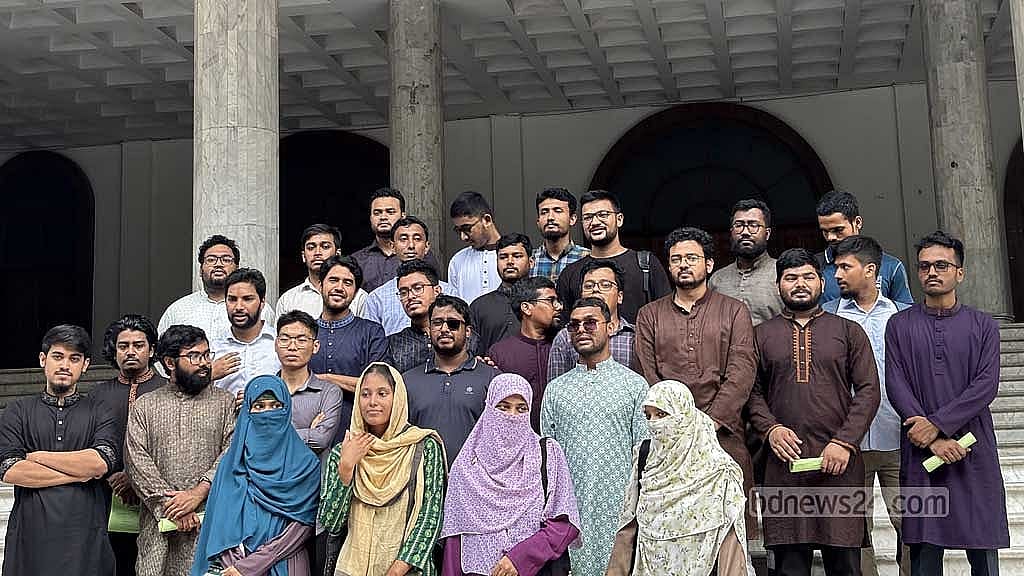
During the Awami League’s decade-and-a-half in power, Shibir was effectively barred from campus politics. But evidence has since emerged that its activists continued organising in secret, often by infiltrating cultural and social groups. The July Uprising created the opening for them to step forward openly -- and now to claim victory.
The results were announced at the packed Nabab Nawab Ali Chowdhury Senate Bhaban by Chief Returning Officer Prof Jasim Uddin, where Vice-Chancellor Prof Niaz Ahmed Khan read out the winners’ names as candidates and supporters looked on.
Shibir activists burst into chants when Shadik was declared DUCSU VP.
But not all accepted the outcome.
Around 2:30am, Chhatra Dal’s vice-president candidate Abidul rejected the result, writing on Facebook: “I predicted this staged fraud by midday. They can insert whatever numbers they like. I reject this pre-planned farce.”
In contrast, his running mate Hamim, the general secretary candidate, urged respect for the student mandate. At 2:15am he posted: “If Dhaka University students believe this is their verdict, I respect it. I await their reactions.”
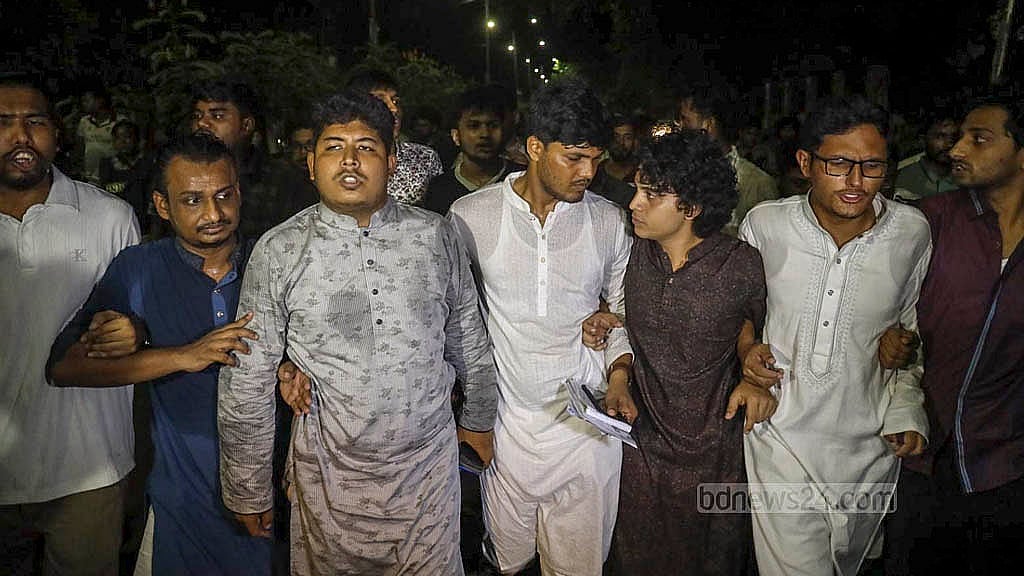
Independent VP candidate Umama Fatema also rejected the results, writing that “novel methods of rigging” had turned the election into a “dark chapter in Bangladesh’s history”. A frontline figure in the July Uprising, she accused Shibir of betraying the nation and lamented that “for this stolen election, 1,400 lives were lost”.
OTHER WINNERS
All 28 positions of the DUCSU have been secured by a mix of Shibir-backed and independent candidates. Shibir took VP, GS, AGS and nine other secretary posts, while independents won three secretary positions.
Shibir-backed winners include:
• VP: Abu Shadiq Kayem – 14,042 votes
• GS: SM Farhad – 10,794
• AGS: Mohiuddin Khan – 11,772
• Liberation War & Democratic Movements Secretary: Fatima Tasnim Juma (Inquilab Mancha) – 10,631
• Science & Technology Secretary: Iqbal Haider – 7,833
• Common Room, Reading Room & Cafeteria Secretary: Umme Salma – 9,920
• International Affairs Secretary: Jasimuddin Khan (Khan Jasim) – 9,706
• Sports Secretary: Arman Hossain – 7,255
• Student Transport Secretary: Asif Abdullah – 9,061
• Career Development Secretary: Mazharul Islam – 9,344
• Health & Environment Secretary: Abdullah Al Minhaj – 7,038
• Human Rights & Law Secretary: Sakhawat Zakaria – 11,747
Independent winners:
• Literature & Cultural Secretary: Musaddiq Ali Ibn Mohammad – 7,782
• Social Service Secretary: Jubair Bin Neshari – 7,608
• Research & Publications Secretary: Sanjida Ahmed Tonni – 11,778
Polling at Dhaka University’s eight centres began at 8am on Tuesday amid high enthusiasm, with students queuing up early. Until midday, the process ran without controversy, but candidates from several panels began raising allegations of irregularities after noon.
Chhatra Dal candidates complained of being barred from entering polling centres, while four panels traded accusations of breaching the electoral code of conduct.
Adite Islam, AGS candidate from the “Aparajeyo 71, Adommo 24” panel, expressed frustration with the Election Commissioner for not taking action against conduct breaches, and alleged ballot fraud.
Chhatra Dal later protested at TSC after accusing the administration of pre-marked ballots in favour of two Shibir-backed candidates. The organisation also demonstrated in the evening, alleging vote rigging.
At a press conference following the vote, VP-elect Shadik described the election as “festive” and accused unnamed actors of trying to derail the election. He called on the university administration to act against those “trying to sabotage the process”.
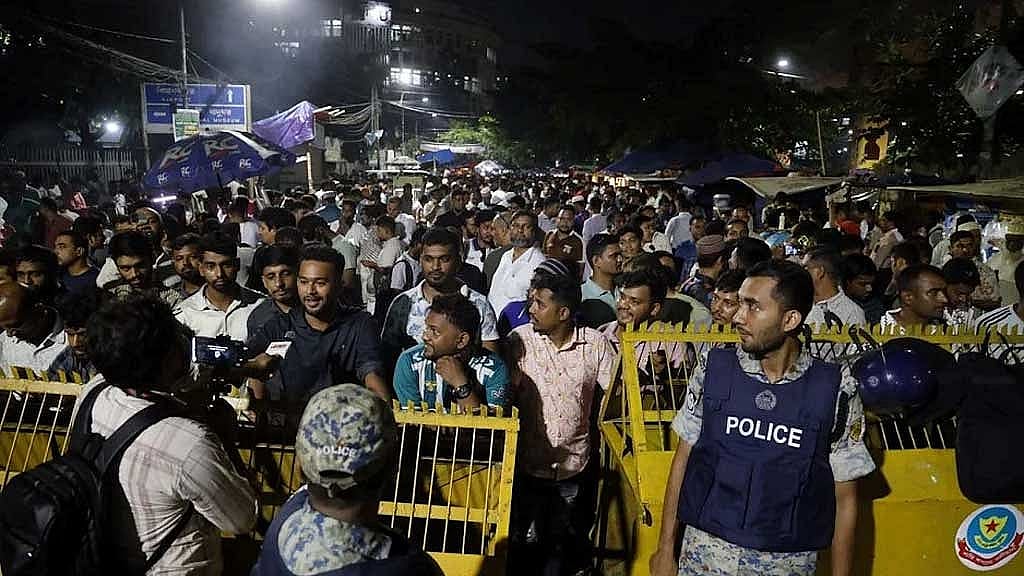
Shibir alleged that a polling agent from Islami Andolan was forced out of a school-based centre, and accused Chhatra Dal of trying to influence voters in Amar Ekushey and Rokeya halls.
Despite tight restrictions on campus entry, groups of people gathered outside, identified in counter-allegations by Chhatra Dal and Shibir as members of the BNP, Jubo Dal, and Jamaat-e-Islami.
The University Teachers’ Network said the election was not “unacceptable despite some minor irregularities and management issues.”
VC Niaz brushed aside allegations of rigging, saying there was no scope for manipulation. He noted that media representatives were present at all centres and that immediate action was taken whenever irregularities were reported.
This year, 39,874 registered students voted uninterrupted from 8am to 4pm across 810 booths at eight centres. Ballots were cast for 28 central DUCSU posts and 13 hall positions. A total of 471 candidates contested the central panel, while 1,035 competed in hall elections.
After polls closed, results were compiled from 18 halls overnight before the final consolidated outcome was announced the next morning.
Final results were later declared outside the Nabab Nawab Ali Chowdhury Senate Bhaban, including those for hall councils.
The election unfolded in a rare and remarkable context -- no single student group held sway, and the ruling party’s student wing lacked its usual dominance. Such a power vacuum is virtually unheard of in the history of Dhaka University.
The last DUCSU election, held in 2019, had seen Nur, a leading figure in the quota reform movement, claim the VP post, while Chhatra League’s Golam Rabbani was elected GS. Chhatra League secured most other posts, except for the social service secretary, which was won by Akhtar Hossain of the Bangladesh Chhatra Odhikar Parishad.
Before that, the last DUCSU vote had taken place 29 years earlier in 1990, during the HM Ershad regime. Chhatra Dal won that election, with Amanullah Aman as VP and Khairul Kabir Khokon as GS.
In that election, women’s halls had strongly backed Chhatra Dal’s candidates. This time, however, their successors failed badly, with Shibir sweeping all five women’s halls, which account for nearly half the electorate. Apart from Jagannath Hall, Chhatra Dal could not secure an advantage in any men’s hall either.
Although there were repeated attempts to hold elections over the decades, none came to fruition. This vote was finally held six years after the previous one, under a drastically changed political landscape following the student-led uprising that brought down the Awami League government.