Published : 14 Dec 2024, 08:01 AM
Updated : 28 Aug 2026, 01:15 AM


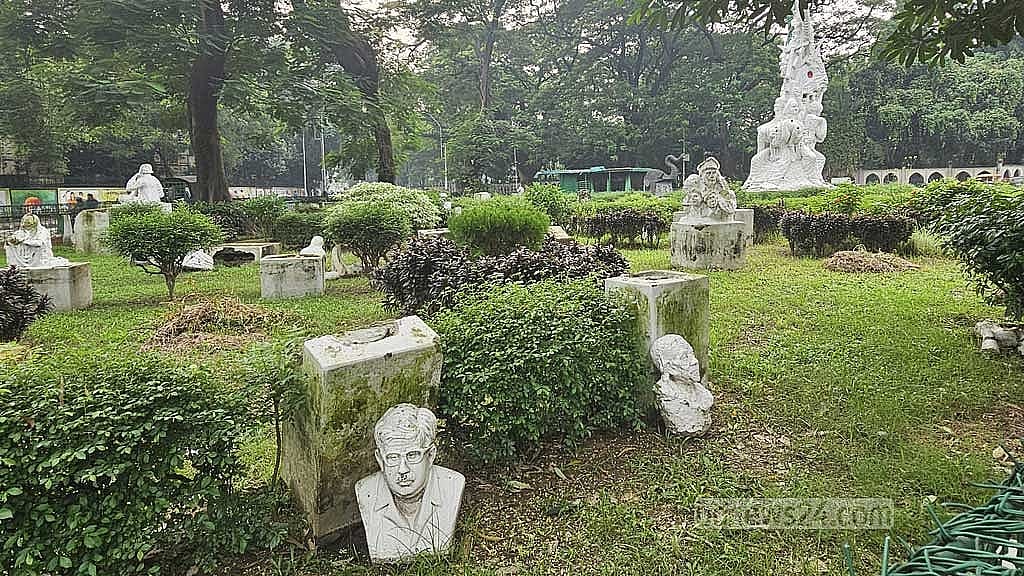
On Fuller Road at Dhaka University stands the “Swadhinata Sangram”, or Liberation Struggle”, sculpture – home to rows of busts representing the history of Bangladesh's bloody struggle for independence.
Known as the largest sculpture in Bangladesh in terms of space, it also features figures representing over 100 global icons of freedom and liberation.
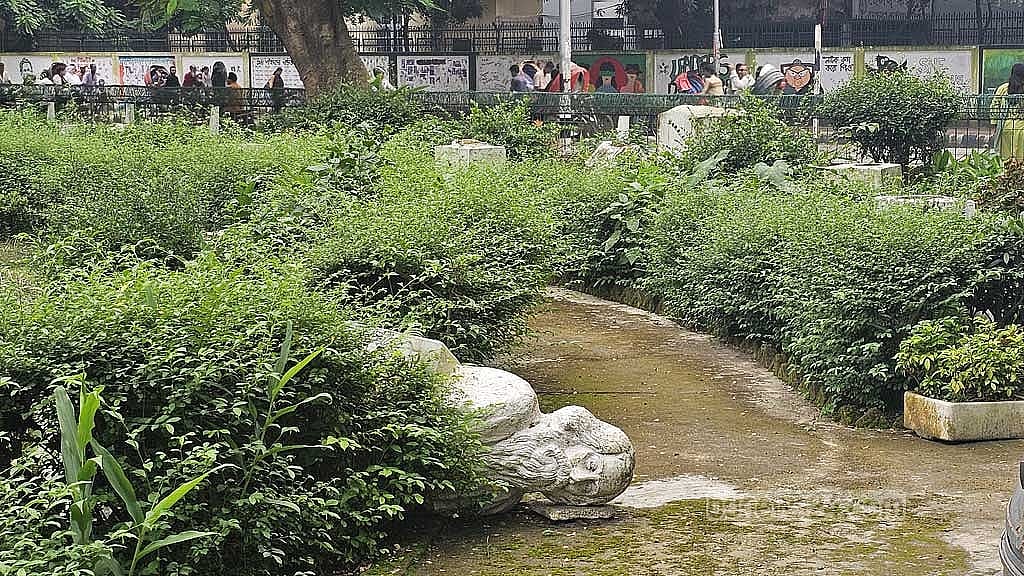
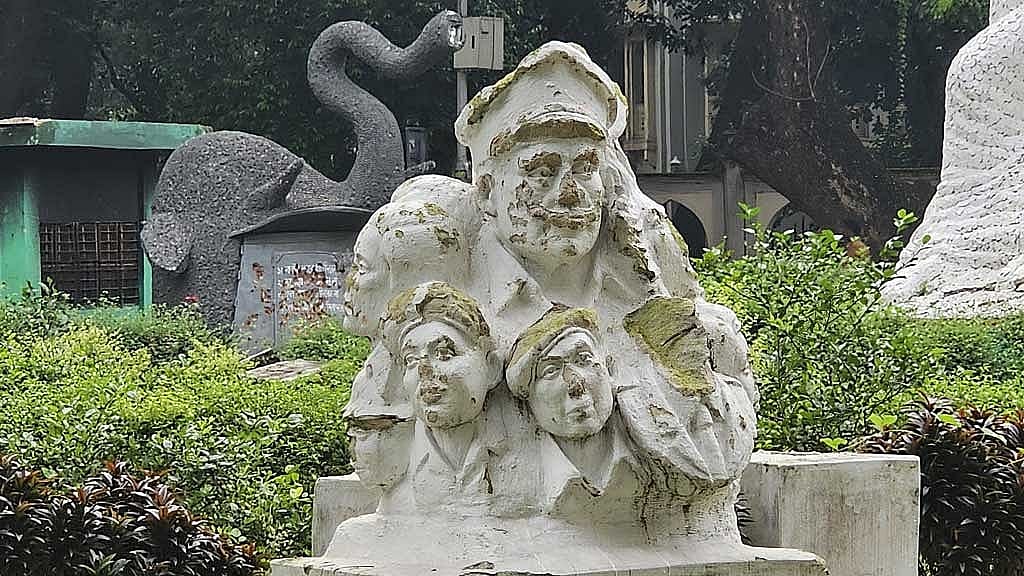
During the violence surrounding the July-August uprising, the sculpture square was heavily damaged. Statues of 18 individuals who died in various movements and struggles were destroyed.
Iconic figures such as Rabindranath Tagore, Kazi Nazrul Islam, Lalon Fakir, and Acharya Jagadish Chandra Bose have become unrecognisable.
The main sculpture of Bangabandhu Sheikh Mujibur Rahman’s index finger is broken, while smaller statues have been toppled from their bases.
Although not as neglected as the “Shadhinota Sangram”, other sculptures at Dhaka University are also left in a state of disrepair. The university administration has taken no initiative to restore them.
Dastagir Chowdhury, a student of the Department of the History of Art in the Faculty of Fine Arts at the university, said: "On the 5th of August, the Swadhinata Sangram sculpture square was vandalised. I believe this is an attempt to erase Bangladesh’s history. The university administration must prioritise its repair."
Nasimul Khabir Duke, associate professor and chairman of the Sculpture department in the Faculty of Fine Arts, said: "I visited the site and found extensive damage. Reconstruction is almost impossible as the sculptor, Shamim Sikder, is no longer alive. But a realistic plan could help partially restore the sculpture."
RAJU SCULPTURE – UNPROTECTED
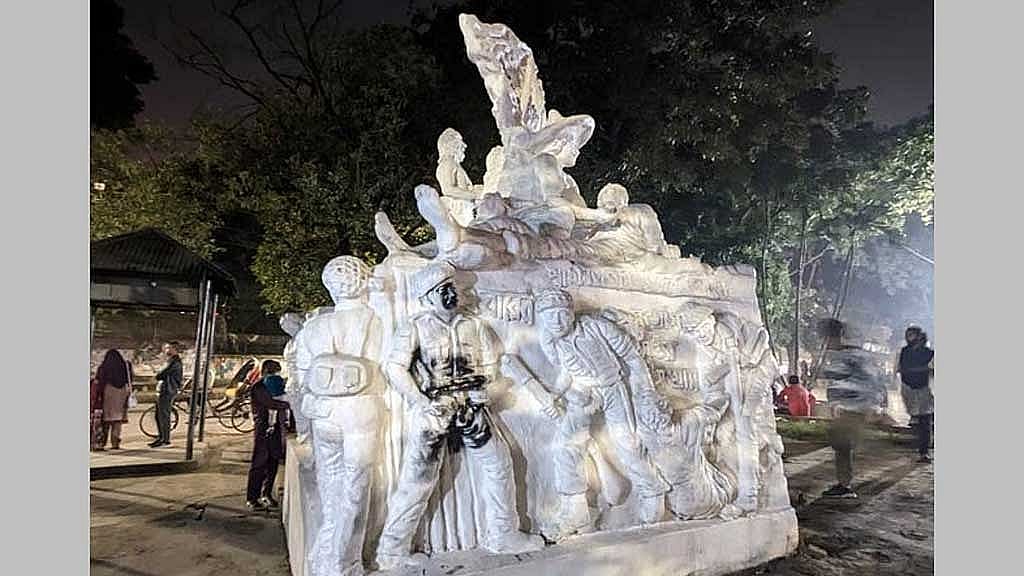
The “Anti-Terrorism Raju Sculpture” was erected in memory of Moin Hossain Raju, a central leader of the Bangladesh Chhatra Union, who was shot dead during a protest against terrorism on Mar 13, 1992.
It was a focal point during the July-August uprising. It now lies neglected, covered in moss, and its white surface has turned blackened in many areas.
Tiles have fallen off the platform, and the base is defaced with graffiti and slogans.
Homeless people have taken residence around the sculpture, breaking the iron fences and leaving personal belongings scattered nearby.
Main Ahmed, Chhatra Union’s Dhaka University unit’s general secretary, said: "We have repeatedly urged the university administration to preserve all campus sculptures. Past vice-chancellors formed committees for this, but the situation remains dire."
SWAPARJITA SWADHINATA – A NEGLECTED LEGACY
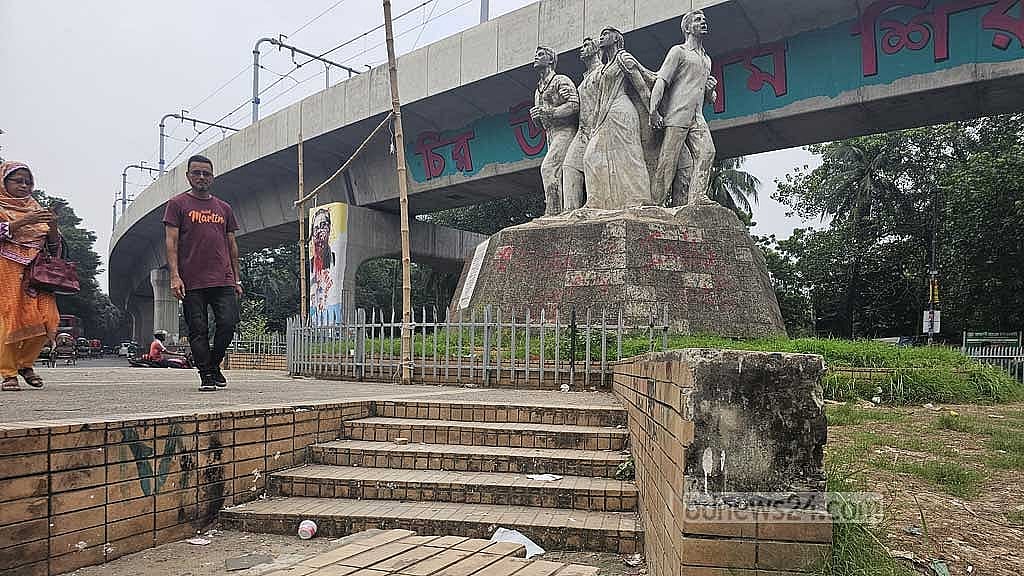
Erected in 1988 in memory of the Liberation War and its freedom fighters, the "Swaparjita Swadhinata” or “Self-Earned Freedom" sculpture stands near DUS square beside the TSC, or Teacher-Student Centre, of Dhaka University.
On its left side stands the figure of a farmer, accompanied by statues of four armed male and female fighters. The condition of this sculpture is deteriorating.
Although originally white, it has turned dark due to algae and dirt accumulation. Despite having a raised pedestal in front of it, the area remains unfinished and unpaved.
In November last year, the sculpture was vandalised with black paint, but the culprits were never identified.
APARAJEYO BANGLA – NO BETTER
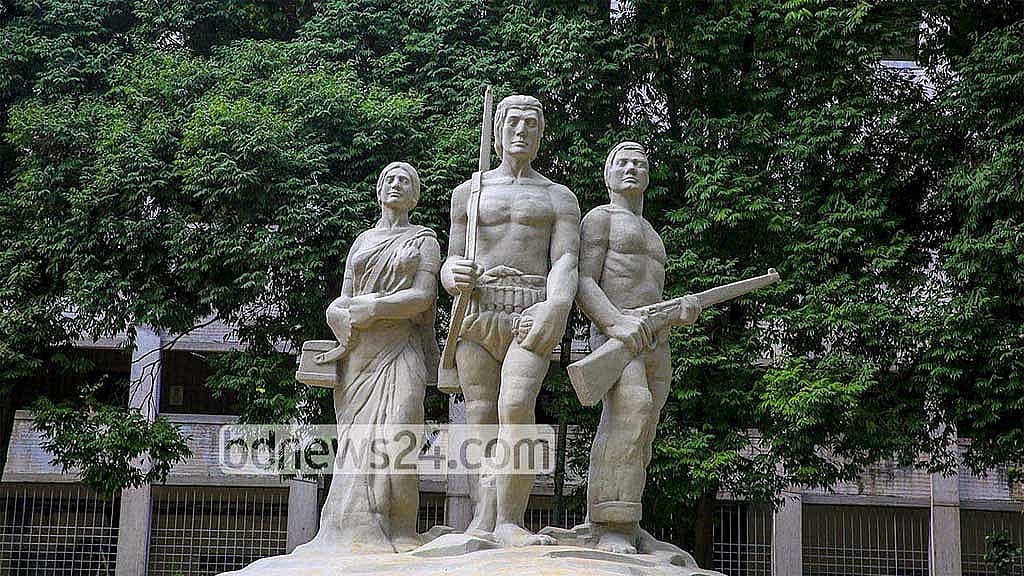
Located in front of the Faculty of Arts, the “Aparajeyo Bangla”, or Unyielding Bengal”, sculpture commemorates three standing freedom fighters from the Liberation War.
However, its current state is disappointing, with moss covering the details and slogans defacing its pedestal.
Without any security fencing, people frequently climb onto the sculpture, exacerbating its degradation.
Nasimul said: "A committee was formed with three faculty members, including the chair of the Sculpture department, to address the preservation of sculptures on campus. We can begin restoration work under the vice-chancellor's initiative. These acts of vandalism are not genuine protests but rather the work of groups opposed to artistic freedom in the country."
ADMINISTRATION’S PERSPECTIVE
Saifuddin Ahmed, proctor of Dhaka University, pointed out that the Aparajeyo Bangla sculpture “has not suffered a great deal of damage”.
He said, “However, the Raju Sculpture has become the centre of public protests, which makes its upkeep challenging.
"We are first trying to control this issue. Once it is under control, it will be possible to maintain the Raju Sculpture."
The proctor added, "The vice-chancellor is keeping track of this matter. First, we are gathering information about the “Swadhinata Sangram” Square. Once it is confirmed whether the sculpture falls under the jurisdiction of the city corporation or the university, we will be able to proceed with its renovation."
Vice-Chancellor Prof Niaz Ahmed Khan confirmed the establishment of a review committee to analyse the incidents.
"Based on the committee's recommendations, the pro-vice-chancellor (administration), the land office, and the engineering department will present a status report. Actions will then be taken accordingly."
When asked about plans for regular maintenance, he highlighted financial constraints, expressing limited ability to ensure regular maintenance despite the university's intentions.
“We will try, but the university budget is limited. Many things cannot be done despite our best intentions,” the VC said.