Published : 03 Sep 2025, 05:17 AM
Updated : 21 Aug 2026, 01:44 PM


Entrepreneurs in Bangladesh’s solar energy sector claim the banks’ complex and conditional financing system is a major obstacle to the expansion of rooftop solar system installation.
However, banks are calling the financing risk very high due to delays in returning investments, despite instructions from the central bank.
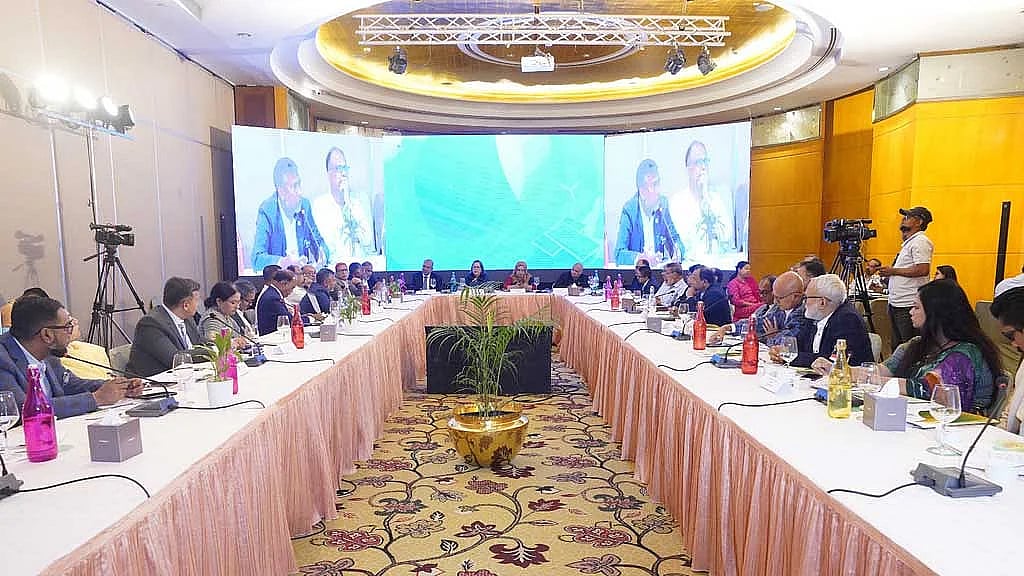
A discussion titled “Unveiling Solar Rooftop Finance: Towards a Sustainable Energy Future” at the Westin Hotel in Dhaka on Tuesday highlighted challenges and prospects of this sector.
Bangladesh Bank Deputy Governor Nurun Nahar said the government is soon unveiling a set of incentive programmes to expand solar power.
The discussion was jointly organised by the Bangladesh Sustainable and Renewable Energy Association (BSREA) and ActionAid Bangladesh.
Nahar said, “Bangladesh Bank has been involved in solar plants since 2008. Rooftop solar is now essential for our country. A policy of 20 percent solar power is being introduced in EPZs, EZs, and other economic zones.
“New instructions are being issued for commercial banks and financial institutions. The BPDB will take the initiative to launch cluster-based franchises in all divisional cities, including Dhaka and Chattogram.
“An escrow system will be introduced to ensure payment security.”
Efforts are under way to launch solar power projects in the public–private partnership (PPP) model using unused railway land, she added.
Alamgir Morshed, chief of Infrastructure Development Company Limited (IDCOL), said the company will take the lead in financing rooftop solar projects, though banks’ participation could encourage mixed investments.
“The cost per watt has dropped to Tk 30 to Tk 35 from over Tk 100 a decade ago. The private sector needs to step forward.”
He added that despite lower costs of rooftop solar power generation due to technology, it remains unfamiliar to many entrepreneurs.
An IDLC representative said, “Investment in the sector has been promising over the past few years. We have invested in projects worth around 80 megawatts. But awareness must be increased now, as rooftop solar is now the second cheapest electricity source after gas.”
BSREA President Mostafa Al Mahmud said, “The new policy has set a target of generating 20 percent renewable electricity by 2030 and 30 percent by 2040. There is also a target of installing 3,000 megawatts of rooftop solar by December 2025.
“However, financing remains the major obstacle, with renewable energy currently accounting for just 5.6 percent of total electricity, which is much less than in our neighbouring countries.”
Representatives from Mutual Trust Bank, Jamuna Bank, City Bank, and other institutions highlighted past challenges in investing in the sector.