Published : 31 Mar 2026, 07:28 AM
Updated : 21 Aug 2026, 03:32 PM


A financial instrument once celebrated as a milestone in Bangladesh’s Islamic finance market is now shadowed by uncertainty.
Beximco’s flagship Sukuk, which is Bangladesh’s first privately placed Islamic bond, is approaching maturity amid mounting concern over whether investors will recover the Tk 30 billion committed to the issue, much of it by institutions that say they were effectively pushed into the investment.
The bond is due to mature in December 2026. If the principal is not repaid before then, banks may come under renewed pressure to raise deposits to meet obligations to their own customers.
Against this backdrop, analysts in the banking sector are weighing two possible paths to salvage the investment: extending the bond’s tenure or selling the Teesta solar power project, which was built using the Sukuk funds.
They also point to the possibility of drawing from a sinking fund, though they acknowledge that the amount accumulated there would fall far short of covering the entire investment.
What was launched as a model for Islamic finance has now become a test of how far regulators can stretch markets -- and how much risk investors can be compelled to bear.
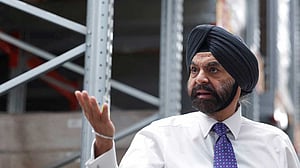
Beximco’s Managing Director Osman Kaiser Chowdhury insists the asset base is strong enough to support repayment.
“The Teesta solar project has a 20-year contract with the government to supply electricity to the national grid. Only around four years have passed. The project is now worth Tk 50 billion. Even if it is sold, investors can be repaid,” he told bdnews24.com.
Beximco Green Sukuk Al Istisna, privately issued, was Bangladesh’s first Sukuk bond.
Initially, Beximco struggled to attract adequate subscriptions despite multiple extensions.
Intervention by the Bangladesh Securities and Exchange Commission (BSEC) compelled brokerage houses and merchant banks to invest Tk 1.5 billion, securing the bond’s early footing.
Furthermore, Bangladesh Bank allowed banks to invest outside standard “capital market exposure” limits, effectively forcing them to participate.
Now, officials report that 27 banks supplying 75 percent of the Sukuk bond’s capital are among the most disillusioned investors.
Regulators Step In — And Tighten Grip
Launched in 2021 as part of market expansion, Bangladesh’s first private Shariah-compliant Sukuk bond came alongside approvals for several other corporate and perpetual bonds for 11 banks.
The BSEC authorised Beximco Green Sukuk Al Istisna with a capital target of Tk 30 billion.
Beximco Group, led by Salman F Rahman, former advisor to the ousted prime minister Sheikh Hasina, initiated the bond.
The trustee role was assigned to the state-owned Investment Corporation of Bangladesh (ICB), while City Bank Capital Resources acted as issue advisor and manager, supported by Agrani Equity and Investment as co-manager.
Underwriters included Agrani Equity and Investment, AB Investment, and AIBL Capital Management. The bond’s face value was set at Tk 100 per unit, with proceeds earmarked for two solar power projects:
• Teesta Solar Power Plant in Gaibandha, 200MW
• Karatoa Solar, 30MW
The Teesta plant is operational, feeding renewable energy into the national grid. Bond proceeds were also allocated for refurbishing Beximco’s textile factories, purchasing machinery, and acquiring equipment.
At the time, Beximco’s profit figures were suddenly increased to attract investors -- a move later criticised.
In 2020-21, profit reportedly surged by 1,400 percent to Tk 6.6 billion, followed by Tk 12.54 billion in 2021-22.
By 2023-24, the company disclosed a loss of Tk 360 million to the Dhaka Stock Exchange (DSE).
Early Sukuk coupon rates were highly competitive at nearly 12 percent, compared with 3.92 percent for treasury bonds.
Despite this, investor interest remained muted. Multiple extensions were granted before brokerage houses and the BSEC collaborated to ensure subscriptions reached Tk 1.5 billion.
Investments Driven by Regulatory Pressure
In June 2022, the BSEC issued letters to brokerage firms, mandating 3 percent of their total capital market investment be channelled into the Sukuk.
Only three bonds were available at the time, leaving limited options.
Bangladesh Bank further eased capital exposure rules in August 2023 to encourage bank participation. Analysts say regulatory pressure was pivotal in raising investment, leaving loss-bearing investors questioning who, if anyone, is accountable.
A BSEC spokesperson told bdnews24.com, “The BSEC only advised diversification of 3 percent of investments into bonds. Investors decide which bonds to select.
“No specific directive for Beximco Sukuk was issued. Responsibility for individual investment choices rests with the investor.”
Yet, the BSEC letters listed Beximco Sukuk alongside eleven other corporate perpetual bonds, at a time when no government bonds were actively traded, effectively leaving investors with few alternatives.
After Political Shift, Financial Strain Deepens
Following the 2024 political upheaval, Beximco Vice-Chairman Salman F Rahman was arrested, pushing the group into acute financial strain.
Several companies have shuttered, operational expenses have surged, and banks along with institutional investors now face substantial losses as bond unit prices plummeted.
• Purchased at Tk 98 per unit in 2022
• Face value: Tk 100 per unit
• Current trading: Tk 62 per unit as of Mar 24
• January 2024 price: Tk 81 per unit
This represents a loss exceeding one-third of the capital invested by banks and brokerage houses.
Profit Distribution and Share Conversion
Investors were offered the option to convert Sukuk units into Beximco shares at 20 percent annual increments (5, 10, 15, 20 percent) over five years. Those who abstain face bond expiry after the period. Uptake of this option remains minimal.
Beximco also issued the IFIC Guaranteed Sripur Township Zero Coupon Bond in 2024, raising Tk 15 billion for housing projects. Together with the 2021 Sukuk, the group collected Tk 45 billion, sparking concerns over proper allocation.
DSE Director Minhaz Mannan told bdnews24.com, “Though Beximco sought Tk 7.5 billion, only Tk 500 million was raised initially. Banks and brokers were later compelled to participate.”
The only income source for the Sukuk bond remains the Teesta Solar Plant, generating Tk 500 million monthly, with Tk 70–80 million consumed in operational costs. ICB, as trustee, currently collects all residual revenue, projected to reach Tk 6.3 billion by December -- insufficient to fully repay investors due to Beximco’s losses.
ICB Chairman Abu Ahmed said, “Earlier, Beximco deposited negligible sums, about Tk 2 million. Now the entire revenue is being directed into the sinking fund to ensure investor repayment. With assets in place, extending bond maturity is a feasible solution.”
Bondholders may also negotiate revised profit rates if maturity is extended, reflecting current market rates above 12 percent.
Regulatory and Institutional Response
The DSE Brokers Association (DBA) has demanded withdrawal of the mandatory investment circular, asserting that investors should bear decision-making authority and responsibility for losses.
DBA President Saiful Islam said, “All decisions should rest with the investor. In the existing system, everything was forced. Those incurring losses should not be held accountable by regulators.”
To protect bank investments, Bangladesh Bank formed a committee under a deputy governor, recommending either a five-year extension of Beximco Sukuk or sale of the Teesta Solar Project to appropriate investors.
Bangladesh Bank spokesman Arief Hossain Khan said, “Regulatory oversight may be necessary until repayment. The circular may be reviewed if required.”
Beximco Managing Director Osman said, “We have a 20-year contract with the government to supply the national grid. The project is valued at Tk 50 billion. Selling it could fully repay investors. Everyone’s cooperation can resolve the repayment issue.”
He emphasised that Beximco, as project owner, should receive part of the revenue, yet all earnings are currently collected by ICB, limiting the company’s ability to sustain operations.
For regulators and investors alike, the bond has become less a financial instrument than a measure of how risk was distributed -- and who is left to absorb it.
For now, the fate of billions of taka rests on whether time -- or a sale -- can bridge a widening financial gap.