Published : 05 Jun 2026, 07:16 PM
Updated : 08 Sep 2026, 09:13 AM


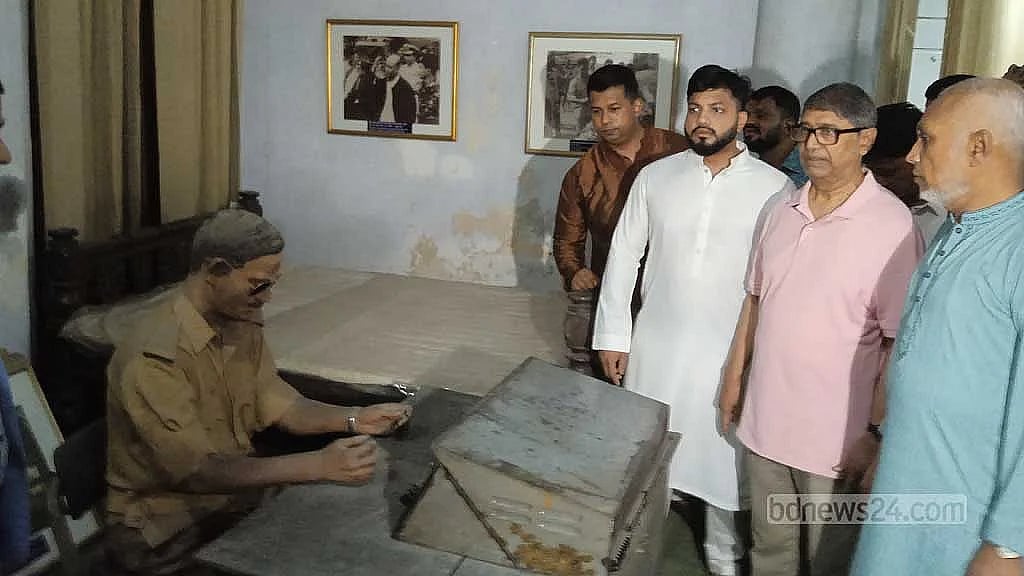
Liberation War Affairs Minister Ahmed Azam Khan and State Minister Ishraque Hossain have toured the Zia Memorial Museum in Chattogram, pledging to do "everything" to preserve the memory of former president Ziaur Rahman.
The two ministers visited the museum on Friday morning, inspecting its rooms including the second-floor room where Zia spent his final night and the staircase where he was shot dead on May 30, 1981.
They also viewed three-dimensional replicas of key historical moments, including the late president’s independence proclamation from Kalurghat Radio Station and his canal-digging programme.
Minister Azam said, “From Major Zia to president Zia, at different turning points of history his role has left a strong impact on Bangladesh and contributed to its development.
“This memorial is meant to preserve his legacy. We have seen the site, though not in full detail. Several rooms were empty as renovation work is ongoing.
“The objective is to properly restore the museum and conserve all memorabilia linked to ‘Shaheed’ president Ziaur Rahman.”
The minister said they would next visit the Zia Memorial Complex, which he said had been renamed Swadhinata Complex during what he called the “fascist” era, “out of jealousy towards Ziaur Rahman”.
"We will rebuild the Zia Memorial Complex anew," he said, describing the renaming as "a strike of vengeful politics”.
Built in 2006 on 6.63 hectares of land beside the Kalurghat Radio Station to mark the spot from where Zi a proclaimed independence in 1971, the complex has been abandoned since Aug 5, 2024, with several of its structures damaged.
The 113-year-old museum building was damaged in an earthquake in December last year and has remained closed since. Renovation work has recently begun.
Officials were directed to preserve remaining memorabilia once repairs are complete.
In response to a question, Minister Azam referred to Zia’s role in the Liberation War, his Bir Uttom gallantry award, his tenure as Army chief and his later leadership of the country.
“For Bangladesh’s prosperity, he once transformed the country’s image, which was repeatedly undermined by fascism later on. We respectfully remember him, and the Liberation War ministry will do everything to preserve his memories,” he said.
State Minister Ishraque said the museum and the complex are historical landmarks that future generations must visit and learn from.
"If we do not know our own history, we cannot build ourselves as a nation," he said, adding that earthquake damage would be repaired and the site reopened to the public as soon as possible.