Published : 16 Oct 2025, 07:42 AM
Updated : 21 Aug 2026, 02:36 PM


Disagreements lingered over the signing of the July National Charter even after the National Consensus Commission convened an urgent meeting, attended by leaders of political parties and alliances, to resolve uncertainties.
Questions remain over how the Charter -- a pledge for state reforms and their implementation -- will be enforced, whether a referendum will be held before national elections, and how divergent views on reforms incorporated into the Charter will be reconciled.
On Wednesday evening, at the urgent meeting called by the commission’s head Chief Advisor Muhammad Yunus no indication emerged that the differences among parties were narrowing.
Leaders exiting the Foreign Service Academy in Dhaka spoke of renewed “crisis” over the July Charter signing.
The Jamaat-e-Islami and the National Citizen Party (NCP) have set conditions for the signing. Jamaat demands a referendum before national elections, while the BNP has no objection to holding two elections on the same day.
The NCP and four left-leaning parties raised questions about how disagreements over reforms included in the Charter will be resolved. The NCP also highlighted the issue of enforcement orders for the Charter.

The four left-leaning parties declared they will not sign the Charter.
Despite this, the commission expressed optimism regarding the July Charter signing.
Preparations for the signing at the South Plaza of parliament are under way under the interim government. A finalised July Charter had been sent to 32 political parties and one alliance by Tuesday evening.
Wednesday’s meeting began at 6:30pm and lasted about 75 minutes, broadcast live on the state-owned BTV.
Attending were the commission Vice-Chairman Ali Riaz; members Justice Md Emdadul Haque, Safar Raj Hossain, Iftekharuzzaman, Badiul Alam Majumdar, Md Ayub Mia; and Chief Advisor’s Special Assistant Monir Haider.
After the July Uprising and the fall of the Awami League government, the interim government led by Yunus had launched state reform initiatives, establishing six reform commissions in October.
After reports from these commissions were submitted in February, dialogue with political parties began to achieve consensus on key recommendations concerning the Constitution, election system, judiciary, public administration, and the Anti-Corruption Commission.
Over this long reform process, the Consensus Commission finalised 84 points in the July Charter based on full party consensus on 17 state reform areas. On the remaining 67 points, some parties expressed dissent or provided notes of disagreement.
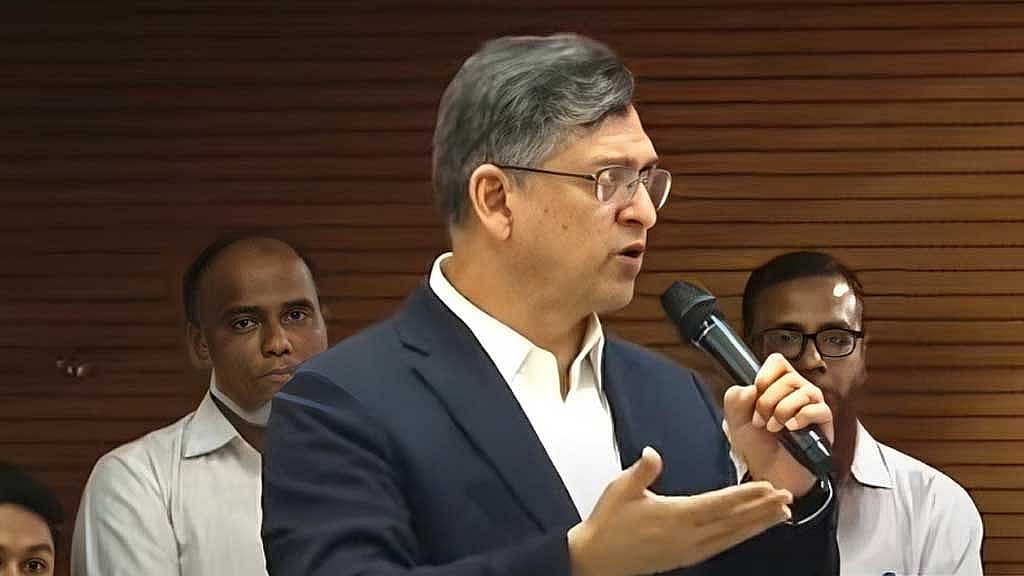
Of the 84 reform points, 47 are marked as “constitutional amendment-dependent reforms” and the remaining 37 as “reforms via law, ordinance, rule, or executive order,” according to the commission.
The 40-page Charter presents the background of the reforms, the 84 points in detail, party commitments, and space for signatures.
Following the signing, the government plans preparations for the parliamentary polls in February, before Ramadan.
The commission chief’s urgent meeting brought the Charter “crisis” to the forefront.
Attending were BNP Standing Committee member Salahuddin Ahmed, the party’s Advisory Council member Ismail Zabiullah, Jamaat Central Executive Council member Matiur Rahman Akand, NCP Secretary Akhtar Hossen, CPB president Sajjad Zahir Chandan and General Secretary Abdullahil Kafi Ratan, Gono Forum General Secretary Mizanur Rahman, BaSaD General Secretary Bazlur Rashid Firoz, BaSaD (Marxist) Coordinator Masud Rana, LDP Secretary General Shahadat Hossain Selim, AB Party Chairman Mohammed Mojibur Rahman Bhuiyan (Monju), and leaders of 31 other parties and alliances.
‘NO CONNECTION BETWEEN CHARTER AND ELECTIONS’
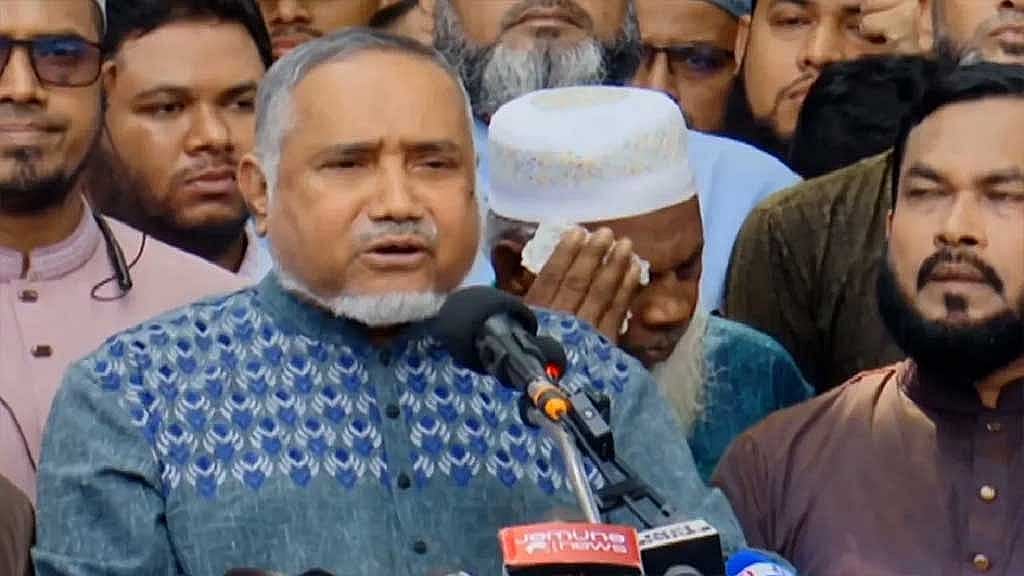
Exiting the meeting, senior BNP leader Salahuddin insisted that the July Charter has no connection with elections.
“Conducting the national parliament election in early February in a transparent, fair, and internationally recognised manner is our aim. What does the Charter have to do with the election? I believe there is no connection between them,” he said.
He added, “The nation wants reforms, and we want them too. Whoever comes to power or holds a majority in parliament must implement them. We have also spoken about a referendum.”
Salahuddin emphasised that all parties will sign the Charter, with dissenting points clearly listed by clause.
“The notes of dissent exist because we have the authority to discuss them within the Consensus Commission. Without that, there would have been no need for discussion.”
He said a referendum could be held on the same day as the national elections, allowing the Charter -- including all consensus-based and dissenting proposals -- to be implemented.
Dissenting points will be clearly stated in electoral manifestos so that parties, if given a mandate, can implement them accordingly.
“Some may have wished not to sign on certain pretexts, but that opportunity is no longer available,” he said.
PRE-REFERENDUM CONDITIONS BY JAMAAT
Jamaat deputy chief Syed Abdullah Mohammad Taher said, “We have some internal disagreements on when a referendum will be held. We have said that the referendum is for the reform commission and is a separate issue from the national election.
“Certain issues, if decided by a yes or no vote, will influence parliamentary election procedures, such as the upper house being elected by the public rather than MPs. We have reached a consensus on this.”
He added that the decision must reach the public before the election, and based on it, voting in the upper house will be conducted.
Taher said, “If the referendum is held on election day, some want the election simultaneously, then the upper house will not pass until that day. This creates a strange situation.”
He recommended holding the referendum in November so that the February elections can proceed with proper preparation, providing about two and a half months for both.
Asked whether he would attend the signing on Friday, Taher said: “Only one day remains; God willing, you will see.”
Jamaat’s Matiur called for a November referendum following the Charter signing. He said the party would sign points agreed upon in the Charter and submit its legal referendum proposals to the election commission.
‘CONFUSIONS REMAIN’
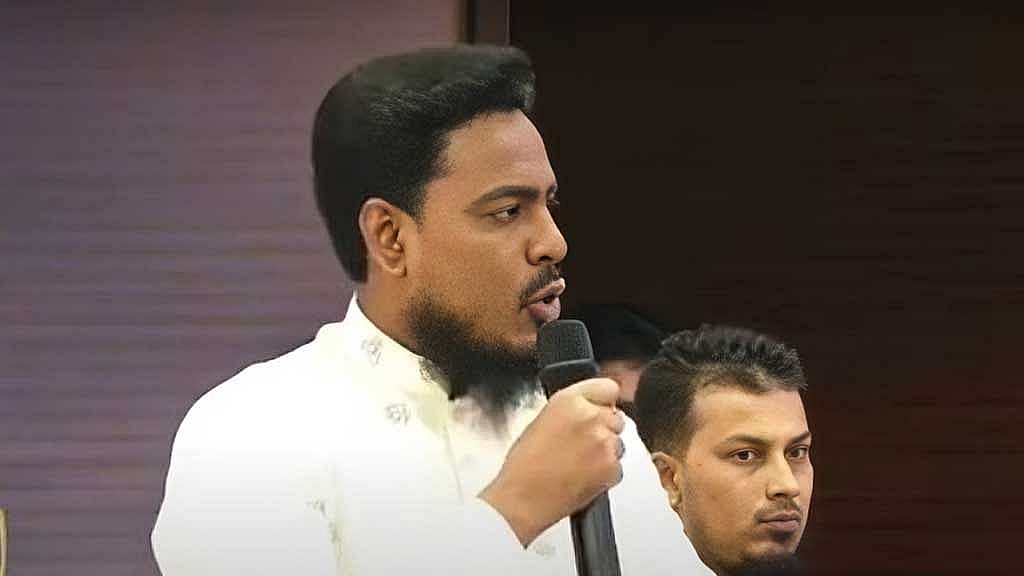
Leaving the meeting, NCP Secretary Akhtar said the commission had been given conditions for signing the Charter, which could be fulfilled in a day.
He stressed the importance of clearly communicating the process to the nation before signing to ensure implementation and meet public expectations.
“We want a clear path for implementing the July Charter before moving to sign it,” Hossain said.
He recalled the sacrifices made for democracy and the collective effort to finalise the Charter in an unprecedented consultative process.
“Some last-minute issues raised doubts. You cannot make a process successful by leaving the nation uncertain. The draft did not clearly define notes of dissent; that needs clarity.”
Akhtar said a roadmap for implementation must be clear. He expects the chief advisor, as head of the interim government, to issue the implementation order.
“We have asked that the July Charter be implemented via an order, whether called a constitutional or implementation order. We are confident the chief advisor will issue it and ensure execution,” he said.
On the referendum, he said: “We still don’t know exactly what the questions or dates will be. That must be clear to the public.”
‘WILL NOT SIGN THE CHARTER’
Leaders of CPB, Gono Forum, Bangladesh Socialist Party (BaSaD), and BaSaD Marxist declared they will not sign the Charter.
BaSaD General Secretary Bazlur said, “Excluding the four fundamental state principles, attempts to confront the Liberation War and the July Uprising, and issues around notes of dissent create multiple problems.
“All four parties -- CPB, Gana Forum, BaSaD, and BaSaD Marxist -- will not sign the July National Charter. We will hold a press conference Thursday afternoon to elaborate.”
CHIEF ADVISOR EXPECTS ‘FESTIVITY’
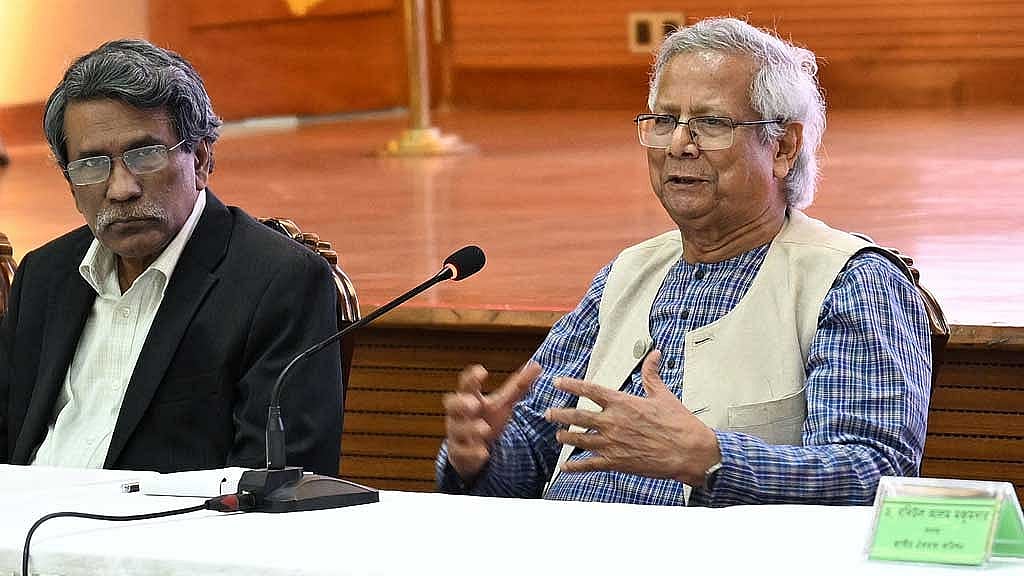
Despite differences, Yunus remains hopeful that parties will sign the Charter on Friday in a festive atmosphere.
He said the pens used for signing and the Charter itself will be preserved in the history museum, reflecting its significance in Bangladesh’s contemporary political history.
Yunus reaffirmed the government’s commitment to holding the February national elections. During the meeting, he repeatedly thanked and congratulated the attending political leaders, describing the July Charter as a historic milestone.
In his welcome address, Riaz also expressed hope for a “joyful” signing, dismissing media reports of crisis as “confusion”.
Riaz said, “Some confusion has been spread from different sides. Many political leaders and journalists have called me. On behalf of the Consensus Commission, I want to state clearly that preparations on our side are complete. With the continued cooperation we receive, we are confident that the signing will take place in a joyous atmosphere.”