Published : 20 Jun 2025, 08:15 AM
Updated : 28 Aug 2026, 01:22 AM


For seven months, Bangladesh’s National Human Rights Commission (NHRC), once a forum of hope for the marginalised and wronged, now sits empty, legally bound but practically powerless.
In the vacuum left behind, a quiet vortex has formed, leaving a growing number of complaints unresolved and citizens without redress.
From families entangled in inheritance disputes to victims of mob violence, hundreds now wait-hope tethered to a body that no longer speaks.
Among them is Nurul Amin, a resident of Narayanganj, who approached the commission nearly a year ago with a grievance involving a business investment gone awry. His case, like many others, now sits in limbo.
Speaking to bdnews24.com, Amin explained that he and his elder brother had jointly invested Tk 1.4 million, while his brother-in-law contributed Tk 900,000 into a friend’s business. The sudden death of that friend left their funds stuck, prompting them to seek intervention from the NHRC.
“The commission had started working on our case. It looked like things might get resolved,” Amin said. “But then it just stopped. Once the commission became empty, we got no solution.”
He added with frustration, “They were about to help us reach a settlement. Now we’re lost in uncertainty. We’re disappointed, honestly. If they were still there, we might’ve had a resolution by now.”
Amin emphasised how crucial the commission had been for ordinary citizens.
“This was one of the only places people could go and get help quickly, and for free. I’ve seen many people come out satisfied from there. It needs to be revived immediately.”
The paralysis began on Nov 7 last year, when chairman Kamal Uddin Ahmed and all sitting members of the NHRC collectively submitted their resignations to the president.
The resignations came amid broader political transitions in the country. Two days earlier, the commission had released its October report, which highlighted a rise in mob lynchings, sexual violence, and other serious rights violations.
The report also documented politically motivated attacks, the weaponisation of legal cases against political figures, and incidents of premeditated violence tied to past enmities.
The National Human Rights Commission Act, 2009 defines the NHRC as a statutory and independent body, with the legal obligation to function continuously.
According to the law, the commission should consist of a chairperson and up to six members, including one full-time member who serves as a permanent representative.
Crucially, the law stipulates that if the chairman’s position becomes vacant, or if the chairman is unable to perform duties due to absence or illness, the full-time member must assume the role of acting chairperson until a replacement is appointed or the chairman resumes duties.
However, in this case, the full-time member resigned alongside the chairman and other members, effectively leaving the commission leaderless and non-functional for the past seven months.
HUNDREDS OF COMPLAINTS UNATTENDED
According to NHRC officials, from Nov 7, 2024, the date of the resignations, until Jun 4, the commission has received around 300 complaints through postal mail, online platforms, and in-person visits. Most relate to family disputes, land ownership conflicts, and issues surrounding property grabs.
But with no functioning leadership, the commission has no legal mandate to act on any of these complaints.
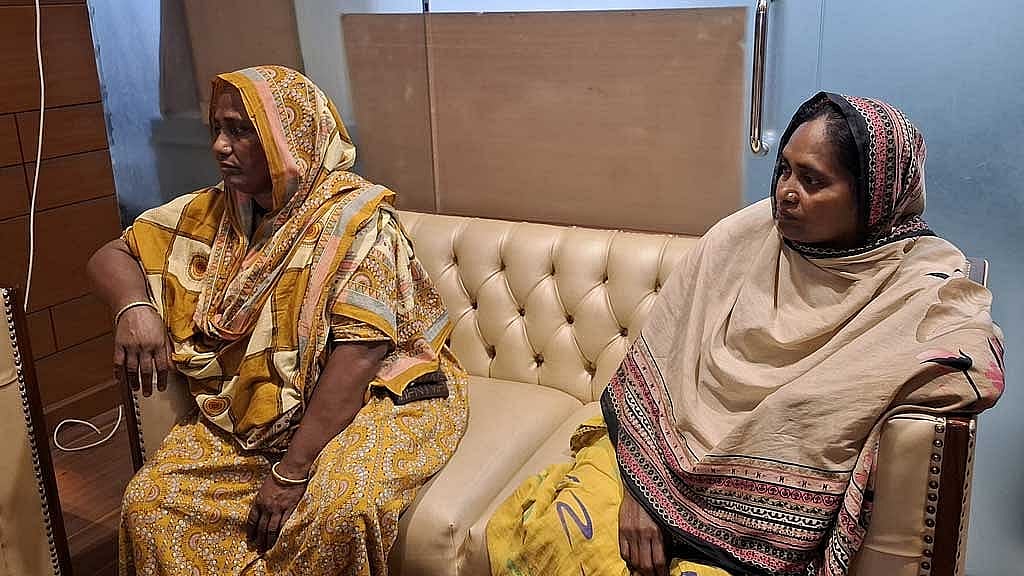
One such visitor was Nazma Akter, who arrived at the commission’s office with her sister-in-law, Halima Begum, to lodge a complaint.
Nazma, a resident of Balurghat in ECB area of Mirpur, told bdnews24.com that both she and her sister-in-law lost their husbands many years ago. Nazma 20 years ago, and Halima 36 years ago. A third female relative, their sister-in-law, also died without leaving an heir.
Nazma alleges that a brother-in-law and another female in-law have taken unlawful control of their inherited property.
“We sell vegetables by the roadside just to survive,” Nazma said. “We have nothing left in our possession. I have two sons and a daughter. She has a son and a daughter too. We raised them all through hard work.”
Her voice trembled as she added: “We’ve been everywhere but no one hears us. We just want justice.”
Nazma, seated in the waiting area of the National Human Rights Commission office in Dhaka, continues her story with quiet despair.
“We heard this was a place where people get justice. So we came,” she said.
Nazma and her sister-in-law have been living in constant conflict over property that once belonged to their father-in-law; land and assets they believe legally belonged to their late husbands. But they’ve received none of it.
“We don’t even know what happened to that property. They keep saying we won’t get anything,” she added. “Now we’re just stuck in that house—barely getting by, always arguing.”
Nazma claims that, if inheritance had been fairly divided, each of them would now have three rental shops and living space, providing both security and income.
“We could’ve lived in peace. But that’s no longer possible.”
SYSTEM PARALYSED
An official at the NHRC, speaking on condition of anonymity, explained the consequences of the prolonged leadership vacuum.
“If the full commission were in place, we could’ve taken up these cases under our quasi-judicial authority,” the official said. “We have four benches here. Normally, the complaints go before those benches. Investigations are conducted, directions are given. None of that is possible now.”
“The Human Rights Commission is meant to be the balancing force. But that mechanism is shut down.”
Deputy Director Farhana Saeed confirmed the situation. “Complaints are still coming in,” she said, “But without a chairman or members, we can’t act on them. We’re holding them for now, hoping the new commission will address them once appointed,”
She added that most complainants come with the same question: “When will the commission return? What will happen to our complaints? Will we get any justice at all?”
Meherunnesa, director of the Complaints and Investigation Division, said her team continues to document and classify the complaints to assess whether they qualify as human rights violations.
“We’re preparing summaries and recommendations. But without a commission in place, we have no authority to issue any directive or take a decision. We can’t resolve cases or assist anyone right now.”
‘PEOPLE ARE SUFFERING’
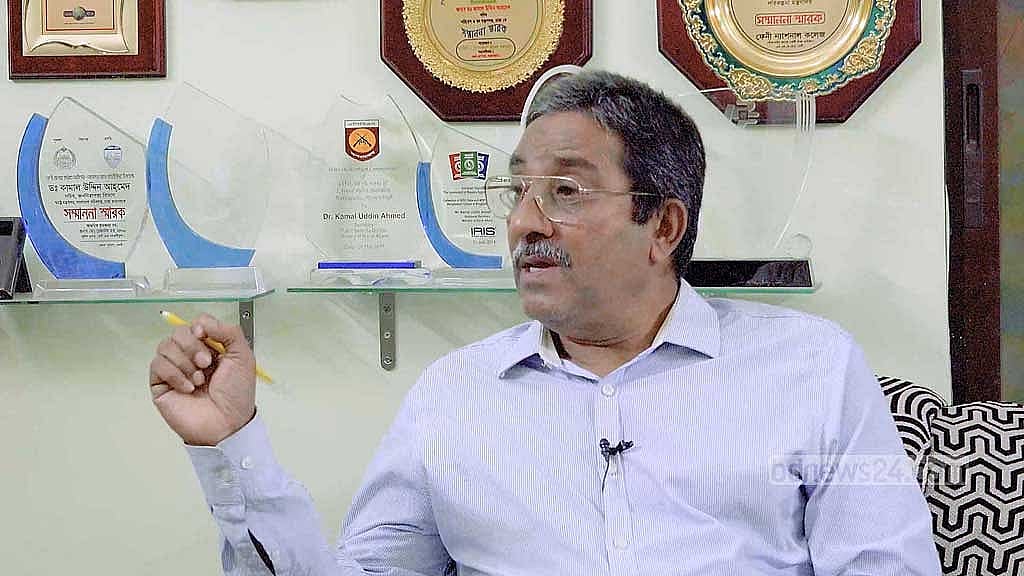
Former NHRC chairman Kamal Uddin Ahmed acknowledged the void left by the commission’s resignation.
“Monitoring whether human rights are being protected is a constant responsibility,” he told bdnews24.com.
Under his leadership, the NHRC routinely issued directives to government agencies urging action on public complaints.
“In most cases, steps were taken. People benefitted. We tried to offer remedies and often, we succeeded. That isn’t happening anymore. And yes, people are definitely suffering.”
He shared that the commission regularly received calls from the public, detailing personal grievances and urgent problems.
In previous years, the NHRC had taken steps to curb child marriage, and following last August’s floods, it visited various districts to recommend embankment construction to the government.
“But now, nothing is happening,” said Kamal. “There are many responsibilities the state must fulfil. Our role was to raise awareness and offer advice. We pointed out things that were wrong. We told the government that this should be fixed.”
Despite the absence of an active commission, the NHRC still received 751 complaints in 2024, according to officials. Of these, 373 were resolved before the commission became inactive. The rest, 228 active cases and 150 under processing, remain untouched.
Under the National Human Rights Commission Act, 2009, the commission is legally empowered to:
Investigate allegations of human rights violations or incitement, either directly or on behalf of a complainant.
Examine actions of public servants that breach or endanger human rights.
Review state mechanisms related to constitutional rights, offering recommendations to improve implementation.
Address obstacles to rights—such as terrorism—and advise the government on remedies.
Facilitate mediation and settlements where possible.
Offer legal assistance to complainants or their representatives.
Recommend prosecution or disciplinary action when settlement efforts fail.
But with no active chairperson or members since November 2024, these powers remain dormant.
VIGILANTE ‘JUSTICE’, RISING LAWLESSNESS
In the absence of formal protections and under a fragile political transition, civil society observers have noted a disturbing rise in mob violence, institutional breakdown, and street-level reprisals.
Following the fall of the Awami League-led government, law-enforcing activities slowed considerably, creating space for vigilante actions. People have been seen attacking political rivals’ homes, storming religious sites, and engaging in public shaming under flimsy suspicions.
In one widely circulated incident last year, a man named HM Rasel Sultan posted a video on Facebook showing himself and others physically assaulting several women in Dhaka’s Shyamoli, claiming they were “suspected sex workers”.
Despite national media coverage and online outrage, no legal action has been reported against him.
Instances of teachers being harassed or forced to resign from schools based on personal or political disputes have also increased. In some cases, defendants have been attacked inside courtrooms, in full view of police.
Although the interim government has expressed concern and urged people not to take the law into their own hands, swift punitive action has rarely followed. This inaction, observers warn, threatens rule of law and risks embedding a culture of revenge in public life.
WARNING OF DETERIORATING CONDITIONS
Khushi Kabir, a prominent rights activist, told bdnews24.com that the commission’s absence means serious violations often escape government scrutiny.
“We see these abuses in the media. But when the commission is active, there’s a way to bring them formally to the government's attention. The commission could have sent investigators. None of that is happening now.”
She added, “The balance has been broken. The government once had a commission where people could go to seek justice. Without it, what are we supposed to think—does the government even care about human rights anymore?”
Kabir believes that if there were real political will, the commission would have already been restored.
“We’re not seeing any reason why it hasn’t been done. Violations are happening everywhere.”
She noted that people now feel unsafe, even in their basic movements. Despite nine months of interim governance, she said, there has been no restoration of civic order.
“There must be a place where people can go, where the commission has a role. If it doesn’t act, at least we can ask why. But now, there is no role at all. The state still hasn’t brought the worsening human rights situation under control.”
CALLS FOR IMMEDIATE RECONSTITUTION
Ali Riaz, vice-chair of the National Consensus Commission, stressed the urgency of restoring the NHRC.
“We need an independent commission, one that can monitor the situation, identify patterns, and determine the nature of violations.”
Asked when a new commission might be appointed, Hafiz Ahmed Chowdhury, secretary of the Legislative and Parliamentary Affairs Division under the law ministry, told bdnews24.com: “I can’t say right now. The decision has to come from the top. It’ll happen when the order is given.”
Until then, rights advocates and victims of injustice must wait without a formal mechanism to hear or resolve their complaints. With each passing day, the backlog grows, and so does public disillusionment.
For now, citizens like Nazma Akter, and hundreds more, can do little but wait and wonder when the very institution built to protect their rights will finally come to their rescue.