Published : 19 Oct 2025, 08:58 AM
Updated : 21 Aug 2026, 02:36 PM


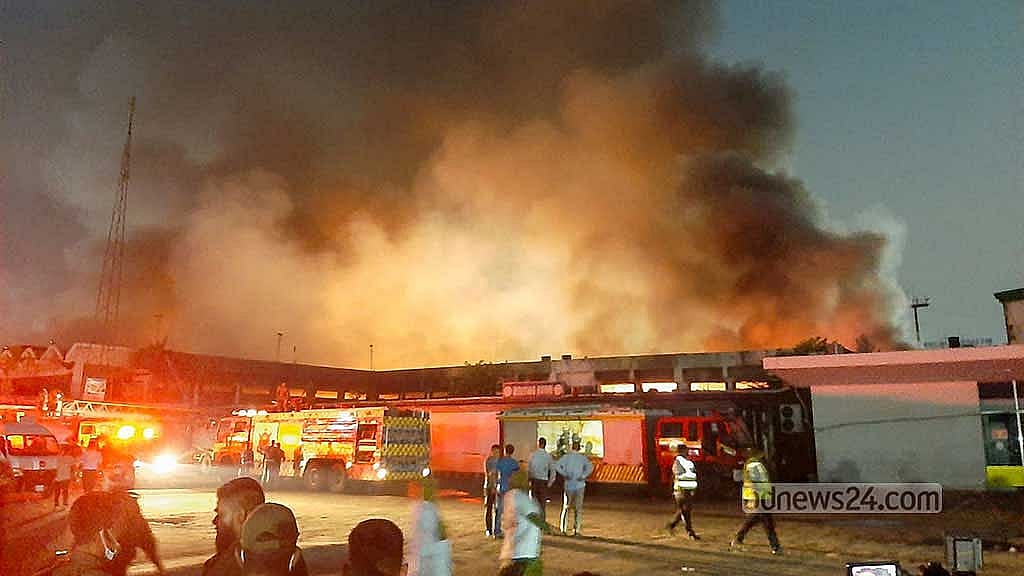
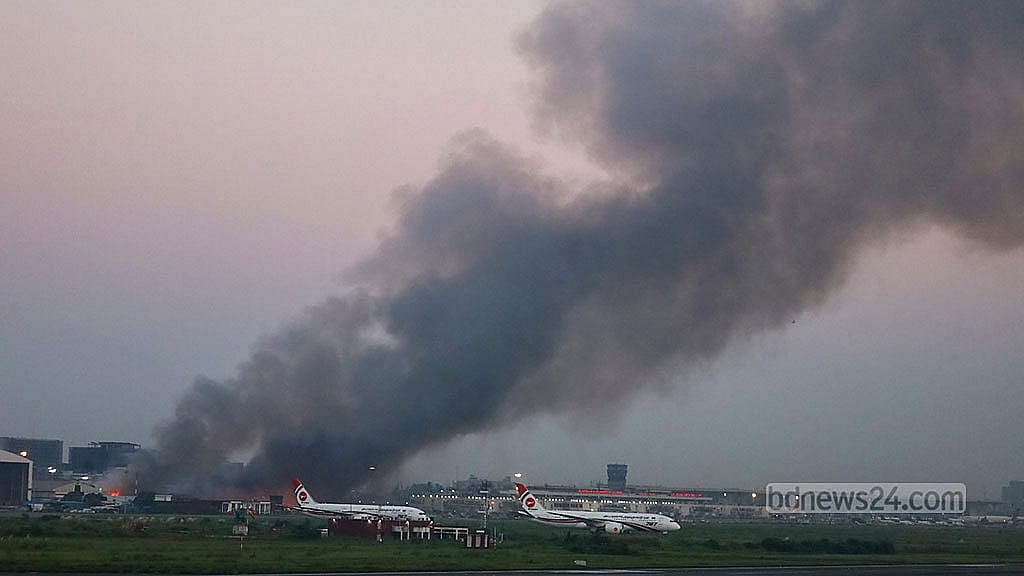
A minor spark escalated into a catastrophic blaze, consuming most of the goods stored at Shahjalal International Airport’s import cargo complex in Dhaka.
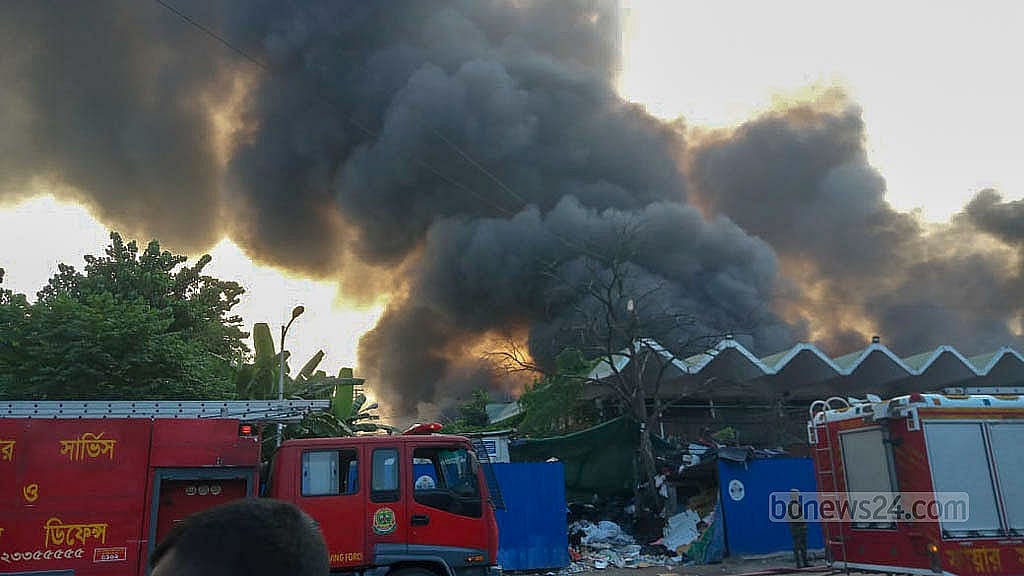
After burning fiercely for seven hours, 37 units of the Fire Service contained the flames. Yet by then, the bulk of imported cargo had been charred beyond.
Officials and stakeholders involved in cargo operations questioned why a fire at the nation’s principal international airport could not be contained sooner, despite the prolonged burning and available firefighting resources.
As part of mandatory airport safety measures, Shahjalal airport conducts annual fire drills, using mock aircraft to simulate emergencies. The airport’s own state-of-the-art fire units, including advanced Airport Crash Tenders, are trained to respond. Fire Service personnel have often received public accolades for their efforts during these drills.
When the flames spread rapidly across the import cargo complex on Saturday afternoon, these preparations appeared inadequate, according to sources involved in the cargo business.
Just six days earlier, on Oct 12, the Civil Aviation Authority of Bangladesh had announced that the United Kingdom’s Department for Transport awarded Shahjalal International Airport’s cargo division a perfect score for additional security measures.
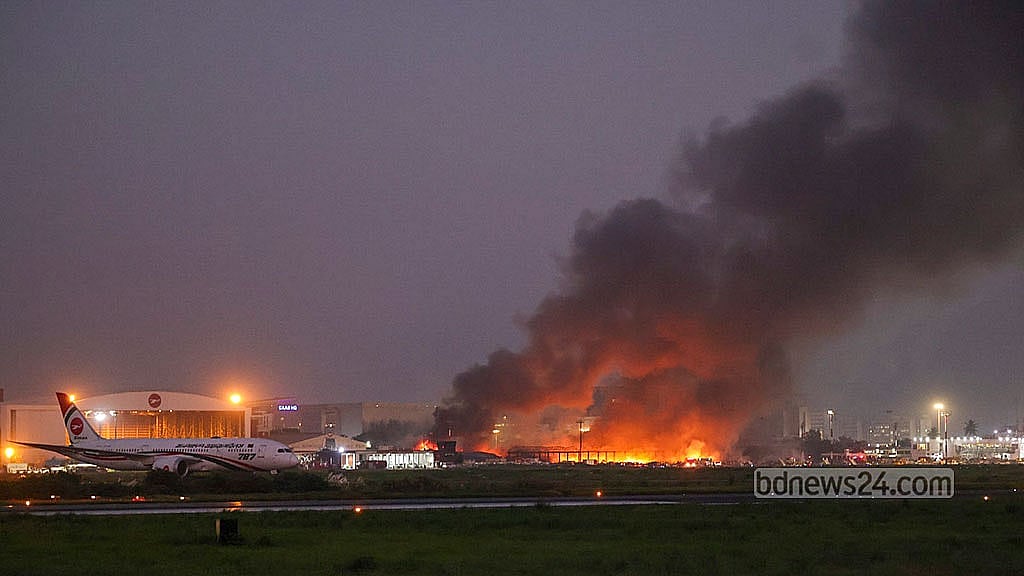
The fire on Saturday has since cast a shadow over that achievement, with international media widely reporting flight disruptions caused by the blaze.
Local cargo stakeholders allege that even with ample time to respond, the fire could not be contained. They claim that by the time the Fire Service arrived, flames had already spread extensively. Fears of chemicals in the warehouse reportedly prompted firefighters to adopt a cautious approach, which inadvertently allowed the fire to engulf the entire complex.
CARGO LOSSES
Clearing and forwarding (C&F) agents assisting with cargo import and export told bdnews24.com that losses run into billions of takas, yet the government has provided no guidance on compensation.
The civil aviation ministry’s media statement said the fire began at 2:15pm, while the Fire Service claimed it received the report at 2:30pm and reached the site at 2:50pm -- a gap of at least 35 minutes from the start of the blaze.
Though CAAB’s on-site fire units had reached the scene earlier, they are also alleged to have delayed their response.
The airport’s permanent firefighting fleet includes advanced Rosenbauer Panther Airport Crash Tenders, equipped with high-capacity pumps and the ability to spray water or foam across long distances.
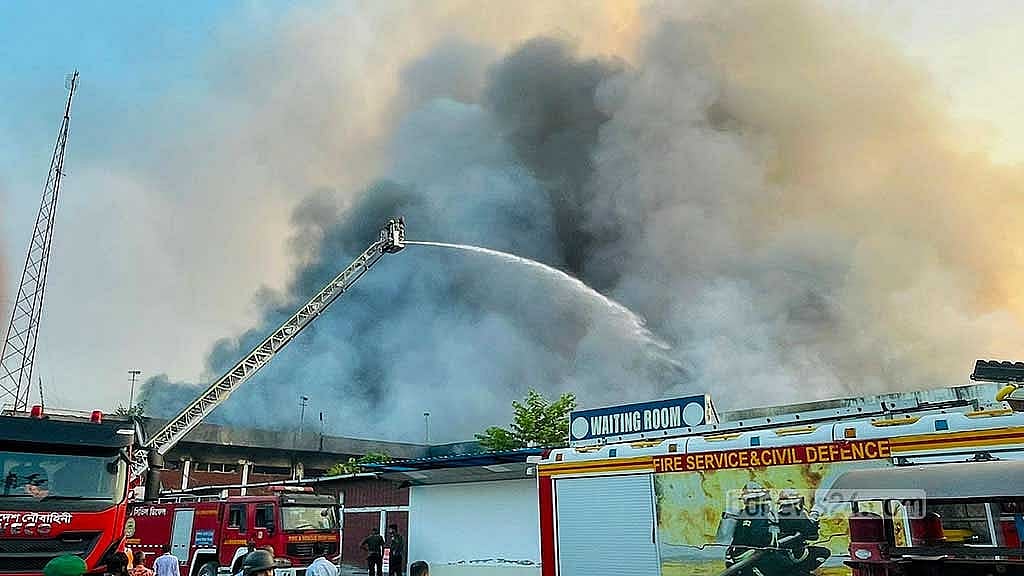
Yet C&F agents assert that these units did little during the early stage of the fire. Workers who attempted to extinguish flames themselves were reportedly prevented from entering due to alleged risks from explosives and chemicals.
Imran Hossain, director of the C&F and logistics firm A-One, said: “The fire started in a DHL courier cage among 25–30 courier services arranged in a cubicle-style formation. People who tried to control the flames were not allowed inside because of the risk of theft or explosions. Some were even removed forcibly.”
A DHL customer care employee, Sakib, said the company had received no information or instructions about the fire or losses.
The import cargo warehouse is a large hall divided into smaller cages for various firms, with separate storage areas for different product types.
Fire Service Director General Muhammad Jahed Kamal said the facility, located at the airport’s north-west corner, measures roughly 1,200ft in length and width, covering approximately 1.4 million sqft.
Biman Bangladesh Airlines’s ground-handling staff were present during the blaze, overseeing the unloading of cargo from aircraft. Employees outside the complex described alarms sounding shortly after 2pm, prompting them to evacuate.
“When some workers tried to enter the courier warehouse to extinguish the fire, they were told there might be explosives or weapons inside. We withdrew immediately,” one worker said on condition of anonymity.
Several sources indicated that the fire may have begun at the Sky Capital Airlines warehouse before spreading to the DHL courier cage and eventually to the “Dangerous Goods” storage area. But everyone agreed that the blaze had already spread significantly before Fire Service units arrived.
Khairul Alam Vuiya Mithu, vice-president of the Shahjalal Airport C&F Agents Association, said:
“At 2pm, when the fire started, many workers and Ansar personnel were present. Those who tried to intervene were removed due to the risk of ammunition and chemicals. The Fire Service vehicles waited outside Gate No. 8 for a long time due to authorisation issues.”
When asked about claims that the Fire Service was initially denied entry, Civil Aviation and Tourism Advisor Sheikh Bashir Uddin said: “You mentioned it; we will investigate. But there is no possibility that such a thing happened.”
Fire Service DG Brig Gen Jahed said, “I have heard nothing like that. It is an international airport, so entry requires careful procedure. We received the report at 2:30pm and deployed immediately.”
He added that wind was a major factor in delaying containment, providing oxygen that fed the flames in the open warehouse area.
DAMAGE ASSESSMENT AND COMPENSATION
With regular cargo operations closed during the weekend, warehouse staff were limited, though loading and unloading continued. Once news of the fire spread, C&F staff began tallying losses.
Abdul Momin Mondal of Fast & Safe Logistics said their leather, fabric, yarn, lace, and elastic shipments -- destined for Savar and Chittagong -- had been destroyed.
Outside Gate No. 8, agents and logistics staff counted losses in millions of takas. Imran Hossain said that three shipments valued at several million takas were affected, with two completely destroyed and the fate of the third unclear. Cargo planes carrying the goods had landed just hours before the blaze.
He explained the warehouse process: aircraft unload cargo, ground handlers bring it to a customs scanner, and C&F agents clear the goods with appropriate documentation and duties. Because Friday and Saturday were holidays, cargo had accumulated outdoors, leaving additional stock vulnerable to fire.
Mithu said, “Ground handlers and airport authorities are responsible for the safety of goods. They charge us for security, yet billions of takas worth of cargo have been lost. Who will compensate the business owners?”
Imran added: “Insurance coverage is up to $6,000, but losses here are in the billions of takas. Some goods had taxes already paid, yet customs had not released them by 7pm. Now both the goods and tax money are lost.”
Advisor Bashir confirmed that a preliminary statement on cargo quantity and value is being prepared by the airport cargo director.
To investigate the fire, the Internal Resources Division (IRD) under the finance ministry has formed two separate committees: one to quantify damages and submit a report promptly, and an aviation committee tasked with identifying causes, assigning responsibility, and assessing losses within five working days.
SABOTAGE OR ACCIDENT
Questions have arisen over whether the blaze was an act of sabotage or an accident, especially after three successive major fires in Dhaka and Chattogram.
A statement from the Chief Advisor’s Office noted that credible evidence of sabotage or arson would trigger immediate government action.
The Chief Advisor’s Office issued a statement later in the evening, saying the government was “deeply aware” of the public concern caused by a series of recent major fires across the country.
The statement said: “We wish to assure all citizens that the security services are investigating each incident thoroughly and protecting lives and property with utmost vigilance.”
“No act of criminality or provocation will be allowed to disrupt the public life and political process,” the statement said.
No criminal acts or provocations that disrupt public life or political processes will be tolerated, it added.
When Bashir was asked whether the airport fire was sabotage or accident near the site around 8:30pm, he reacted sharply: “Is it right to ask such a question so quickly?”
He added, “This is a national institution. Asking whether this is sabotage or an accident -- do you expect me to give a statement right now? Is that a proper question? At this moment, our top priority is to restore normal airport operations and assess the damage.”
To a follow-up question on sabotage, he said: “It is illogical to ask such a question at this stage.”