Published : 06 Oct 2025, 03:28 AM
Updated : 21 Aug 2026, 01:53 PM


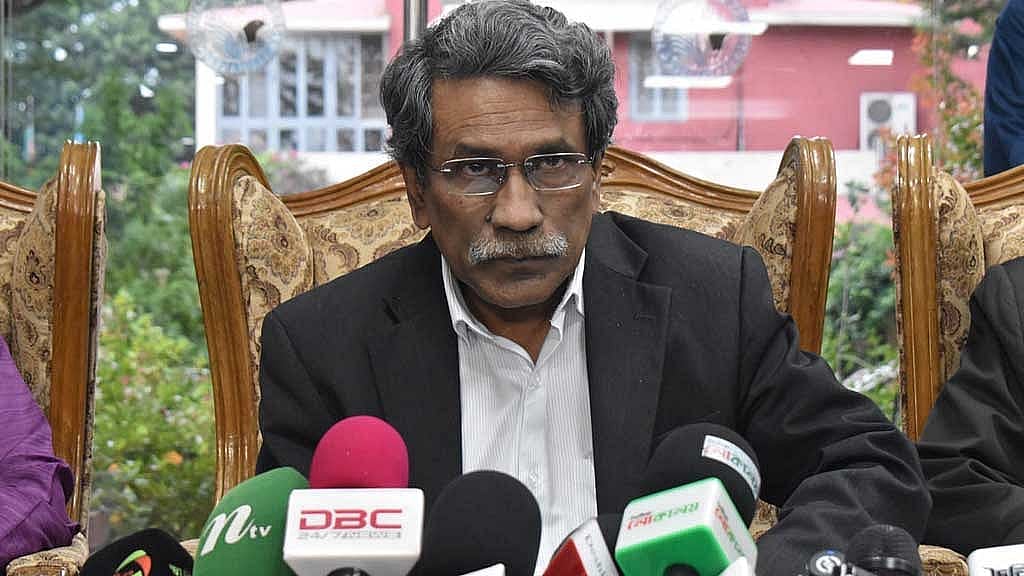
Ali Riaz, vice-chair of the National Consensus Commission, has said political parties have “agreed” to hold a referendum on the implementation of the National Charter, also known as the July Charter.
The commission, however, has not clarified whether the referendum will be held alongside the parliamentary elections or beforehand.
On Sunday, the Consensus Commission held the fourth day of discussions with political parties regarding the implementation of the National Charter.
Riaz said, “All political parties have agreed to hold a referendum to ensure the public's involvement and consent in the implementation of the Charter. This marks the first step for political parties in the implementation process.”
Riaz expressed hope that consensus would also be reached on other matters, adding that the commission would soon provide detailed recommendations for implementation to the government.
Parties are divided over the implementation of the Charter.
The Bangladesh Nationalist Party (BNP) and several other parties had suggested that the Charter should be implemented through the elected parliament, while the Jamaat-e-Islami and its allies advocate for its implementation before the elections.
This disagreement created a deadlock, which Jamaat and like-minded parties have sought to resolve by proposing a referendum.
Initially opposed to the idea, the BNP and its allies later shifted their stance, agreeing that a referendum could take place, but only on the same day as the parliamentary elections, using a separate ballot.
Despite this shift, the Consensus Commission has not clarified when the referendum will be held.
Riaz confirmed that political parties are nearing a final decision on the process, saying discussions are progressing towards a clear resolution.
He added that the commission will soon provide detailed recommendations to the government for the implementation of the Charter.
Also, political parties have largely agreed that the reforms to be carried out by the legislature in February must be sustainable.
BNP's Standing Committee member Salahuddin Ahmed, leading the party delegation in the dialogues, emphasised the importance of involving the public in the National Charter's implementation, asserting that a “separate ballot” for the referendum should be held on the same day as the national election.
He also suggested that no constitutional amendment would be required for the referendum to take place, and that an ordinance could be issued to facilitate the process.
Jamaat Assistant Secretary General, Hamidur Rahman Azad, however, believes the referendum should occur before the announcement of the election schedule, preferably in November or December, to avoid any complications.
He said holding the referendum prior to the elections would ensure the legality of the National Charter and make its implementation widely accepted. Azad further mentioned that if the referendum results went against Jamaat's stance, the party would accept the outcome.
In contrast, the National Citizen Party (NCP) advocates for the referendum to take place on election day.
NCP Joint Convener Sarwar Tushar argued that the current government should “resolve” the legal basis for the Charter, as the next government could potentially “reject it”.
He reiterated that most parties agree on having a separate ballot for the referendum alongside the general election.
Representatives from 28 political parties, including BNP, Jamaat, NCP, the Gono Odhikar Parishad, Ganosamhati Andolon, the Communist Party of Bangladesh (CPB), the Revolutionary Workers Party, and others, participated in Sunday’s discussions.
The consensus is that a referendum will be held, though the exact timing remains uncertain.