Published : 17 Jul 2026, 02:54 PM
Updated : 08 Sep 2026, 09:25 AM


Bangladesh's new flood reality
Urban flooding: Cities are increasingly vulnerable as intense rainfall overwhelms drainage systems, making urban flooding a growing disaster risk.
Changing rainfall: Longer dry spells followed by short bursts of extreme rain are reshaping Bangladesh's monsoon pattern.
Infrastructure gaps: Loss of wetlands, clogged canals, poor drainage and unplanned urbanisation are amplifying flood impacts.
Coordination needed: Experts say weak coordination among government agencies continues to hamper effective flood preparedness and response.
Better forecasts: More accurate, location-specific forecasts and dedicated urban flood warning systems are critical to reducing future losses.
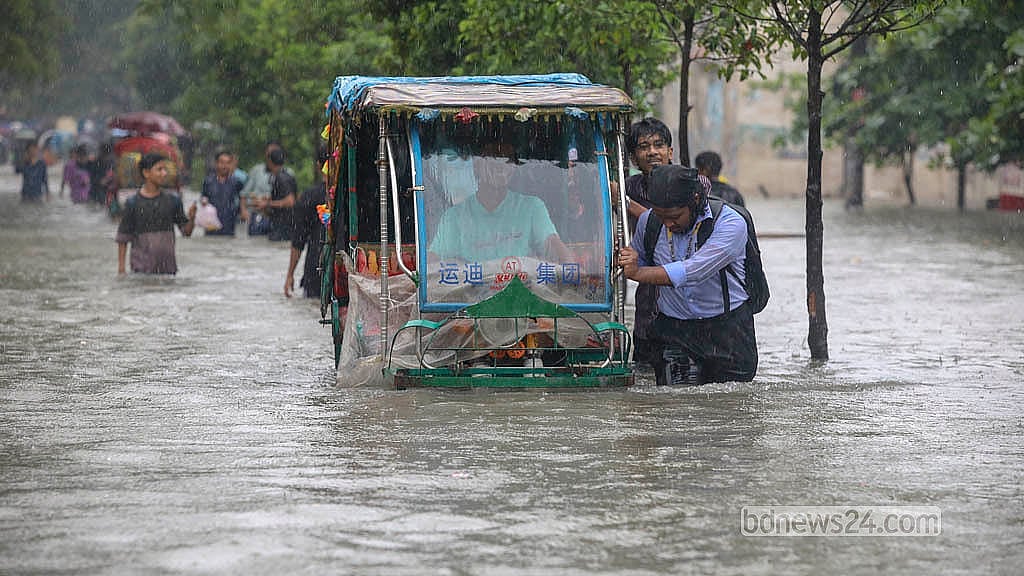
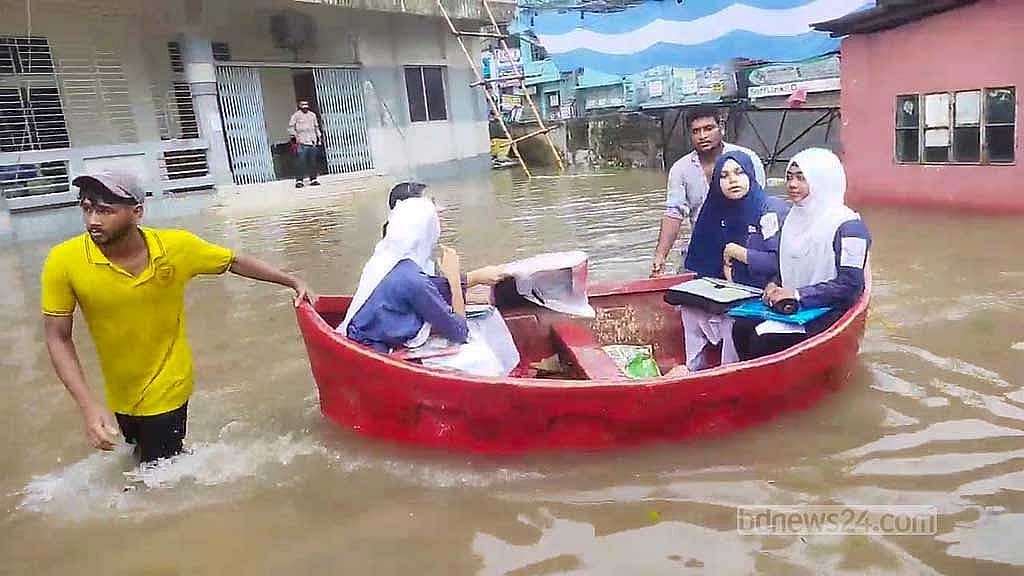
Rain had stopped hours earlier, but knee-deep water still covered many roads in Dhaka.
Traffic remained at a standstill in some areas, while office-goers were stranded in others.
Several hundred kilometres away in Chattogram, water cascading down hillsides inundated roads, homes and businesses.
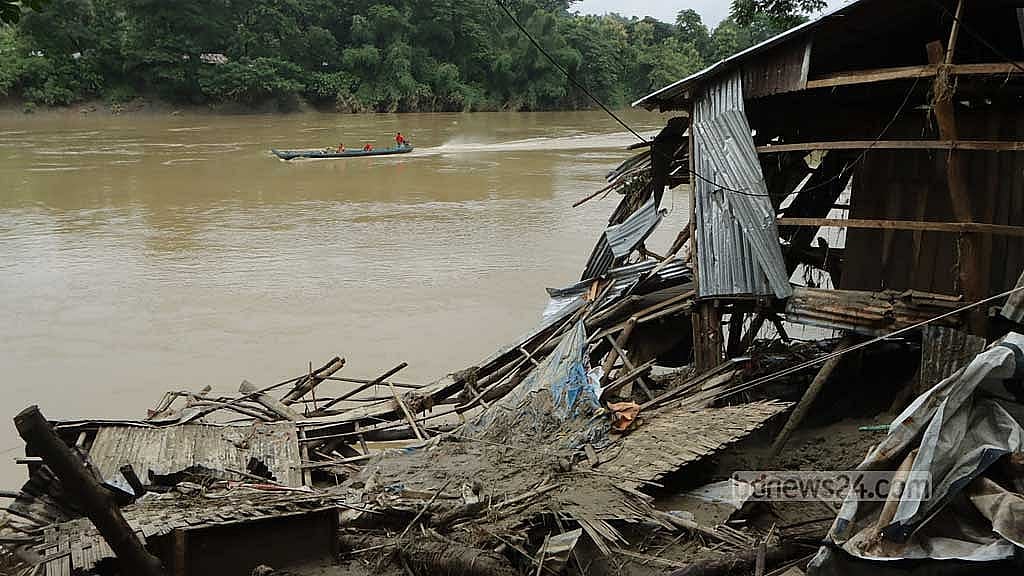
In parts of the Chattogram Hill Tracts, swollen rivers and flash floods created widespread flooding.
Monsoon flooding is nothing new in Bangladesh. What is changing, experts say, is where it strikes -- and how.
They believe this year's monsoon is more than another seasonal disaster. It reflects a changing pattern of rainfall and flooding across Bangladesh, with cities increasingly bearing the brunt.
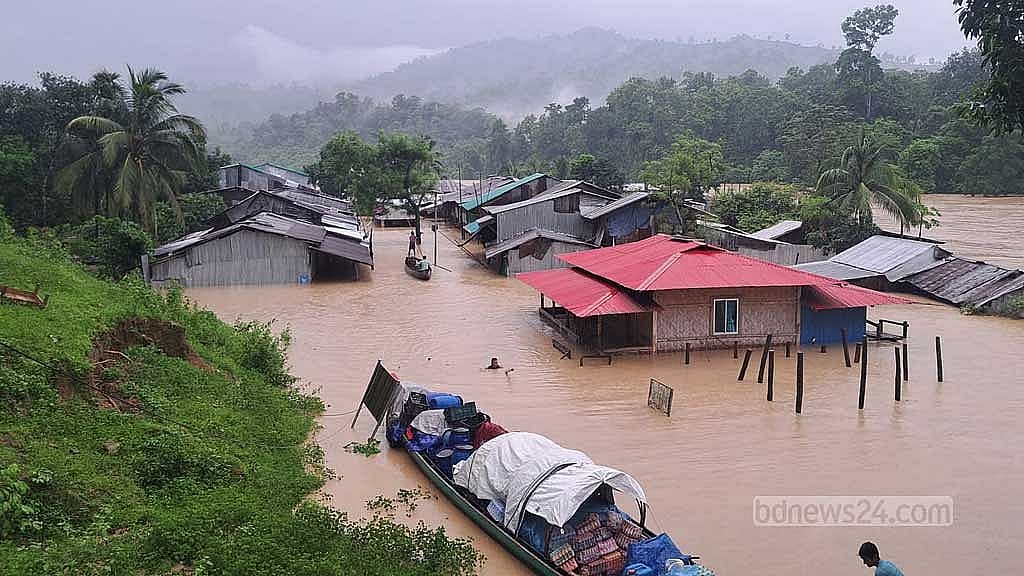
On Jul 7, Chattogram recorded 412mm of rainfall in a single day, the city's highest daily rainfall in four decades.
A week later, nearly 97mm of rain left large parts of Dhaka waterlogged for hours.
Heavy rainfall triggered by a monsoon low-pressure system also caused rivers to swell in several districts, while official figures from the Ministry of Disaster Management and Relief show that Khagrachhari, Rangamati, Bandarban, Cox's Bazar, Chattogram, Moulvibazar and Habiganj were among the worst affected districts.
Experts argue that the defining feature of this year's floods is not only the damage in these seven districts but also the shift in rainfall patterns and the geography of flooding itself.
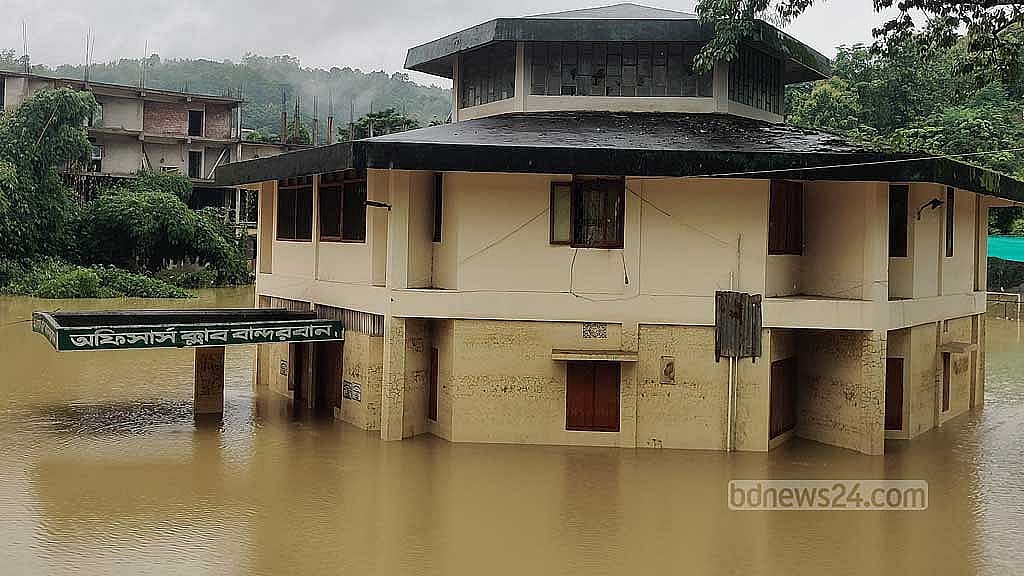
Where coastal and river basin districts traditionally suffered the worst flooding during July and August, Dhaka and Chattogram have now experienced severe urban flooding.
They attribute this to rapid urbanisation, unplanned land use, inadequate drainage systems and the loss of wetlands, which have made cities increasingly vulnerable to extreme rainfall.
Climate change, they say, is altering both the timing and spatial distribution of rainfall, requiring disaster management strategies and urban infrastructure to adapt accordingly.
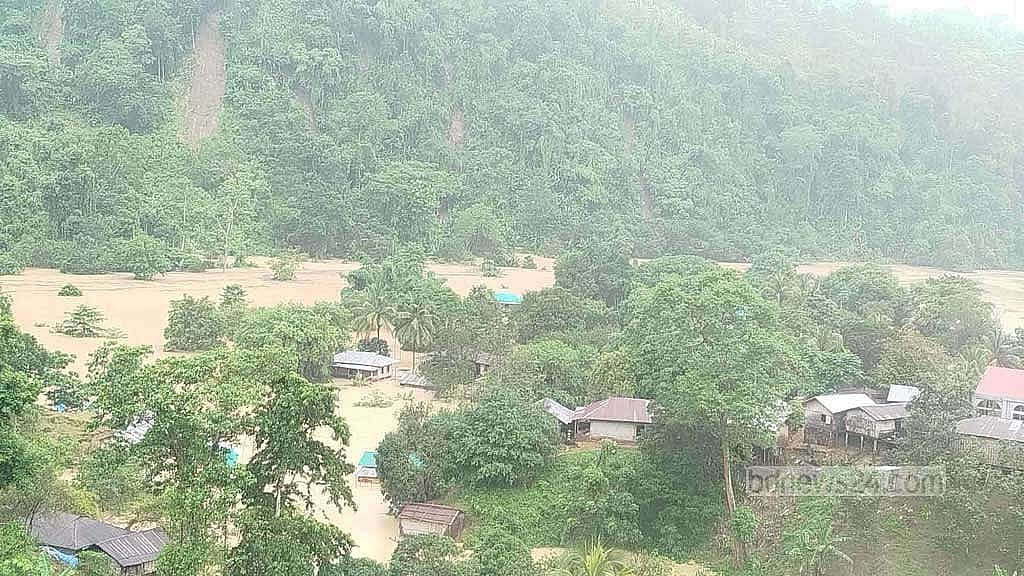
Why the Flood Pattern is Changing
Prof AKM Saiful Islam of the Institute of Water and Flood Management at Bangladesh University of Engineering and Technology (BUET) believes urban flooding must now be treated as a major disaster risk alongside traditional river flooding.
"This year's flooding first began in the south-eastern region. Chattogram, Bandarban, Rangamati, Cox's Bazar and Khagrachhari received exceptionally heavy rainfall because of a monsoon low-pressure system that carried large amounts of moisture from the Bay of Bengal," he said.
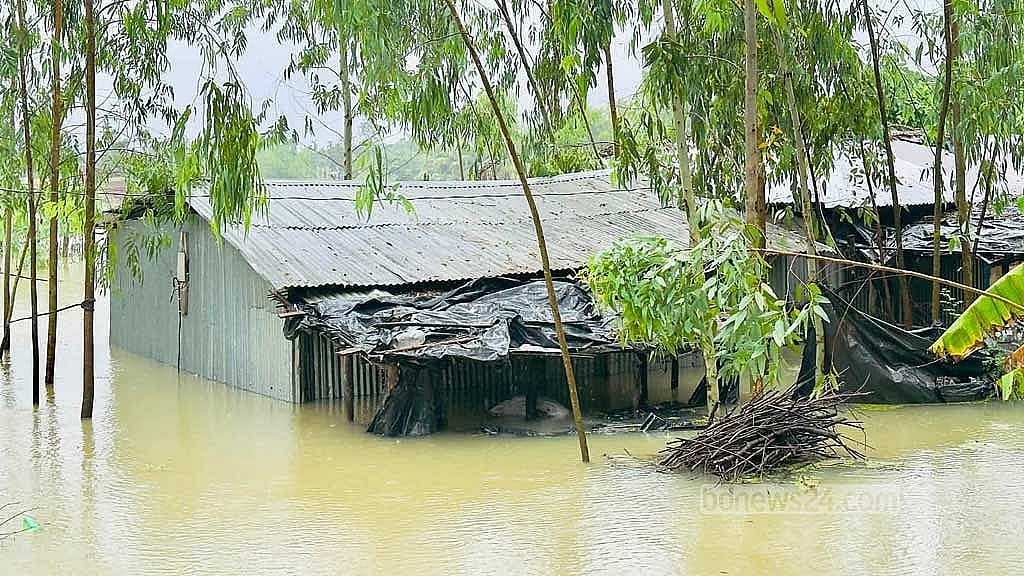
He recalled that a similar weather system caused devastating floods in Feni and Cumilla in 2024, but said this year's event differed because rainfall within Bangladesh itself was much heavier.
"In Chattogram alone, about 850mm of rain fell over three days. Draining that volume of water within such a short time is extremely difficult," he said.
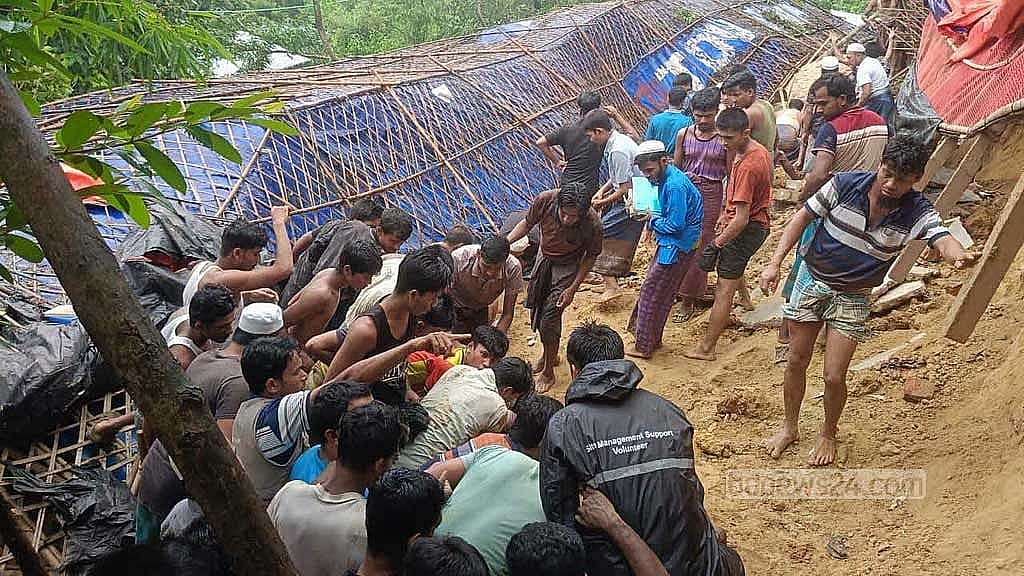
The prolonged rainfall also softened hillsides, increasing the risk of landslides, including around Rohingya camps in Ukhiya.
Why Urban Flooding is Increasing
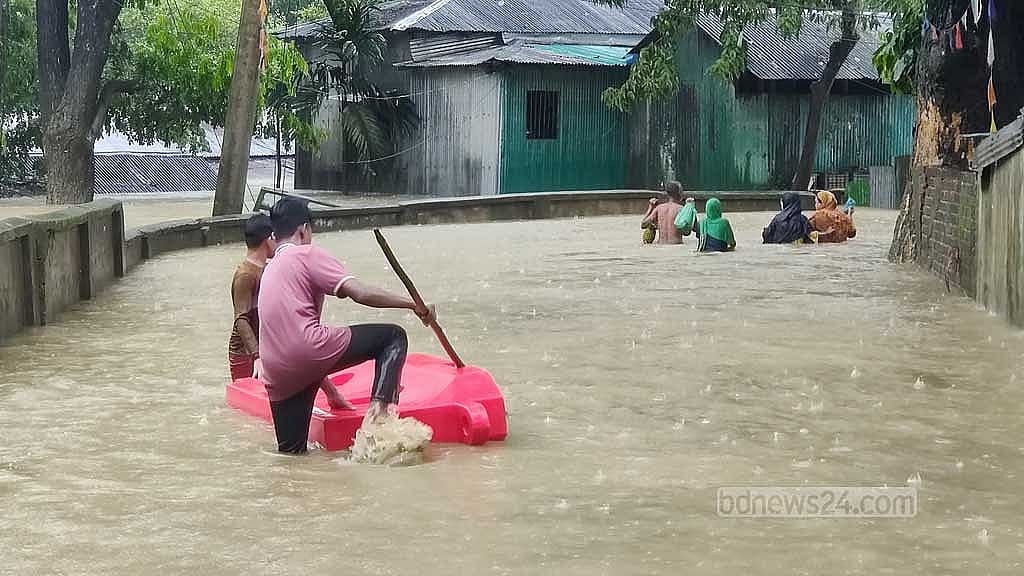
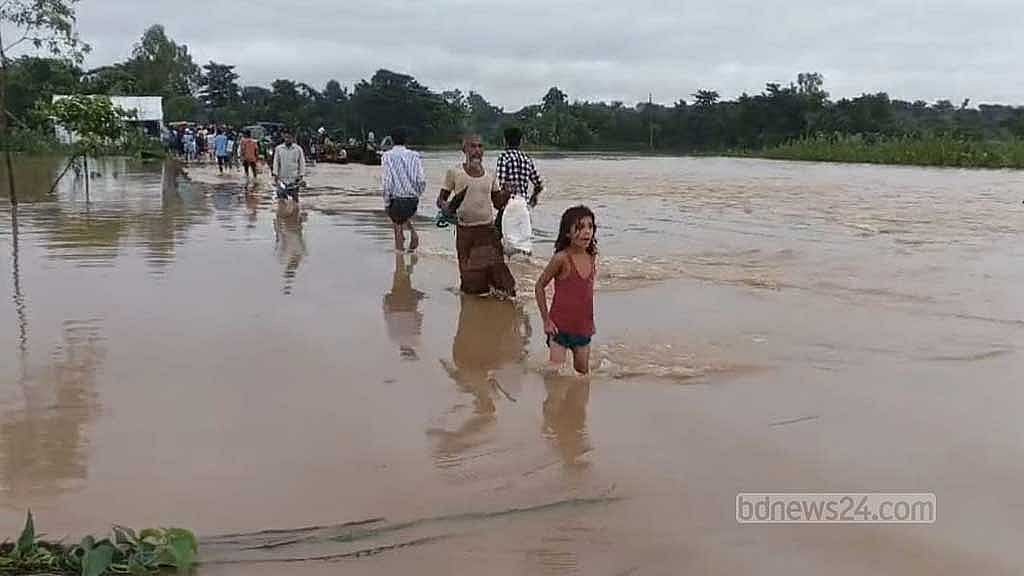
According to Prof Saiful, Bangladesh now faces three major forms of flooding: river flooding, flash floods caused by hill runoff, and urban flooding.
"This year we have experienced all three," he said.
He noted that rivers have lost water-carrying capacity because of sedimentation, while insufficient dredging has reduced the natural flow of rivers and canals.
Rapid urbanisation has compounded the problem. Wetlands and open land have been filled for buildings and commercial projects, leaving rainwater with little opportunity to soak into the ground.
"Previously, around 40 to 70 percent of rainfall naturally infiltrated the soil. Now almost all of it flows directly into drains, placing enormous pressure on drainage systems," he said.
He added that poor waste management has further reduced drainage capacity, with canals and drains clogged by rubbish.
In Chattogram, the challenge is even greater because sluice gates often have to remain closed during high tide on the Karnaphuli River, preventing water from draining naturally.
"Effective pumping systems are essential, but pumps alone are not enough. Heavy rainfall forecasts must be used to activate pumping systems early and prepare canals in advance," he said.
He also called for location-specific flood forecasting and dedicated urban flood forecasting systems to help cities respond more effectively to increasingly unpredictable rainfall.
Lack of Coordination
Prof Saiful said poor coordination among government agencies had long undermined Bangladesh's flood response.
He pointed to a lack of cooperation between city corporations, WASA, the Local Government Engineering Department (LGED), the Roads and Highways Department, the Bangladesh Water Development Board, BIWTA and the Department of Environment.
Although weather forecasts are often accurate, he said they are rarely translated into timely action.
"Waterlogging is no longer just an urban inconvenience; it has become a major disaster," he said, noting that schools have suspended exams, offices had been disrupted and key commercial areas such as New Market had been inundated.
Saiful warned that if Dhaka were to receive rainfall on the scale of Chattogram's recent 400mm-plus downpour, much of the capital could grind to a halt.
To reduce that risk, he called for urban planning that treats drainage infrastructure, canal restoration and waste management as part of a single, coordinated strategy.
Rainfall Patterns are Changing
Meteorologists said this year's monsoon also reflects a shift in how rain falls across Bangladesh.
Former Bangladesh Meteorological Department director Samarendra Karmakar noted that rainfall is rarely evenly distributed between June and September.
This year, June recorded about 30 percent less rain than normal, but the deficit was quickly erased by repeated spells of intense rainfall in early July.
He added that while heavy monsoon rains had triggered major floods in 1987, 1988, 1995 and 1998, this year's rainfall was unusually intense over short periods.
BMD meteorologist Md Hafizur Rahman said nearly 75 percent of July's average monthly rainfall fell within the first 11 days.
Mohan Kumar Das, executive director of the Hydro-Climate and Ocean Centre and joint secretary of the South Asian Meteorological Association (SAMA), said recent studies indicate rainfall patterns in Bangladesh are changing, with longer dry spells increasingly followed by short bursts of extreme rain.
He attributed the trend to climate change, the Indian Ocean Dipole, shifting monsoon circulation and broader regional atmospheric changes, warning that intense downpours are overwhelming both natural drainage systems and urban infrastructure.
Flood Toll and Damage
According to the Ministry of Disaster Management and Relief, this year's floods affected 59 Upazilas, 334 Unions and 12 municipalities across seven districts: Khagrachhari, Rangamati, Bandarban, Cox's Bazar, Chattogram, Moulvibazar and Habiganj. Around 609,000 people were affected.
Cox's Bazar recorded the highest death toll with 31 fatalities, including 18 local residents and 13 Rohingya refugees. At least 24 people were injured and one remains missing.
The Directorate of Disaster Management also reported 13 deaths in Chattogram, six in Bandarban, three in Rangamati and one in Moulvibazar.
Experts said many of the casualties could have been prevented through earlier evacuations in landslide- and flash flood-prone areas, supported by stronger local awareness campaigns.
Disaster Management Department Director General Rezwanur Rahman said the government had taken preparatory measures, but most fatalities resulted from landslides and drowning.
He added that relief operations were continuing in affected areas, while rehabilitation efforts were being coordinated with the Ministry of Local Government and other relevant agencies.
Focus Must Shift to Forecasting
Experts said this year's disasters have delivered a clear warning: the nature of flooding in Bangladesh is changing.
They said the country now faces not only river flooding driven by upstream flows, but also urban flooding caused by intense short-duration rainfall and flash floods in hilly areas.
To adapt to the new reality, they called for greater emphasis on:
Mohan Kumar said weather warnings must be communicated in language the public can easily understand and act upon.
He argued that issuing forecasts alone was not enough, saying they should enable both authorities and residents to make timely decisions.
"If agencies cannot prepare in time based on a forecast, it is fair to question how useful that forecast is for people at risk," he said.