Home
+
Published : 16 Jul 2026, 12:33 AM
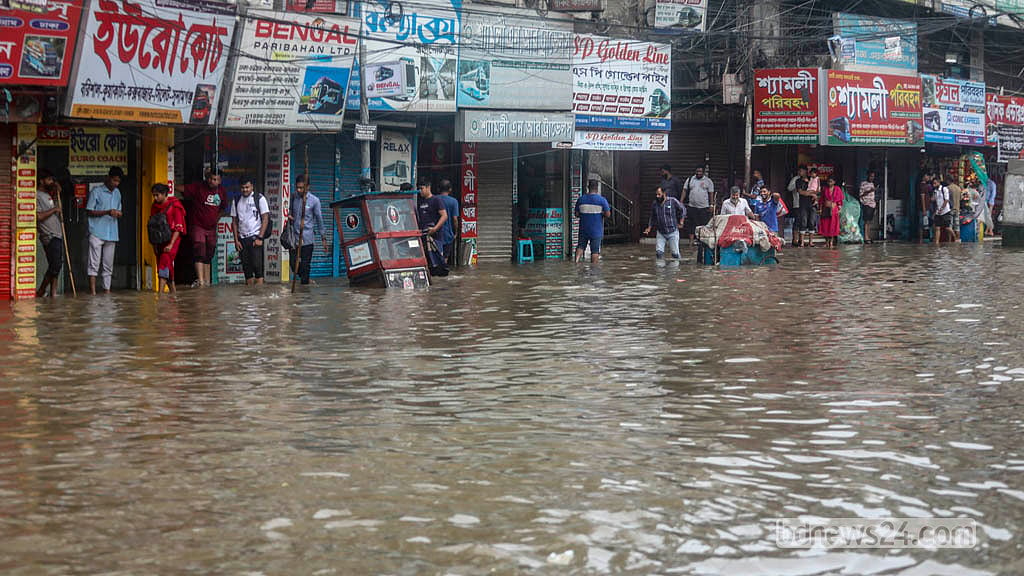
Heavy rain has once again exposed the fragile drainage systems of Dhaka and Chattogram, leaving large parts of Bangladesh’s two biggest cities under water.
Experts say the flooding was not caused by rain alone. They blame a chain of man-made failures. Among them are poor waste management, filled-up water bodies, blocked canals, unplanned sluice gates, disconnected drains, and the loss of natural channels that once carried rainwater into rivers.
In both cities, water that should have flowed into rivers and canals either could not move fast enough or flowed back into the streets.
What Went Wrong in Dhaka
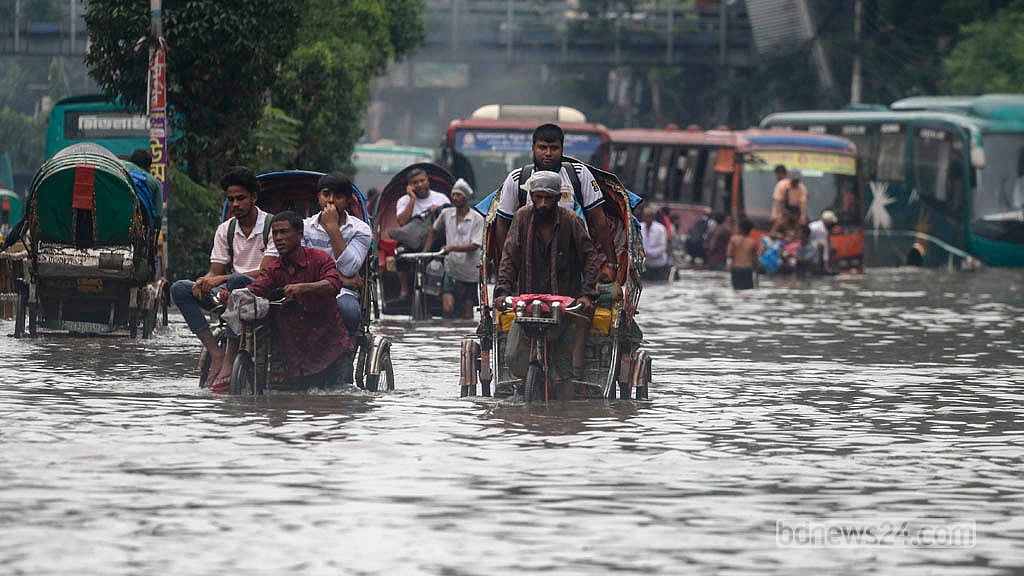
Rain began in Dhaka on Jul 7 and intensified over the following days. The heaviest spell came from Saturday night to Sunday noon, with 135mm of rain -- 135 litres of water over every single square metre -- recorded in the 24 hours to 9am on Sunday.
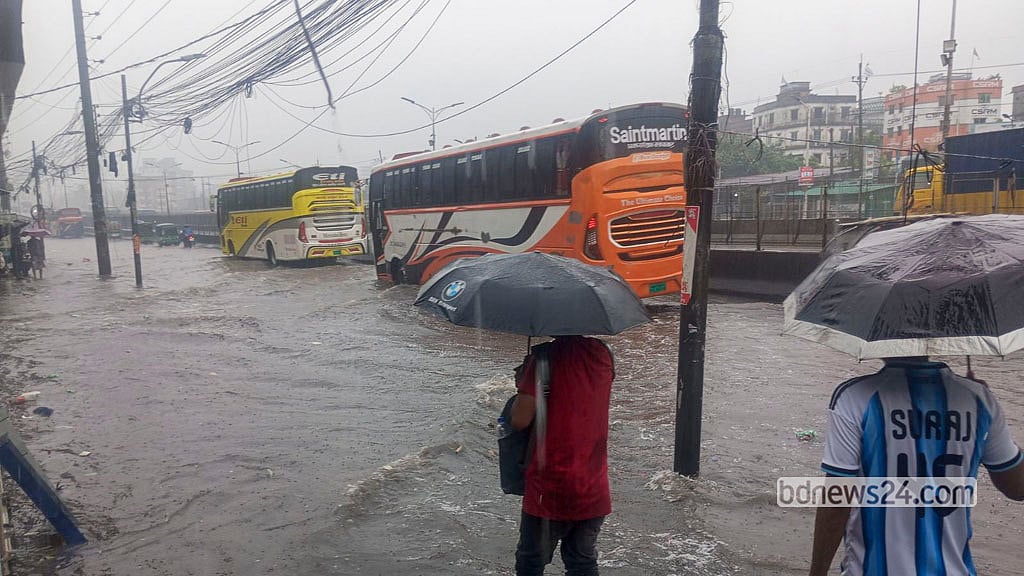
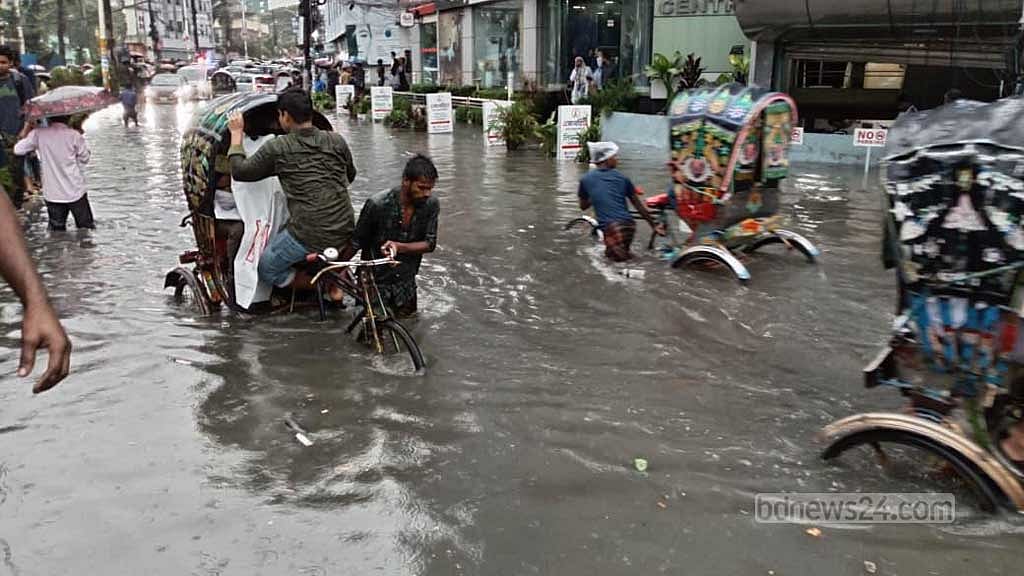
The downpour flooded Jatrabari, Kutubkhali, Shonir Akhra and parts of the Dhaka-Chattogram Highway.
Waterlogging also slowed traffic from the Dainik Bangla intersection to Fakirapul. Knee-deep water gathered on Purana Paltan Culvert Road and entered small shops nearby.
Roads and alleys in Motijheel, Arambagh, Fakirapul, Shantinagar, Rajarbagh, Naya Paltan, Kakrail, Dilkusha and the commercial belt around Motijheel also went under water. Even the Secretariat compound saw standing water.
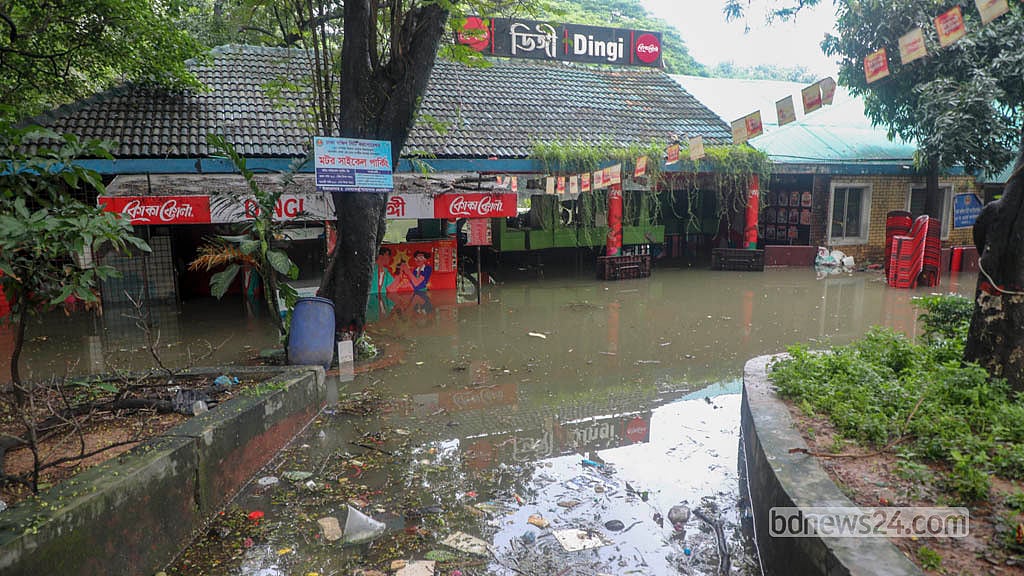
In Khilkhet, the road towards Lake City was submerged, while water also accumulated on the main road of Southpara in Mohakhali and below the Kakoli ramp of the Elevated Expressway.
Low-lying areas in Banani, Gulshan, Khilkhet and around Dhaka Gate were also badly affected.
Many blame the recurring flooding on poor coordination among government agencies, but Rajdhani Unnayan Kartripakkha (RAJUK), the capital city's development authority, says the issue is not that simple.
RAJUK Chief Urban Planner Md Ashraful Islam said the legal responsibility for drainage management in Dhaka now lies with the two city corporations, after the duty was transferred from Dhaka WASA.
He said Dhaka’s rapid urbanisation has left little room for rainwater to be absorbed into the ground.
“Most of the water now flows directly into roadside drains, putting pressure on the drainage system,” he said.
Ashraful also pointed to poor construction practices. Bricks, sand, and cement are often mixed on roadsides, and during rain these materials wash into drains, reducing their depth and carrying capacity.
He said the problem is not a lack of plans, but a failure to define clearly which agency should do what.
“If one agency is made responsible for coordination and the work is divided among RAJUK, the city corporations, WASA and other agencies under a two or three-year action plan, waterlogging can be reduced significantly,” he said.
Dhaka South City Corporation officials, however, say the latest flooding was driven mainly by “backflow” from rivers.
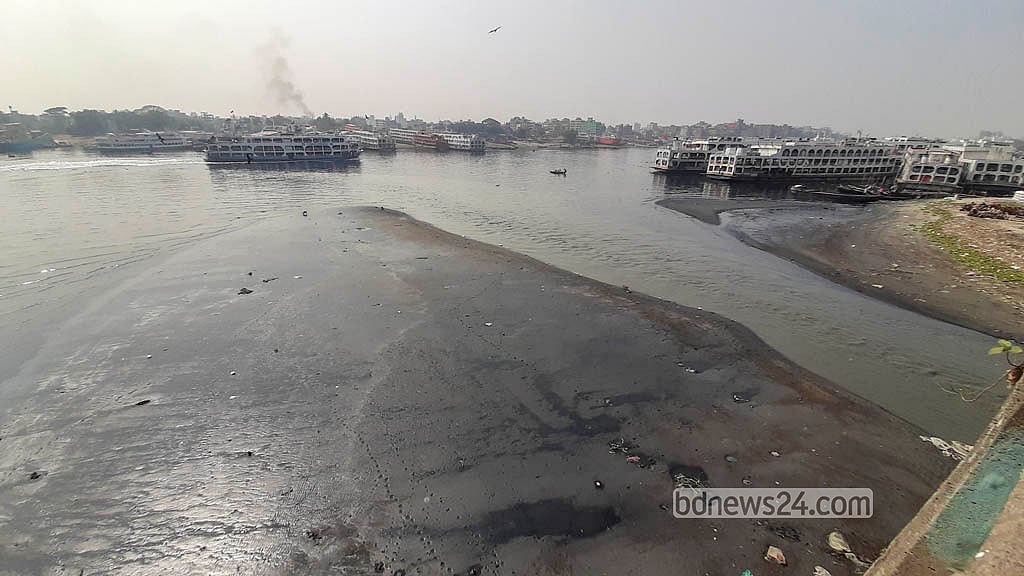
Md Mahbubur Rahman Talukder, DSCC’s chief waste management officer, said the Buriganga’s water level was 10cm to 12cm higher than normal, causing connected canals to overflow.
“Drain water is supposed to flow through canals into the river. But because river water flowed back, the drains could not discharge water,” he said.
He said similar problems occurred in areas linked to the Shitalakhya, Turag, and Balu rivers.
Mahbubur also pointed to public behaviour, saying bedding, quilts, pillows, plastic waste, and construction materials had been found inside drains.
Urban planner Adil Muhammad Khan, however, said the wider problem is man-made.
He said Dhaka’s natural landscape has been destroyed over the past 30 to 50 years. Canals have not only been grabbed, but their natural flow has also been disrupted. Water bodies, ponds, and retention areas that once held rainwater have disappeared.
“Where will the water go now?” he asked.
Adil said many drains can now carry only 30 to 40 percent of the water they should. He said waste is part of the problem, but not the main one.
“In my view," he said, "waste management accounts for no more than 20 to 30 percent of the problem. The remaining 70 percent comes from canal encroachment, filling of water bodies, destruction of retention areas and the broken link between natural and artificial drainage systems.”
Why Chattogram Flooded
In Chattogram, residents and analysts point to unfinished projects and sluice gates that have not delivered the expected results.
This time, severe waterlogging hit Katalganj, Panchlaish, Chandgaon, Mohra, Sholoshahar, the Agrabad commercial area, residential parts of Agrabad, Halishahar and parts of Patenga.
Under a major Chattogram Development Authority project, 39 sluice gates have been installed at the mouths of canals under a scheme covering 36 canals.
The Water Development Board (WDB) has also installed 21 sluice gates from the Karnaphuli estuary to Madunaghat, while another CDA embankment project from Shah Amanat Bridge to Kalurghat includes 12 more sluice gates.
But questions remain over whether the gates are properly designed and managed.
At a meeting with State Minister for Water Resources Farhad Hossain Azad on Monday, Chattogram-8 MP Ershad Ullah said the size of the sluice gates must be reviewed.
“If we build sluice gates but they cannot remove water, people will not benefit,” he said.
Chattogram-10 MP Saeed Al Noman said he had visited canals near Baruni Ghat and ward No 26 and found everything blocked. He said two sluice gates at No 16 were closed.
Delwar Majumder, a former president of the Chattogram centre of the Institution of Engineers, Bangladesh (IEB), said experts had warned earlier that the width of the gates needed to match the volume of water from the catchment areas.
“That was not done,” he said.
He said the Chattogram Development Authority (CDA) project did not include retention ponds proposed in the 1995 master plan. At the same time, low-lying land and wetlands across the city have been filled for housing.
Delwar added that the work completed under the 36-canal project has produced some benefit, but nearly 70 percent of the city’s canals and 60 percent of its drainage network remain outside the project.
Unless those are recovered and restored, he said, the city will not see the full benefit of the work.
Chattogram has now seen major waterlogging three times this year.
In April, even light rain caused flooding in areas including Probartak intersection and Muradpur. About a week later, another spell of rain flooded Probartak, Katalganj, Panchlaish, Rahmatganj, Sirajuddoula Road and Rampura after only an hour and a half of rainfall.
Residents say water cannot drain because many canals are blocked or unfinished.
Agrabad resident Md Alamgir Chowdhury said the drain on Commerce College Road is higher than the road, preventing street water from entering it. He also said the drain is too narrow to carry water quickly to the canal.
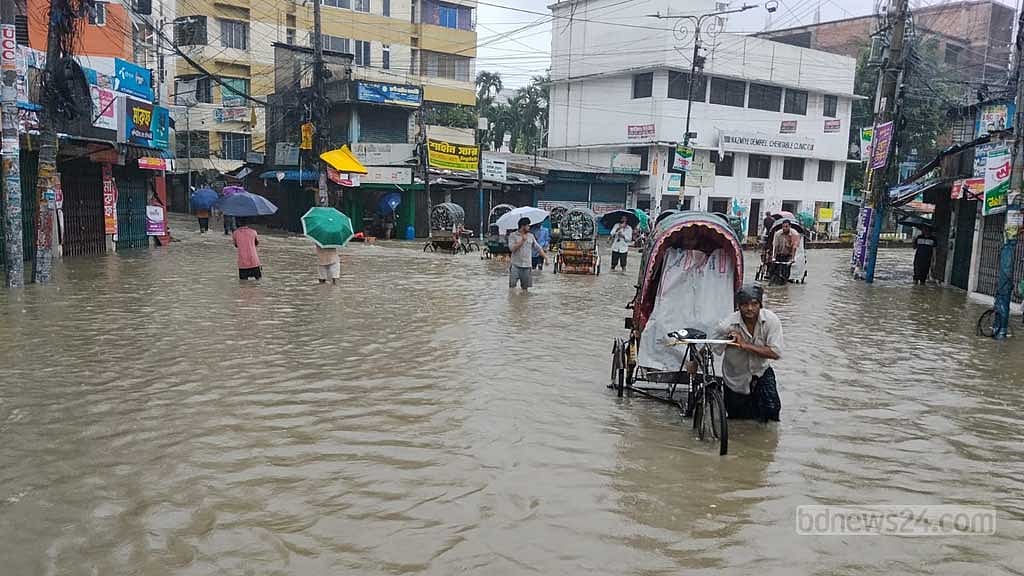
In Katalganj, resident Ishtiaq Hossain said the unfinished renovation of Hijra canal left nearby homes flooded for days.
Some residents say the city corporation should have acted before the monsoon.
Md Azam, a resident of Patenga, said the area had not flooded before, but this time water could not drain because sluice gates were closed.
“After the water rose, the sluice gates were opened and some canal barriers were cut,” he said. “If this had been done before the rains, we would not have suffered so much.”
Chattogram Mayor Shahadat Hossain said two new project proposals are being prepared: one to manage the 36 canals once the ongoing work is completed, and another covering the city’s remaining 40 canals.
He said the city corporation also plans to set up a separate waterlogging department to monitor regulators, pumps, drainage networks and canals, and to respond to emergencies.