Published : 19 Nov 2025, 04:05 AM
Updated : 28 Aug 2026, 04:10 AM


Bangladesh’s political theatre has entered a new and perilous act.
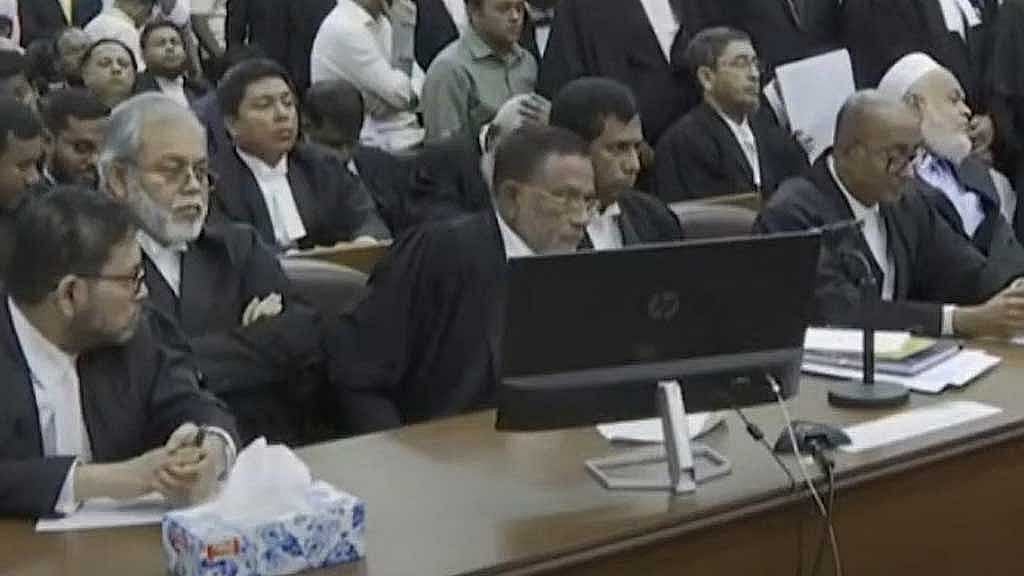
The International Crimes Tribunal that Sheikh Hasina herself created to try the crimes against humanity of 1971 has now sentenced the former prime minister to death for the same offence, following her overthrow in the July Uprising.
Forced from office by a fierce mass movement and fleeing to India after the fall of her government, she now carries a sentence that has pushed her party, the Awami League, to the brink of its gravest crisis in 50 years.
After the 1975 assassination of her father, independence architect Bangabandhu Sheikh Mujibur Rahman, and the killing of most of her family, the Awami League splintered but was never formally banned.
This time, after losing power in a uprising, a prohibition has been imposed on all activities of the Awami League and its affiliated organisations, while the suspension of its registration has also blocked its path back to the ballot.
As a result, Bangladesh is left asking whether the Awami League can ever recover, and what kind of ordeals its leaders and activists may now have to face.
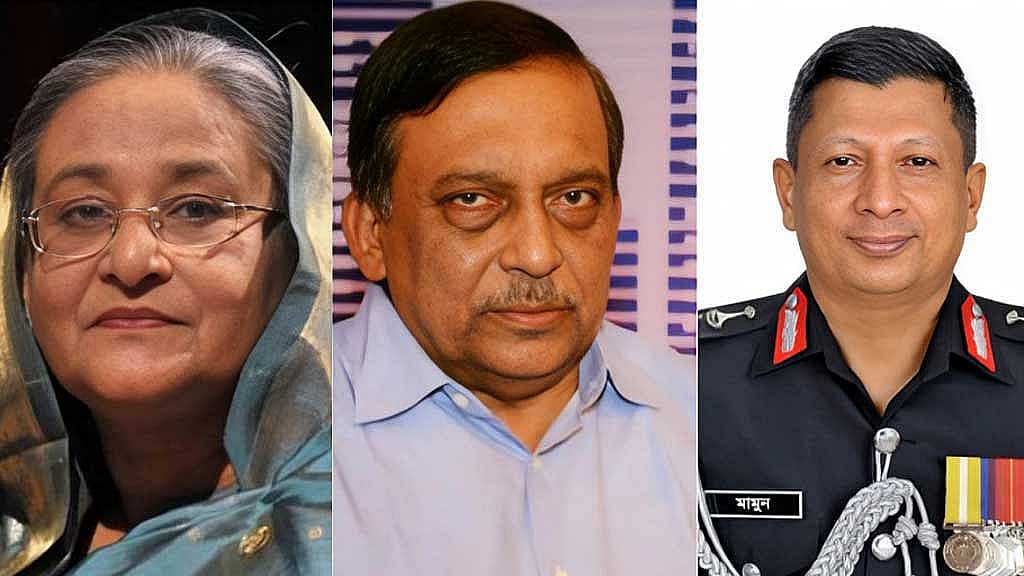
Alongside Hasina, her home minister Asaduzzaman Khan Kamal has received an identical sentence.
The tribunal found her guilty on four counts of crimes against humanity for her role in the violent July Uprising, which toppled her government and sent shockwaves through the country.
As the verdict reverberated through the capital, former inspector general of police (IGP) Chowdhury Abdullah Al-Mamun, who had testified as a state witness, was handed a five-year prison term.
Since being ousted on Aug 5 last year, Hasina has been in India, living under the cautious protection of Delhi. From there, she remains the central figure in a party now operating in the shadows, banned from formal activities and barred from the forthcoming February elections.
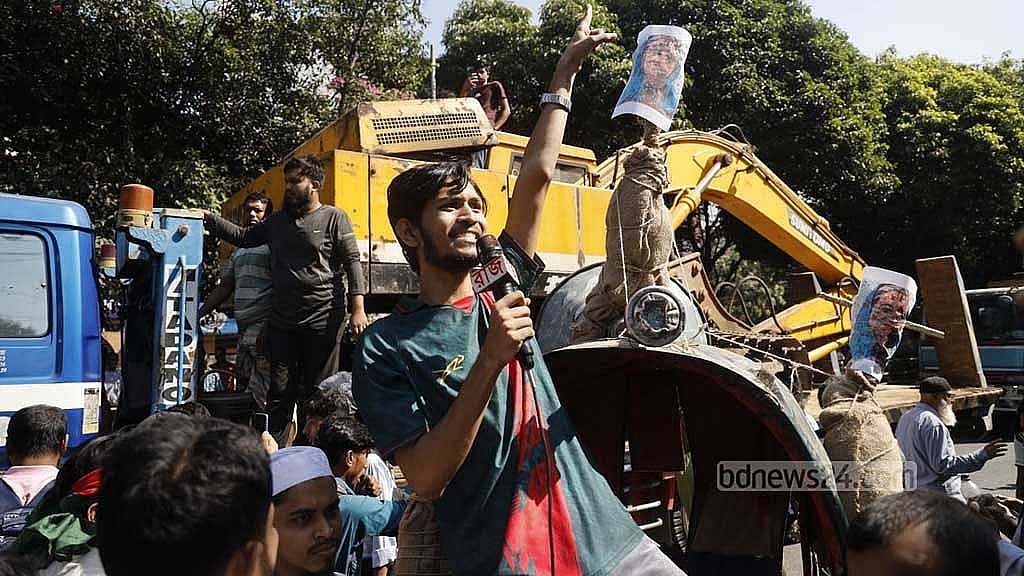
Communications are discreet and circuitous, as loyalists across Bangladesh attempt to keep the organisation alive in conditions akin to political underground.
For a party that ruled for 15 and a half years, the transition from near-total control to effective exile has been abrupt and dramatic.
The implications of the verdict are both immediate and chilling.
Analysts warn that the Awami League’s survival will hinge on its ability to adapt to a leaderless yet ideologically cohesive structure -- a process that will depend on the government, the party’s initiatives, and the wider geopolitical context.
Political commentator Prof Zobaida Nasreen said, “The interim government has already imposed strict curbs on the Awami League’s activities until the completion of judicial processes." “The crucial question," she said, "is whether these restrictions will be reconsidered at some stage, or lifted entirely. This will be a key turning point in determining whether the party can rebound.”
Nasreen pointed to subtle strategic efforts by loyalists to keep the party’s symbolism alive, noting protests around Dhanmondi 32, Bangabandhu Sheikh Mujibur Rahman’s historic residence, even on the day of the verdict, as a source of inspiration for those searching for a path to political revival without Hasina.
“A particular faction repeatedly targets Dhanmondi 32, even on the day of the ruling,” she said. “This could fuel the Hasina-less Awami League motivation, at least temporarily.”
She argued that geopolitical forces will also shape the party’s future. India has said it will not facilitate Hasina’s return, even as earlier speculation has hinted at international involvement in government transitions.
Nasreen also cited the “secretive signing of agreement” ceding control of ports to foreign companies as a sign of broader international stakes in Bangladesh’s political trajectory.
“The death sentence does not operate in isolation. Multiple factors on the same day collectively influence whether the Awami League can re-emerge,” she said.
She warned that political violence could escalate and stressed that the mobilisation of Awami League supporters, estimated at 32–35 percent of the electorate, will be critical as elections draw nearer.
SENTENCING IMPACT
The tribunal’s ruling casts a long shadow over the party’s political legitimacy as well as its immediate prospects.
Under the 2013 amendments to the Representation of the People Order, anyone convicted under the International Crimes Tribunal Act is barred from standing for election. By this measure, Hasina and Kamal are not merely fugitives, they are permanently ineligible for public office.
State-appointed counsel Amir Hossain represented both in court. With the verdict delivered in absentia, their right to appeal remains blocked unless they voluntarily return and surrender to the authorities – an eventuality the Indian government has so far resisted facilitating.
The Awami League’s operational response has been as striking as the judgment itself. On Nov 13, nearly 14 months after the Uprising, party leaders called for a “Dhaka lockdown” and a two-day online “complete shutdown”, orchestrating the campaign from exile.
Local activists responded on the ground, holding protests, marches and other programmes, even as sporadic bomb attacks and incidents of vehicle arson punctuated an already tense atmosphere.
Former Chhatra League leader Anwar Hossain, however, criticised the thin presence on the streets, lamenting that the party’s organisational machinery had been hollowed out by 16 years of sycophancy and opportunistic leadership.
The stage is thus set for a high-stakes struggle between exiled leaders, domestic loyalists and a wary interim government, with a wider electorate watching from the sidelines. The same party that rose from the trauma of Bangabandhu’s assassination now faces an existential trial of its own.
TURBULENT PATH
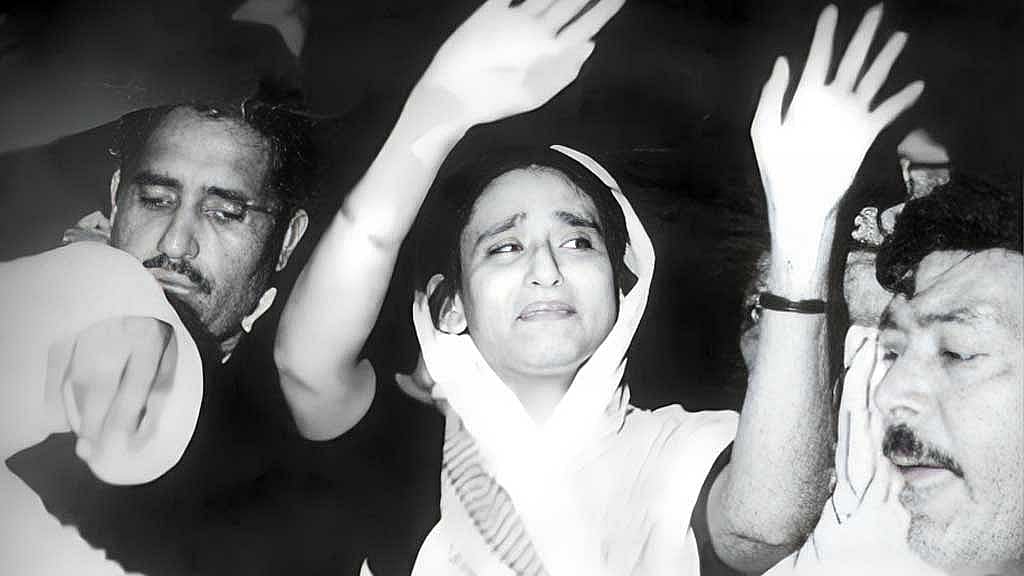
The assassination of Sheikh Mujib and most of his family sent a shockwave through Bangladesh’s politics, drawing some of his closest associates into the orbit of the killers and splintering the Awami League. Those divisions persisted long after Hasina’s return in 1981.
Nearly a year after Sheikh Mujib’s murder, on Aug 25, 1976, the Awami League convened an expanded meeting of former central executive members.
Under Acting President Mohiuddin Ahmed and Acting General Secretary Sajeda Chowdhury, the party resolved to carry forward its organisational work collectively and appointed Mizanur Rahman Chowdhury as convenor of a preparatory committee.
The meeting decided that the party would submit a constitution by Aug 31 to revive itself under the name Bangladesh Awami League. The party was then formally registered on Nov 4, 1976.
Later, during a conference at Hotel Eden on Apr 3-4, 1977, efforts to reach consensus on a full committee failed, and Syeda Zohra Tajuddin was appointed convenor.
She was tasked with consulting party leaders and announcing a 44-member organisational committee within 10 days. It was also agreed that imprisoned leaders would be included in the committee once they were released.
From Apr 3-5, 1978, a three-day Awami League conference appointed Abdul Malek Ukil as president and Abdur Razzaq as general secretary. Mizanur Rahman Chowdhury rejected that decision and on Aug 1 formed a separate convenor committee with Dewan Farid Gazi.
Many leaders and activists joined his faction, creating a visible split within the Awami League. At the same time, another group led by Mozaffar Hossain Poltu emerged, also claiming the Awami League banner.
Writer and researcher Mohiuddin Ahmed, reflecting on the post-1975 divisions in his book Awami League: Utthanporbo 1948–1970, observed: “After Sheikh Mujib’s assassination, the Awami League was almost completely disordered. The rhythm of the party was lost. A separate Awami League under Mizanur nearly caused another division.”
The council session held at Hotel Eden on Feb 13-15, 1981, finally brought the fractured party back together. Hasina was unanimously elected president of the Awami League, with Razzaq as general secretary. On May 17, 1981, she returned to Bangladesh and succeeded in reuniting the organisation under her leadership.
Following years of sustained agitation against the Hussain Muhammad Ershad regime, the Awami League, under Hasina, returned to power in 1996 after a 21-year absence from government.
Whether it can now survive her death sentence, exile and political proscription, and in what form, is the question that will define the next chapter of Bangladesh’s turbulent history.
STEPS TO BRING HASINA BACK
After being ousted in the face of the July Uprising last year, Hasina crossed the border into India, taking refuge as a “guest” of the Indian government in Delhi, according to Indian media reports.
By October, the situation escalated as the International Crimes Tribunal issued an arrest warrant against Hasina following the initiation of her trial. The interim government immediately invoked the bilateral extradition treaty, formally requesting her return from Delhi.
Yet, despite the tribunal concluding one of her trials, the Indian government did not respond to the extradition request, leaving Hasina beyond the immediate reach of Bangladeshi authorities.
The developments took on renewed urgency on Monday after the tribunal handed down the sentencing for July atrocities.
A statement from the Ministry of Foreign Affairs declared: “The verdict given by the International Crimes Tribunal held both absconding accused Hasina and Asaduzzaman guilty and sentenced them for the murders during the July Uprising.
It added that any country offering asylum to these individuals would be “extremely unfriendly and demeaning to justice”.
“We urge the Indian government to immediately hand over these two convicts to the Bangladeshi authorities. It is also a legal obligation for India as per the existing extradition treaty between the two countries,” it said.
Following the verdict, Law Advisor Asif Nazrul confirmed that another official request would be sent to Delhi.
Chief Prosecutor Tajul Islam elaborated on the options for returning the fugitives: “There are two routes to bring back fugitives. First, under the 2013 surrender agreement, Bangladesh can request extradition from India. If India respects the rule of law, it will comply, allowing the sentences to be enforced.
“Second, since the death sentence has been delivered by a competent Bangladeshi court, Interpol can facilitate their return, ensuring the punishment is executed. The home and foreign ministries will coordinate this process.”
AWAMI LEAGUE'S FAITH IN HASINA
Even after the tribunal’s verdict, Hasina remains the central figure around whom Awami League leaders rally.
Abdur Rahman, a member of the Awami League Presidium, told bdnews24.com: “The Awami League has always been united under the leadership of our people’s leader Hasina. It is so today, and it will remain united under her in the future.”
When asked how the party would continue its programmes amid such extraordinary circumstances, he said: “All Awami League activities across the country will be carried out under the leadership of our people’s leader. Party leaders will announce programmes in accordance with her directives, just as before.”
Since February, Hasina has remained connected to her party through live shows in India and speaking over the phone. She has also conducted emailed interviews with international media outlets, where she refused to apologise for the July killings, describing the case as “politically motivated”.
Following her departure, local leaders across multiple regions conducted scattered demonstrations against the government. In Dhaka alone -- Tejgaon, Gulistan, and Khamarbari -- thousands of party activists took to the streets, signalling a persistent, if fragmented, show of force.
On Nov 13, the Awami League, still banned from formal activity, called for a “Dhaka lockdown” to coincide with the tribunal’s scheduling of the case against those accused of crimes against humanity.
The call came from the party’s central leaders abroad, with local activists responding and executing programmes in their wake. To maintain coordination, overseas leaders continued to transmit instructions, which domestic members followed meticulously.
Ahead of the tribunal’s verdict, the Awami League also announced protests and “Dhaka shutdown” from Nov 10-13, despite the ongoing ban on political activities.
Over the past few days, isolated incidents of bombings and vehicle arson outside Dhaka demonstrated the volatile mood among local activists.
Yet, former joint general secretary of the Chhatra League Anwar expressed his frustration over the low turnout on the ground.
On Facebook, he questioned: “How can 300 MPs not manage a small march of 100 people each in their constituencies? How can 50 ministers not organise one march apiece? And the 81 central leaders -- can’t they hold 100 people each for 81 marches? Local leaders across districts, Upazilas… can’t they each manage a single march?”
HASINA SHOOTS BACK
In the immediate aftermath of the tribunal’s death sentence, Hasina struck back with a defiant statement that left little doubt about her stance. She rejected all charges levied against her and castigated the ICT for denying both herself and the Awami League a “fair chance to defend themselves.”
NDTV reported Hasina as saying the verdict laid bare “the brazen and murderous intent of extremist figures in an unelected government”.
She did not stop there, alleging bias on the part of the tribunal and its members.
“Judges and lawyers have publicly expressed sympathy for the current administration,” she claimed, highlighting what she described as a deeply compromised judicial process.
Hasina emphasised her personal mourning over the violence, insisting that she bore no responsibility for the killings.
“I mourn all of the deaths that occurred in July and August of last year, on both sides of the political divide. But neither I nor any other political leaders ordered the killing of protesters,” she said.
She went on to criticise the tribunal itself, challenging its very legitimacy.
“There is nothing international about the tribunal, nor is it impartial,” she said. According to her, judges and advocates who had previously expressed sympathy were “removed or intimidated into silence”, while the tribunal “exclusively” prosecuted members of the Awami League and failed “to prosecute or even investigate perpetrators from other parties of violence against religious minorities and others”.
PROGRESS OF AWAMI LEAGUE'S TRIAL
The tribunal’s proceedings against the Awami League as an organisation had been set in motion months earlier. On Oct 2, 2024, the Nationalist Democratic Movement (NDM) filed a prosecution petition at the ICT, seeking to hold the party accountable as a criminal organisation.
Chaired by Bobby Hajjaj, the NDM accused the Awami League and allied parties in the 14-party coalition of directly orchestrating “genocide” and suppressing the Anti-discrimination Student Movement.
Chief Prosecutor Tajul had immediately announced that investigations into the Awami League and its affiliated organisations would commence.
During the tribunal proceedings on Monday, the prosecution described the party as a “criminal organisation”, though the court itself refrained from any formal observation, given that the party was not a defendant in that particular case.
Tajul said, “The prosecution submitted that the Awami League, the Jubo League, or the 14-party coalition constitute a criminal organisation. Since the party is not a defendant in today’s case, the court has abstained from any observation. A separate trial could address whether the organisation as a whole is criminal, but that is outside the remit of this verdict.”
POLITICAL SHIFTS REVERSE JUDICIAL OUTCOMES
Bangladesh’s history of political upheaval has repeatedly demonstrated the impact of regime change on judicial outcomes.
The tribunal that sentenced Hasina and Kamal to death had previously issued similar punishments to Jamaat-e-Islami leader ATM Azharul Islam for war crimes. Yet following a political turnaround after the July Uprising, his death sentence was overturned on Supreme Court review, and he was released from prison.
Similarly, leaders of the BNP, including Chairperson Khaleda Zia and Acting Chairman Tarique Rahman, have seen convictions overturned or sentences reduced following the shift in power.
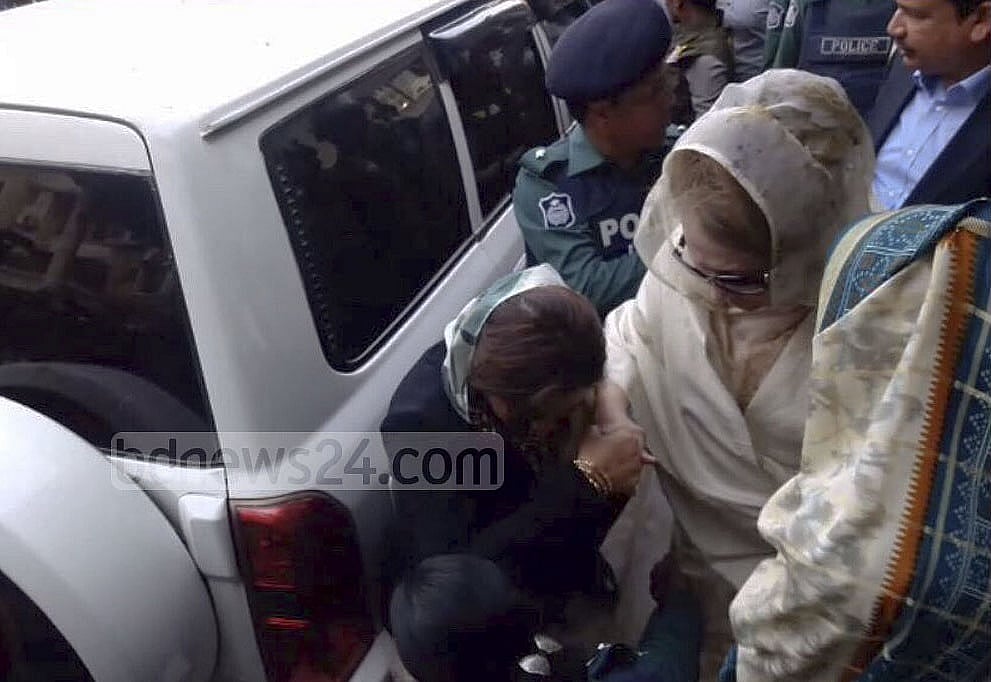
On Feb 8, 2018, Khaleda was sentenced to five years in prison in the Zia Orphanage Trust corruption case. She was detained at the old Nazimuddin Road central jail and, later in October, received an additional seven-year sentence in the Zia Charitable Trust case.
Her son Tarique, along with former MP Kazi Salimul Haque Kamal and businessmen Sharafuddin Ahmed, Kamal Uddin Siddiqui, and Mominur Rahman, were each jailed for 10 years.
Khaleda appealed on Feb 20, and in March the Anti-Corruption Commission (ACC) sought to increase the sentence. Following hearings, the Supreme Court bench of Justices M Enayetur Rahim and Md Mostafizur Rahman rejected the appeals on Oct 30, 2018 and approved the ACC’s request, raising Khaleda’s sentence from five to 10 years.
In the Charitable Trust case, she was also sentenced to seven years in October 2018.
Since 2020, Khaleda has been released temporarily under executive orders, with her periods of temporary release extended every six months. After the Uprising, President Md Shahabuddin used Article 49 of the Constitution on Aug 6 to commute her sentences.
Subsequent legal appeals placed the two cases in abeyance: in November of last year, the Supreme Court stayed the combined 15-year sentence, and on Jan 15 this year, both Khaleda and Tarique were acquitted in the Orphanage Trust case.
Following these 2018 corruption convictions, Tarique assumed de facto leadership of the BNP, a role he continues to hold as the party’s senior vice-chairman.