Home
+
Published : 30 Jun 2026, 08:11 PM
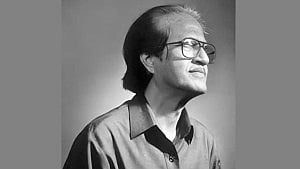
The International Crimes Tribunal (ICT) has ruled that Jatiya Samajtantrik Dal (JaSaD) President and former information minister Hasanul Haq Inu was not a "passive observer" during the July Uprising but “participated in and incited the unlawful crackdown" on protesters.
Tribunal-2, led by Justice Nozrul Islam Chowdhury, delivered the verdict on Tuesday in the crimes against humanity case over allegations of torture, conspiracy and incitement to suppress the July Uprising.
Inu, the sole suspect, was convicted on three of eight charges.
He was sentenced to 10 years' imprisonment for political persecution and torture under Charge 3, 10 years and a Tk 100,000 fine for conspiracy and incitement under Charge 6, and another 10 years' rigorous imprisonment and a Tk 100,000 fine for conspiracy under Charge 7.
He was acquitted on Charges 1, 2, 4, 5 and 8 due to insufficient evidence. The tribunal ordered all sentences to run concurrently, meaning Inu will serve 10 years in prison.
In its observations, the tribunal cited official government figures showing 846 deaths and more than 13,000 injuries during the July Uprising, adding that more than 1,000 people were killed and thousands suffered serious injuries or permanent disabilities within a short period.
The tribunal said Inu's principal role was to “conspire, incite and facilitate” the crimes even though he was not physically present at the crime scenes.
It relied heavily on intercepted phone conversations between Inu and then prime minister Sheikh Hasina, his public statements and decisions taken by the then 14-party alliance.
The court said prosecutors lawfully obtained the recordings from the National Telecommunication Monitoring Centre (NTMC) and verified them through the CID's digital forensic laboratory, while the defence did not challenge their authenticity during cross-examination.
Analysing the first conversation, the tribunal said Inu discussed strategic and organisational measures to crush the protests, including identifying protest leaders in Uttara, Badda, Gulshan and Jatrabari for abduction at night, while endorsing the government's violent response.
The tribunal said the conversations demonstrated coordinated planning among political leaders, law-enforcing agencies and state institutions rather than isolated actions.
On a second call, the court said Inu was involved in planning the suppression of the July Uprising, with detailed knowledge of the curfew, military deployment and state messaging.
His remarks that “pressure must continue” and protesters should be arrested upon leaving their homes amounted to incitement for an extremely harsh curfew.
The tribunal also said Inu repeatedly portrayed protesters as militants, communal forces and anti-state elements to justify state repression, concluding that he was "far from an ordinary spectator".