Home
+
Published : 01 Jul 2026, 01:12 AM
Reform in Retreat?
Democratic detachment: The public ownership of the July Charter is fading as complex constitutional debates distance it from ordinary citizens
Political fractures: Widening rifts over parliamentary oaths and notes of dissent threaten to stall the country's post-Uprising consensus
Referendum reality: Analysts warn the referendum lacked clear public understanding, leaving millions feeling excluded from the process
Reform reductions: A special committee's decision to shelve key human rights and judicial ordinances fuels fresh opposition distrust
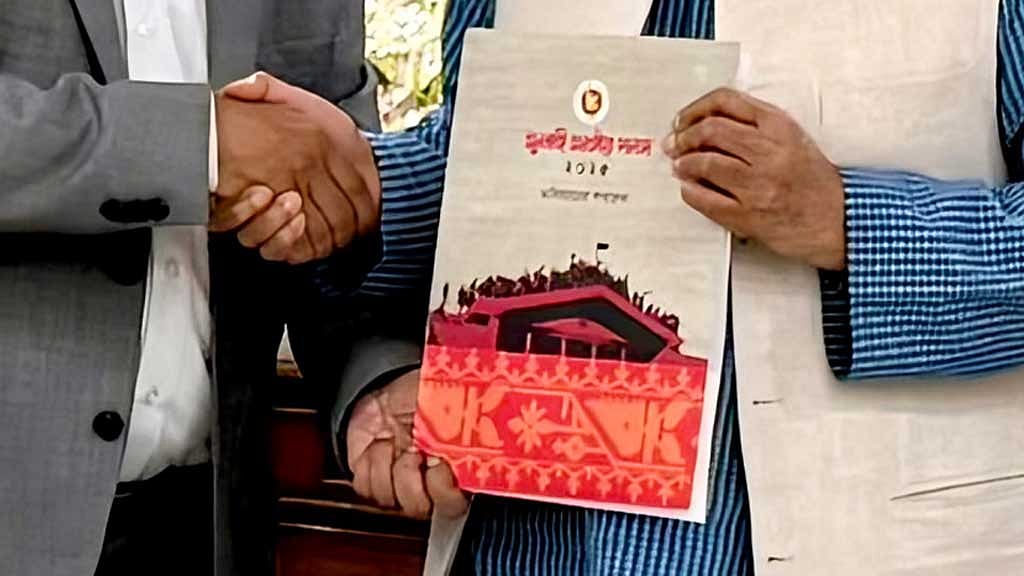
It was meant to become the political covenant of post-July Uprising Bangladesh.
Forged after months of negotiations, disagreements and compromise, the July Charter promised to anchor a new democratic order following the dramatic events of 2024.
Nearly a year later, however, the document that once symbolised consensus has itself become the latest battleground in Bangladesh's increasingly polarised politics.
The dispute is no longer only about implementing reforms. It has evolved into a more fundamental question: can a charter signed by political leaders and endorsed in a referendum retain its legitimacy if large sections of society no longer feel connected to it?
The ruling BNP and its allies say they remain committed to delivering the Charter. Jamaat-e-Islami, the National Citizen Party (NCP) and their allies argue otherwise, accusing the government of slowly retreating from the commitments that once united the country's post-Uprising political landscape.
Some opposition leaders fear the BNP, armed with a two-thirds parliamentary majority, could sidestep implementation under different pretexts.
BNP leaders reject the accusation, insisting they remain sincere about carrying out the Charter while questioning the motives of some reform advocates, with some ruling party figures alleging that opposition demands are driven more by a desire to share political power than by genuine reform.
For some analysts, however, the larger concern lies elsewhere: whether the July Charter has gradually lost its connection with ordinary citizens.
They argue that even if the Charter is fully implemented, its benefits may remain limited if a significant section of society feels excluded from the process.
The reform agenda traces its origins to the mass uprising of Aug 5, 2024, when the Awami League government led by Sheikh Hasina was ousted after more than 15 years in power following a student-led mass movement.
The interim government that followed launched sweeping reform initiatives covering the Constitution, judiciary, police, Anti-Corruption Commission, electoral system and public administration before expanding the process through five additional reform commissions.
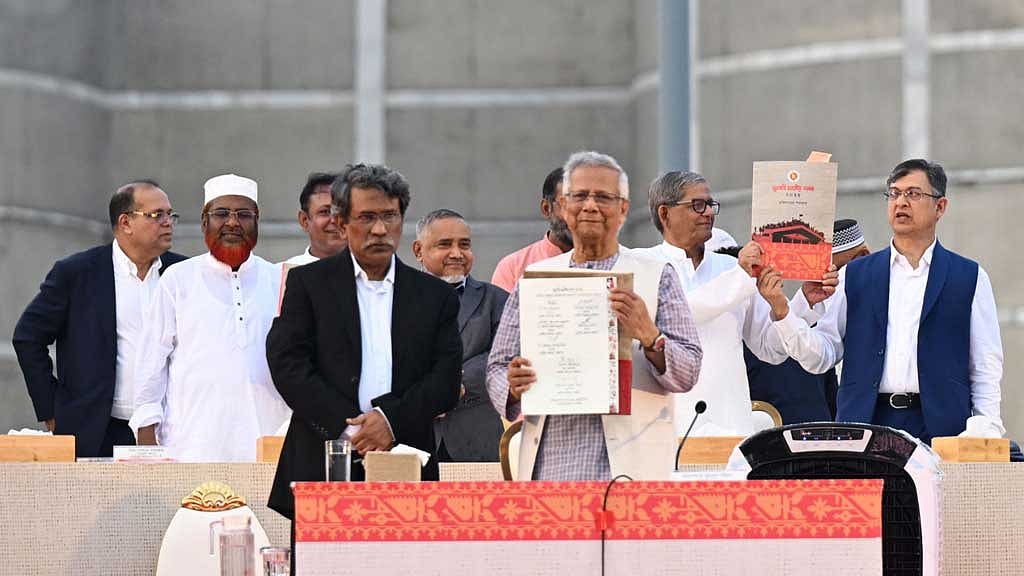
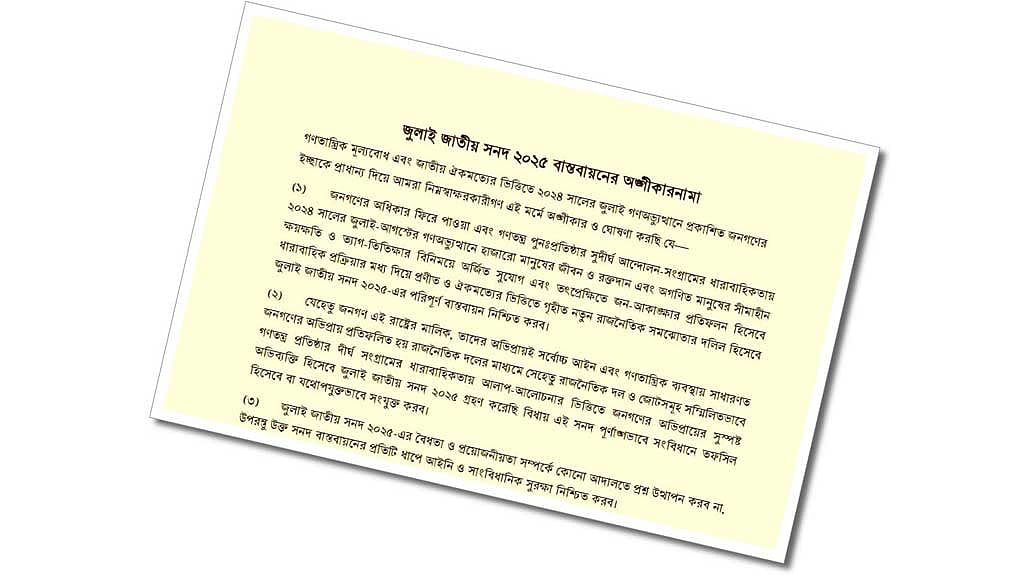
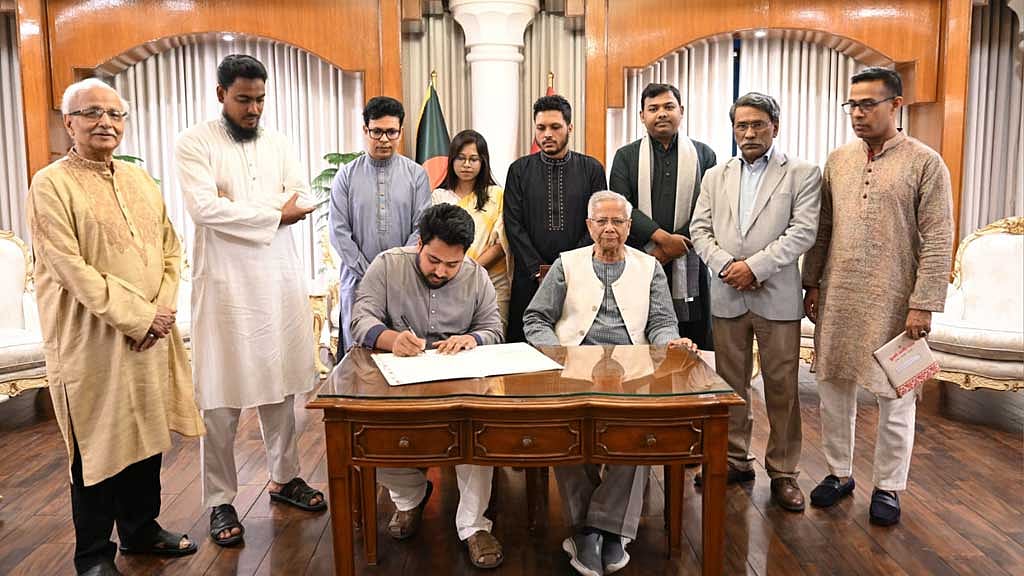
After months of dialogue with political parties, the July National Charter was adopted on Oct 17 last year in the presence of then chief advisor Muhammad Yunus.
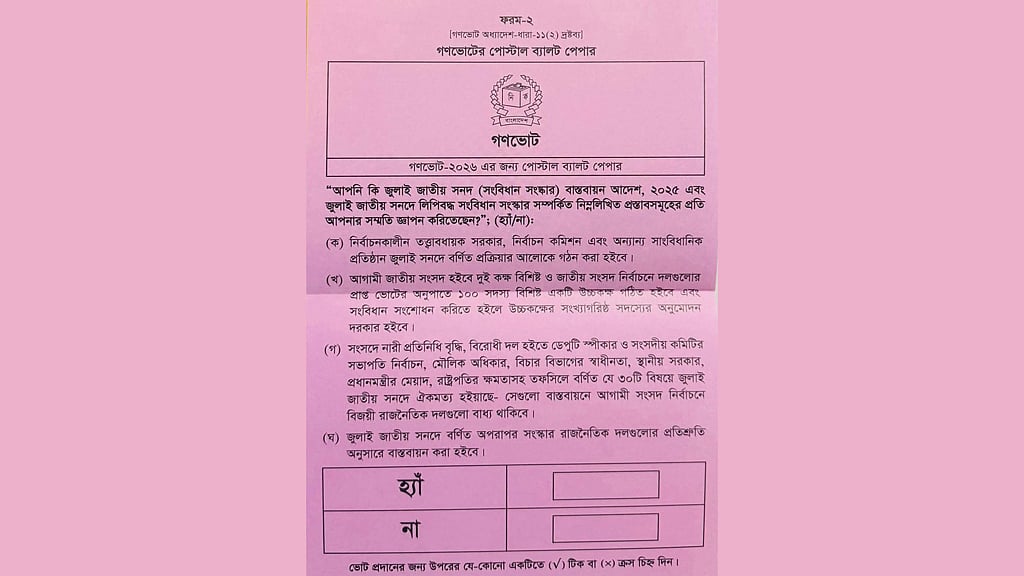
The following month, President Mohammed Shahabuddin issued the July National Charter (Constitutional Reform Implementation) Order, paving the way for a national referendum held alongside the Feb 12 parliamentary election.
Nearly 69 percent of voters backed constitutional reform.
Under the presidential order, newly elected MPs were also required to take a separate oath as members of the Constitutional Reform Council. While the BNP, which won absolute majority, declined to do so and took only the parliamentary oath, the 77 lawmakers from the Jamaat-led alliance took both oaths.
That divergence exposed the political fault lines that have continued to widen.
The BNP says it will implement the Charter -- but only after excluding provisions covered by its formal “note of dissent”. Opposition parties insist the referendum approved the charter in its entirety and have vowed to mobilise if the government departs from that mandate.
Reform or Retreat?
During its nearly 18 months in office, the interim government promulgated 133 ordinances. Parliament later formed a special committee to examine them before they could become law.
The committee has now recommended that 98 ordinances be enacted without change, 15 with amendments, while advising against immediately converting 20 -- including those concerning the referendum, enforced disappearances, the National Human Rights Commission, the Anti-Corruption Commission, judicial appointments and the Supreme Court Secretariat -- into permanent legislation.
That recommendation has fuelled fresh criticism from opposition parties, who question the BNP's commitment to the July Charter.
Badiul Alam Majumdar, who served on one of the interim government's reform commissions, believes the referendum gives the Charter democratic legitimacy.
"The people approved the July National Charter through a referendum. Therefore, the approval of nearly 70 percent of the people should not be ignored."
He warned that failing to implement it could block Bangladesh's path to meaningful change.
"It is unfortunate that the BNP is not accepting the July Charter. If it remains suspended, the country as a whole will suffer."
Government figures reject that assessment.
One advisor to the prime minister told bdnews24.com that BNP leader Tarique Rahman remained committed to the Charter but only to the version signed with formal reservations.
"The BNP signed the charter with a note of dissent. That means there are provisions it explicitly does not agree to implement. That is precisely why the note of dissent exists."
Pressure over Confrontation
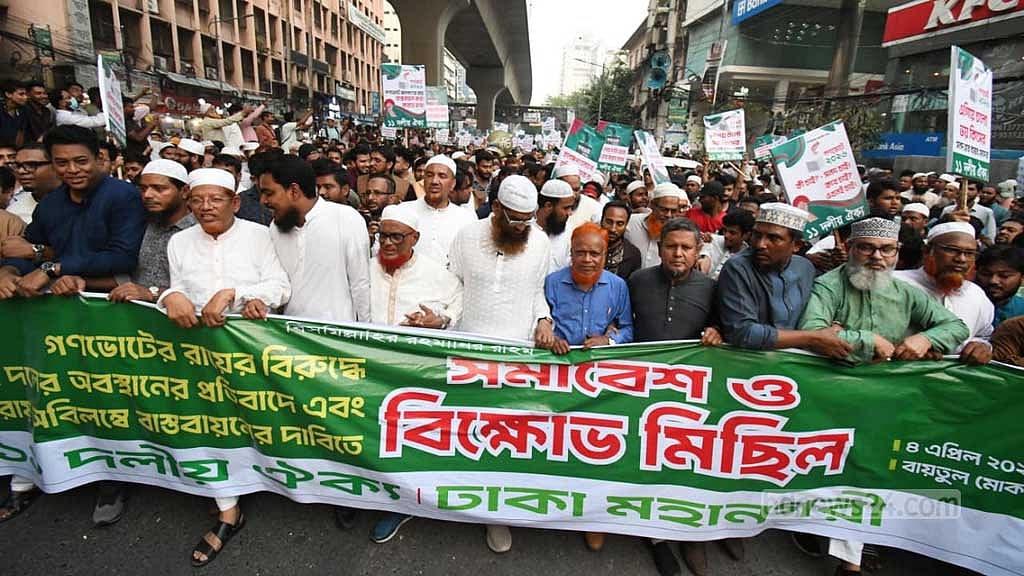
Jamaat and the NCP have continued campaigning for implementation of the referendum verdict but, for now, have stopped short of launching mass protests.
Jamaat leaders have warned they could return to the streets if the Constitutional Reform Council is not convened, although they now favour a gradual strategy.
Assistant Secretary General Hamidur Rahman Azad said the party remained active both inside and outside parliament.
"Our programmes are continuing. We have remained active throughout the year. Ordinary people believe we are on the right point."
He added, "We will advance our movement step by step. Movements do not happen overnight; people do not like that."
The NCP has adopted a similar approach.
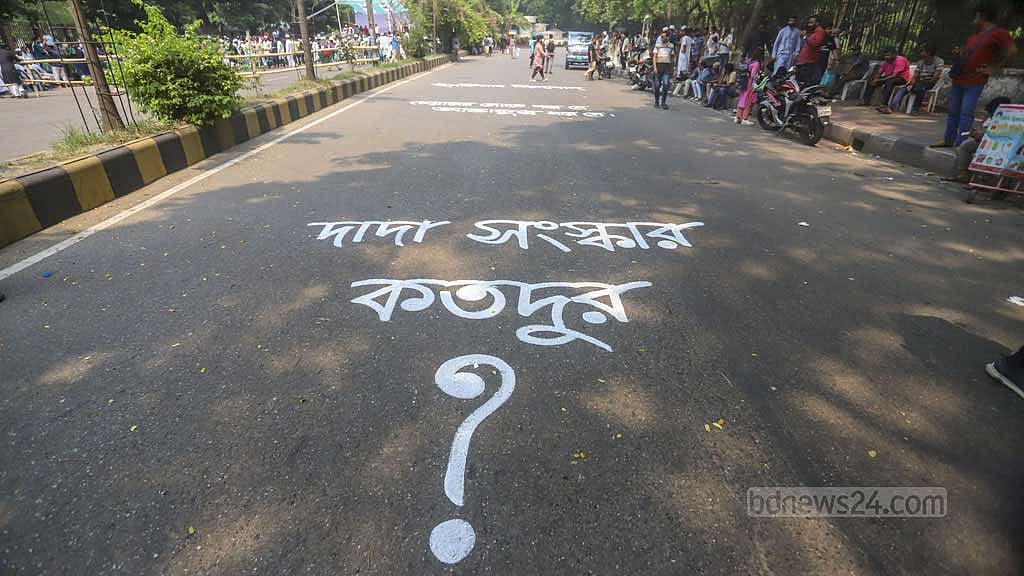
Its central committee member Yasir Arafat said the party had already announced nationwide programmes demanding justice for the July killings and implementation of the referendum verdict.
"We will organise street meetings across the country's upazilas. There will be at least 50 such meetings. The NCP remains on the streets."
Bangladesh Khilafat Majlis says it will continue campaigning even if other parties withdraw.
Yet some leaders within the broader opposition alliance privately question whether Jamaat will sustain the pressure over time, suspecting its enthusiasm could gradually diminish.
Jamaat rejects such suggestions.
Meanwhile, AB Party Chairman Mojibur Rahman Bhuiyan Monju argues events are unfolding exactly as his party feared.
"We feared that if the BNP secured a two-thirds majority, it would avoid implementing the July Charter under different excuses. It now seems that fear is becoming reality."
Promises of Delivery
Not everyone shares that pessimism.
Saiful Haque, general secretary of the Revolutionary Workers Party and a BNP ally, says the governing party has repeatedly pledged to implement the Charter.
"The BNP has promised to implement the July Charter to the letter. We want to trust that commitment."
He nevertheless questioned the government's withdrawal of several reform ordinances concerning disappearances, human rights, the Anti-Corruption Commission and the judiciary, saying the move had created fresh uncertainties.
Within the BNP itself, senior leaders acknowledge that no final roadmap has yet been adopted. Some argue that domestic and international political realities make immediate decisions difficult.
Party leaders say reforms promised in the BNP manifesto -- including the creation of an upper house, rebalancing powers between the president and prime minister, and increasing women's representation -- remain on the agenda, though timing will be crucial.
Permanent Committee member and Power Minister Iqbal Hassan Mahmood Tuku insisted the party would honour every commitment it had signed.
"We signed the July Charter. We will implement everything that we signed."
But he stressed that the referendum itself did not override the BNP's reservations.
"The referendum and the July Charter are not the same. We will implement what we signed, together with the note of dissent."
Does the Charter Belong to the People?
For political analyst Prof Tariq Manzoor, a Dhaka University academic, the referendum itself was not without flaws.
He argues that political parties never fully agreed on several provisions of the Charter and that reducing complex constitutional questions to a simple yes-or-no vote oversimplified the debate.
He points to proposals that would make future constitutional amendments easier than under the existing system, raising legitimate questions about whether every reform necessarily represents an improvement.
Yet, he says, the Charter's central objective remains clear: preventing any individual or political party from acquiring authoritarian power again.
Anthropologist Zobaida Nasreen believes the deeper problem lies in public ownership.
"The questions included in the referendum were not understood by ordinary people. Most people did not even know what was in the ballot."
She argues that reforms imposed without broad public participation rarely become genuinely accepted.
"That is why I do not think most people in Bangladesh feel that the July Charter belongs to them. It may reflect the aspirations of a few major political parties."
She also notes that supporters of the Awami League -- whom she estimates still make up around 40 percent of the population -- remain excluded from the process.
"Even if you survey the remaining 60 percent, I believe many people still do not understand it. I think the July Charter did not emerge through the people. It did not reflect everything that people wanted."
If implementation proceeds under those circumstances, she warns, public reaction could take two forms.
"One could be non-acceptance; the other outright rejection. The public could choose either."
Political analyst Prof Khalidur Rahman offers a more measured assessment.
Reform, he says, is inherently a gradual process. An elected government must balance constitutional limits, political realities and economic pressures.
"The public now wants justice, good governance, accountability and visible progress in reform," he says.
His conclusion echoes a sentiment shared across Bangladesh's political divide: lasting reform will require national consensus rather than partisan competition.
"The elected government's greatest responsibility is to reconcile the democratic mandate with the aspirations of July and carry forward effective reforms."