Published : 24 Nov 2025, 07:25 PM
Updated : 28 Aug 2026, 01:30 AM


Bangladesh has launched a new e-Family Court system aimed at reducing delays, cutting corruption and easing the burden on litigants seeking justice in family-related disputes.
The digital platform was inaugurated on Monday at the Dhaka Metropolitan Sessions Judge’s Court by Law Advisor Asif Nazrul. Noting that the initiative would significantly improve access to justice, he said: “Through the e-Family Court, harassment and corruption will certainly decrease, and time will be saved. The chief advisor does much of his work digitally -- mainly through WhatsApp. So we should move towards digitisation as well.”
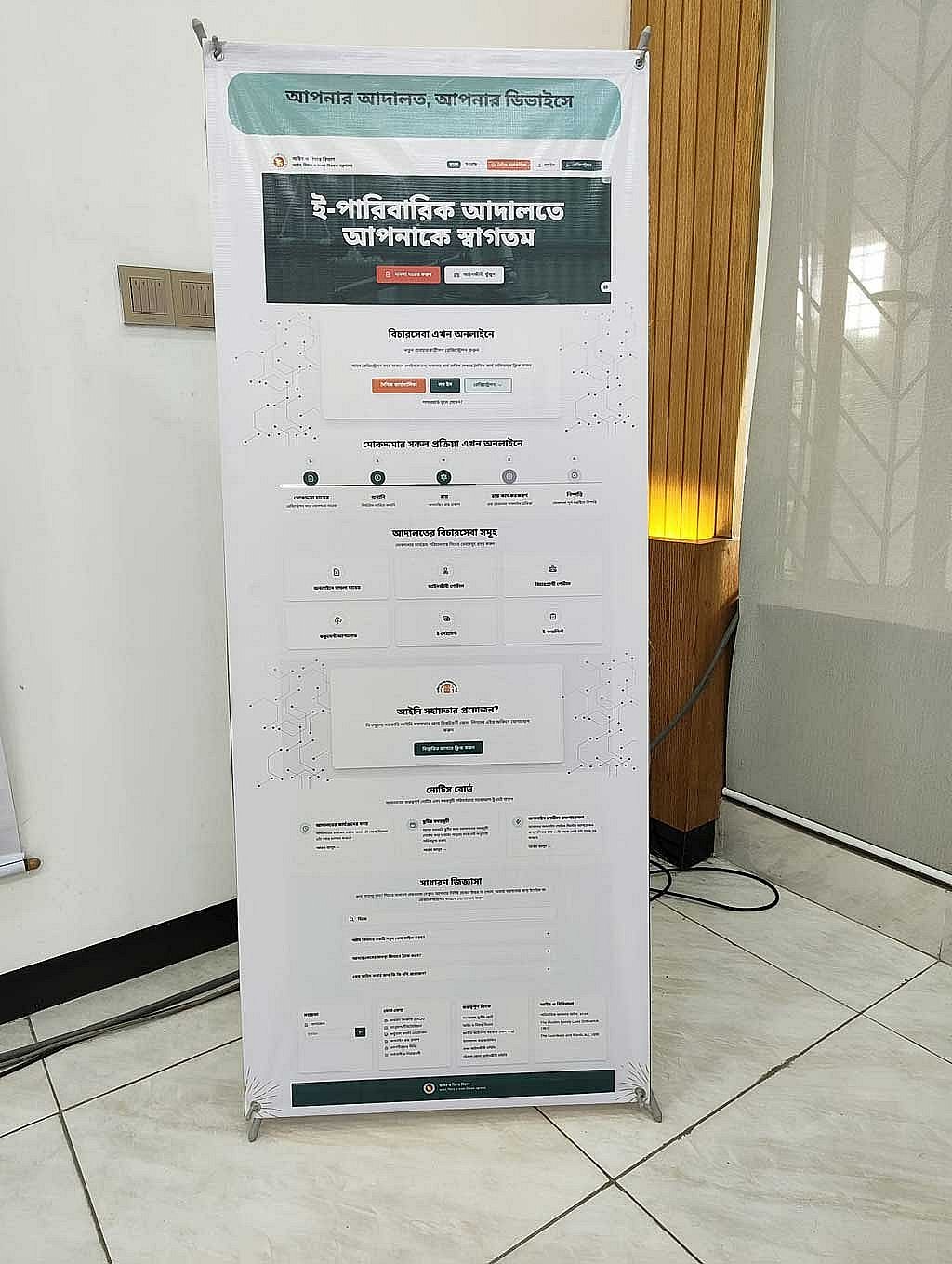
Emphasising the importance of managing and harnessing the e-Family Court system, he added: "This is still in its early stages, but if you do not take care of it, it will not survive. You don’t need to thank us -- just take care of it as you would a child."
He further noted that the interim government had introduced 21 reforms in the legal sector and hoped future administrations would continue them “out of love for the country”.
The advisor also highlighted the expansion of free legal aid, saying family court matters would now be handled through mandatory legal aid services. The system has been rolled out in 20 districts and is expected to reach all 64 before the interim government leaves office, according to him.
“I hope that in future, a third of cases will be resolved through legal aid. Within five years, the case backlog will fall by 50 percent. I urge the next government to continue our initiatives.”
Officials said the e-Family Court will offer digital case files, remote access to services, online scheduling and other paperless features.
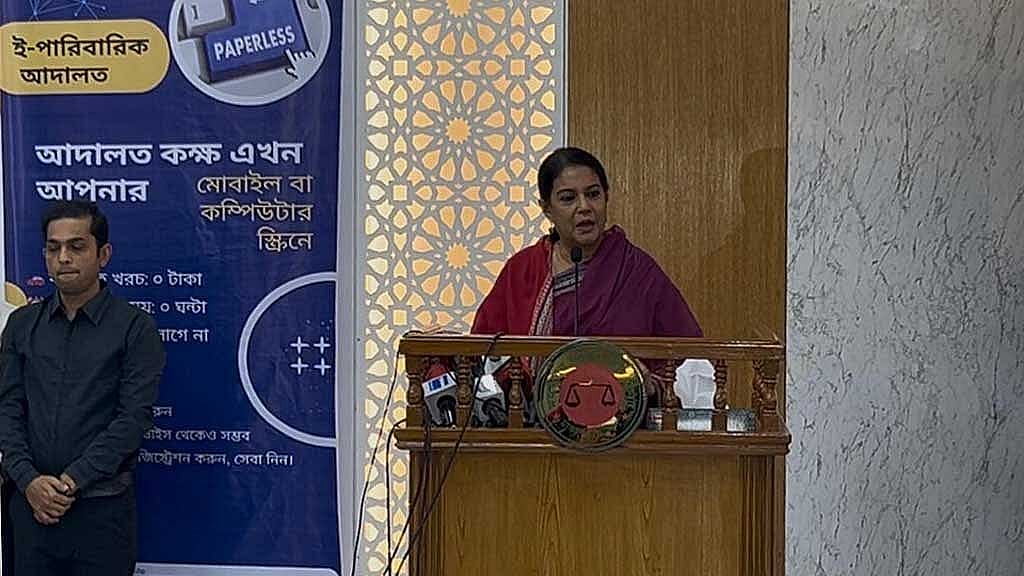
Environment Advisor Syeda Rizwana Hasan said the initiative could prove “revolutionary” if sustained.
“With this, we are moving closer towards a paperless justice system. It brings renewed hope of justice for women and children who suffer abuse.”
Faiz Ahmad Taiyeb, special assistant to the chief advisor on ICT, said the system would enable legal professionals to serve clients more efficiently, while Supreme Court Registrar General Habibur Rahman Siddiquee noted it would help push the judiciary further toward a paperless future.