Published : 30 Sep 2025, 07:38 AM
Updated : 21 Aug 2026, 01:52 PM


NASSA Group, once one of Bangladesh’s largest garment exporters, has permanently shut down 16 of its factories, throwing the future of roughly 30,000 workers into uncertainty and deepening wage arrears across its plants.
The closures follow the arrest of the group’s Chairman Nazrul Islam Mazumder on corruption and embezzlement charges earlier this month.
Workers are owed months of unpaid wages and are struggling to find new employment, as many factories refuse to hire them due to their involvement in protests.
“I still have two months’ salary pending with NASSA. I don’t know when or if we will get it,” said Nasir Uddin, a helper at Nassa Super Garments in Ashulia, who supported his parents and siblings with his wages.
“We may survive for another month with what little savings we have. After that, how will we eat?” he asked, barely above a whisper.
Many workers share the same predicament -- unable to pay rent, clear debts at local shops, or cover school fees for their children. Families caring for elderly parents face particular hardship.
SHUTDOWN AFTER TURMOIL
Following the fall of the Awami League government on Aug 5, 2024, NASSA boss Nazrul, who also chaired EXIM Bank, went into hiding and was arrested on Oct 2.
Unrest mounted across NASSA plants as wages and benefits fell into arrears and workers took to the streets.
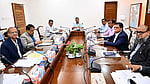
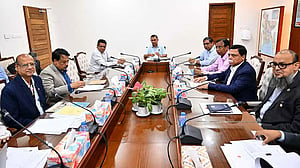
At a tripartite meeting last week involving government officials, labour leaders and factory representatives, the Department of Inspection for Factories and Establishments (DIFE) confirmed the closures, citing power and gas shortages alongside a lack of export orders. All operations ceased from Sept 25.
The closures affect 10 factories in Ashulia, two in Gazipur, two in the Chattogram Export Processing Zone, and two in the Cumilla EPZ.
Among them are AJ Super Garments, Feroza Garments, NASSA Super Garments, NASSA Embroidery, NASSA Basic, and NASSA Hi Tech Wash.
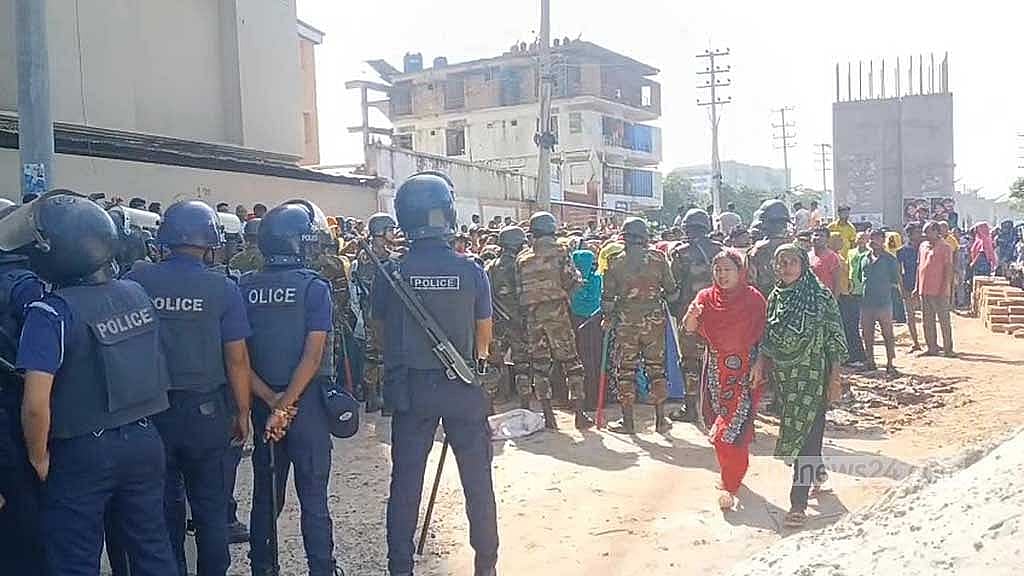
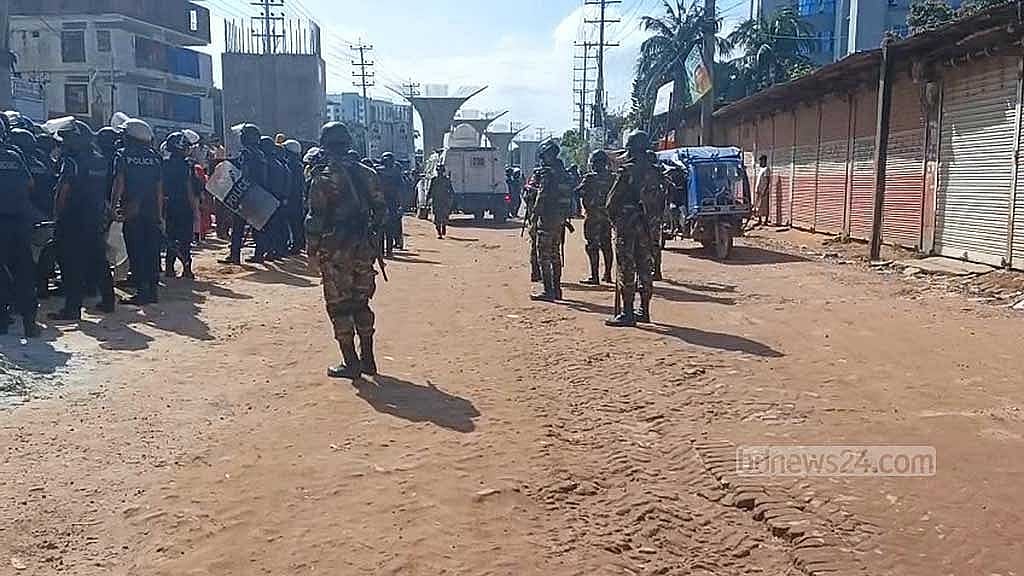
NASSA workers responded by blocking the Dhaka-Tangail Highway, demanding payment of arrears and reopening of the factories. Police dispersed the protests with water cannons and batons, causing severe traffic disruption.
‘HOW WILL OUR FAMILIES SURVIVE?’
Imran Hossain, employed for three years at a NASSA plant, said: “I was supporting my wife and children, but now I don’t know how we will eat. If other factories refuse to hire us, we’ll have no option but to live half-fed.”
Tawhidul Islam, a helper at NASSA Super Garments, added: “We protested for unpaid wages, and then suddenly came the news of permanent closure. If the factories don’t reopen, we are doomed.”
Rafiqul Islam Sujan, president of the Bangladesh Garments and Industrial Workers Federation, condemned the decision.
“Closing down factories without ensuring the livelihoods of thousands of workers is unacceptable. The government must step in to reopen them,” he insisted.
Repeated calls to NASSA officials for comments went unanswered.
On Sept 23, a tripartite agreement was signed at the labour ministry to settle unpaid wages. Under the deal, August salaries will be paid by Oct 15 and September wages by Oct 30.
In line with labour law, workers will also receive 30 days’ basic pay for each full year of service and maternity benefits, all to be cleared by Nov 30. No worker will be blacklisted in digital databases.
The meeting was chaired by a DIFE additional director general, with representatives from workers, factory management, the government, BGMEA, the Bangladesh Army, Industrial Police and intelligence agencies in attendance.
ASSET SALE 'NO SOLUTION'
Media reports say that on Sept 20, under labour ministry facilitation, Mazumder signed powers of attorney from prison authorising the sale of assets to pay dues, including dates stock worth Tk 25-30 million at the Hatirjheel depot, land and a six-storey building in Ashulia's Ghoshbagh valued around Tk 300 million, and land in Gulshan-2 valued at about Tk 40 billion, with targeted sale dates spread across Sept 11-25.
But labour leaders argue asset sales are not a solution.
“Selling land and buildings to pay workers’ dues is no substitute for reopening factories,” said Khairul Mamun Mintu of the Garments and Sweater Workers Trade Union Centre.
“The government must intervene to restart operations. Otherwise, thousands of families face destitution.”
Founded in 1990, NASSA grew rapidly into a diversified conglomerate spanning garments, banking, real estate, stock brokerage, education and travel. At its peak, its 34 factories employed more than 30,000 workers.
Union leaders warn that the NASSA closures reflect a broader trend, with more than 100,000 workers nationwide reported to have lost their jobs over the past year.
They argue that when major industrial groups collapse, the state must weigh the systemic impact and protect livelihoods, regardless of an owner’s personal or political troubles.
“When major industrial groups collapse, questions must be asked,” said Mintu. “Whatever the owner’s personal or political problems, the livelihoods of tens of thousands of workers cannot be treated as collateral damage.”
7 ARRESTS, ONLY ONE NAMED
Police said seven workers were arrested in Ashulia’s Narsinghpur area on Sept 25 in connection with unrest linked to the closures.
Ashulia Police chief (OC) Md Abdul Hannan said: “On the 25th of September, seven individuals were brought in from different areas of Ashulia for questioning. They were later shown arrested in a case filed by the Industrial Police.”
Dhaka District North Detective Branch OC Md Jalal Uddin added, “Behind the attempt to create disorder in the name of a workers’ movement was Tipu Sultan. We arrested him in the Jamgora area.”
Police disclosed only one name Tipu Sultan, a native from Shailkupa village of Jhenaidah district. Once involved in pro-Awami League Chhatra League politics, he now lives with his family in rented housing near Ashulia and is accused of orchestrating protests.
Industrial Police-1 SP Mominul Islam Bhuiyan said, “Additional forces are deployed to ensure NASSA’s closed-factory workers do not descend on the highway and cause disorder.”