Published : 11 Apr 2026, 08:00 AM
Updated : 28 Aug 2026, 01:33 AM


Arakan Crisis Radar: Bay Abductions, Broken Returns
Captivity allegations: A Bangladeshi fisherman says he and his two sons were held for over six months in Myanmar’s Rakhine State after being taken at sea, describing severe deprivation and injuries.
Scale uncertainty: Fishermen estimate around 150 Bangladeshi fishers may have been taken, but there is no official government tally confirming the total number.
Trawlers retained: Returnees claim that while some detainees have been released over time, fishing vessels are often not returned and are allegedly used or taken across the border.
Missing cases persist: Several fishermen from Teknaf remain unaccounted for, with families saying they do not know whether their relatives are alive after months without contact.
Sea boundary risks: Fishermen and local leaders cite unclear maritime boundaries, currents, and sandbar shifts in the Naf River as key factors behind accidental border crossings.
Security pressure: Local officials acknowledge ongoing detentions and say enforcement agencies are working on repatriation while urging fishermen to avoid crossing into Myanmar waters.
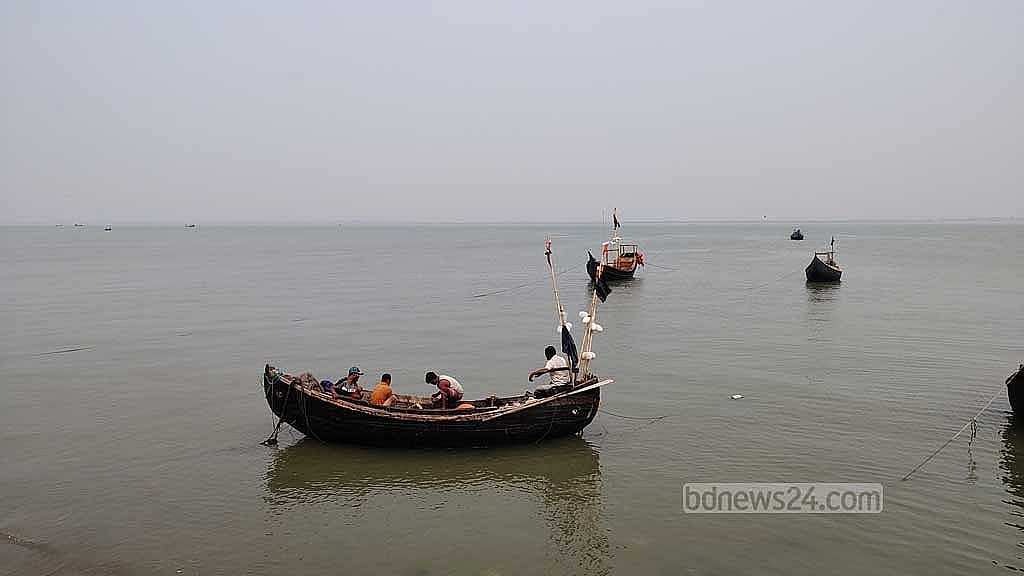
Mohammad Elias has grown up listening to the call of the ocean.
The fisherman, now in his 40s, cannot even recall when he first drifted into the deep sea as a child.
Previously, his only fear was the tempest, a danger he survived several times to return home safely.
For a battle-hardened Elias, the “Arakan Army”, however, has emerged as a threat far more terrifying than any storm at sea.
The armed group from Myanmar’s Rakhine State has reportedly been abducting Bangladeshi fishermen and their vessels from the bay “without provocation”.
Standing on the beach at Shah Porir Dwip in Teknaf, Elias pulled at his loose skin to show the marks of his ordeal after spending more than six months in captivity.
He returned home on Feb 16 with his two sons after being snatched on Sept 5 last year.

Recalling the ordeal, Elias said he returned with “nothing but skin and bones”, adding that he lost two teeth due to what he described as brutal torture.
He also said his body had become so weak that he felt only skin remained over bone, with no flesh left after months of detention.
He was accompanied by his two sons, who were also abducted alongside him.
Although they were released earlier this year, the reasons behind their capture remain a mystery to the family.
Elias recalled the day of the incident, noting that he had built a new trawler with a loan and ventured into the Naf River with his sons to catch fish.
Despite being vigilant and remaining within Bangladeshi territorial waters, they could not escape.
The Arakan Army reportedly chased them with a speedboat and held them at gunpoint, Elias said, adding that the four of them—including him and his two sons—were seized together.
He shared that during the six months of captivity, food was scarce, with only one meal provided every 24 hours.
Witnessing his children's suffering was the most agonising part of the experience.
Though Elias and his sons have returned, the Arakan Army kept his trawler.
Now, he faces the dual burden of supporting his family and repaying debts, forcing him back into the treacherous waters.
"Do you not feel afraid? What if the Arakan Army seizes you again?"
At the question, Elias replied: "If I succumbed to fear, there would be no food on the table. If they take me, so be it! So many are being snatched away; not everyone even makes it back."
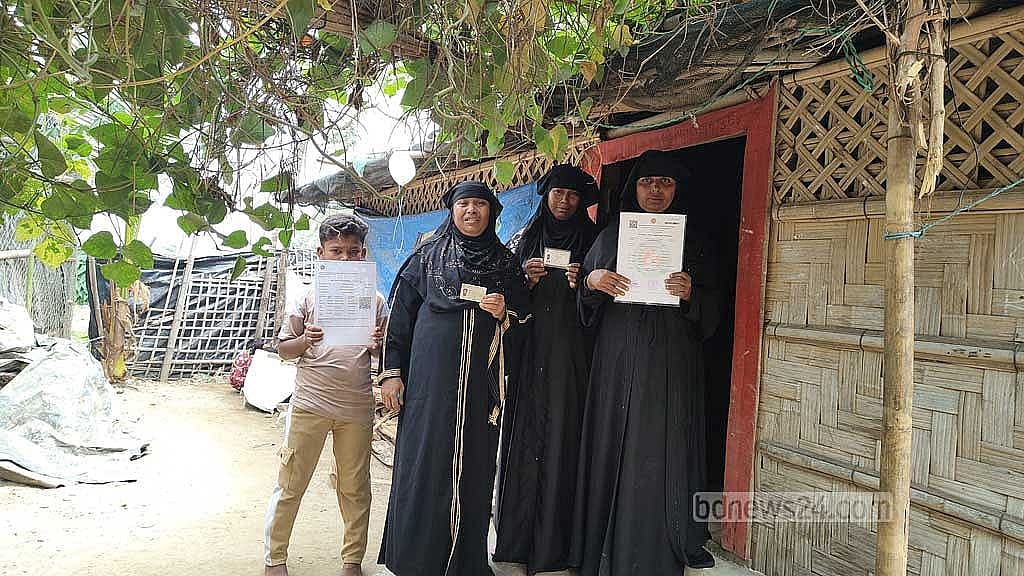
Aman Still Missing as Others Return
Rakhine State, which shares a border with Bangladesh, is currently embroiled in conflict, with the Arakan Army controlling over 80 percent of the region.
Since the rebel group took command, the abduction of Bangladeshi fishermen has surged.
Local representatives say at least three fishermen were taken on Mar 12 and four more on Mar 17 near Shah Porir Dwip estuary.
Some detained fishermen have been released over time, with earlier captives also returning home.
While fishermen are sometimes freed, their trawlers are increasingly being withheld and later seen used or the catch sold in Myanmar markets, according to returnees.
There is no official government tally of the missing, but the Trawler Owners’ Association believes nearly 150 fishermen remain in rebel custody.
Aman Ullah, 50, was abducted in September 2025 along with four companions.
While his associates were released on Feb 16, Aman remains in custody.
His son, Zillur Rahman, said the family does not know whether Aman is alive. He appealed to the government for urgent efforts to secure his father’s return, breaking down as he described the family’s financial hardship.
Returnees told him detainees are often separated and held in different locations. While four were freed from one camp, they had no information about Aman.
Similar grief consumes Sajeda Begum from Whykong, whose husband, Abdus Shukur, has been missing for over six months.
She said she had informed the Border Guard Bangladesh (BGB) and the upazila administration in writing after her husband was abducted while fishing at sea.
Although 73 fishermen recently returned from Arakan Army detention, her husband was not among them. She has had no contact with him for six months.
“Even fishing within our own country’s waters is no longer safe. The Arakan Army abducts people. The government cannot ensure security,” she said. “The government must take steps to bring my husband back immediately.”
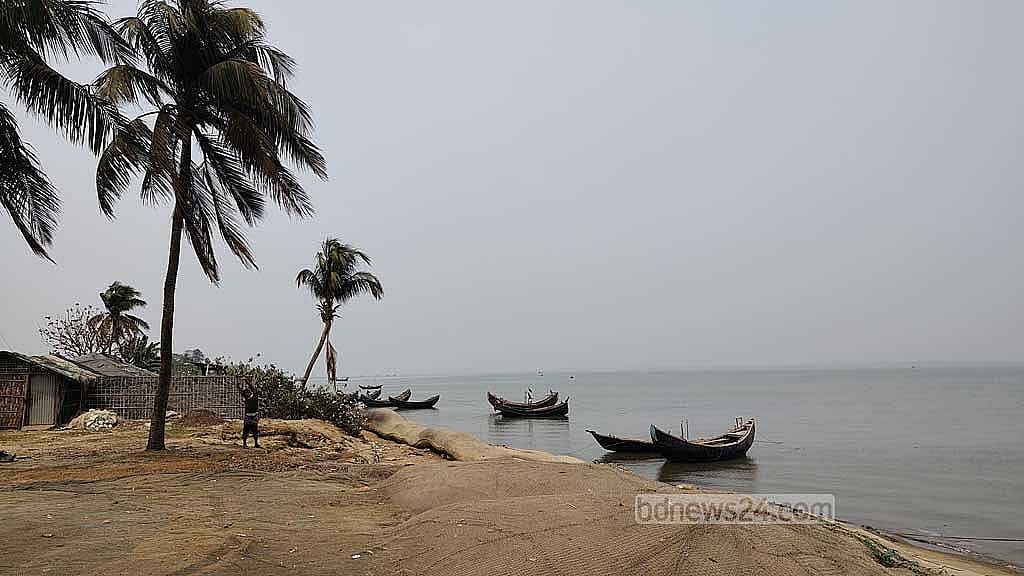
Wails in Every Household
Across fishing villages in Teknaf, families now live in constant anxiety, watching the sea as relatives head out to fish, uncertain if they will return.
Five fishermen who left on Feb 18 aboard a trawler from Shah Porir Dwip remain missing after more than a month.
Their families say they have no information on whether they are alive.
Shamsunnahar, wife of one of the missing fishermen, said her children keep asking when their father will return. With him as the sole earner, the family is struggling to survive.
Another woman, Khurshida Begum, said the loss of her husband has pushed the family into extreme hardship, forcing them to cut back on food while their children’s education is at risk.
Sometimes, photos of detained fishermen appear in Myanmar media, but no such images of the missing five have surfaced, deepening fears.
Are Fishermen Crossing into Myanmar Waters?
Interviews with returning fishermen and boatmen suggest that fishing in the Naf River has long been restricted by the administration due to security concerns.
However, some still venture into the area and face risks.
Shah Porir Dwip Boat Owners’ Association General Secretary Mohammad Hasan said water depth has reduced on the Bangladesh side of the Naf River estuary due to a sandbar in the Naikkhangdia area, while deeper waters along the Myanmar side attract boats during low tide.
He added that there are other factors as well, including strong currents that sometimes push boats across the border unintentionally.
Boatman Nurul Alam said such incidents have occurred in the past due to natural conditions, but earlier Myanmar authorities did not always intervene.
“After the Arakan Army took control, restrictions have tightened,” he said.
Association President Gafur Alam said the Arakan Army has effectively imposed restrictions on fishing in Myanmar waters since taking control of Rakhine State.
He said fishermen are now being targeted at sea. “They are being taken at gunpoint while returning from fishing,” Gafur added. “Fishermen are afraid to go to sea. If this continues, fishing will have to stop.”
He claimed that around 140 fishermen taken from the Naf River and the Bay of Bengal are still being held, with no contact possible with them.
Subrang Union Parishad member Abdus Salam said unclear maritime boundaries between the Naf River and the sea are a “key issue”.
He said fishermen often cannot identify the border, while tidal movements sometimes push boats into Myanmar waters despite precautions.
He added that authorities are continuing awareness efforts, but incidents are still occurring.
‘Be Alert’: Teknaf Official
Teknaf Upazila administrator Md Enamul Hafiz Nadim said the "Arakan Army" has been detaining Bangladeshi fishermen at gunpoint since taking control of Rakhine State.
He said there is no precise data on how many fishermen are currently held in Myanmar, as many families do not report incidents to the administration.
He added that law-enforcement agencies are working to bring them back.
“We are hopeful they will return soon,” he said. “But fishermen must remain cautious and avoid crossing Bangladesh’s water boundary.”