Published : 05 Aug 2026, 07:25 AM
Updated : 08 Sep 2026, 09:30 AM


The internet was down. Most people in Dhaka were confined to their homes. Gunfire echoed through the streets, and the city beyond the doorstep felt suddenly unfamiliar.
Driven by curiosity, Tanvir Arafat Dhruva stepped outside.
A few paces from his workplace was the entrance to Central Road. Science Laboratory intersection lay in one direction; Green Road, Panthapath and Farmgate in the other.
Dhruva said police were firing continuously from both sides. Between them, a man lay bleeding on the road.
He later learnt that the man was journalist Tahir Zaman Priyo.
It was between 4:30pm and 5pm on Jul 19, 2024. Dhruva did not yet know that within minutes he would become a key witness in a murder case.
According to his account, Priyo’s colleagues repeatedly tried to reach him and take him to hospital, but were forced back by the continuing gunfire. A police vehicle from Dhanmondi Police Station eventually arrived and took Priyo away.
A month later, on Aug 20, Priyo’s mother Shamsi Ara Zaman filed a murder case at New Market Police Station. The case is now being investigated by the prosecution’s investigation team at the International Crimes Tribunal.
Two years after the uprising, one question continues to haunt her.
Who Killed Her Son?
Whenever she thinks of Priyo, she sees his bloodied body. And the same question returns: whose bullet took his life?
“I want to know who killed my son,” Shamsi Ara told bdnews24.com.
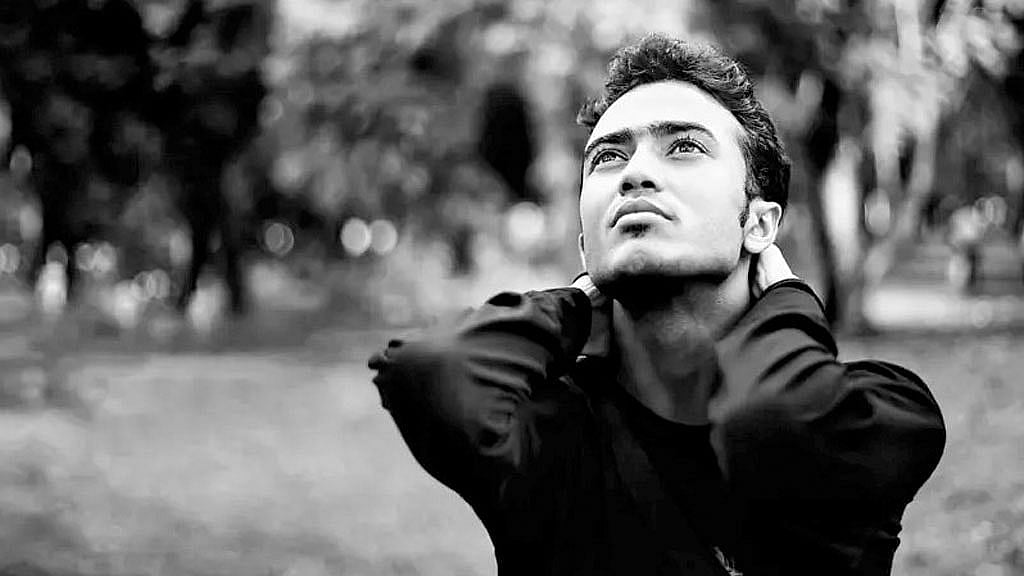
“All the evidence and witness statements are in the case. I believe that if they are properly analysed, it should be possible to determine whose bullet killed him.”
The investigating officer, Police Inspector Alamgir Sarkar, declined to discuss the case in detail.
“God willing, something good will happen,” he said.
Dhruva said Priyo’s death changed him.
“I may not have seen the deaths of thousands of people, but the final outcome of everything I witnessed that day was Priyo’s death,” he said.
“If the police had not taken him away after he was shot, perhaps his colleagues or friends could have taken him to hospital.
“I did not know Priyo before that day. But what happened introduced him to me. The hope of seeing justice for his killing later gave me the courage to witness many other incidents.”
Investigations Complete, Questions Unanswered
The Police Headquarters’ monitoring committee says 1,862 cases have been filed across Bangladesh over the July Uprising, including 799 murder cases.
By Jun 30, investigations had been completed in 100 murder cases.
Charge sheets were submitted in court in 63 of them against 5,793 people, including former prime minister Sheikh Hasina. Final reports marked “true”, or FRTs, were filed in the remaining 37.
Although many of the charge sheets name individuals or officials as responsible for the killings, most do not specify whose gunfire or physical assault caused the victim’s death.
Rakibul’s Family Waits for An Answer
On Jul 19, 2024, Mirpur-10 roundabout was in turmoil.
Rakibul Hossain was crossing the road with a friend when a bullet struck him. He collapsed and was later pronounced dead at hospital.
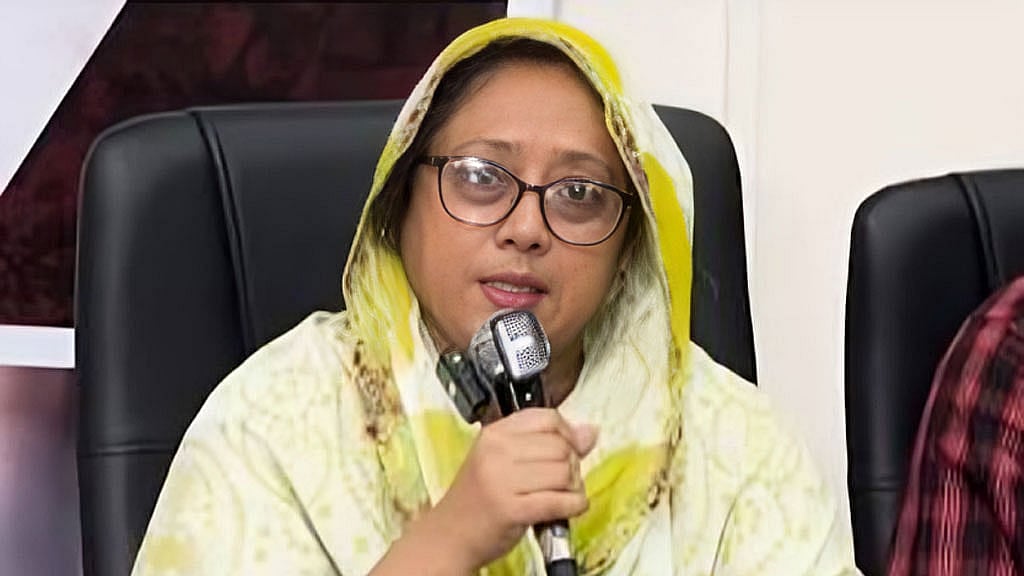
Two months later, on Sept 20, his father, Abu Bakar Siddique, filed a murder case with Mirpur Model Police Station.
After the investigating officer was changed twice, the case was assigned to Police Bureau of Investigation Inspector Md Mominul Islam.
On Jul 30, he submitted a charge sheet in court naming 50 people, including Hasina, and recommended that another 49 be cleared because of a lack of sufficient evidence.
Rakibul’s family is satisfied that those accused of giving orders have been charged. But one question remains unanswered.
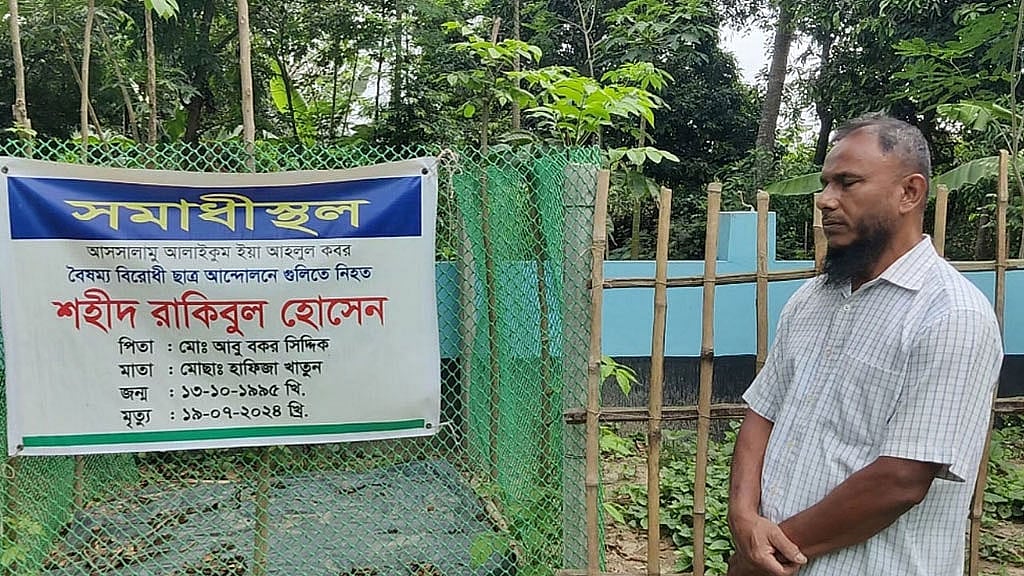
“Charge sheets have been filed against those who gave the orders, and we are satisfied with that,” said Abu Bakar, a former master warrant officer in the Bangladesh Air Force.
“But I still do not know whose bullet killed my son.”
He said police were positioned on one side of the road that day, while Awami League, Chhatra League and Jubo League members were on the other.
“We were not at the scene. Rakib’s friend, who was with him, later told us what happened.”
For Abu Bakar, the hardest moments come when Rakibul’s mother asks the same question he has been unable to answer.
“She sometimes asks me ‘Whose bullet killed our child?’ I have no answer,” he said. “I am searching for that answer too. Now I am looking to the investigating officer.”
Inspector Mominul said investigators had been unable to determine which weapon, or whose bullet, killed Rakibul.
“With so much gunfire taking place, it was not possible to establish whose bullet caused his death,” he said.
‘The Same Police Are Investigating’
Golam Nafiz had only just completed his secondary school examinations.
The 17-year-old, who had achieved a GPA of 5, went to Farmgate on Aug 4, 2024, in response to a call from the Students against Discrimination.
His family said he left home despite his mother’s objections and never returned alive.
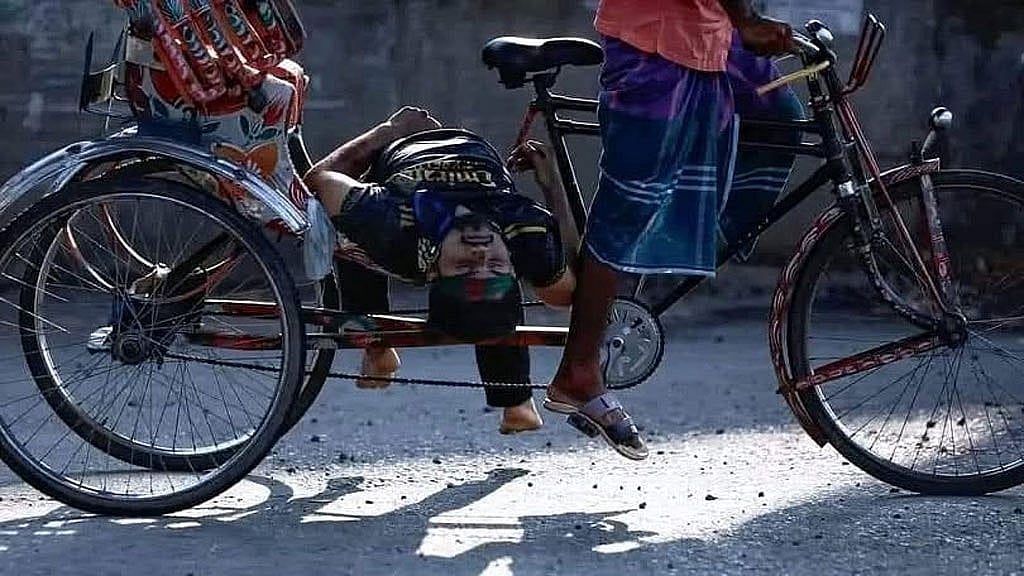
Nafiz was shot in Farmgate that afternoon. He was placed on the footboard of a rickshaw as people tried to take him to hospital. A photograph of the bloodied teenager spread widely on social media.
His father, Md Golam Rahman, filed a case with the International Crimes Tribunal on Sept 3, a month after his death.
Nearly a year and a half later, on Jan 15, 2026, a charge sheet was submitted against 22 people, including former home minister Asaduzzaman Khan Kamal.
But it did not directly identify the person who shot Nafiz.
His elder brother Golam Russell said the family remains angry and frustrated.
“My mother sometimes asks who shot Nafiz,” he said. “The same question comes to our minds, but we have no answer.”
Russell also questioned the investigation.
“The most painful thing is that police looking for Nafiz’s killer are the same police who opened fire on people under the orders of the government at the time,” he said.
“What more can we expect from them? Even so, our mother wants justice for her son. We also want a proper trial for Nafiz’s killing.”
bdnews24.com could not reach the investigating officer in the case for comment.
Can Justice Be Delivered?
A United Nations fact-finding report estimated that about 1,400 people were killed during the July Uprising. The government gazette lists around 850 people as "martyrs".
The dead included children such as Riya Gope, as well as women.
Mohammad Tajul Islam, a former chief prosecutor of the International Crimes Tribunal, said those who gave orders or shaped policy could still be prosecuted even if they were not physically present at the scenes of the killings.
He added that if the alleged crimes committed in July were established as crimes against humanity, senior figures could be held responsible under recognised legal principles such as command responsibility and joint criminal liability.
“Those who held senior positions and ordered killings or the use of lethal force did not need to be physically present at the scene,” Tajul said.
“If reliable evidence establishes that they issued instructions, exercised effective control or contributed to the commission of the crimes, they cannot escape legal responsibility.”
But he said sufficient and admissible evidence would be essential.
“Without it, the accused may receive the benefit of the law and be acquitted.”
According to Tajul, those who directly carried out the orders and fired the fatal shots must also be identified and prosecuted.
“If the direct perpetrators cannot be identified and their roles proven, the judicial process will remain incomplete,” he said.
He also raised concerns about the impartiality of investigations.
Because police are accused of involvement in many of the incidents while the same force is conducting the investigations, questions about their credibility were “natural”, he said.
The government could establish an independent and separate investigative body if necessary to ensure fair and impartial inquiries, he added.
Police Reject Allegations of Bias
Police acknowledge that investigators have been unable to identify the direct perpetrators in some cases, but reject allegations that the inquiries are biased.
Khandaker Rafiqul Islam, an additional inspector general of police and member of the committee overseeing July-related cases, said the scale and circumstances of the uprising had made investigations particularly difficult.
Thousands of people were present on different sides, he said. Some incidents led to multiple cases, while some cases were filed by people falsely claiming to be relatives of the victims.
In many instances, there were also no inquest reports or post-mortem examinations.
“In an uprising, thousands of people were present on both sides,” Rafiqul said.
“It is extremely difficult to identify whose bullet or blow caused a particular death. The inability to identify the direct perpetrators is delaying charge sheets in several cases.”
He said multiple cases over the same incident, complaints filed by people who were not genuine relatives and the absence of inquests and autopsies had created major obstacles.
Families remain uneasy because police are investigating incidents in which police gunfire has been alleged.
But Rafiqul said police were not the only force whose involvement had been reported.
“It is not the case that everyone died only from police gunfire,” he said. “We have also received information about the involvement of several other agencies, and evidence is being collected.”
Investigating officers had been clearly instructed to remain “100 percent impartial”, he said.
Information provided by victims’ relatives about suspects or accused individuals should not be dismissed without reason, he added. Families were instead being encouraged to submit whatever evidence they had so that those responsible could not escape through legal loopholes.
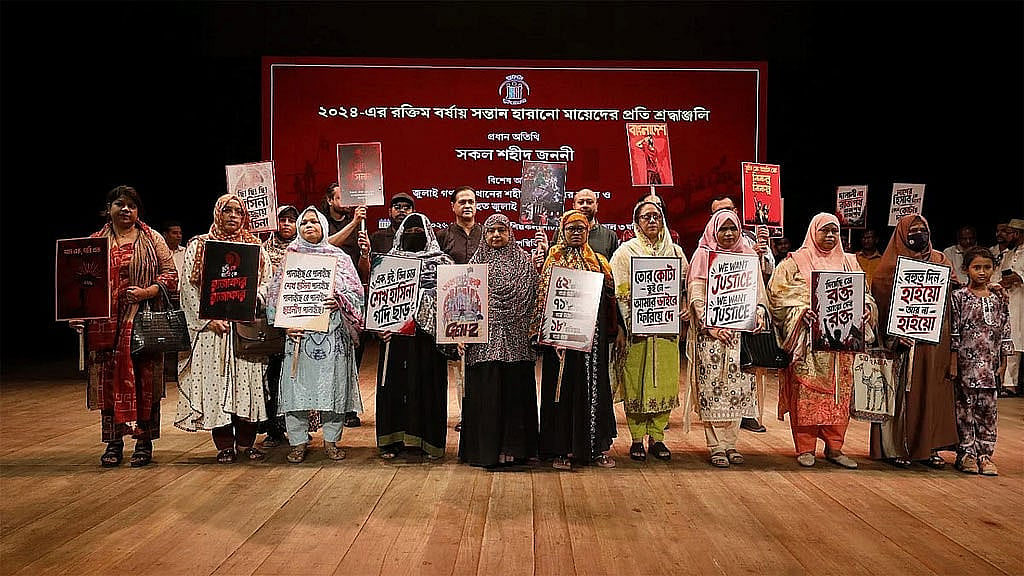
For the families, however, the question remains painfully simple. Who fired the shot that killed their child?