Published : 28 Nov 2025, 02:33 AM
Updated : 21 Aug 2026, 02:48 PM


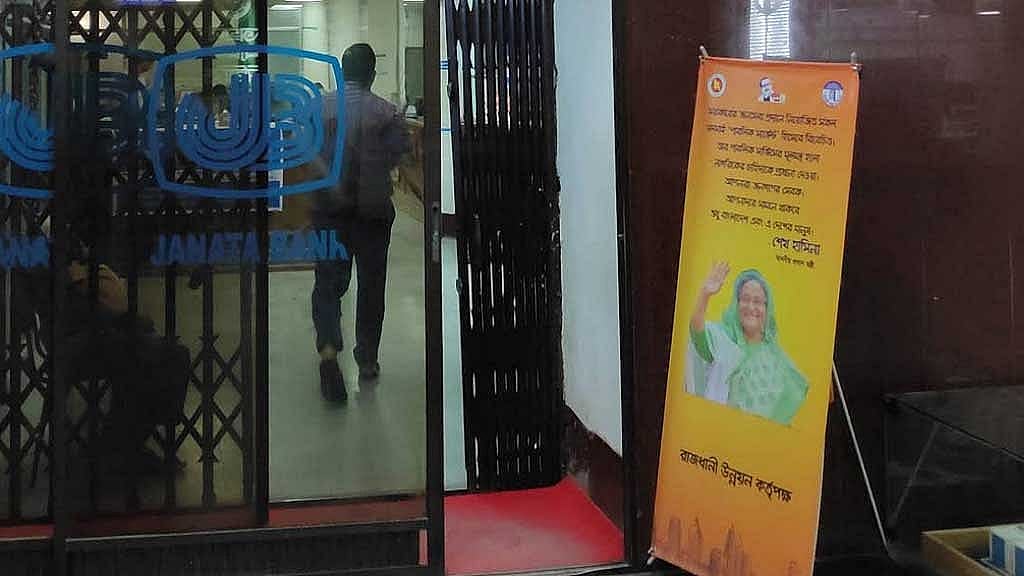
Alongside finding former prime minister Sheikh Hasina guilty in the plot corruption cases, Dhaka’s Fifth Special Judge’s Court also highlighted serious malpractices by the Rajdhani Unnayan Kartripakkha (RAJUK) and the housing ministry.
The court observed that these institutions were complicit in the illegal allocation of multiple plots and ordered identification of all unauthorised plot beneficiaries.
It also ordered all recovered plots to be reallocated exclusively to landless citizens and eligible applicants, ensuring fairness in future allotments.
Judge Mohammad Abdullah Al Mamun underscored systemic irregularities, arbitrary decision-making, and longstanding misconduct in government housing and land allocation.
The court ordered RAJUK and the housing ministry to start departmental and criminal proceedings.
The verdict imposed seven-year rigorous prison terms on Hasina in each of the three cases, totalling 21 years. Her son, Sajeeb Wazed Joy, received a five-year sentence in one case, and her daughter, Saima Wazed Putul, five years in another.
Alongside imprisonment, fines were imposed: Hasina received Tk 100,000 in each case, totalling Tk 300,000, with non-payment leading to six to 18 months of additional imprisonment. Joy and Putul were fined Tk 100,000 each, with six months imprisonment in case of non-payment.
Before the verdict, RAJUK’s former member Khurshid Alam, the only arrested defendant in the three cases, was produced in the Dhaka Metropolitan Magistrates’ Court’s lock-up at 9:30am.
The court session began at 10:55am, with Judge Abdullah entering the courtroom at 11:23am. The judge first read the verdicts for Hasina and 12 others, then sequentially delivered the three case judgments, concluding at 11:56am.
The court noted that RAJUK and the housing ministry routinely violated rules to favour powerful individuals, undermining constitutional mandates and state policy.
The verdict pointed out that RAJUK deliberately bypassed legal allocation procedures, with senior officials, including the chairman, approving applications of influential people without verifying prescribed forms or eligibility.
The court observed that beneficiaries often included the former prime minister, her family members, officers of the Prime Minister’s Office, ministers, MPs, ruling party leaders, bureaucrats, and other influential figures.
Many allocations were made without reviewing documentation or qualifications, amounting to abuse of power and constitutional violations, it added.
The court issued detailed directives:
1. All officials involved in irregularities must be immediately removed from decision-making positions and face departmental and criminal proceedings.
2. All allocations during the period must undergo forensic audits by independent experts.
3. Digital lottery systems must be introduced for future allocations, including live broadcast, audit trail, and encrypted mechanisms.
4. Officials approving illegal allocations are jointly liable and must face dismissal and criminal prosecution.
5. Legal protection and rewards must be ensured for whistleblowers exposing corruption.
6. Allocation must prioritise landless, low-income, single-parent, disabled, and post-service homeless families through a point-based eligibility system.
7. Reserved portions must be set aside for single mothers, citizens with disabilities, low-income families, and those without housing after government service.
On the housing ministry, the court found it failed to properly supervise RAJUK, with oversight being nominal.
The ministry itself exerted illegal influence over “special category” allocations, prolonging irregular practices.
Directives include:
1. Abolishing government special recommendation policies
2. Cancelling any ongoing special-category allocation recommendations and prohibiting new allocations in this category
3. Restoring full control and supervision over RAJUK
4. Establishing an independent monitoring unit
5. Taking departmental and criminal action against the ministry and RAJUK officials involved in irregularities
6. Digitally integrating RAJUK’s data with national property, land records, municipal holdings, sub-registry, and TIN databases
7. Publishing applicant lists, eligibility criteria, plot numbers, and beneficiary information online
8. Structurally reforming allocation with digital lotteries, point-based scoring, and officer accountability
9. Providing legal protection and rewards to employees who expose corruption