Published : 08 Oct 2025, 12:22 AM
Updated : 21 Aug 2026, 02:33 PM


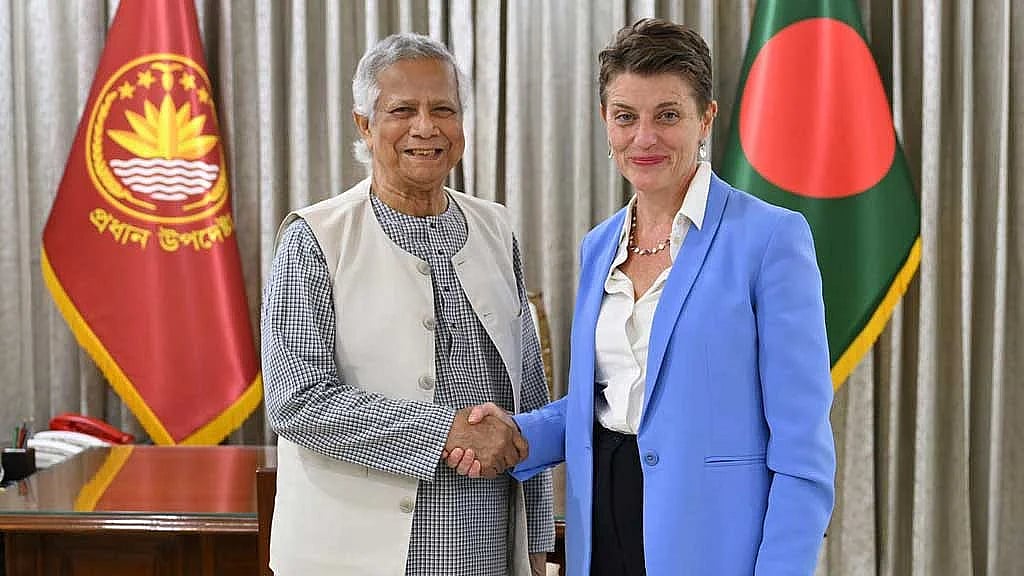
UN Resident Coordinator Gwyn Lewis has said serving the people of Bangladesh has been "one of the greatest honours and privileges" of her career.
She made the remarks during her farewell meeting with Chief Advisor Muhammad Yunus at the State Guest House Jamuna on Tuesday, according to a media statement issued by his office.
The statement noted that Lewis described her tenure in Bangladesh as highly memorable and significant.
She commended Yunus's recent New York visit, calling his participation in the 80th session of the UN General Assembly "highly successful”.
During his New York trip, the chief advisor held bilateral meetings with more than a dozen world leaders and addressed the landmark UN conference on the Rohingya crisis.
Lewis highlighted that the diverse composition of the Bangladeshi delegation created a strong example of national unity, as it included leaders from six major political parties for the first time.
Discussions during the meeting focused on sustainable cooperation, innovation, and inclusive growth as Bangladesh prepares for the national elections in February and enters a new phase of development.
Reflecting on her tenure, Lewis said: "Serving the people of Bangladesh over the past three and a half years has been one of the greatest honours and privileges of my career.
"I have witnessed firsthand the resilience, creativity, and generosity that define this nation. Working alongside government, civil society, and development partners has been deeply inspiring.”
Lewis praised the chief advisor's leadership, stating: "I hold immense respect for him and his lifelong dedication to social innovation and equity. His leadership inspires millions globally and is reshaping the global conversation on inclusive development."
During her term, the UN and the Bangladesh government jointly worked to implement the Sustainable Development Cooperation Framework (2022–2026), which is aligned with the country's 8th Five-Year Plan.
These efforts span five strategic priorities: inclusive economic development, equitable human well-being, environmental resilience, participatory governance, and gender equality.
A landmark achievement during this period was the opening of a new OHCHR mission in Dhaka, strengthening the UN’s human rights presence and deepening engagement on rights-based development.
The UN also played a pivotal role in supporting Bangladesh’s preparation for graduation from Least Developed Country (LDC) status while advancing reforms in the labour sector and health and education systems.
Climate action remained a cross-cutting priority, with integrated programming to strengthen environmental sustainability and disaster preparedness.
Lewis further praised Bangladesh’s leadership in global initiatives such as Early Warning for All, Transforming Education, and the Food Systems Summit, all of which saw significant progress in 2023.
“Our partnership with Bangladesh is rooted in shared values and a vision for a prosperous, climate-resilient future.
“We remain committed to ensuring that no one is left behind, with gender equality and human rights embedded in all our efforts," she added.