Published : 27 May 2026, 06:20 AM
Updated : 21 Aug 2026, 03:47 PM


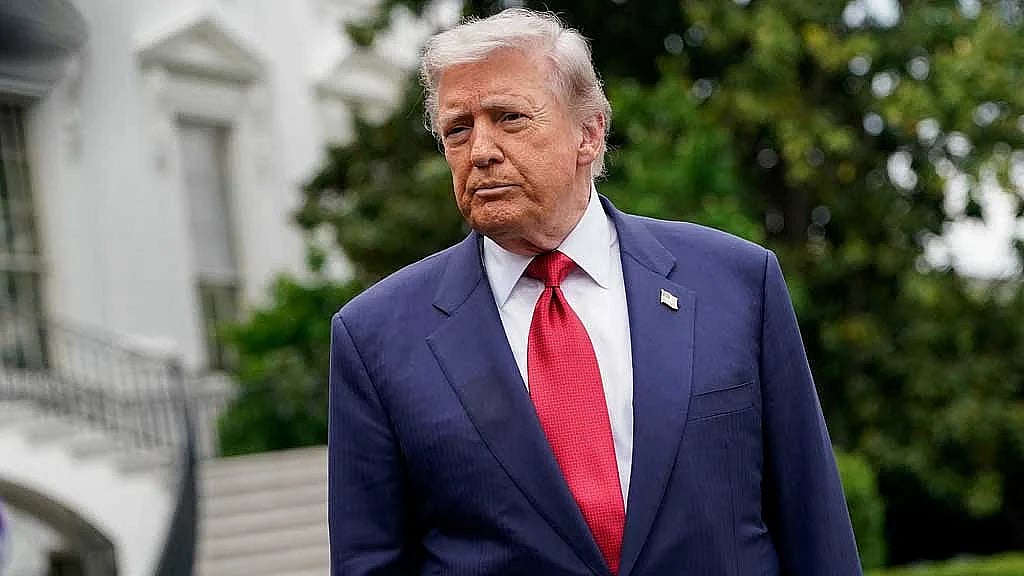
US President Donald Trump has proposed expanding the Abraham Accords to include Saudi Arabia, Qatar, Pakistan, Turkey, Egypt and Jordan as part of efforts to reshape West Asia politics amid the ongoing conflict with Iran, according to CNN.
Trump said on Monday he had urged the Muslim-majority states to join the diplomatic framework that established ties between Israel and several Arab countries during his first term in office.
The proposal emerged as US and Iranian negotiators discussed language for a possible memorandum of understanding that could eventually form the basis for peace talks.
Trump also suggested Iran itself could one day join the accords following a peace agreement, a prospect analysts and regional observers described as highly unrealistic given decades of hostility between Tehran and Israel.
“Wow, now that would be something special!,” Trump wrote on social media. “This will be the most important Deal that any of these Great, but always in Conflict Countries, will ever sign.”
CNN said the proposal added fresh uncertainty to already fragile regional politics after a war that has heightened tensions across West Asia and damaged regional economies.
The report noted that it was “unthinkable” the Islamic Republic would recognise Israel after Israeli raids reportedly killed Supreme Leader Ali Khamenei. It also said Israel would be unlikely to accept ties with a state it considers an existential threat.
The initiative followed virtual talks over the weekend between Trump and Arab and Muslim leaders regarding efforts to end the Iran conflict.
According to CNN, one possible explanation for Trump’s proposal is that he continues to pursue a broader vision of West Asia reconciliation through economic, political and cultural cooperation despite setbacks from the war.
But analysts cited by the network questioned whether current regional realities support such ambitions.
Iran has remained defiant despite the conflict.
CNN reported that a commander of Iran’s Islamic Revolutionary Guard Corps claimed the country was now stronger than it had been at the start of the war.
The report said Gulf Arab states were now more focused on regional security and economic stability than on improving relations with Israel.
The conflict has disrupted trade and economic activity, particularly following the closure of the Strait of Hormuz, which analysts had long warned could happen in the event of a wider regional war.
CNN said Gulf nations may now reconsider their security arrangements after Iranian missile and drone attacks targeted areas linked to US military operations.
The report also highlighted political barriers to any expansion of the Abraham Accords.
Saudi Arabia has repeatedly said recognising Israel would depend on progress toward Palestinian statehood, which analysts say appears increasingly distant after the deaths of tens of thousands of civilians during Israel’s military operations in Gaza following the Oct 7, 2023 Hamas attacks.
Ongoing Israeli operations in Gaza and settler violence in the occupied West Bank have further reduced political room for compromise, according to the report.
Hasan Alhasan, a senior fellow at the International Institute for Strategic Studies, told CNN that many countries in the region viewed Israel’s actions as destabilising.
“A lot of regional perceptions of Israel are not at all flattering,” he said.
“I think a lot of countries in the region see Israel’s actions as highly dangerous, destabilising.”
CNN military analyst Cedric Leighton described Trump’s proposal as “wishful thinking”.
“And certainly to get the Arab nations to agree to be part of the Abraham Accords and to recognise Israel at this particular point in time, that might be a bridge too far,” he said.
CNN also noted that an Israeli general election expected later this year could further complicate prospects for any new regional agreements involving Prime Minister Benjamin Netanyahu and his far-right coalition.
The Abraham Accords were signed in 2020 between Israel, the United Arab Emirates, Bahrain, Morocco and Sudan, and were considered one of Trump’s main foreign policy achievements during his first term.
CNN said Trump has long sought to expand the agreements, especially after his administration helped negotiate a temporary ceasefire in Gaza earlier in his second term.
But the network said efforts to broaden the accords now appeared increasingly difficult as the US has yet to resolve key issues including the reopening of the Strait of Hormuz and concerns over Iran’s nuclear programme.
The report also questioned the practicality of including Pakistan, noting that Islamabad has never officially recognised Israel and faces sensitive domestic political conditions.
A source familiar with the discussions told CNN that Trump encouraged countries to join the accords but did not make participation a condition for any future agreement with Iran.
Hasan Alhasan also questioned Washington’s leverage following the conflict.
“It’s not entirely clear what President Trump himself has to show for, by way of his track record in running or managing this war, that he feels able to impose such a demand on regional countries,” he told CNN.