Home
+
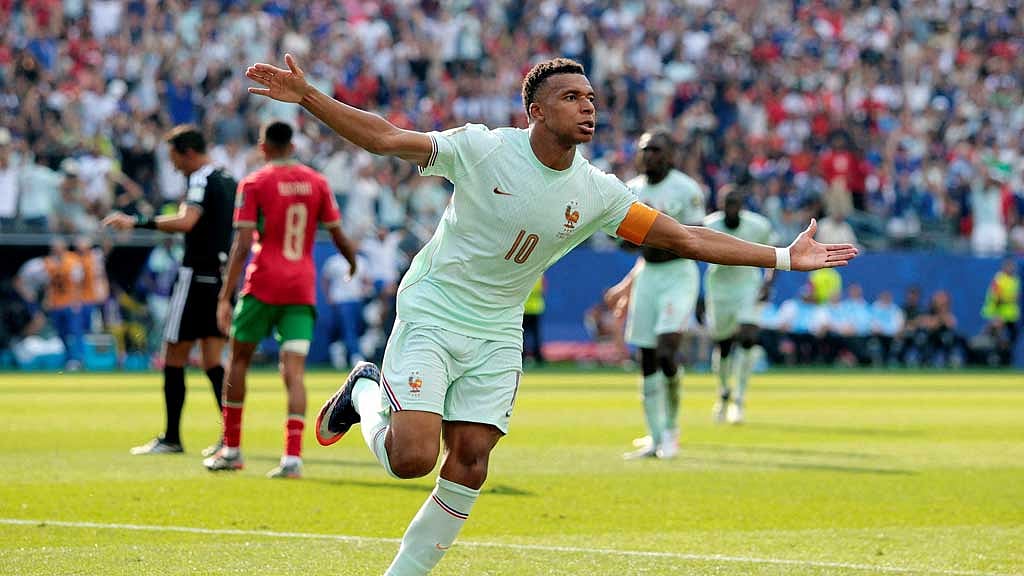
Published : 12 Jul 2026, 05:31 PM
Football has a cruel arithmetic to it. Score, and the whole nation claims you.
Miss, or simply skip a handshake, and somewhere online, someone decides your passport was always conditional.
Kylian Mbappe lived both versions of that story inside a single week.
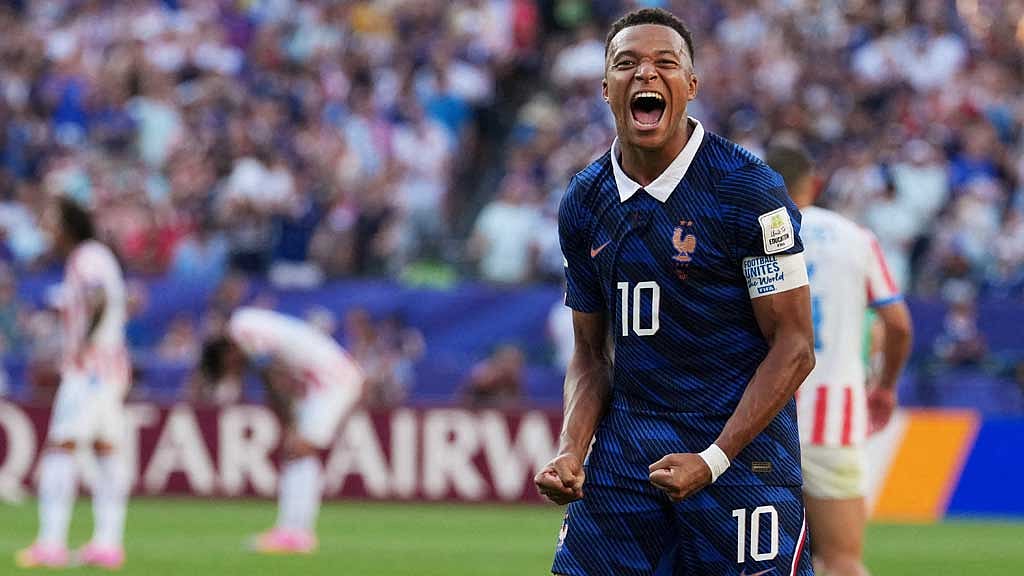
On Jul 4, his penalty knocked Paraguay out of the World Cup.
By Jul 6, Paraguayan Senator Celeste Amarilla had called him a "colonised Cameroonian" and a "brute" in a string of posts on X, and suggested Paraguay's players should have struck him after the final whistle.
The word "colonised" was not a random insult.
Mbappe's father, Wilfried, is Cameroonian; his mother, Fayza, is Algerian -- both countries once under French colonial rule.
Calling him "colonised" reaches directly for that history, turning the very migration pipeline that built modern France into an accusation, as though his heritage were something stolen rather than lived.
Mbappe did not stay quiet.
He called senator "a despicable woman, unworthy of her position”, and said he would never let people like her spread hatred unchallenged.
Madame Celeste Amarilla,
Vous êtes une femme méprisable et indigne de sa fonction.
Vous ne représentez pas le Paraguay, ce pays qui a transpiré la passion et l’honneur tout au long de la compétition. Par votre inconscience et votre racisme décomplexé, le monde entier a déjà… pic.twitter.com/EnYmgQXvPL
— Kylian Mbappé (@KMbappe) July 6, 2026
For most footballers, that exchange would be the whole story.
A cruel post, a federation statement, a quiet return to training.
For Mbappe, it landed as the latest instalment of something far older, something he has been carrying since he was a teenager in one of Paris's poorest suburbs, and something France itself has never fully resolved.
A Childhood Built on Two Rules
Mbappe grew up in Bondy, northeast of Paris, in what he has described as a genuine melting pot of French, African, Asian and Arab families.
In a letter he wrote for The Players' Tribune in 2020, he said the world outside only ever heard the neighbourhood's worst stories and never its best.
He remembered a school tournament played for a two-euro plastic trophy treated like it was the World Cup itself.
He remembered his father coaching him for a decade with no patience for academy fanciness, and his mother grabbing him by the ears after a nervous performance at a youth match, telling him that missing goals meant nothing but refusing to play out of fear was the thing that would haunt him for life.
He signed with Monaco as a teenager.
Zinedine Zidane personally called him to Real Madrid's academy at 14.
By 19, he was lifting the World Cup in Russia, standing in the tunnel with fellow banlieue kid Ousmane Dembele, both of them shaking their heads in disbelief before kickoff.
That triumph made him a national hero almost overnight.
Three years later, the same country turned on him.
When Adoration Turned to Abuse
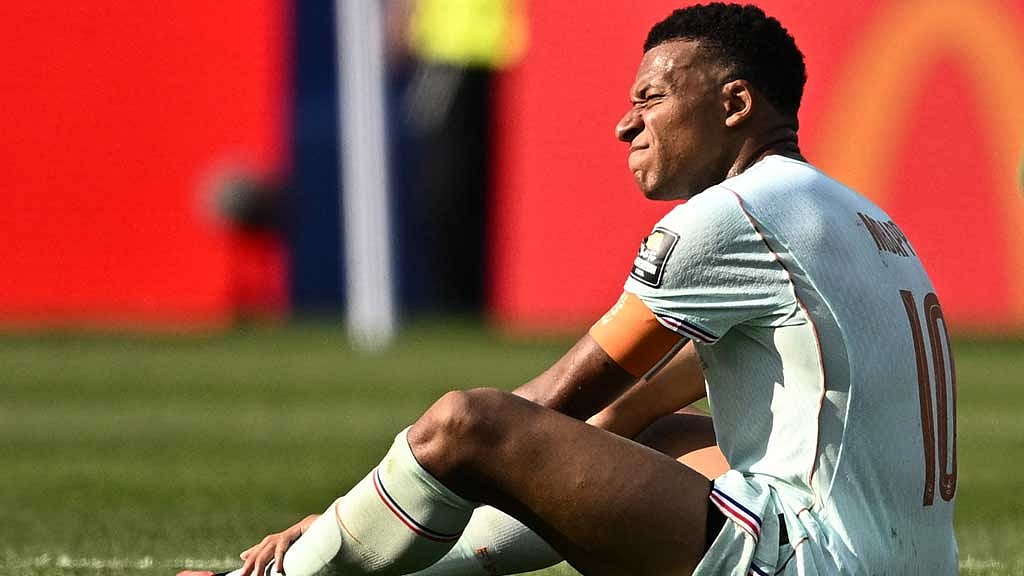
At Euro 2020, Mbappe missed a decisive penalty against Switzerland, and the response was instant and racial.
He has since said he seriously considered leaving the national team for good.
In comments carried by Yahoo Sports earlier this year, the player recalled being called a monkey and insulted online, and going from national hero after 2018 to a target of racist abuse within a single tournament cycle.
He asked himself, plainly, whether these were really the people he was playing for.
He was not the only young player to face this particular cruelty.
Days before that tournament ended, three England players who missed penalties in the Euro 2020 final, Marcus Rashford, Jadon Sancho and Bukayo Saka, were flooded with racist abuse within minutes of the final whistle, and a mural of Rashford was defaced in Manchester before the sun came up the next day, as reported by CNN and Sky Sports at the time.
Twitter's own review of that night, published on its company blog, found it had removed 1,622 abusive tweets within 24 hours of the final, a number that climbed to nearly 2,000 within three days -- a scale that pushed the platform into direct talks with the UK government and forced the Football Association to publicly demand tougher regulation of social media companies.
But Mbappe's case carries something most of his peers never had to deal with.
In France, questioning his belonging is rarely just about one missed kick.
It taps into a much older argument about who the national team is allowed to represent in the first place.
A Question France Never Actually Settled
France last won the World Cup on home soil in 1998 with a squad so visibly mixed that the press nicknamed it Black-Blanc-Beur, a pun on the colours of the national flag.
Zidane, son of Algerian immigrants, scored twice in that final and became the most beloved man in the country for a season.
Politicians rushed to hold the team up as proof that French assimilation worked.
It did not really settle anything. It just delayed the argument.
Far-right leader Jean-Marie Le Pen had already dismissed the squad as “artificial”, a line he repeated for years, and four years later he stunned the country by reaching the runoff of the presidential election.
A poll taken after France's follow-up win at Euro 2000, cited by the Media Diversity Institute, found that a third of the country still believed the team had too many players of foreign origin.
Arsene Wenger, the former Arsenal manager who now serves as FIFA's chief of global football development, told a gentler version of that same history this month, speaking on Toni Kroos's podcast.
French football's success, he argued, cannot be separated from its immigration story, and he ran through the lineage as evidence rather than embarrassment: Raymond Kopa, son of a Polish miner; Michel Platini, of Italian descent; Zidane and Karim Benzema, both of Algerian heritage; Dembele, whose roots trace to West Africa.
What Wenger offered as praise, France's own diplomats have at times treated as an accusation.
In 2018, after that World Cup win, American comedian Trevor Noah joked that Africa had won the tournament, and France's ambassador in Washington fired back a public letter accusing him of denying the players' Frenchness.
Noah's response was simple. Why could not the players be both.
Mbappe was 20 years old when that argument played out in public. He has spent every year since finding it circle back to him personally.
Choosing to Speak, Not Just Absorb
What sets him apart from most players caught in this cycle is that he eventually stopped waiting for the argument to come to him.
Ahead of France's snap legislative elections in 2024, with polls showing Marine Le Pen's National Rally on course for its first parliamentary majority, Mbappe broke football's usual silence on politics.
He told reporters that the extremes were at the gates of power and urged young voters to reject the far right, adding that he did not want to represent a country whose values contradicted his own.
National Rally's young leader Jordan Bardella hit back within a day, suggesting a multimillionaire footballer had no business lecturing voters struggling to make ends meet.
That moment matters more than a single quote.
It shows Mbappe was never simply a passive target in this story, absorbing insults and moving on quietly.
He had already stood up during his own country's election and made clear that the question of who gets to be French was one he intended to answer on his own terms.
A Fight That Outlasts Any One Match
Three days after her original tirade, Amarilla had the chance to walk it back in front of Paraguay's Senate on Jul 8.
She did the opposite, calling Mbappe a slur and telling her critics to stop crying like women, according to CBC News, which covered the session.
By then, the diplomatic machinery on both sides had already moved.
The French Football Federation had filed a formal legal complaint with prosecutors in Paris, describing her remarks as "utterly abhorrent and unacceptable”, as per its own statement carried by multiple outlets including ESPN.
Paraguay's government, wary of the episode straining ties with France, issued a statement distancing itself from Amarilla, insisting her words did not reflect the country's official position, TheGrio reported.
Her own chamber had had enough. After five hours of debate, the Senate voted to formally condemn her remarks as “racist and discriminatory”, an unusual rebuke of one of its own, delivered in the very session where it separately honoured Paraguay's World Cup run.
Mbappe captains France against Morocco in the Thursday’s quarterfinal.
He has said the abuse will not change how he plays. It has not changed what he says about his country either.
From a letter written to the kids of Bondy at 21, to a plea to French voters at 25, to a Paraguayan senator's tirade at 27, the message has stayed consistent.
He is French, entirely on his own terms, and he stopped waiting long ago for anyone's permission to say so.