Published : 17 Nov 2025, 08:07 AM
Updated : 28 Aug 2026, 01:29 AM


Bangladesh stands on the edge of a reckoning unlike any in its history -- a judgment of law, but also a moment of profound political reckoning.
On Monday, the very court that former prime minister Sheikh Hasina established to try the war crimes of 1971 is due to deliver its most consequential ruling yet: a decision on whether Hasina herself is guilty of “crimes against humanity” for her alleged role in the brutal crackdown on the July 2024 student uprising.
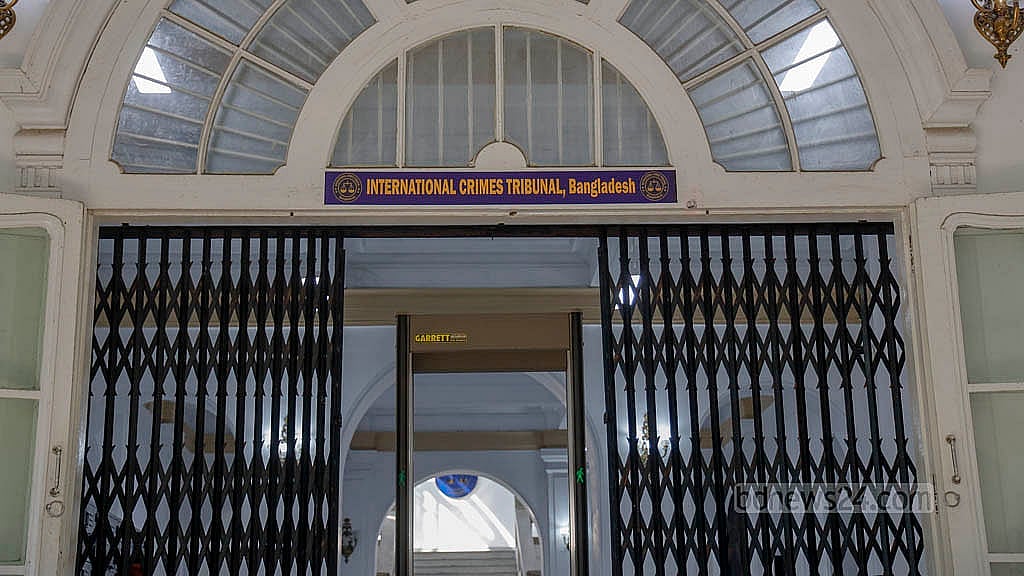
The International Crimes Tribunal-1, led by Justice Md Golam Mortuza Mozumder, and comprising Justice Md Shofiul Alam Mahmood and retired District and Sessions judge Md Mohitul Haque Enam Chowdhury, will hand down the verdict.
Prosecutors have sought the death penalty, citing the “scale and severity” of the violence that followed the student uprising.
If the judges concur, Hasina will become the first head of government in Bangladesh to be sentenced to death -- a stunning reversal of fortune for a leader who once ruled with near-total control for over 15 years.
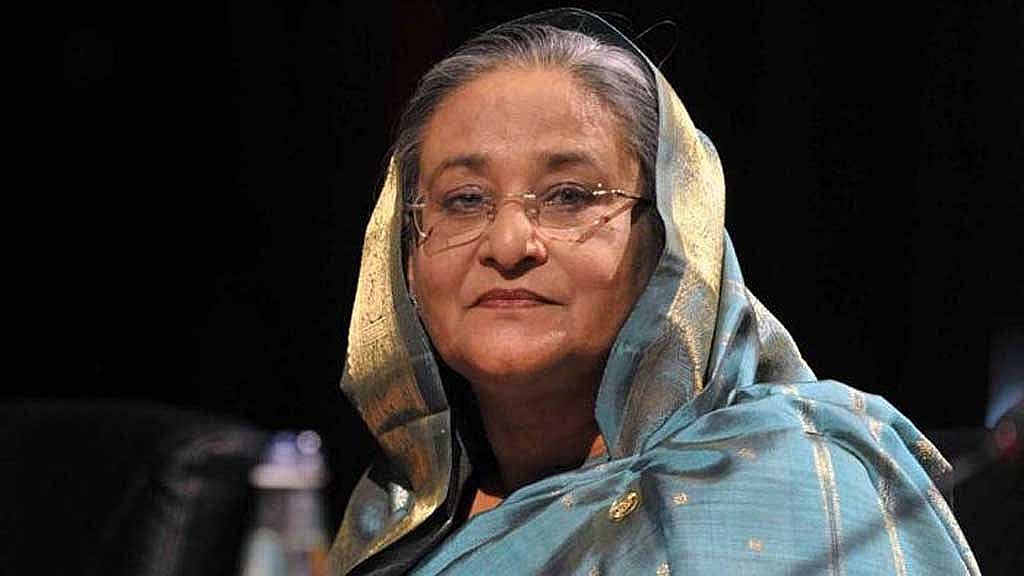
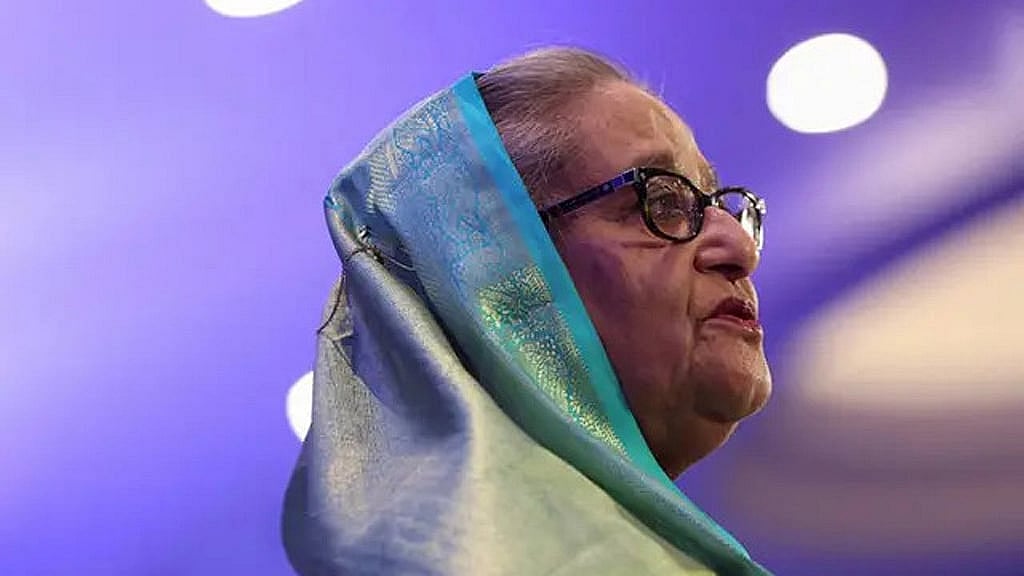
Now residing in India following her ouster, Hasina has been designated a fugitive by the tribunal. She has not appeared in person, nor directly mounted a defence.
However, in multiple interviews with international media, she has denied issuing any orders related to the killings. A court-appointed lawyer has represented her interests, protesting her innocence.
The charges stem from a dramatic chain of events that culminated in Hasina’s fall. What began as student protests against the controversial public service quota system soon evolved into a full-blown demand for regime change.
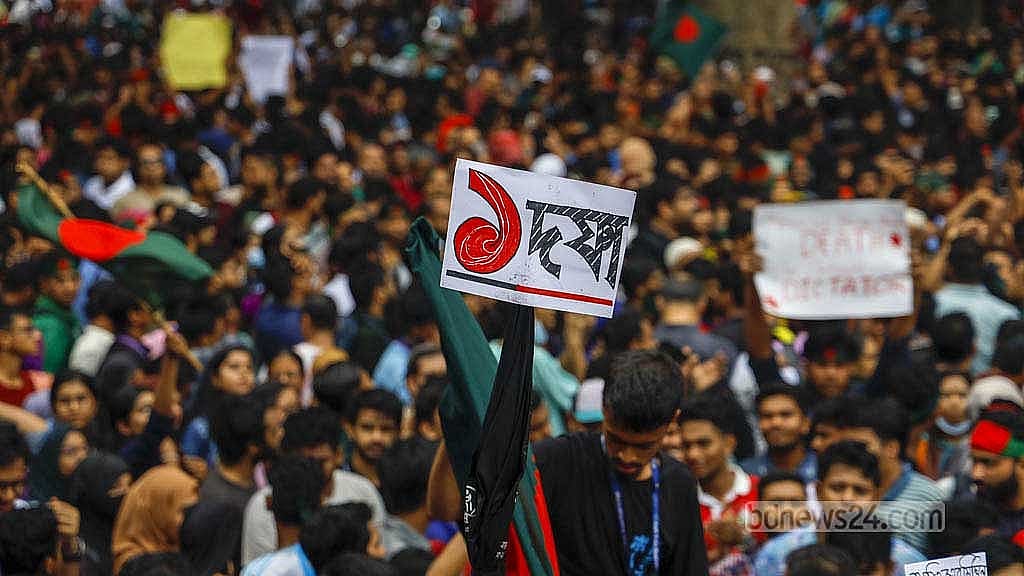
On Aug 5, 2024, the movement erupted into a mass uprising that unseated the Awami League administration. Hasina fled to India hours later.
In the months that followed, a cascade of criminal cases was filed against her across the country. Many senior Awami League figures were similarly implicated.
Eventually, the interim government transferred Hasina’s case to the International Crimes Tribunal.
Under Hasina’s leadership, the tribunal handed down capital sentences to five senior Jamaat-e-Islami leaders and a top BNP figure, despite widespread concerns from international rights groups over the court’s adherence to international fair trial standards, especially in case of death penalty.
That very tribunal now sits in judgment of its creator.
Hasina is not the only figure in the dock. Also charged are her former home minister Asaduzzaman Khan and ex-inspector general of police Chowdhury Abdullah Al-Mamun. Together, they face five counts, including incitement, instigation, and command responsibility for the deaths of more than 1,400 people during the July crackdown.
The charges invoke doctrines of “superior command responsibility” and “joint criminal enterprise”.
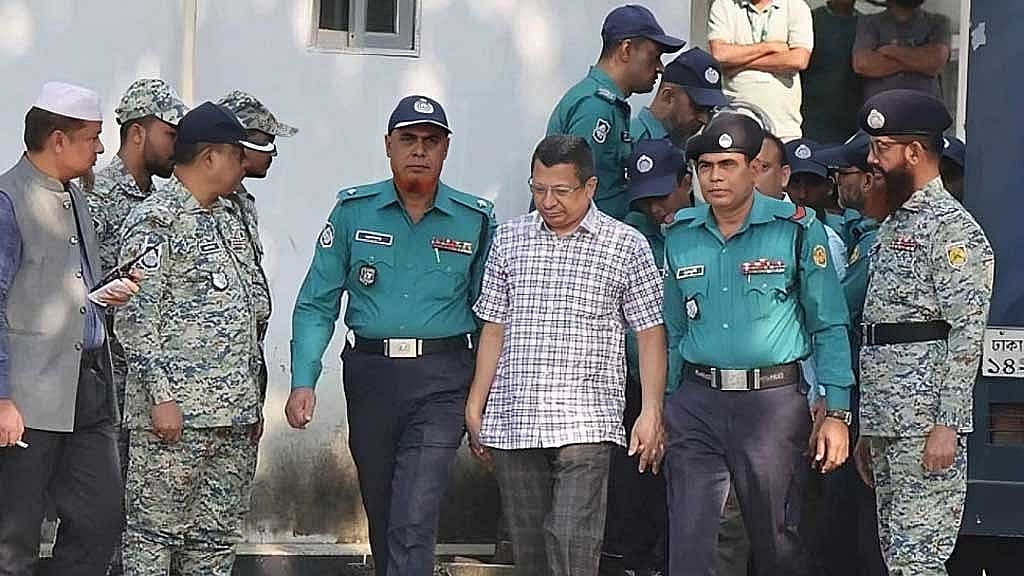
Both Hasina and Asaduzzaman were tried in absentia. Only Mamun remains in custody, and in a dramatic turn, he flipped as a state witness, testifying for the prosecution.
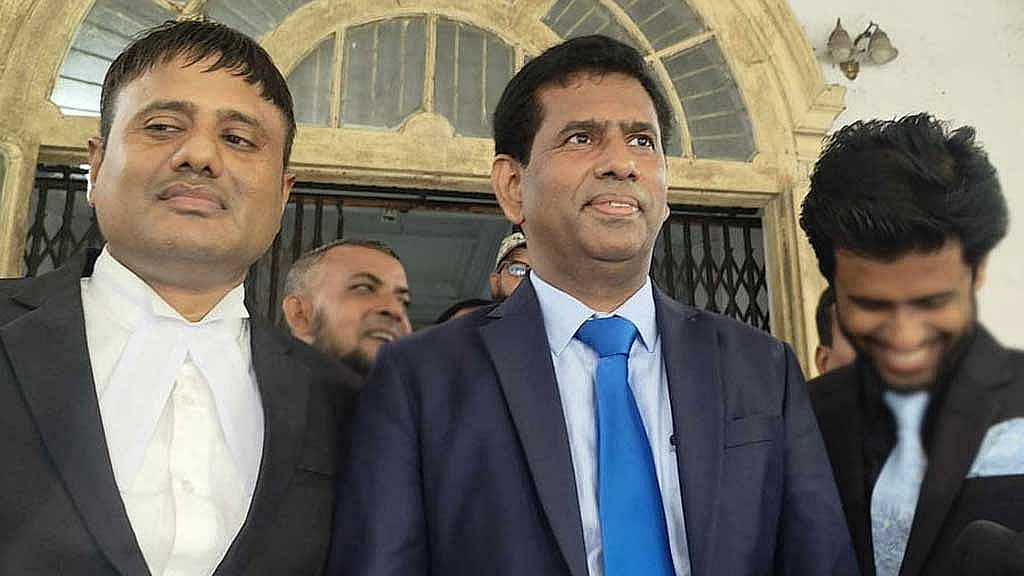
The state’s case has been spearheaded by Chief Prosecutor Mohammad Tajul Islam, backed by a legal team including Md Mizanul Islam, Gazi MH Tamim, BM Sultan Mahmud, Faruk Ahmed, Md Abdus Sobhan Torofdar, Md Shahidul Islam Sardar, and Tanvir Hasan Zohas.
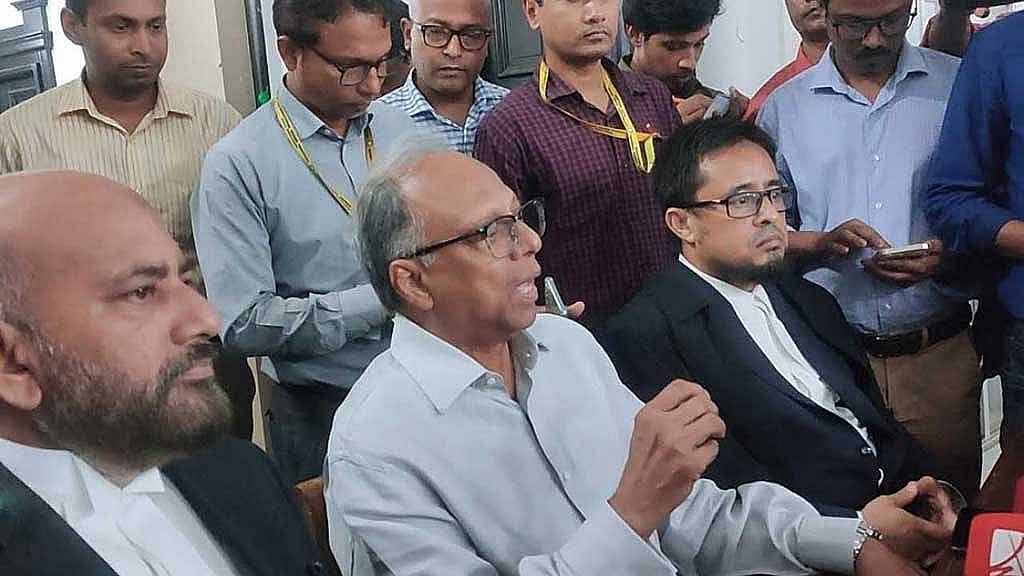
Al-Mamun’s defence was led by Zayed bin Amzad, while Md Amir Hossain served as the court-appointed counsel for Hasina and Asaduzzaman.
HOW THE TRIBUNAL LAW ALLOWS THIS TRIAL
After the Awami League government fell, Law Advisor Asif Nazrul raised the prospect of trying the former prime minister at the International Crimes Tribunal. On Aug 14 last year, he briefed reporters at the Secretariat on why trying Hasina, top Awami League leaders and their associates at this court was legally tenable.
He argued that those involved in the July killings – those who gave orders and those who helped in various ways – could all be brought under trial at the tribunal under the International Crimes (Tribunals) Act, 1973.
The law was originally enacted to prosecute crimes against humanity committed during the Liberation War against Pakistan. Amendments in 2009 added provisions allowing the trial of individuals and groups, and ensured the tribunal’s independent functioning. On that basis, the tribunal, prosecution panel and investigation agency were formed in 2010.
Section 3(1) of the 1973 Act states that the tribunal has the power to try and punish any person, group [or organisation] or any member of any armed, defence or auxiliary force, regardless of nationality, if they are associated with any offence listed in subsection (2) and if that offence is committed in the territory of Bangladesh, whether before or after the Act came into force.
In other words, the tribunal is empowered to try any person, political group, armed force or auxiliary force accused under international law of crimes against humanity, crimes against peace, genocide, war crimes, violations of the Geneva Conventions and any comparable international crimes.
THE CHARGES
On May 12 this year, the tribunal’s investigation agency submitted its report against Hasina, Asaduzzaman and Mamun. On Jun 1, the prosecution filed a formal charge and supporting documents with the tribunal registrar.
Chief Prosecutor Tajul Islam then placed the 8,500-page charge sheet before the three-member bench. The tribunal admitted five charges against the three defendants and, the same day, issued arrest warrants for Hasina and Asaduzzaman.
On Jul 1, Tribunal-1 framed charges on five counts of crimes against humanity against Hasina, Asaduzzaman and Mamun and ordered the trial to begin. At the same time, it granted Mamun’s application to become an approver.
CHARGE 1
At a press conference in Ganabhaban on Jul 14, 2024, Hasina allegedly delivered an “inciting” speech. The prosecution says following this, then home minister Asaduzzaman, then IGP Mamun and other senior officials of the government, through “instigation, assistance and involvement”, used police, other law-enforcing agencies and armed “Awami terrorists” under their command and control to carry out widespread and systematic attacks on unarmed students and civilians. These attacks allegedly involved murder, attempted murder, torture and other inhuman acts. The charge alleges incitement, instigation, assistance, participation, failure to prevent crimes, failure to punish those responsible, and conspiracy – all said to have been committed with the knowledge of the accused.
CHARGE 2
Former prime minister Hasina is accused of ordering the “use of helicopters, drones and lethal weapons to kill and eliminate protestors”, and that former home minister Asaduzzaman and former IGP Mamun, in order to implement this order, instructed security agencies under their command to commit crimes, and aided, participated in and conspired in those acts.
CHARGE 3
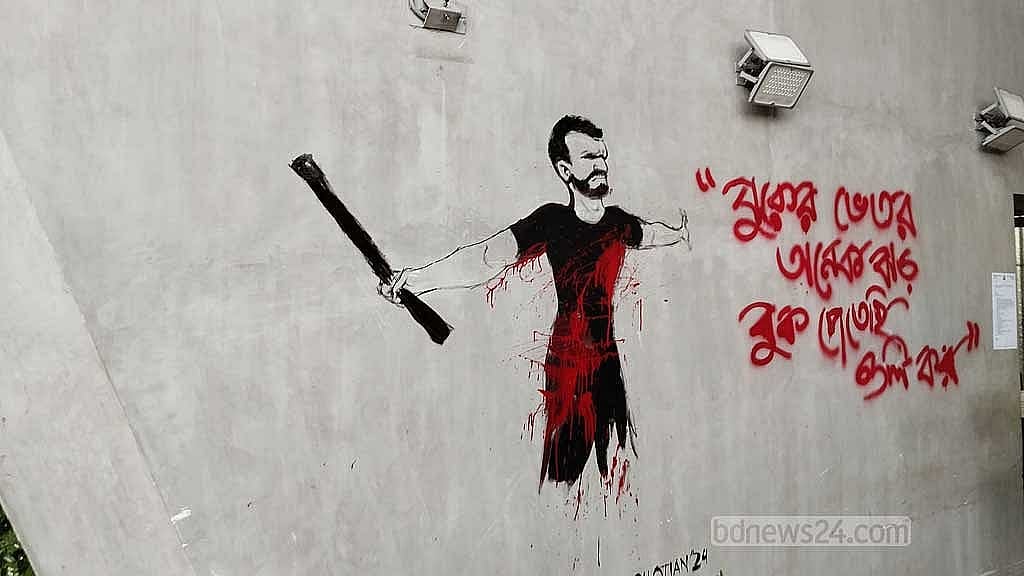
On Jul 14, 2024, in front of Begum Rokeya University in Rangpur, police allegedly opened fire at close range without provocation, aiming at the chest of unarmed protester and student Abu Sayed, killing him brutally. The prosecution says this killing was carried out with the knowledge of the accused and on their orders, through instigation, incitement, assistance, participation and conspiracy, constituting a crime against humanity.
CHARGE 4
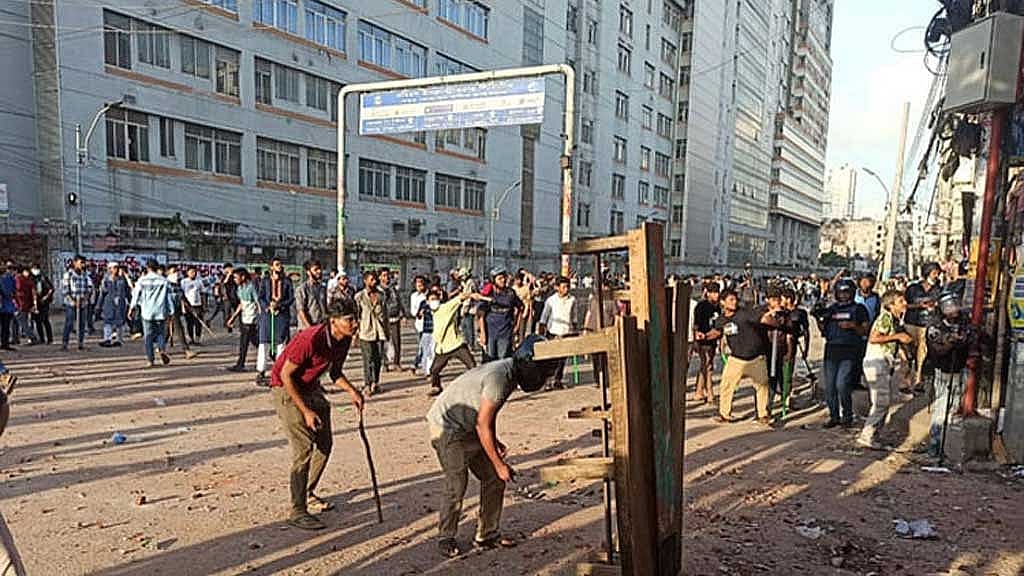
On Aug 5, 2024, in Dhaka’s Chankharpul area, security personnel allegedly opened fire on unarmed student protesters, killing six people. The prosecution says this was done with the knowledge of the accused and on their orders, through instigation, incitement, assistance, participation and conspiracy, and constitutes a crime against humanity.
CHARGE 5
Also on Aug 5 that year, in front of and around Ashulia Police Station, security personnel allegedly shot six unarmed student protesters, then burned the bodies of five and set fire to one survivor who was critically injured. The charge says these acts were committed with the knowledge of the accused, who ordered, instigated, incited, assisted, participated in and conspired in murder, torture and the burning of dead and living victims, amounting to inhuman treatment and crimes against humanity.
Witness testimony began on Aug 4 after the prosecution’s opening statement a day earlier. The proceedings were broadcast live from the tribunal on government-controlled Bangladesh Television.
Following examination, cross-examination and closing arguments, the tribunal kept the case waiting for verdict on Oct 23. On 13 Nov, it announced that the verdict would be delivered on 17 Nov.
WHAT THE WITNESSES SAID
A total of 54 witnesses testified in the case. They include the father of Abu Sayed, a key symbol of the Uprising, relatives of those killed, National Citizen Party Convenor and July movement leader Nahid Islam, fellow July movement leader and Advisor Asif Mahmud Shojib Bhuyain, and Amar Desh Editor Mahmudur Rahman.
A written statement by leftist thinker Badruddin Umar, submitted before his death, was read out at the tribunal.
Former IGP Mamun testified as an approver.
He told the court, “On the 18th of July in 2024, the then home minister phoned me and informed me that Sheikh Hasina had directly ordered the use of lethal weapons to end the movement.”
On helicopter attacks, Mamun said: “The protest areas were divided into zones. Then helicopters, drones, and lethal weapons were used to kill and injure many students and ordinary civilians.”
The fourth charge in the case concerns the killing of six people at Chankharpul in Dhaka. On Oct 16, Advisor Asif Mahmud, a frontline student leader in the movement, testified on this incident.
Asked about the figure of 1,400 people killed, he said: “We’re receiving lists in various ways. We previously witnessed two other massacres, the BDR mutiny killings and the later Shapla Square killings. Hundreds of people disappeared and were killed. Many were never found. We saw Aynaghar (the torture facility) ourselves.
“So if you try to hold a separate trial for every single victim in every incident, that trial may not finish even by Doomsday.
“We are seeking exemplary punishment for Sheikh Hasina and those involved, on behalf of all these victims for these misdeeds, and we hope this exemplary punishment will be ensured.”
Editor Mahmudur told the tribunal: “Despite having all kinds of evidence of Sheikh [Fazle Noor] Taposh’s involvement in the BDR killings, he was never brought to trial. In the BDR massacre, 57 patriotic officers of the Bangladesh Army were brutally killed.
“Their families were subjected to inhuman persecution. The then head of government, the prime minister’s defence advisor, the home minister and army chief Moeen U Ahmed took no steps to protect army personnel or their families. Instead, they allowed this killing spree to continue for two days.”
Nahid, the leader of the anti-discrimination movement, said in his testimony: “When students were branded as the children and grandchildren of Razakars, all students across the country felt insulted.”
In closing arguments, Chief Prosecutor Tajul said: “Article 7 of the Rome Statute of the International Criminal Court defines crimes against humanity, including ‘widespread attack’ and ‘systematic attack’. Sheikh Hasina has committed both types of offences.”
Defence counsel for Hasina, Amir Hossain, countered that “the main Evidence Act cannot be applied under the International Crimes Tribunal law. The CrPC also cannot be imported into this law. A trial under this law is like tying an accused hand and foot and throwing them in a river, then telling them ‘now swim’.”
On the “command responsibility” allegations against Hasina and Asaduzzaman, Amir argued: “Even if we accept the July 2024 movement as legitimate, the state still has a responsibility to control such a movement.”
He added, “There can be mistakes in running a state. We have to accept those and move forward. This has been happening since the beginning of history – Khomeini in Iran, Mahathir Mohamad in Malaysia. You cannot highlight only the wrong and ignore the right.”
WHAT HASINA HAS SAID`
From her refuge in India, Hasina has not had the chance to defend herself in person before the court. But in interviews with international media she has denied crimes against humanity and attacked the tribunal process itself.
In an interview with British newspaper The Independent, Hasina said she would not be “surprised or afraid” if the tribunal sentenced her to death, describing the proceedings as “a politically motivated show trial”.
Asked whether she would apologise to families of those killed in the July movement, she said: “We have lost sons, brothers, sisters, relatives and friends as a nation. I mourn each of them. My mourning will continue.”
Describing the July movement as a “violent insurrection”, Hasina said she did not personally accept responsibility for any individual killing. She claimed the death toll rose due to “indiscipline in the field” among law enforcers.
“As a leader, I definitely accept leadership responsibility,” she said. “But the allegation that I ordered the security forces to open fire on civilians is completely false.”
In an interview with India’s The Hindu, Hasina said in response to the protests “some members of law enforcement definitely made mistakes”.
“But the claim that, as prime minister, I was directing every step, reflects a misunderstanding of how the security forces operate. Again, I emphasise, under no circumstances did I authorise the security forces to shoot at the people.”
Speaking to the BBC, Hasina said: “I am not denying that the situation went out of control, or that many people died unnecessarily. But I never ordered anyone to open fire on unarmed civilians.”
Three more cases are pending at the International Crimes Tribunal against Hasina, relating to alleged torture in the TFI Cell, torture at the Joint Interrogation Cell, and killings at Shapla Square. All three are at the investigation stage.
The interim government amended the tribunal law last May to allow the trial of a political party, clearing the way to prosecute the Awami League as an organisation. The prosecution has already announced the opening of an investigation for such a case.
Until that trial is concluded, all Awami League political activity has been banned. The Election Commission has suspended the party’s registration.
As a result, the party that ruled Bangladesh for 15 consecutive years will not be able to contest the general election scheduled for February. Because Hasina is under indictment at the tribunal, she cannot run as an independent either.
A large number of senior Awami League leaders, like Hasina, are abroad or in hiding. Several are in jail.
With party activities banned, the Awami League has limited itself to occasional flash processions in a few places. But now, with the verdict looming, Hasina has stepped up interviews with international media, while her legal team abroad has begun petitioning the International Criminal Court and the United Nations.
SECURITY TIGHT ACROSS DHAKA, ‘SHOOT’ ORDERS
Ever since the tribunal announced the verdict date on Nov 13, scattered crude bomb blasts and arson attacks on vehicles have been reported in Dhaka and parts of the country. Security has been strengthened around key installations.
The Awami League has announced another “complete shutdown” for Sunday and Monday around the verdict. Police say they have stepped up patrols, checkpoints, raids on hotels and messes and other suspected hideouts, and arrested over a hundred people. Yet the attacks have not stopped.
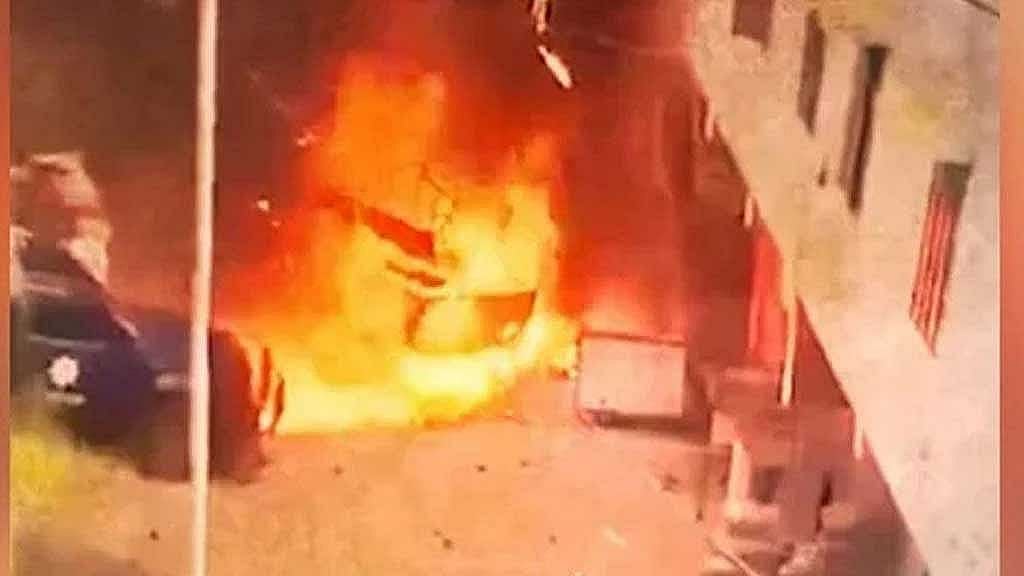
On Sunday, a passer-by was injured in a crude bomb blast in Eskaton. There were further reports of hand-crafted bombs being detonated in several other parts of Dhaka in the evening. At dawn, two stationary buses on the outskirts of the capital were torched. Similar incidents were reported outside Dhaka as well.
Against this backdrop, Dhaka Metropolitan Police Commissioner Sheikh Md Sazzat Ali issued orders over DMP wireless channels on Sunday afternoon, instructing officers to open fire on anyone found setting vehicles ablaze or throwing crude bombs.
He told bdnews24.com: “I said over wireless that if anyone sets fire to a bus or throws a crude bomb in an attempt to kill, they should be shot. This is allowed under our law.”
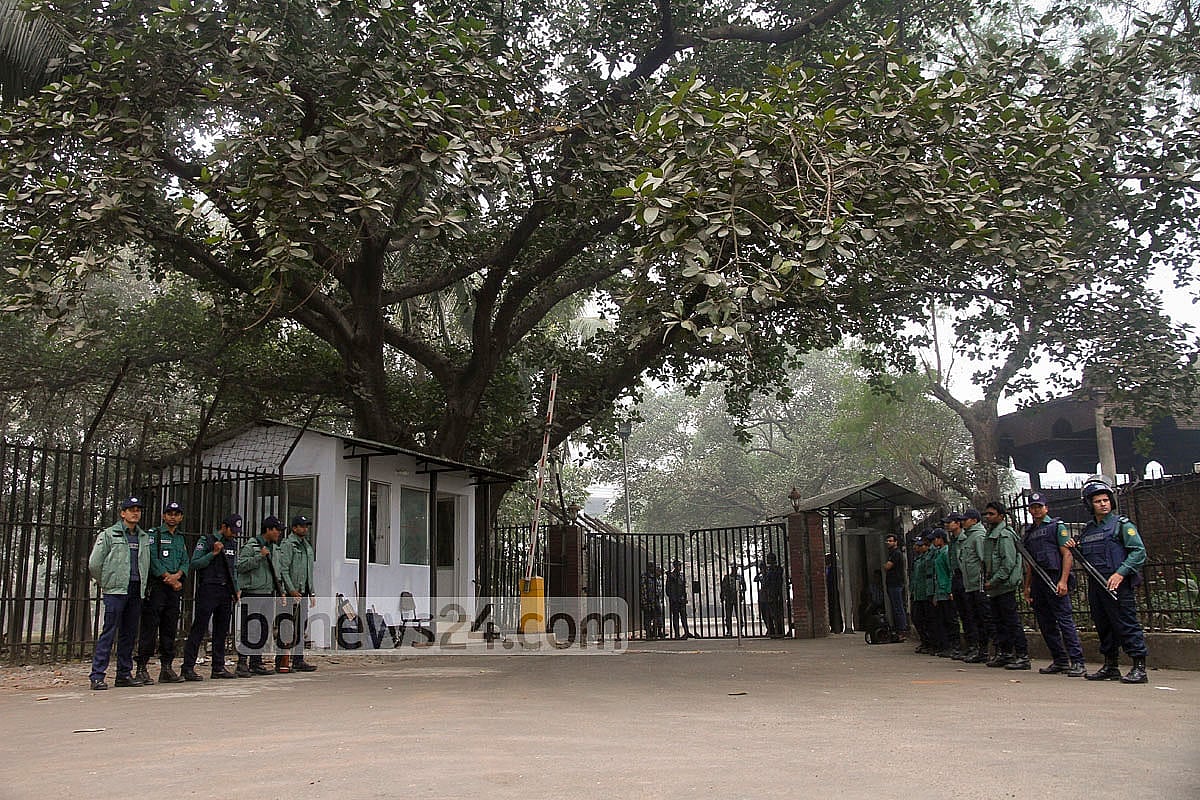
Border Guard Bangladesh has been deployed not only in Dhaka but also in Gopalganj, Faridpur and Madaripur on fears of unrest. Security has been tightened around the International Crimes Tribunal as well.
Despite police assurances, public anxiety has not eased. Many educational institutions in Dhaka moved classes online from Sunday. On Monday, several international organisations and INGOs told staff to work from home. A number of multinational companies have taken the same approach.