Published : 25 Nov 2025, 12:24 AM
Updated : 28 Aug 2026, 03:41 AM


Senior BNP leader Mirza Fakhrul Islam Alamgir has urged journalists to stick to their professional ethics and refrain from aligning with political parties to fulfil their professional commitment to the people.
Speaking at a discussion on media reform at the Bangladesh-China Friendship Conference Centre in Dhaka on Monday, Mirza Fakhrul said divisions within journalists’ unions and their alignment with political camps had undermined public trust.
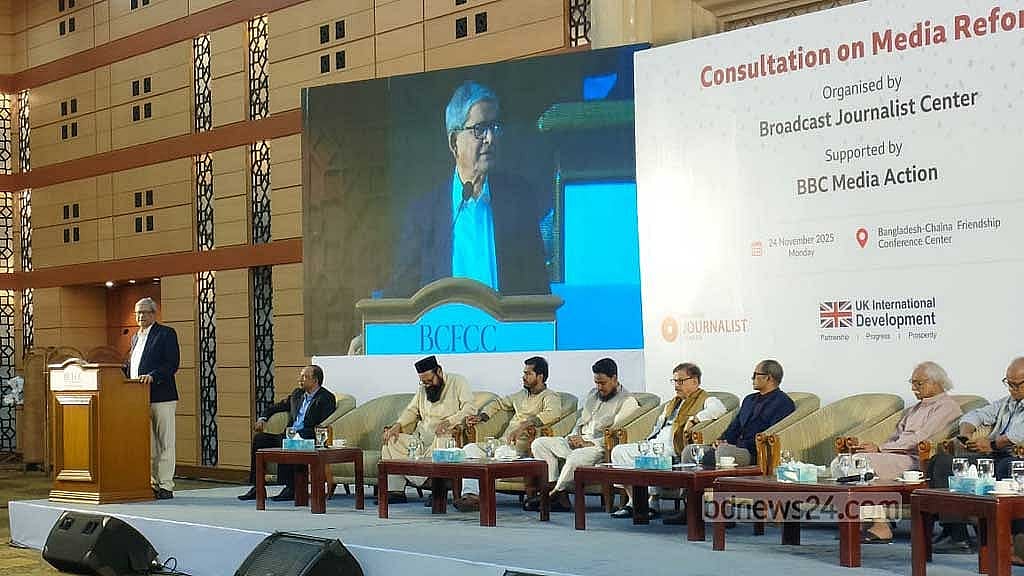
“It creates a problem if journalists choose to slip into the pockets of political parties,” said the BNP secretary general.
“Let me be frank, journalists have many unions like BFUJ. Even such organisations have factions. You like to act as a partisan. Political parties do not want you to keep in their folds. But it has become a problem when you choose to go there,” said Fakhrul.
Fakhrul also alleged that sections of the media had supported “fascist" Awami League regime over the past 15 years.
“The people of the country saw it. There is clearly a lack of commitment. Please keep yourselves from entering into such positions and practice independent journalism to serve the people,” said Fakhrul.
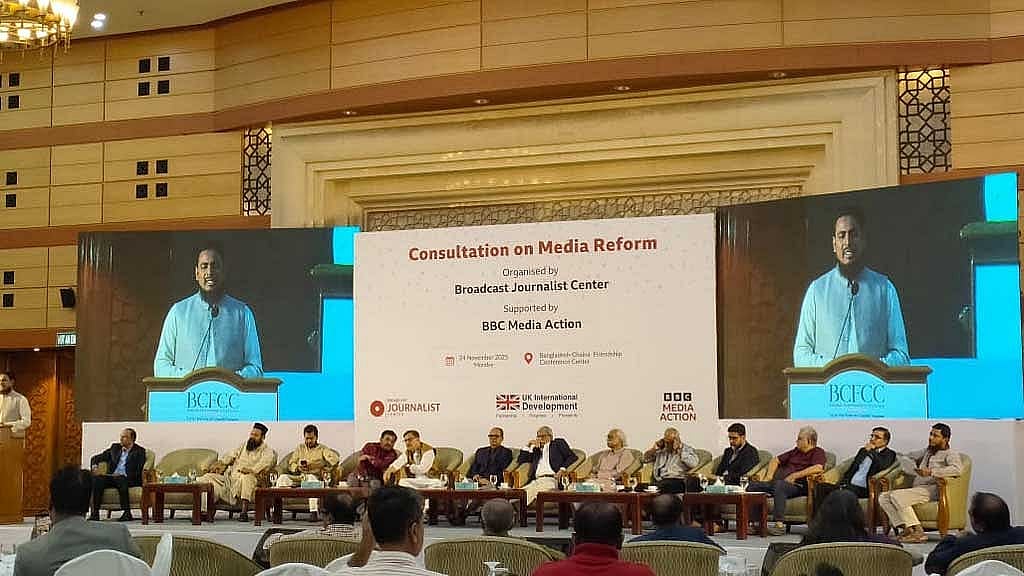
The discussion, organised by the Broadcast Journalist Centre (BJC), brought together political leaders to review the recommendations of the Media Reform Commission and discuss steps for ensuring independent journalism and worker-friendly newsrooms.
Fakhrul added that the BNP would prioritise the commission’s proposals if it returned to power.
“Our commitment is clear. In our 31-point outline we said we want a free media,” he said.
He also expressed regret that the commission’s report had not received wider attention.
The BJC has outlined an eight-point proposal that includes a separate broadcast law, the formation of an independent National Broadcast Commission, declaring TV channels as pay channels, recognising the broadcast sector as an industry, and introducing a code of ethics to ensure accountability for broadcast journalists.
The proposals also call for a TV licensing policy and a clear framework for ownership, representation of employees on governing boards, establishing politically neutral unions, forming an independent accreditation authority, and drafting guidelines for journalism on digital platforms.
The BJC expressed concern that both the recommendations of the Media Reform Commission and the proposals submitted by journalists remain uncertain in terms of implementation.
Akhter Hossen, member secretary of the National Citizen Party (NCP), said journalists continue to face major challenges concerning fair pay, dignity at work, and personal security.
“If we look at district and Upazila-level journalists, most do not have a defined salary structure,” he said.
“They often do not receive their salaries at the end of the month and are forced to remain dependent on others. This dependency creates an obstacle to independent journalism.”
He added that when local journalists rely on political leaders or institutions to sustain their livelihoods, it creates psychological pressure to report news in line with those interests.
“This must change,” he said.