Published : 04 Feb 2026, 03:18 AM
Updated : 21 Aug 2026, 03:06 PM


Living in Dhaka, most of us become slaves to banal routines.
Getting out of it often needs deliberate effort!
As for myself, coming out of the work-play-home system is sometimes tricky because by the time the day comes to an end, the whole mind is screaming for comfort.
Well, determined to do something out of the ordinary, I decided to listen to my younger brother Shahriar Feroze, a journalist for Daily Observer, to take a boat ride, which he told me would end with some fascinating discovery/encounter.
A BRIDGE NOT TOO FAR
For those who live in the city, are always pressed for time and a few hours is what they will be able to allot for an experience out of the ordinary, the best option is to just head towards Sadarghat, hire a boat for Tk 500 to Tk 2000 and then slowly move down the Buriganga River towards Postogola Bridge.
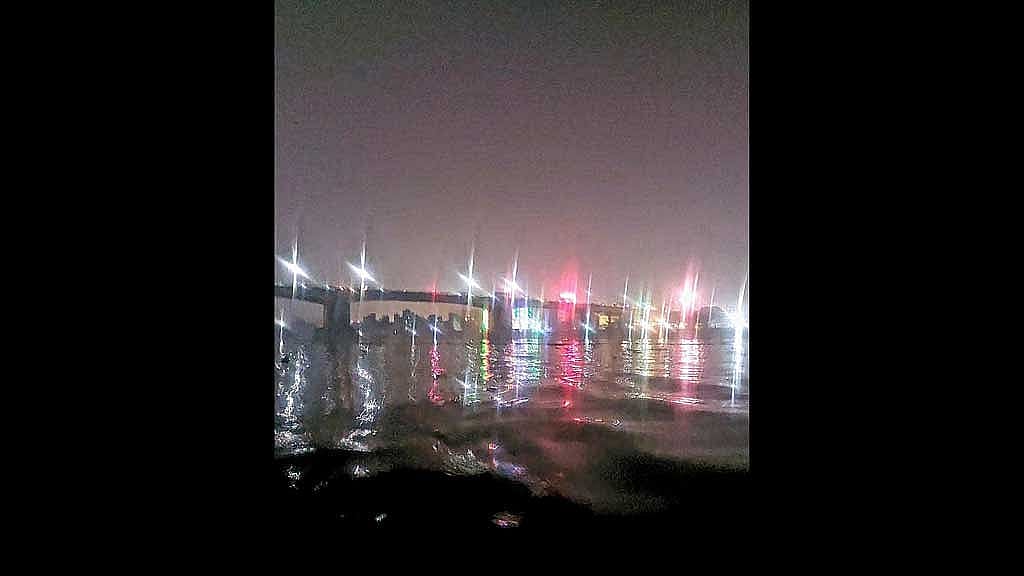
Naturally, winter-time is best because the air is fresh and pleasant while the night fog covering the bridge creates a haunting aura.
Come to Shyambazar Jame Mosque and my biker cum acolyte will be waiting, my brother told me.
And where will you be? I asked, to which he replied, “by the boat with the red lamp and a boatman wearing a red shirt.”
Must admit, all this had a little Cold War era espionage touch to it.
Meet me by the boat with the red lantern!
So, off we went on a Monday evening from Dhaka University towards Sadarghat.
The early February chill was beginning to bite softly as we reached the river side.
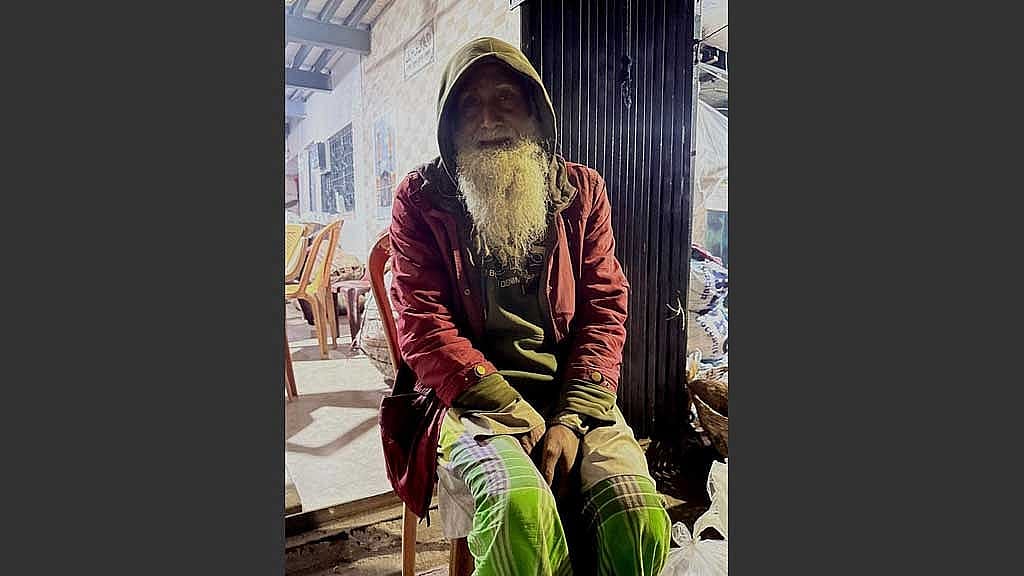
Boats on one side and a bustling bazaar on the other – a kaleidoscope of colours, smells, faces and, yes, someone looking like Gandalf from Lord of the Rings.
In fact, this bearded man dozing off on a plastic chair, selling a rather exotic vegetable/fruit called Keshor, was the splitting image of Gandalf, the wizard.
Mithun, one of my gang members and a broadcast journalist, bought a few pieces and the man bid us goodbye with a cryptic smile.
Did he put a spell on the vegetable?
Our first contact, the biker, came in from the cold and greeted us.
How very John le Carre like, I thought.
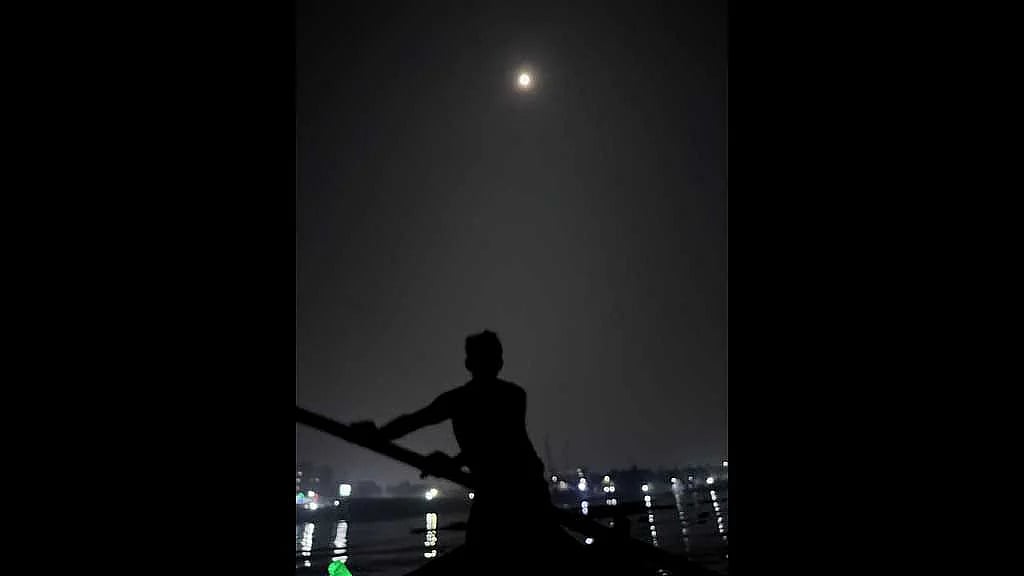
My brother was waiting by the boat while the boatman, the man in red, known and widely respected at the boat jetty as Nur Hossain, was eager to start the journey.
“Through this entry the law enforcers brought two political heavy weights of the last government after they were apprehended down the river,” he said excitedly.
From that day, this ghaat is called, Sallu mama’s ghaat!
I am sure, no elaboration is needed as to the re-naming of the jetty.
At the jetty, the city lights on the other side of the river, seemed far away – glittering and exuding the hedonist bling of Dhaka.
Well, we were leaving the glitter in search of something surreal!
SPIRITS OF FORGOTTEN REVOLUTIONARIES
It may be called the Full Snow Moon, but to me, any full moon is wicked.
Call it superstition, but the moon induces madness and perhaps a little malevolence, an astrologer told me long ago.
From then on, I have always remained wary during the full moon.
To many it’s a time for moon indulgence, for a few it’s time to come out of the human flesh and transform into something sinister and, for others, a period to be extra cautious.
As we slowly left the jetty and moved towards the Postogola Bridge, the cacophony slowly faded, the sound of the oars splashing against the dark water created a symphony broken intermittently by a passing steamer.
From the boat jetty to the bridge takes about 45 to 50 minutes and one can either turn back and return or stop over near the Postogola boat jetty to visit the crematorium, dating back to 1876, when landlord Govinda Chandra Dutta gave the land for the interment of the dead from the Hindu community.
The common belief among most is that when a member of the Hindu community passes away, the body is cremated but the little known fact is that many are also buried.
This depends solely on the wish of the person, remarked Dipok, my trusted confidant.
The crematorium has a new and an old structure, and behind it is a graveyard where we came across the tomb of a renowned socialist revolutionary of the fifties, better known as Comrade Moni Singh.
A lifelong socialist and a proponent of discrimination free social ideals, Singh was vocal against the exploitation of peasants, unjust distribution of crops by landowners, acting as an advisor of the Provisional Government of Bangladesh during the War of Liberation in 1971.
He remained the president of the Communist Party of Bangladesh until his death in 1990.
Many of today’s social changers may not have heard of Moni Singh but in the volatile 70s and 80s, his visions of an egalitarian society influenced countless intellectuals to shun the path of financial opulence to lead a life of high thinking and moderate living.
A wistful Mithun remarked: “Visions of these socialists align to a large extent to the aspirations that fuelled the July August uprising in 2024.”
Several other revolutionaries of the period are also buried beside Moni Singh with the trademark “Laal Salam” salutation.
Not too far away from the crematorium, young bikers converged around a tea stall.
Their machines gleamed under the street-light, a sense of youthful vitality was palpable.
An election hustings van, escorted by ten motor-cycles passed, slogan, song and video epitomising the slick modern day approach to election campaigning.
Spirits of another era hovered overhead as hopes in a new age blended with tech savvy vote canvassing.
“Despite the change in approach, the core message remains the same – vote and ensure a better future,” observed the tea stall owner.
On a winter velvet night we got on the boat once more for the return journey.
The long rows of empty, abandoned river steamers on one side of the river created a haunting image.
After the construction of the Padma Bridge, most steamers and other passenger-carrying water vessels have become obsolete, remarked Nur Hossain, the boatman.
“Now most of the boats which once ferried thousands sit idly by the river, with many in the process of being scrapped.”
But there’s also a rather thrilling side to these abandoned vessels, remarked my brother, adding: “Some of them are used by floating people to live and if one is looking for an adventure of an unconventional sort then, staying on such a vessel is possible after paying those who live in them.”
Relics of another era, the large structures appear spooky, sometimes eerie in their silence.
Passing one such steamer we saw three men, standing by the vessel’s stern, smoking cigarettes.
In the foggy atmosphere, the three men in long coats, faces blurred by darkness, seemed like figures from a spy novel – waiting for the signal to carry out a prisoner exchange.
George Smiley and his men!
After dark, on the river, with a large moon overhead, one is expected to let the imagination run wild.
As we got off the boat around midnight, the river became quieter, the few boatmen making their last trip shouted farewells to their friends and when we began to climb the stairs, someone came forward for the toll.
For each person crossing the river, and entering the city, the price is Tk 2, he said.
Our boatmen in his red shirt bade us farewell and then slowly faded into the night.
On that stranded boat, the three men possibly went to sleep or maybe, just maybe, they saw their signal flicker from another boat and decided to move, adding another unseen mystical layer to the night.
So many mysteries unfold over the water of the Buriganga, with one silent witness up there – the mischievous moon!
[Towheed Feroze is a former journalist!]