Home
+
Published : 18 May 2026, 12:46 AM
UNICEF Bangladesh has said that it had "repeatedly warned" the Muhammad Yunus-led interim government about an impending vaccine shortage and the consequent risk of disease outbreaks.
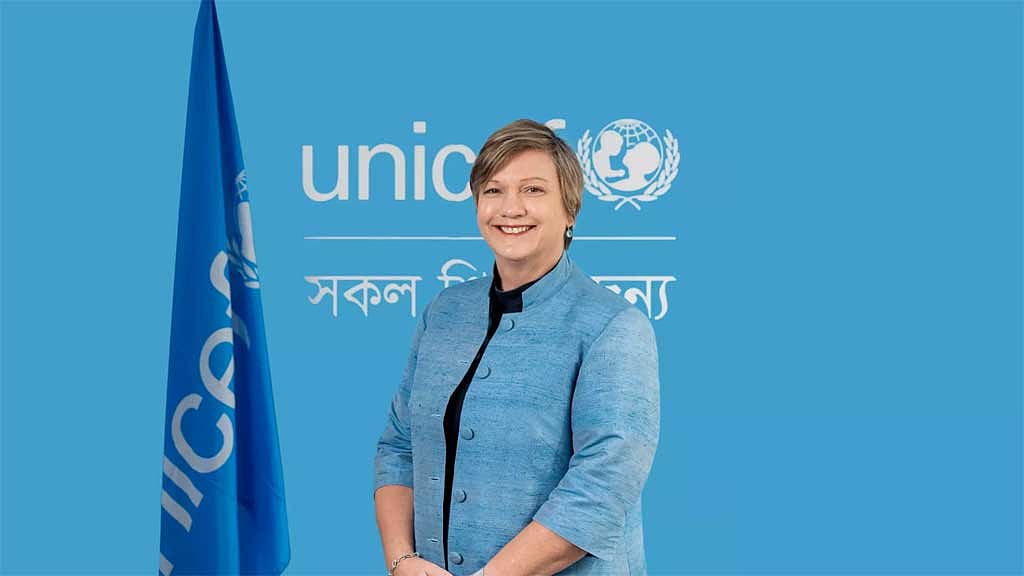
The UN children’s agency revealed that its country representative Rana Flowers sent an official letter to the then-health advisor, Nurjahan Begum, on Feb 10 -- just ahead of the general election -- explicitly flagging the imminent crisis.
Responding to written queries from bdnews24.com on prior discussions on the measles vaccine crunch, UNICEF Bangladesh said on Sunday: "Yes. UNICEF engaged with the interim government leadership on multiple occasions and followed up with official letters after those meetings, warning of stock-out risks and possible disease outbreaks, complications and child deaths."
Until 2024, the government procured vaccines directly through UNICEF, primarily financed by donor funds.
The Yunus government shifted the procurement to the national revenue budget through an open tender mechanism in 2025.
Additionally, routine immunisation programmes were severely disrupted due to the adverse situation during the July Uprising and prolonged demonstrations staged by vaccination workers.
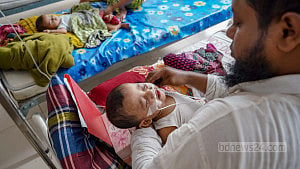
The crisis surfaced prominently in March after a surge in measles cases across the country.
The outbreak had begun escalating in January as the interim administration was preparing for the parliamentary election.
In her letter to the then-health advisor, Flowers noted that the expiration timeline for the Measles-Rubella (MR5) vaccine had already ended on Feb 5.
Furthermore, stockpiles for the Bivalent Oral Polio Vaccine (bOPV), Tetanus and Diphtheria (Td), and the BCG vaccine for tuberculosis were slated to expire on Feb 15, 22, and 28, 2026, respectively.
The letter noted that disruptions in supply compromise routine immunisation, preventing children from receiving vaccines on time and increasing the risk of vaccine-preventable diseases.
The pro-opposition doctors' association Doctors for Health and Environment said that the interim government and health administration cannot evade accountability for the deaths of over 400 children from measles.
The Directorate General of Health Services (DGHS) reported 451 deaths from measles and measles-like symptoms between Mar 15 and May 15, with 74 confirmed to be caused by measles.
When asked about a leaked letter surfacing on the matter, UNICEF Bangladesh responded to bdnews24.com: "UNICEF does not comment on leaked or unauthorised correspondence. What we can confirm is that UNICEF has been in continuous and close engagement with the Government of Bangladesh, including through official communications, on the risk of vaccine stock-outs, immunity gaps, potential outbreaks and increased child mortality.
“These concerns were based on vaccine supply timelines, stock availability, routine immunisation needs, and the known risk that measles spreads rapidly when coverage falls," UNICEF said.
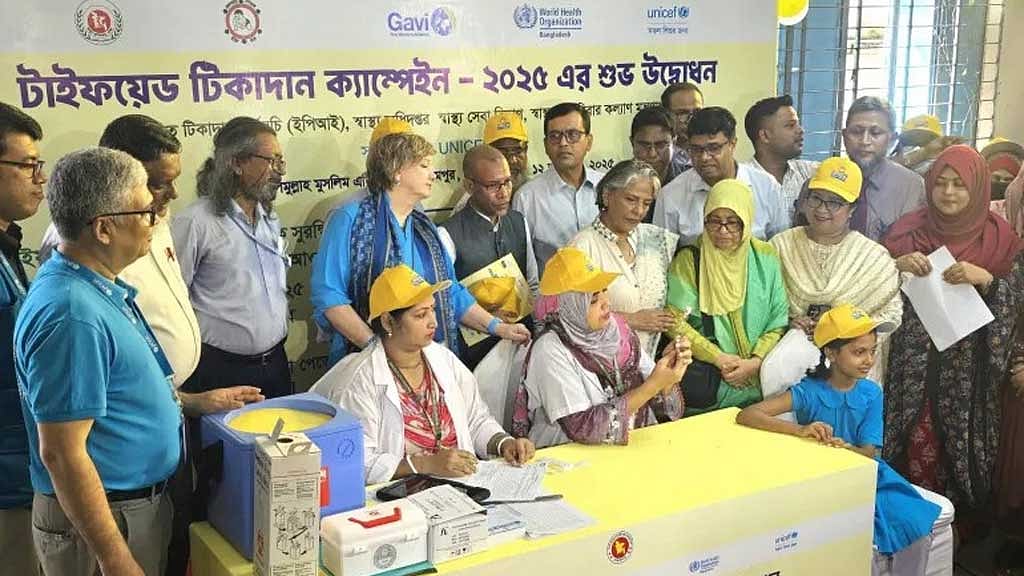
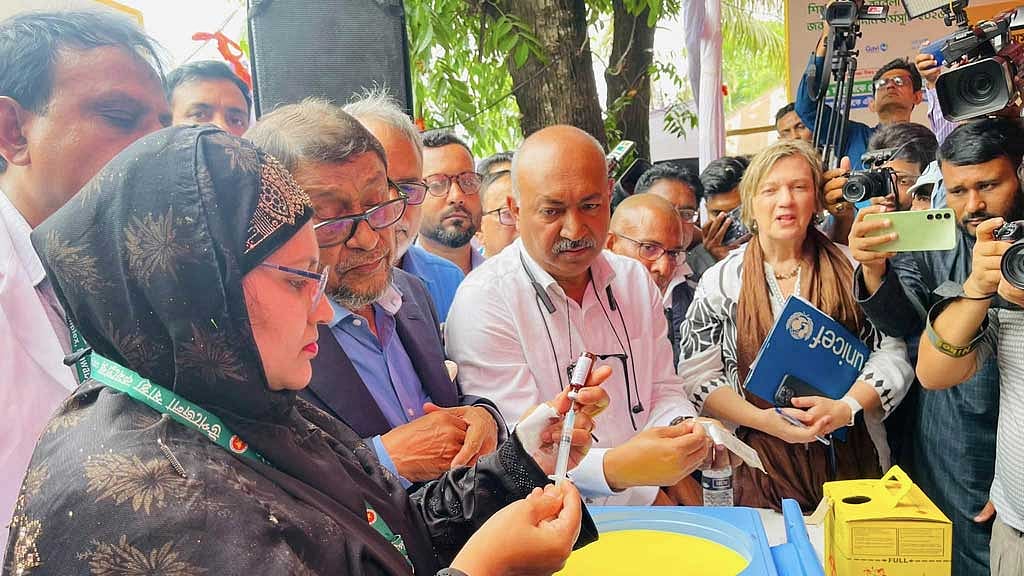
Replying to another question, UNICEF Bangladesh said that the new BNP-led government acted with urgency to control the outbreak with support from UNICEF, the World Health Organization (WHO), Gavi, the United States government, and other partners.
"The emergency vaccination drive launched on Apr 5 in 30 high-risk Upazilas was expanded into a nationwide MR campaign targeting more than 18 million children, with 100 percent reached as of May 10."
UNICEF added, "The government has also endorsed a return to established procurement mechanisms through UNICEF, which should help ensure more timely and reliable vaccine availability going forward."
Responding to a question regarding whether warnings were issued before the outbreak escalated in January 2026, UNICEF said: "UNICEF has consistently raised the importance of maintaining high routine immunisation coverage, timely procurement and uninterrupted vaccine supply. The shift to domestic financing was positive for sustainability, but the transition created delays..."
The UN body also noted that "...the option of an open tender was questioned by UNICEF from the beginning, as UNICEF utilises economies of scale to provide best possible rates for the government and our only goal is to protect children."
It revealed that even the DGHS had written to the Ministry of Health and Family Welfare during the interim government's tenure to continue vaccine procurement through UNICEF, since "vaccine procurement through open tender is lengthy (8 to 11 months) and risky for timely vaccine availability".
Attempts to reach the interim government's health advisor Nurjahan and the chief advisor's special assistant on health, Prof Sayedur Rahman, for comments via phone calls and text messages were unsuccessful.