Home
+
Published : 25 Jun 2026, 02:59 PM
The health ministry has not given a direct answer on whether anyone has faced action over the child deaths linked to the recent measles outbreak.
Minister Sardar Md Sakhawat Husain on Thursday told parliament that responsibility for measles outbreaks and related deaths will be determined through investigations and evidence-based assessments.
The information came in a written reply tabled during the parliamentary question-and-answer session presided over by Speaker Hafiz Uddin Ahmad.
Reserved-seat MP Shammi Akther had asked what steps the government has taken to stop child deaths from measles and whether action has been taken against those responsible.
In his reply, the minister said the government's primary goal is to bring every child under vaccination coverage and build a strong immunity shield against the disease.
He, however, provided no figures on measles deaths, identified outbreak hotspots or disciplinary action against any official.
The reply said vaccine hesitancy, incomplete immunisation, low public awareness and, in some cases, geographical and social barriers contribute to the spread of measles.
Sakhawat said assigning responsibility for an outbreak depends on the findings of relevant investigations and supporting evidence.
He added that departmental and administrative action is taken under existing rules if negligence, dereliction of duty or misconduct by any official is proven.
The reply, however, did not say whether any such investigation has been carried out or whether any official has been found at fault.
The ministry said it is relying on mega campaigns and crash programmes to contain the latest measles outbreak.
Children who missed routine immunisation are being identified and brought under vaccination coverage as quickly as possible, the minister said.
He added that children in high-risk areas who have already been vaccinated may receive an additional dose of the measles-rubella (MR) vaccine through special campaigns to strengthen protection.
Special attention will be given to Dhaka North and South city corporations, major urban centres and densely populated areas such as Cox's Bazar, that host displaced communities.
According to the minister, intensive neighbourhood-based vaccination drives will be carried out in these high-risk areas over the coming months through micro-planning initiatives.
The ministry also outlined plans to strengthen technology-based monitoring to ensure no child is left out of immunisation programmes.
The minister said the e-tracker system will be expanded to maintain digital vaccination records and ensure full online registration of children.
The government also plans to modernise cold-chain refrigeration systems and tighten monitoring to maintain vaccine quality in remote areas.
As per the ministry, vaccine procurement, storage and distribution under the Expanded Programme on Immunisation (EPI) follow international standards and government regulations.
The reply said any claims that changes in vaccine procurement procedures have affected immunisation activities will be reviewed through data analysis and technical assessments.
Action will be taken under the law if such reviews uncover negligence or misconduct by any individual or institution, the minister said.
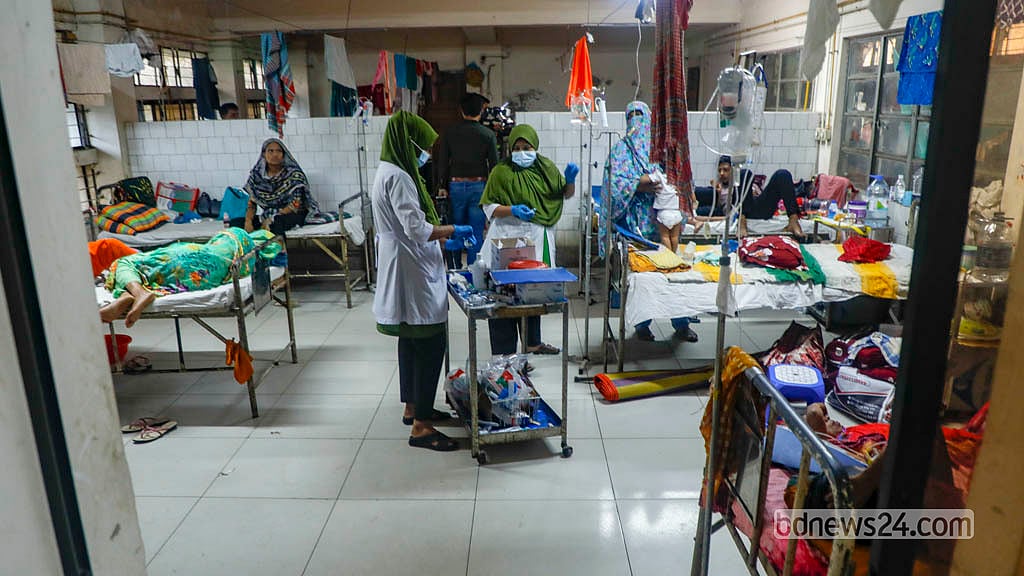
The ministry has also formed surveillance teams at field level and in outbreak hotspots under a community-based surveillance programme to detect suspected measles cases quickly.
Sakhawat said plans are under way to ensure an adequate supply of testing kits and expand specialised treatment for measles-related pneumonia to the Upazila level, including the use of Bubble Continuous Positive Airway Pressure (Bubble CPAP) support.
The ministry said treatment services for infected children, vitamin A supplementation and measures to prevent complications are being strengthened.
It also plans to intensify awareness campaigns to tackle vaccine hesitancy and neglect.
The government will step up courtyard meetings, public announcements and media campaigns, with a particular focus on working parents and disadvantaged families.
The ministry said efforts are also under way to strengthen vaccine stock management, ensure uninterrupted supplies, expand disease surveillance and improve outbreak detection and response systems.