Published : 08 Dec 2025, 03:47 AM
Updated : 21 Aug 2026, 02:51 PM


UNICEF Representative to Bangladesh Rana Flowers has said more than 42.5 million children in Bangladesh have been given the typhoid vaccine.
In a statement, UNICEF said the Typhoid Conjugate Vaccine (TCV) Campaign 2025 has reached over 97 percent of the country’s children, meaning more than 42.5 million children have been protected.
“This remarkable achievement is a testament to the commitment of the Government of Bangladesh to protect children from preventable death and suffering and their families from the cost burden and emotional pain that occurs when children become dangerously ill,” Flowers said.
“It places Bangladesh among global leaders -- the eighth country in the world to introduce this life-saving campaign.”
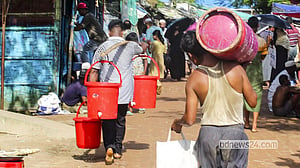
Citing data from the latest Multiple Indicator Cluster Survey (MICS) conducted by the Bangladesh Bureau of Statistics (BBS) in collaboration with UNICEF, the statement said that only 39.3 percent of the population in Bangladesh has access to safe drinking water.
More worryingly, 47.2 percent of all water sources and eight out of 10 households (84.9 percent) tested positive for E coli bacteria, the statement added.
Flowers said, “These numbers mean that for millions of children, illnesses like typhoid are not distant threats, they are risks faced every single day, and a simple glass of water can carry real danger.
“For this reason, UNICEF urgently supported the Government of Bangladesh to undertake the campaign. Until such time as every family can rely on clean, safe water, the TCV vaccine remains one of the strongest safeguards we can offer, protecting children from severe illness, protecting their futures, and giving parents peace of mind.”
She praised the government and health ministry for meeting the target and thanked parents for vaccinating their children against typhoid.
“UNICEF is honoured to have supported every step of the journey, from supplying 50.4 million doses of TCVs, to robust planning, strengthening cold chain systems with new cold rooms, and deploying digital tools like the VaxEPI platform that ensured vaccines reached the right children at the right time.
“We also helped build the capacity of frontline health workers with the training and guidance needed for such a massive nationwide rollout.”
She noted that over 424,000 children have been vaccinated, including those in “marshy lands, coastal belts, and remote hilltops; children with disabilities; children from underprivileged families; children in nomadic, ethnic, and tea-garden communities; students in Qawmi madrasas; and children of sex workers”, saying this demonstrates “Bangladesh’s deep commitment to all children in Bangladesh”.
She thanked Gavi, the Vaccine Alliance, for funding the programme and acknowledged the World Health Organization (WHO) and other partners for supporting the campaign, while also expressing gratitude to the media.