Home
+
Published : 16 Apr 2026, 01:01 AM
Bangladesh will launch a nationwide special immunisation campaign on Apr 20 to contain a growing measles outbreak, but while vaccine stocks are sufficient, a shortage of syringes has emerged as a critical bottleneck.
Officials of the Expanded Programme on Immunization (EPI) said the country has about 20 million doses of measles vaccine, but only around 45,000 “mixing syringes” are available.
While this may be enough to begin the campaign, nearly 2 million syringes are required to administer the available stock fully.
Officials said two types of syringes are used for measles-rubella vaccination: 5ml syringes for mixing and 0.5ml syringes for administering doses.
Each vaccine vial contains 10 doses and requires one 5ml syringe for preparation.
By that calculation, 2 million doses require 2 million mixing syringes.
A recently retired EPI deputy director, asking not to be named, said: “Right now vaccines are available but there are not enough syringes. Several hundred thousand syringes are expected to arrive in three shipments over the next few months.”
EPI Assistant Director Hasanul Mahmud said the ongoing stock is sufficient to start operations.
“The number of mixing syringes we currently have is enough to run the campaign, and vaccination is under way. Efforts to procure syringes quickly are ongoing,” he said.
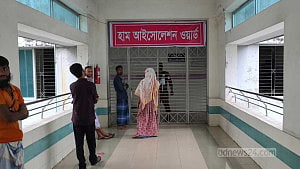
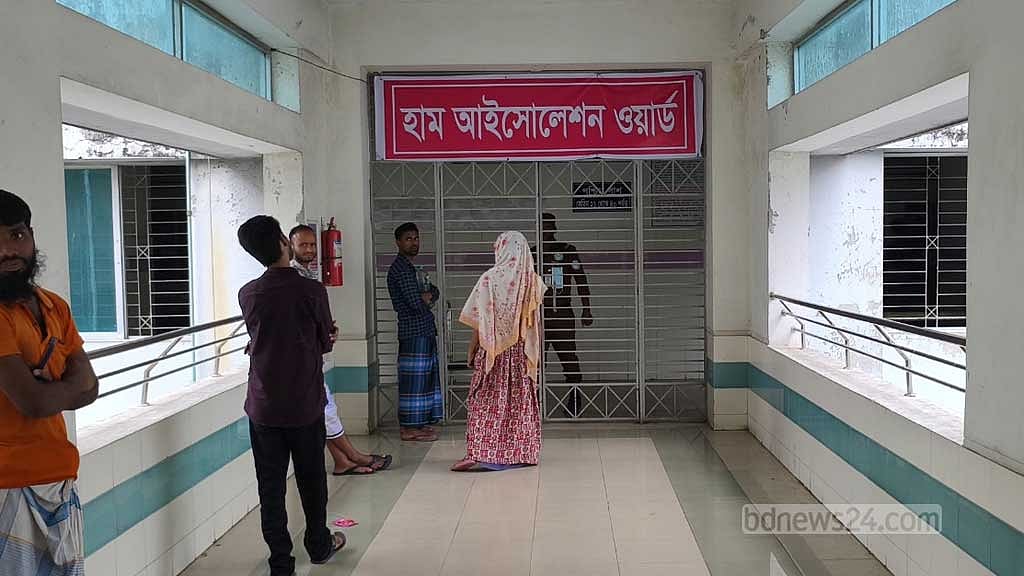
The measles outbreak began in March this year, with infections spreading across at least seven districts, including Dhaka, Chattogram, Rajshahi, Chapainawabganj, Pabna, Barishal and Mymensingh.
The World Health Organization (WHO) has warned that an “immunity gap” created by disruptions in routine childhood immunisation over the past two years is a key driver of the outbreak, which has now spread to 56 districts and is described as “alarming”.
According to WHO data, 69 percent of infected children are under 2 years of age, while 34 percent are below 9 months.
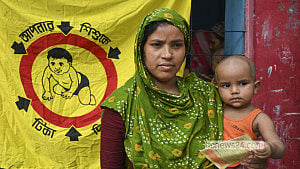
In Bangladesh, measles vaccination is normally given in two doses at 9 and 15 months of age. However, due to rising infections among infants under 9 months, the government has decided to vaccinate children from 6 months of age.
Several EPI officials, speaking on the condition of anonymity, claimed procurement delays and policy uncertainty under the interim government led to the depletion of stockpiles.
Allegations of irregularities in vaccine and syringe procurement have also been submitted to the Anti-Corruption Commission (ACC).
Officials, however, said the campaign is under way nationwide, with accelerated efforts to ensure supply continuity despite logistical constraints.