Home
+
Published : 04 Jun 2026, 04:36 PM
A Ministry of Health investigation committee says it has found evidence of “negligence” in the mysterious deaths of six newborns at Dhaka’s Ad-din Medical College Hospital.
Health Minister Sardar Md Sakhawat Husain highlighted observations by the probe panel at a press conference at the Ministry of Health on Thursday.
He said, “After visiting the scene on the ground, reviewing the statements of the victims’ families, doctors, nurses and staff, and considering the surrounding conditions, the investigation committee has unanimously concluded that the sudden and tragic death of six newborns at Ad-din Medical College Hospital in Moghbazar between 5am and 9am on May 27, 2026, was clearly due to the absence of a doctor on duty at that time, the negligence of the nurses and staff and, above all, the hospital authorities.”
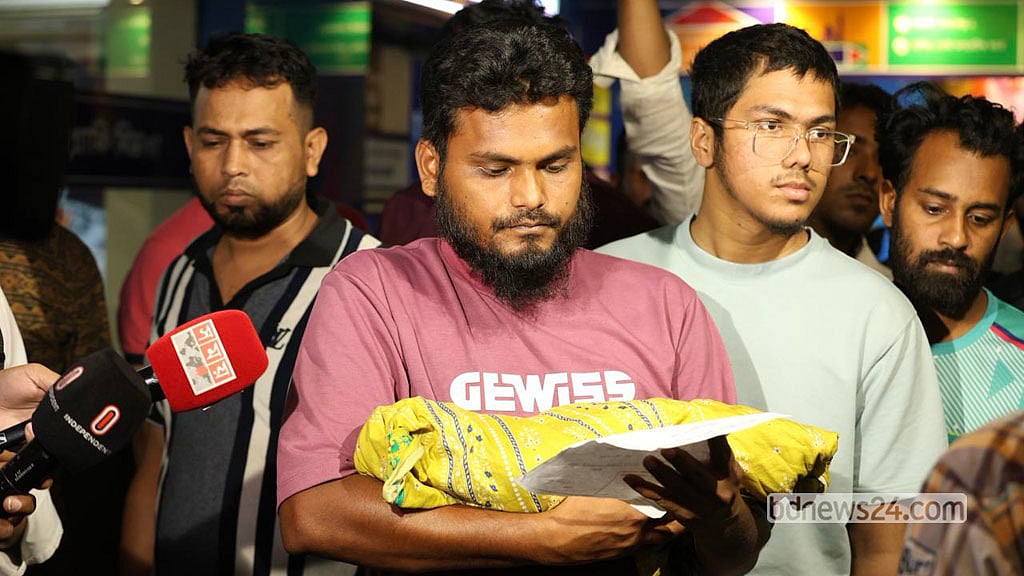
On Wednesday morning, the day before Eid-ul-Azha, all six children in a “post-operative” ward of the hospital suddenly fell ill and died one by one.
The incident caused “deep concern, grief and anger” across the country.
The Ministry of Health formed a three-member investigation committee to probe the incident.
The committee submitted its report to the ministry on Wednesday. As promised, the health minister presented a summary of the committee’s report to journalists.
He said the investigation committee visited the hospital and made several important observations. They are:
• Unsuitability of the building: The investigation committee visited the hospital and agreed that the building is not suitable for the operation of the hospital.
• Lack of ventilation and oxygen: After visiting the relevant post-operative room 2, it was found by the committee that oxygen deficiency had developed in the room due to the AC being off for a long time and lack of normal ventilation. On the other hand, the amount of carbon dioxide was higher than normal.
• Extreme negligence in duty: The committee says that the statements of the nurses in charge of the room, the cleaners and the parents of the deceased newborns have proven that there was “extreme negligence and lack of cooperation” in the nurses' duties. There was no active emergency medical response in the hospital during the sudden physical deterioration of the newborns.
• Negligence in treatment: The report says that the concerned nurse did not respond to the parents' calls and kept wasting time without informing any doctor about the matter. Necessary or appropriate medical care was not provided to prevent the death of the newborns.
• Presence of excess crowds: At that time, about 50 people, including 11 patients, newborns and relatives of the patients, were present in the approximately 900-square-foot room, which is far more than the capacity.
• Administrative failure: The investigation committee says that the people in charge of the hospital's administration were “incapable of fulfilling the basic conditions of running the hospital”.
Quoting from the investigation report, the health minister said that while the exact cause of death could not be established without postmortem examinations in cases of unnatural death, the surrounding circumstances and witness testimonies pointed to several likely factors behind the incident.
According to the report, the following conditions could reasonably be considered contributory causes of the deaths:
The investigation also identified a series of fundamental lapses by Ad-din authorities in the management of the hospital.
The committee also observed that the hospital had become inherently hazardous because of the widespread construction of small glass-enclosed rooms throughout the building.
Among its recommendations, the committee said that inspections of buildings should be made mandatory before new licences are granted to private hospitals in the future, and that approval from the Department of Environment should be required as part of the licensing process.
What action will be taken?
At the press briefing, a journalist asked whether the committee had recommended any punitive measures and what action would be taken against the hospital authorities.
In response, the health minister said the committee had already submitted its findings, and the report had been presented publicly.
“Now we, as the authorities, will sit down and review this report. Whatever punishment is permissible under existing law, we will implement, God willing. We will examine the law and take action accordingly,” she said.
Asked whether the government was considering cancelling Ad-din Hospital’s licence, the minister replied that any decision would be taken in accordance with the law.
A journalist then noted that in previous incidents involving deaths, hospitals had often been sealed off to prevent the destruction of evidence.
“But so many infants died here. Why was the hospital not sealed? A lot of evidence has already disappeared,” the reporter said.
Responding to the question, Health Minister Sakhawat said the specific post-operative room identified in the investigation had already been sealed.
“The post-operative room that lacked ventilation and contained higher levels of carbon dioxide than oxygen has been sealed,” he said.
“The hospital currently has more than 200 patients. We cannot suddenly shut down an entire hospital.
“Secondly, that would be outside the law. The law requires an investigation first. After the investigation, we will determine what penalties are available and ensure they are applied.”
Another journalist asked whether the government would issue new directives for private hospitals in light of the report’s findings.
The minister said inspections were already being carried out continuously, but that the child deaths had prompted authorities to become even more vigilant.
“After this incident, we are more serious than ever. We are keeping a much sharper watch,” she said.
“Over the past three days, we have held Zoom meetings with civil surgeons, deputy commissioners and divisional directors across the country and have issued strict instructions on these matters. Our oversight will become increasingly stringent to ensure the delivery of safe healthcare services.”
A journalist then pointed out that, according to existing law, proven violations could result in a fine of Tk 500,000 or even cancellation of registration.
The minister disagreed with part of that interpretation.
“That is not entirely correct,” she said. “If an offence is proven under the law, imprisonment is possible. But we do not have the authority to impose jail sentences. That is the court’s responsibility. A criminal case has already been filed.”
Another reporter argued that the findings of the investigation alone were sufficient grounds for the immediate closure of the hospital.
“The report has already established serious failings. The health ministry should shut down the hospital immediately. There is no need to reinterpret the law,” the journalist said.
The minister responded cautiously.
“Sometimes you demonstrate very sharp intelligence,” she said. “When questions are answered with another question, authorities become alert. I do not wish to say more than that. What we have done is the correct thing. For the benefit of everyone involved, I will not answer that particular question.”
One of the most contentious issues raised during the briefing was the absence of postmortem examinations on the six infants who died.
A journalist asked how a criminal offence could ultimately be proven in court without postmortem reports.
Sakhawat acknowledged that the lack of postmortems could provide some advantage to the suspects.
“When no postmortem is conducted, defendants gain a certain benefit,” he said. “However, in this case, the emotional condition of the mothers made it impossible to obtain consent despite repeated efforts. The CID and the police tried extensively.”
He expressed confidence, however, that the strength of the available evidence would outweigh that limitation.
“This is an extremely sensitive case. These deaths did not occur in secret under the cover of darkness. The facts are highly established. Therefore, I firmly believe the honourable court will not extend any undue benefit to the suspects.”
Asked whether Ad-din Hospital had possessed the necessary approvals to operate, the minister said it had originally received permission lawfully.
“The hospital had the required approval at the time it was licensed,” she said. “However, we have a report from RAJUK indicating that substantial alterations were later made to the building structure. RAJUK will take whatever action it considers appropriate.”
Another journalist asked what the government intended to do about similar hospitals across Dhaka and the rest of the country.
The minister replied that every hospital would now come under closer scrutiny.
“We will inspect every hospital with this incident in mind. If we find similar conditions, we will seek to correct them. If that is not possible, we will shut them down.”
Questions were also raised about whether officials from the Directorate General of Health Services, who are responsible for inspections, had failed in their duties.
Another journalist pointed to the presence of a bakery operating above the ninth floor of the hospital and asked who had allowed such an arrangement.
The minister replied that responsibility did not rest with a single agency.
“You mentioned the bakery,” she said. “Permissions were issued by BSTI and the Department of Environment. There are many different authorities involved here.”
The health minister ultimately urged journalists to wait until Sunday evening, when the government is expected to announce what action, if any, will be taken against the Ad-din authorities.